Pylon doesn't publish plan prices. Pricing is quote-based: you book a personalized 30-minute demo and receive a custom quote for your team.
Pylon uses custom, quote-based pricing — you book a personalized 30-minute demo to get a price for your team.
There's no public plan table to compare, so here's what we know and how to get your quote.
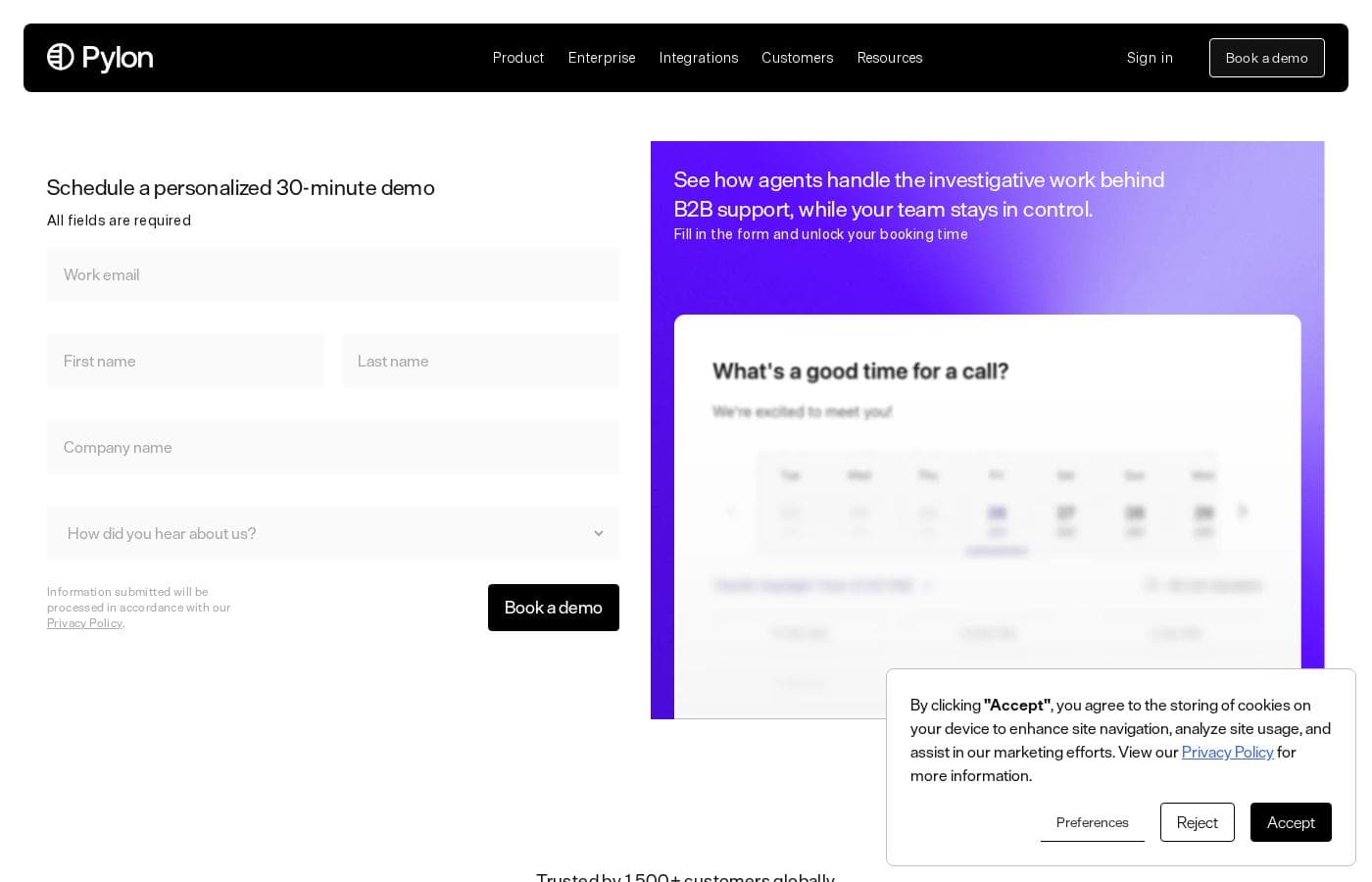
Pylon's pricing page doesn't show plan names, dollar amounts, or tiered features. Instead, it opens with a demo request form. You fill in your details, use a work email, and pick a time for a walkthrough. That call is the path to an actual quote.
Your final cost will depend on what you agree on in that conversation. The site doesn't list seat counts, usage limits, contract lengths, or annual discounts.
It helps to know what you'd be buying. Pylon is an agentic support platform built for B2B teams. It bundles AI agents — Assist, Background, Slack, and Support Agents, plus Skills — with core tools like ticketing, analytics and reporting, account intelligence, a knowledge base, workforce management, and NPS/CSAT surveys. It covers Slack, Microsoft Teams, email, chat, phone and SMS, WhatsApp, Telegram, and Discord, and connects to CRMs such as Salesforce and HubSpot.
The site also links to an Enterprise offering, so larger organizations have a dedicated path. If you run a big support team, expect that conversation to cover security, custom terms, and rollout support.
When you book the demo, come with questions ready. Ask how seats are counted, whether usage is capped, what contracts look like, and what happens at renewal. The 30-minute call is your best chance to pin those details down.
No free plan or free trial is advertised, and there's no published money-back guarantee. The personalized demo is how you evaluate Pylon before spending anything. With more than 1,500 B2B customers — including Cognition, Linear, and Airtable — Pylon is clearly selling to serious teams, but you'll need that call to see the actual price.