Databox vs Ignition
Databox and Ignition solve very different business problems, but both can save your team serious time. Databox turns data into clear answers, while Ignition automates proposals and gets you paid faster. The right choice depends entirely on whether your bottleneck is understanding performance or chasing payments.
Best for: Marketing teams needing campaign performance insights, Agencies creating automated client performance reports
Best for: Freelancers and agencies tired of manual invoicing., Consultants and service providers billing by project or retainer.
Smart AI analytics for growing teams.
We found Databox is a capable BI platform that connects to many data sources and uses AI to explain performance. Overall, it's a strong choice for teams needing fast, actionable insights from their data, especially with its unlimited user model.
Pros
- AI-powered Genie provides instant, plain-English answers to data questions.
- Connects to 130+ data sources, creating a single source of truth.
- Unlimited users and dashboards on all paid plans, removing seat-based costs.
- Offers a free plan and a 14-day trial for paid tiers.
Cons
- Pricing starts at $159/month for paid plans, which may be high for small budgets.
- Advanced features like white-labeling are available as paid add-ons.
- Limited external review data was accessible for a full sentiment check.
- The platform's depth might require an onboarding period for full adoption.
Solid automation for getting paid faster.
We found Ignition to be a robust platform that truly automates the proposal-to-payment cycle, saving service businesses considerable admin time and improving cash flow. Overall, it's an excellent choice for firms wanting to professionalize their client onboarding and eliminate manual invoicing work.
Pros
- Automates proposals, agreements, and upfront billing in one flow.
- Helps eliminate manual payment chasing and reduces accounts receivable delays.
- Provides professional templates and tools to upsell and capture additional work.
- Saves significant admin time with bulk actions and automated renewals.
Cons
- Pricing, likely annual, may be a barrier for some budgets.
- Requires commitment to a specific workflow, not a simple standalone invoicer.
- Initial setup and learning curve can be steep for some users.
- May have limitations with deep integrations for non-standard accounting software.
AboutDatabox
Databox is a business intelligence and analytics platform built for teams that need clear, trusted answers fast. It connects directly to over 130 tools you already use, like CRMs and marketing platforms, and turns that data into shared metrics, dashboards, and AI-powered insights. Whether you're a marketing lead, a business analyst, or an agency owner, it's designed to help you understand performance without the technical headaches.
AboutIgnition
Ignition is a platform for service businesses that want to automate proposals, agreements, and billing. 🔄 It's designed for professionals who bill clients for projects or recurring work. The goal is to make getting paid a seamless, automatic part of starting a new engagement.
Highlights
Feature Comparison
Features Overview
We highlight the main differences and pick a winner for each feature.
Core Purpose & Focus
Databox is a BI platform for data analysis. Ignition automates client agreements and billing.
Databox connects to over 130 tools to unify your business data. It uses AI to turn that data into clear, actionable insights. Ignition is built for service businesses to automate proposals, agreements, and payment collection. It replaces manual invoicing with a single automated workflow. The key difference is Databox analyzes what already happened. Ignition helps you get paid for the work you do. A marketing team uses Databox to track campaign ROI. A consulting firm uses Ignition to send a proposal with a credit card on file.
AI & Automation
Databox has an AI analyst for data questions. Ignition automates the billing process itself.
Databox's AI 'Genie' answers business questions in plain English. It pulls data from your connected sources and explains trends instantly. Ignition's automation focuses on the business process. It collects payments upfront and bills clients automatically after signing. Databox automates data analysis. Ignition automates administrative work and cash flow. You ask Databox 'Why did leads drop?'. You set up Ignition to automatically bill a client for a scope change.
User Interface & Collaboration
Databox is for internal team data exploration. Ignition is for client-facing proposals and agreements.
Databox provides shared dashboards for internal teams. Everyone from executives to analysts can explore data in a self-service model. Ignition's interface is designed for creating and sending professional proposals to external clients. It provides a seamless signing and payment experience for them. Databox is a tool your team uses together. Ignition is a tool you use with your clients. Your sales team collaborates on a Databox dashboard. You use Ignition to get a new client on board.
Integrations & Data
Databox has 130+ direct data integrations. Ignition integrates with specific accounting tools.
Databox connects directly to popular CRMs, marketing platforms, and databases. It creates a single source of truth from your existing tech stack. Ignition integrates with tools like Zapier, XPM, and Karbon. This connects it to your existing accounting and practice management workflow. Databox pulls in data from everywhere for analysis. Ignition plugs into your financial tools for billing. You connect Databox to Google Analytics and Salesforce. You connect Ignition to your accounting software.
Reporting & Analytics
Databox is built for analytics. Ignition provides basic reporting on proposals and payments.
Databox offers advanced analytics, forecasting, and anomaly detection. You can track goals and OKRs against live data. Ignition likely provides reports on sent proposals, revenue collected, and client activity. The focus is on transactional reporting. Databox gives deep insights into business performance. Ignition gives you operational metrics on your sales process. You use Databox to forecast next quarter's revenue. You use Ignition to see which proposals are pending.
Customer Support
Databox offers standard and priority support. Ignition advertises specific response time SLAs.
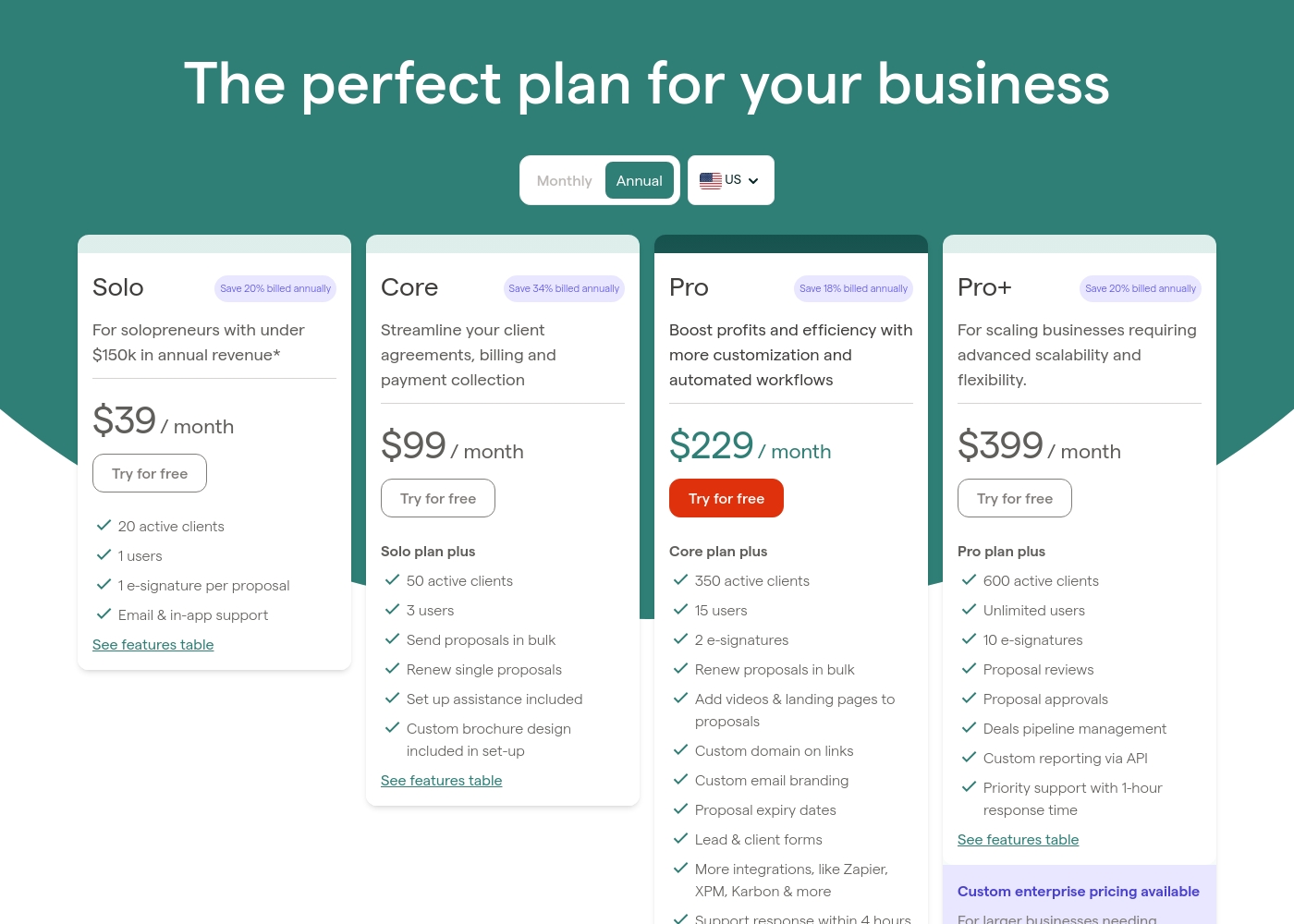
Databox provides chat and help center support on all plans. The Premium plan adds priority support, but no specific time guarantee is listed. Ignition states Pro+ plans get a 1-hour response time. Core plans have a 4-hour response guarantee. Ignition is more transparent about support speed commitments. Databox's support tiers are less defined publicly. If a critical report is failing, you rely on Databox's support. If a proposal is stuck, you rely on Ignition's guaranteed response time.
Mobile Experience
Databox has a dedicated mobile app. Ignition's mobile experience is unclear.
Databox has a mobile app for monitoring dashboards on the go. It allows you to check key metrics from your phone. There is no explicit mention of a native mobile app for Ignition in the provided data. The focus seems to be on desktop for proposal creation. For checking data anytime, Databox has a clear advantage. Ignition's mobile capabilities are not a highlighted feature. You check your Databox dashboard during a commute. You likely use Ignition at your desk.
Security & Compliance
Databox lists specific security certifications. Ignition's security details are not public.
Databox uses AES-256 encryption and is GDPR compliant. It inherits AWS certifications like ISO 27001 and SOC 1/2/3. Ignition's security protocols are not detailed on their public website. You would need to confirm directly with them. Databox provides public reassurance about security. Ignition leaves those details for you to request. A healthcare agency might prefer Databox's stated compliance. Any business should verify Ignition's data handling.
Pricing & Value
Databox has a free plan and tiered paid plans. Ignition uses tiered annual plans.
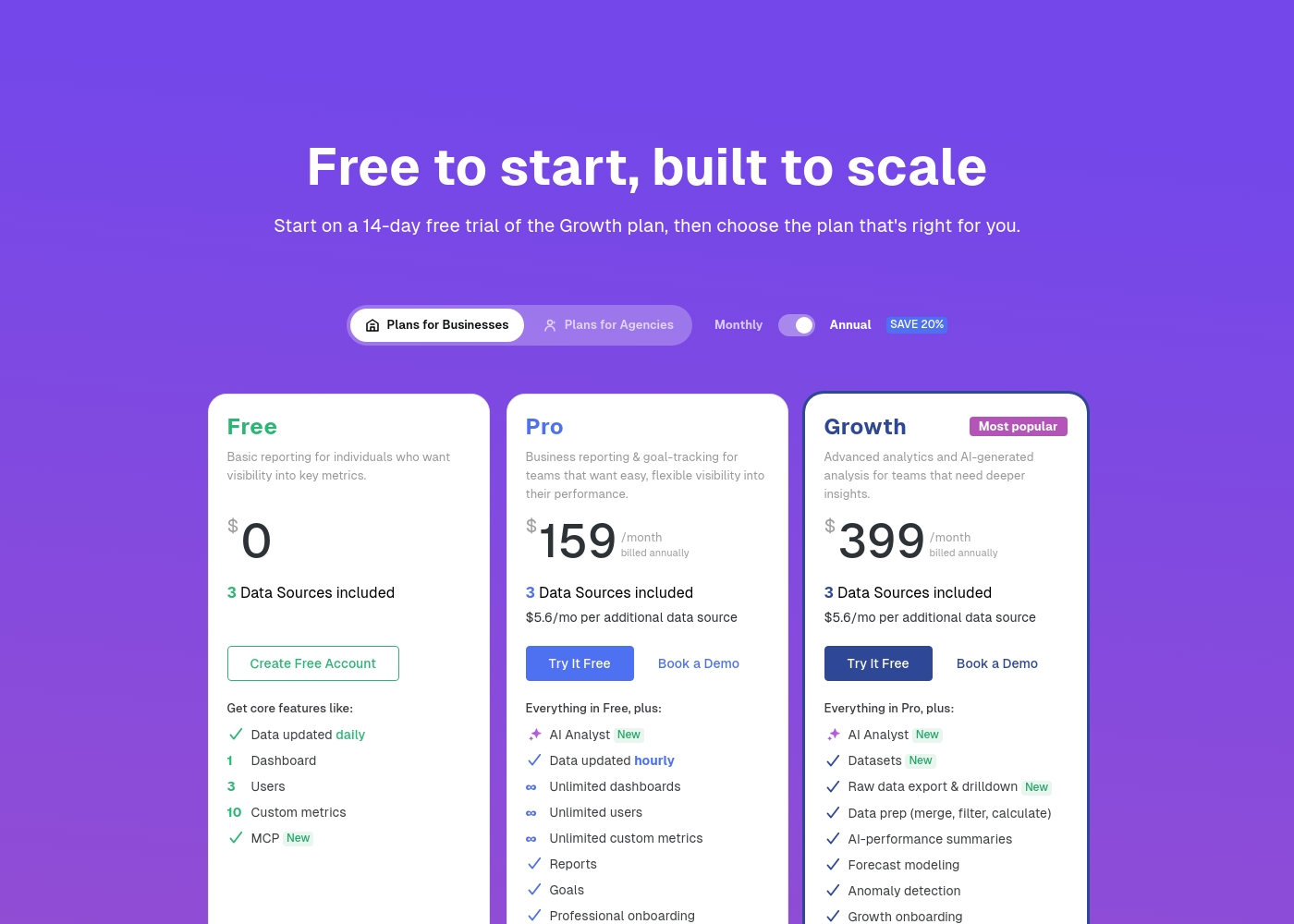
Databox starts free, with paid plans from $159/month annually. All paid plans include unlimited users, which adds value as teams grow. Ignition's plans are likely billed annually with set client/user limits. Pricing seems focused on the value of saved time, not per-seat costs. Databox's pricing is transparent and scales with features. Ignition's pricing model is less public but tied to client volume. A small team might start with Databox's free plan. An agency might see Ignition's annual fee as an investment in faster cash flow.
Databox pricing: Databox offers a forever-free plan and three paid tiers starting at $159/month when billed annually. Pricing is based on data features and bundled data sources, with a 20% discount on yearly subscriptions.
All paid plans include unlimited users and dashboards, but extra data sources are billed based on a per-source monthly fee. A 14-day free trial is available for all new users to explore the full-featured platform before committing to a paid plan.
Professional, Growth, and Premium tiers ensure high scalability for teams of any size by removing seat-based pricing and offering advanced analytics, AI-powered reports, and business intelligence features regardless of team complexity or user count. For even more power, you can also add on specialized services like OKRs and white-labeling to truly customize your dashboard experience for your organization or clients' needs and brand standards through their flexible dashboard portal.
Ignition pricing: Plans from 0 Plans range: 0–200
Pricing Notes
- Databox's pricing is public, starting with a free plan and paid tiers from $159/month annually.
- Ignition's exact pricing is not listed in the provided data, but it uses a tiered annual model.
- Databox includes unlimited users and dashboards on all paid plans, offering strong value for growing teams.
- Ignition's pricing is likely a significant annual commitment, but the value comes from eliminating payment chasing.
- Databox offers a clear 14-day free trial with full feature access.
- Ignition offers a free trial, but the specific length isn't stated publicly.
Pricing Head-to-Head
User Reviews
We found external review snippets were blocked by security checks on both Trustpilot and Capterra, preventing us from gathering specific user feedback from these sources. Therefore, our assessment is based solely on the provided website content and pricing information, which highlights key features like AI-powered analytics, extensive integrations, and unlimited users on paid plans.
Based on external reviews, Ignition receives praise for automating proposals and billing, which users say saves significant time and eliminates payment chasing. Many appreciate the professional client experience and ease of use, especially for integrating agreements and upfront payments.
💡 However, recurring concerns include pricing, which some find expensive, and occasional technical glitches or integration issues. Support responsiveness is noted as a highlight by many, though a few mention a steep initial learning curve and that the annual billing model isn't ideal for all budgets.
Ignition has transformed our proposal and billing process. Getting payment details upfront means we never chase invoices anymore. The automation saves our team hours every week.
Our Verdict
This isn't a typical software battle—it's a choice between two completely different superpowers. **Databox** is for understanding your business. **Ignition** is for getting paid by your business. One answers 'why,' the other makes 'how' automatic. Databox's superpower is instant clarity. It connects to 130+ tools and uses AI to explain your performance in plain English. It turns confusing data spreads into shared dashboards your whole team can actually use. Ignition's superpower is eliminating busywork. It bakes payment collection directly into your proposals. Once a client signs, billing happens on autopilot. You never chase an invoice again. The deciding factor is your biggest pain point. If you spend hours pulling reports or can't trust your data, Databox is the answer. If you waste hours chasing payments or managing manual billing, Ignition will transform your workflow. Choose **Databox** if your team needs faster answers from scattered data. Choose **Ignition** if your service business needs to get paid reliably and scale client agreements. They solve different problems, so pick the one that fixes your most frustrating bottleneck.
Frequently Asked Questions
Can Databox do what Ignition does with proposals and billing?
No, Databox is a business intelligence and analytics platform. It connects to data sources and provides insights. It does not have features for creating client proposals or automating billing.
Which is better for a small marketing agency?
It depends on the problem. Choose Databox if you need to analyze campaign performance and create client dashboards. Choose Ignition if you need to send proposals, get upfront payment, and manage client billing.
Does Ignition offer a free plan like Databox?
No, Ignition does not list a free plan. It offers a free trial, but its core model is a paid, tiered annual subscription. Databox provides a forever-free plan with limited features.
Is the AI feature in Databox worth it?
The AI 'Genie' can save significant time by answering data questions in plain English. It's most valuable for teams that constantly need quick insights without digging through dashboards or waiting on analysts.
Why does Ignition use annual billing?
Annual billing likely reflects the value of the automation—it saves hundreds of hours per year. It also allows Ignition to offer features like priority support with guaranteed response times.
Can I integrate Databox with my accounting software?
Databox connects to many platforms. If your accounting software is a major one, it's likely supported in their 130+ integrations. Ignition integrates specifically with tools like XPM and Karbon for accounting firms.
Ready to Choose?
Both tools have their strengths. Choose based on your specific needs.