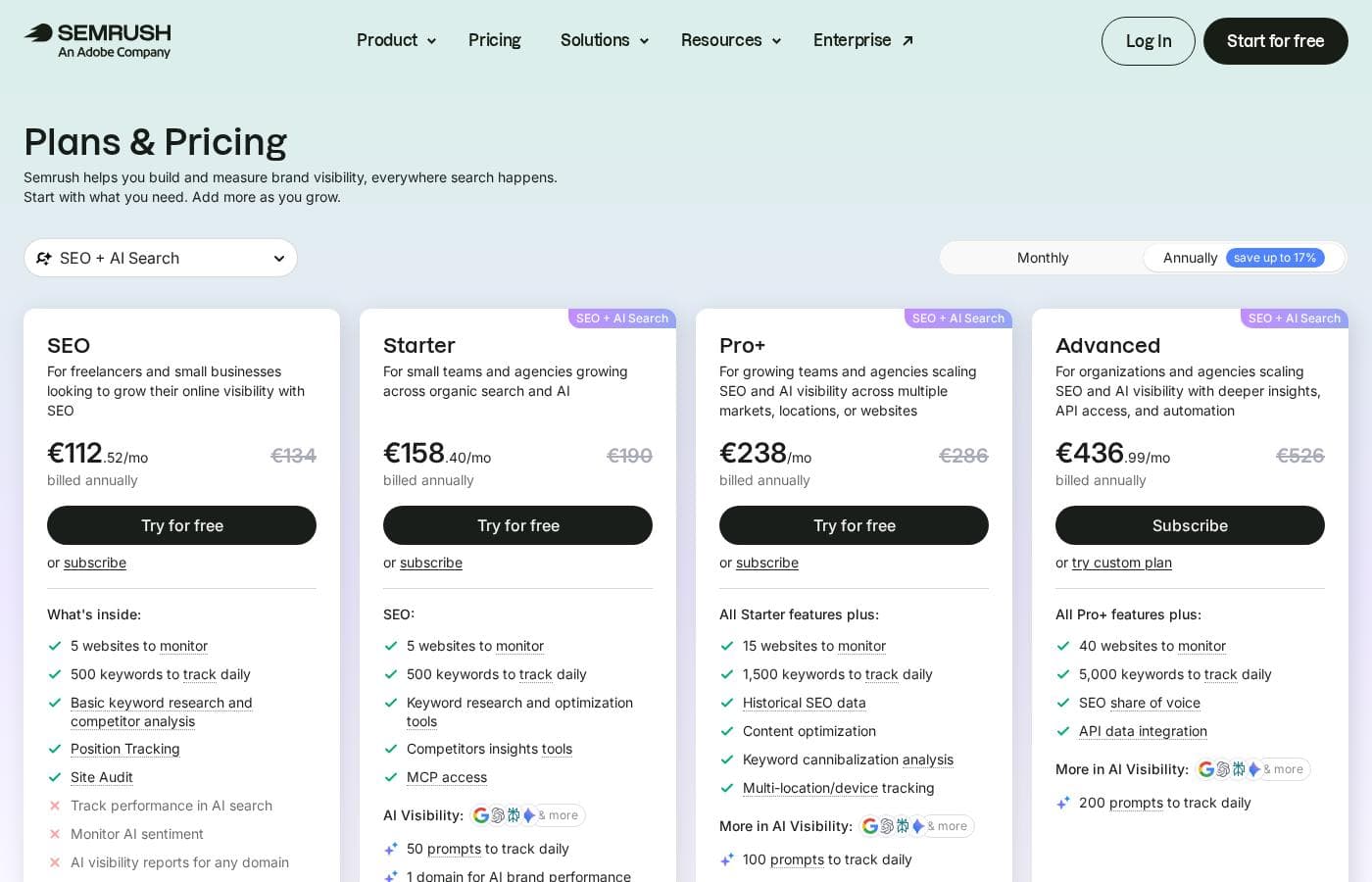
Semrush offers subscription plans across several tiers, with pricing that scales by features and usage limits. Exact plan prices and billing options are listed on Semrush's pricing page.
Semrush uses subscription pricing with several plan tiers, so what you pay depends on the features and usage limits your work requires.
Here's a plain-English look at how Semrush's pricing works and what to check before you commit.
Semrush sells its SEO and marketing toolkit as a recurring subscription. The pricing page splits the offering into tiers, and each tier bundles a different set of features. As you move up, you typically get more capacity and more advanced tools, while entry levels cover the basics for smaller workloads.
When you compare tiers, focus on the details that drive real cost: usage limits such as projects, tracked keywords, reports, and user seats. A higher tier only makes sense if you'll actually use that headroom. If you're a solo marketer or a small business, a lower tier is usually enough; agencies and larger teams benefit from room to scale.
It also helps to think about where you are today. If you're just getting started with SEO, a simpler plan keeps costs down while you learn the platform. If you manage several sites or clients, extra capacity spares you from hitting limits mid-month.
Billing period matters too. Many subscription tools discount annual commitments, so compare the monthly and yearly options to find the true cost of each plan.
Because prices and plan details change over time, it's worth a quick check before you buy. Confirm these basics on Semrush's live pricing page:
- Current prices for each plan, in both monthly and annual billing
- Usage limits per tier, such as projects, keywords, and user seats
- Whether a free trial or money-back guarantee is offered
Those few minutes give you a clear picture of total cost, and they protect you from surprises at renewal.
Overall, Semrush's subscription model lets you start at the level that fits your needs today and upgrade later as your SEO work grows. Match each tier's limits to your workload, and you'll pick the right plan without paying for capacity you won't use.