Parim Workforce Software vs Timely
Parim Workforce Software and Timely solve very different problems. Parim focuses on scheduling shifts, while Timely automates time tracking. It's like choosing between a calendar and a stopwatch.
Best for: Security firms needing to schedule guards and track compliance, Event staffing agencies managing hundreds of temporary shifts
Best for: Agencies needing accurate, automatic time tracking for client billing, Project managers who need real-time visibility into team utilization
A robust toolkit for shift-heavy operations.
We find Parim Workforce Software to be a comprehensive and well-structured solution for managing complex, shift-based teams. It excels at automating the entire cycle from scheduling to payroll, which can save significant administrative time. Overall, it’s a strong contender for agencies and businesses needing to scale operations with clarity and control.
Pros
- Comprehensive scheduling with templates, patterns, and self-service shifts.
- Automated time tracking, timesheet generation, and payroll calculation.
- Strong compliance features for managing rules, breaks, and certifications.
- Unlimited employees and locations across all plans for predictable scaling.
Cons
- Pricing is custom-quoted, lacking transparency on the website.
- No free trial or standard money-back guarantee mentioned.
- Feature availability depends entirely on the selected tier.
- Requires a demo or call to get detailed information.
Advanced Automation Met by Operational Growing Pains
Timely offers powerful, privacy-focused automatic time tracking that ensures high data accuracy for billing and project management. However, based on widespread user complaints, operational reliability and consistent support are ongoing concerns for many users. Overall, we recommend Timely for firms prioritizing advanced automation and design, provided they can tolerate potentially inconsistent customer service response times and isolated platform glitches.
Pros
- AI-powered automatic time tracking and quick timesheet generation.
- Privacy-first design (memories remain private until shared).
- Generally reported as easy to manage and set up.
- Integrates with project management and accounting tools (e.g., Jira, QuickBooks).
Cons
- Customer support is inconsistent and sometimes slow or unresponsive.
- Reports of recurring system glitches and reliability issues (e.g., server outages, UI bugs).
- Pricing perceived as expensive compared to the level of service provided.
- Lack of key automation features (e.g., manual refunds required, manual invoice sending).
AboutParim Workforce Software
Parim is a comprehensive workforce management platform. It's designed for businesses with complex, shift-based work. This includes security firms, event staffing agencies, warehouses, and hospitality teams. The software helps you schedule, track time, manage payroll, and ensure compliance—all in one place. 💡
AboutTimely
Timely is an automatic time tracking solution designed for businesses seeking to maximize their margins and drive profitability. It uses AI to capture work activity seamlessly in the background.
This approach eliminates manual input, ensuring you receive accurate, real-time data without interrupting current workflows. It is trusted by over 5,000 businesses and helps managers gain a complete, real-time view of resource allocation and project progress easily.
💡 Notably, Timely takes user privacy seriously; it operates with a strict anti-surveillance policy. Your tracked memories remain yours, and no manager can see them until you explicitly share them.
Highlights
Feature Comparison
Features Overview
We highlight the main differences and pick a winner for each feature.
Core Purpose
Parim Workforce Software manages people, schedules, and payroll. Timely automatically tracks time for accurate billing.
Parim Workforce Software is built for scheduling complex shifts. It handles long-term rotas, open shifts, and event staffing for hundreds of people. It also automates payroll calculations. Timely's core is automatic time tracking. Its AI captures all work activity in the background. It then drafts timesheets in seconds for review and submission. The key difference is focus. Parim Workforce Software answers "Who is working where and when?" Timely answers "How much time was spent on what?"
Time Tracking
Parim Workforce Software uses clock-ins. Timely tracks activity automatically without timers.
Parim Workforce Software relies on employees actively clocking in and out. They use a GPS-enabled mobile app, a kiosk, or NFC tags at job sites. Timely's Memory Tracker runs silently in the background. It records activity across apps and websites. Employees never need to start or stop a timer. The trade-off is intent. Parim Workforce Software captures location-based presence. Timely captures detailed, project-level work activity.
Scheduling & Rostering
Parim Workforce Software is a full scheduling powerhouse. Timely has basic project planning.
Parim Workforce Software lets you build long-term schedules with templates and patterns. You can publish open shifts for employees to claim. The Event Module handles massive, one-off staffing needs. Timely's Premium plan allows planning work for teams. It's useful for assigning hours to projects. It lacks complex shift scheduling, rotation patterns, or self-service shift claiming. For managing who works where and when, Parim Workforce Software is the clear leader. Timely is better for tracking time against pre-defined projects.
Reporting & Analytics
Parim Workforce Software reports on payroll and shifts. Timely reports on project costs and profitability.
Parim Workforce Software provides pay run reports, timesheet analytics, and invoicing reports. The focus is on operational and financial metrics for workforce management. Timely offers customizable reports on time allocation, project health, and budgets. It includes capacity planning and billable rate analysis. The data serves different goals. Parim Workforce Software helps manage labor costs. Timely helps maximize project margins and profitability.
Mobile Experience
Parim Workforce Software's app is for clocking in and requests. Timely's app is for viewing data.
Parim Workforce Software's mobile app is a primary tool for employees. They use it to clock in/out with GPS, view schedules, and request time off. It's designed for frontline, deskless workers. Timely's mobile app allows users to review their tracked time and memories. The actual tracking happens automatically on desktop. The app is more of a companion for on-the-go review. This reflects their user base. Parim Workforce Software serves a mobile, distributed workforce. Timely serves office-based or knowledge workers.
Pricing & Transparency
Timely has clear per-user pricing. Parim Workforce Software uses custom quotes.
Timely publishes all its prices. You pay $9-$28 per user per month depending on the plan. You know the cost before you sign up. Parim Workforce Software requires you to book a demo. They then provide a custom quote based on your needs. Pricing details aren't public. Transparency goes to Timely. Parim Workforce Software's model is common for enterprise software but less upfront.
Integrations
Timely connects to project management and accounting tools. Parim Workforce Software's integrations are not detailed.
Timely Premium and above integrate with Jira, Asana, monday.com, ClickUp, and QuickBooks Online. This fits a professional services workflow. Parim Workforce Software does not list specific integrations on its site. It mentions a "dedicated staff + management apps" but no details. For connecting to a wider software stack, Timely provides clearer, ready-made options out of the box.
Customer Support
Timely has mixed reviews on support. Parim Workforce Software's support details are unclear.
Timely user reviews are split. Some praise quick, helpful support. Others complain about slow responses and unresolved bugs. Support level varies by plan. Parim Workforce Software mentions "dedicated staff + management apps" but doesn't detail channels or response times. You must ask during sales. Based on available data, Timely's support is more visible, though inconsistent. Parim Workforce Software's is opaque.
Privacy & Surveillance
Timely is built on a strict privacy-first policy. Parim Workforce Software uses GPS tracking.
Timely is explicitly an anti-surveillance tool. Memory data is private until a user chooses to share it. This builds employee trust. Parim Workforce Software uses GPS for clock-in verification. This tracks employee location at the start and end of shifts for compliance. The philosophical difference is stark. Timely prioritizes privacy for time data. Parim Workforce Software prioritizes location verification for scheduling compliance.
Ease of Use
Timely is noted for being easy to set up. Parim Workforce Software handles complex workflows.
Multiple Timely reviews highlight its ease of use and intuitive setup. The automatic tracking reduces user friction. Parim Workforce Software manages complex scheduling, payroll rules, and compliance. This inherently creates a steeper learning curve for administrators. For a simple, quick start, Timely wins. For managing intricate operational needs, Parim Workforce Software's complexity is a necessary trade-off.
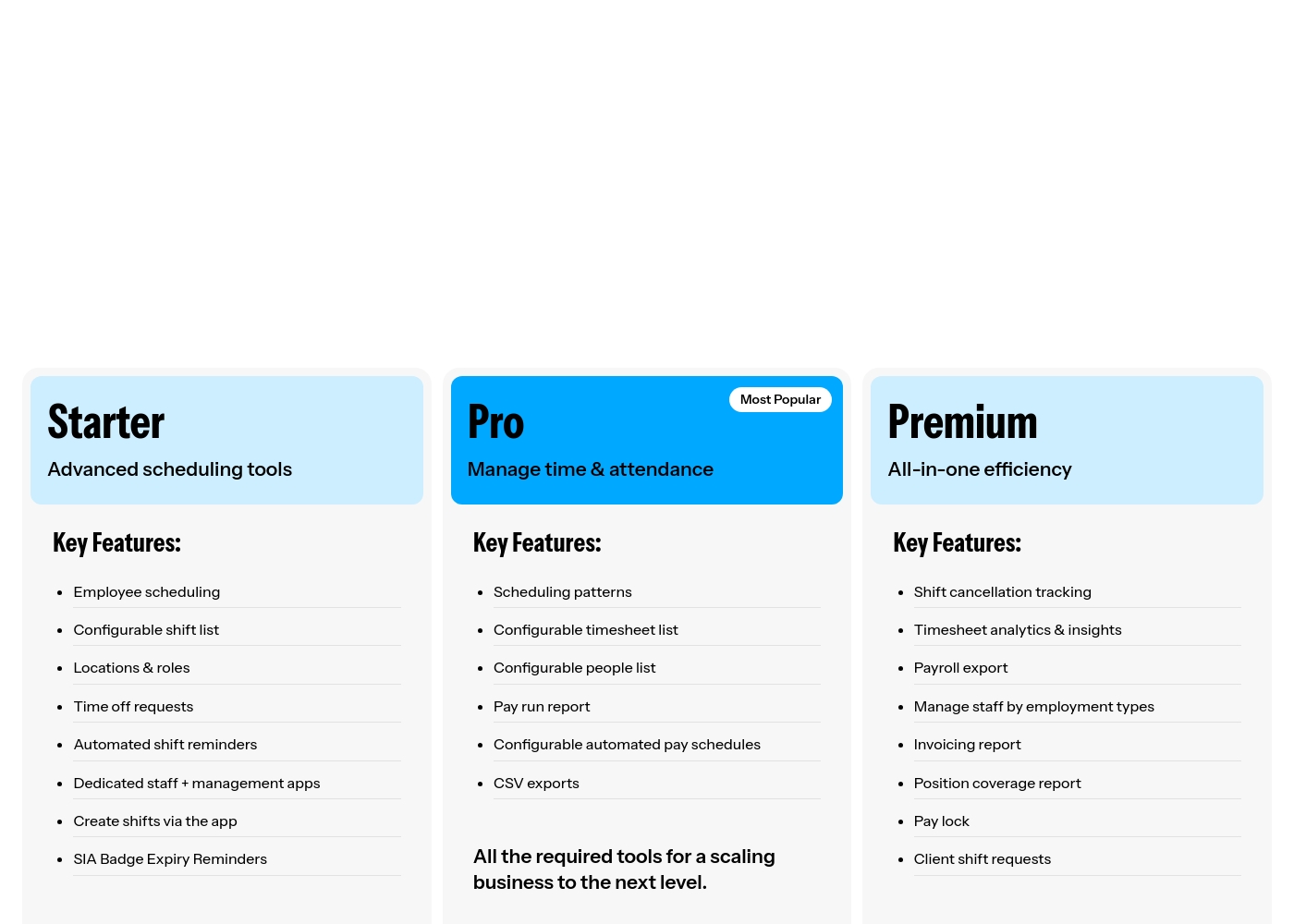
Parim Workforce Software pricing: Parim Workforce Software offers three tiered service levels—Starter, Pro, and Premium—with custom pricing based on your specific business needs. The platform includes unlimited employees and manager seats in every plan to help your operations grow without extra costs per person. 🚀
Take a look at the breakdown of our features below to see which plan fits your workflow best.
Starter
Best For: Advanced scheduling tools Other Features:
- Employee scheduling
- Configurable shift list
- Locations & roles
- Time off requests
- Automated shift reminders
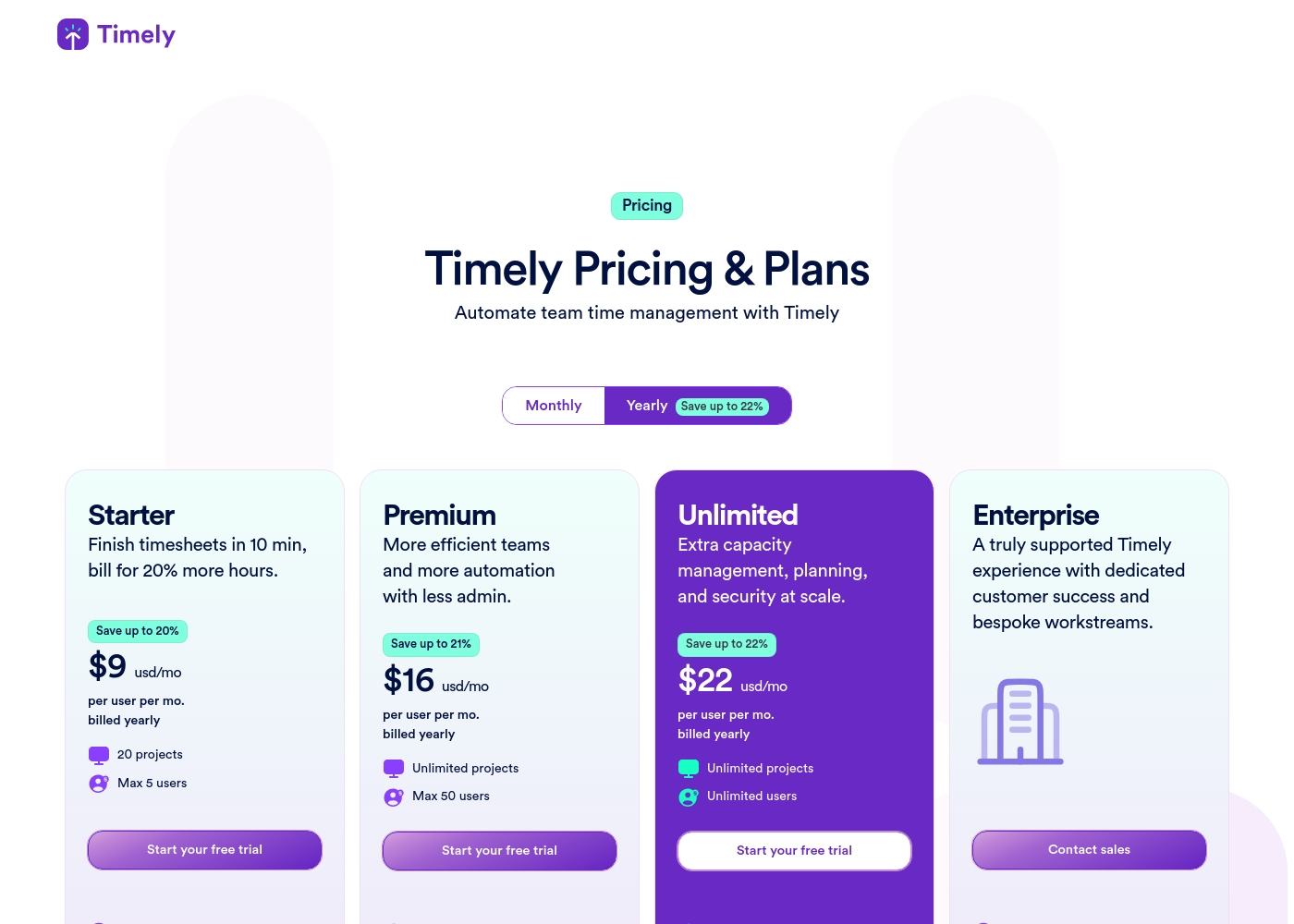
Timely costs between $9 and $28 per user, per month, with three defined subscription plans: Starter at $9 annually, Premium at $16 annually, and Unlimited at $22 annually (plus a custom Enterprise option).
Here’s a clear breakdown of the flexibility offered in each plan, allowing you to choose the perfect fit for your organization.
Starter
Price: $9 USD/mo per user (billed yearly) or $11 USD/mo per user (billed monthly) Best For: Teams aiming for fast timesheet completion and increased billable hours. Other Features:
- Automatic time tracking and AI timesheets
- Monitor project health
- Api access
- In-app support
- Automatic time tracking
- AI timesheets
- Monitor project health
- Track time on thousands of apps and websites
- In-app support
- All Starter features
- Sync work with project management tools
- Integrate with accounting tools
- Team management
- Manage budgets and costs
- All Premium features
- Unlimited usage
- Capacity management and reporting
- Overtime and undertime
- Azure User Management
- All Unlimited features
- Tailored onboarding and set up
- Premium Timely team training
- Monthly/Quarterly reviews
- Dashboard and reporting support
Pricing Notes
- Parim Workforce Software pricing is not public; you must contact sales for a demo and quote.
- Timely offers transparent per-user pricing with a 14-day free trial for all features.
- Parim Workforce Software includes unlimited employees and locations in all plans, so cost isn't per-seat.
- Timely's annual billing saves up to 22% compared to monthly billing.
Pricing Head-to-Head
User Reviews
Our external review check hit a wall. The Trustpilot page for Parim returned a 403 error, so we couldn't access any user reviews or ratings.
The Capterra page wasn't provided. Therefore, we have no external review data to summarize from these sources.
Timely reviews present a stark contrast regarding user experience. Users frequently praise the software for its general ease of use and straightforward setup, often finding it intuitive for managing client appointments across salons of varying sizes.
However, customer support is arguably the most divisive topic. While several reviewers highlight individual support agents as quick and incredibly helpful 🤗, others complain about chronic issues, including a lack of 24-hour phone support and agents dismissing small bug reports as low priority.
I’ve been using Timely over three years and always felt well supported by their team. It's easy to manage and set up the system. When I need assistance, I always receive a helpful answer quickly!
Our Verdict
This isn't a fair fight. Parim Workforce Software and Timely are tools for different jobs. Choosing one means the other likely isn't your right solution. Parim Workforce Software is a complete workforce management machine. Its superpower is automating the entire cycle from complex shift scheduling to final payroll. It's built for businesses like security firms or event agencies where managing who works where and when is the main challenge. Timely's superpower is automatic, accurate time tracking. It runs silently in the background, capturing every minute without timers. This is perfect for project-based teams, like agencies, that need bulletproof data for client billing and profitability analysis. The deciding factor is your core problem. If your headache is creating schedules, tracking attendance, and calculating pay for a mobile workforce, pick Parim Workforce Software. If your headache is getting accurate, non-invasive time data to bill clients and manage projects, pick Timely. For most shift-heavy operations, Parim Workforce Software is the more comprehensive solution. For professional services firms focused on billable hours, Timely is the specialized tool. Check their pricing models—Timely is transparent, while Parim Workforce Software requires a sales call.
Frequently Asked Questions
Which is better for small teams: Parim Workforce Software or Timely?
Timely is likely better for small, project-based teams. Its Starter plan is designed for up to 5 users and offers simple, automatic time tracking. Parim Workforce Software is built for larger, shift-heavy operations, though its pricing is custom.
Does Parim Workforce Software have automatic time tracking like Timely?
No. Parim Workforce Software uses active clock-in methods like a mobile app, kiosk, or NFC. Timely uses an automatic AI tracker that works in the background without user input.
Can I use Timely for scheduling employee shifts?
Timely has basic planning features on higher plans, but it's not a scheduling tool. Parim Workforce Software is specifically designed for complex shift scheduling, rostering, and event staffing.
Is Timely worth the extra cost over Parim Workforce Software?
They solve different problems. Timely's cost is per user for automatic time tracking. Parim Workforce Software's cost is a custom quote for full workforce management. Compare based on your primary need: billing accuracy or shift operations.
Does Parim Workforce Software integrate with payroll systems?
Parim Workforce Software automates payroll calculations and generates exportable reports. Specific integrations with external payroll software aren't detailed on their site.
How does Timely handle employee privacy?
Timely has a strict privacy-first policy. All tracked activity is called a 'memory' and remains completely private to the user until they explicitly choose to share it for a timesheet.
Ready to Choose?
Both tools have their strengths. Choose based on your specific needs.