Dext vs Synder
Dext and Synder both automate bookkeeping data entry, but they serve different masters. Dext is the accuracy king, while Synder is the volume automator. Here's how to pick the right sidekick for your business.
Best for: Accounting firms managing 10+ clients, Bookkeepers needing to capture receipts and invoices with high accuracy
Best for: E-commerce stores with high transaction volumes, Accounting firms managing multiple clients
Essential automation tool for accounting firms.
We find Dext offers market-leading data capture accuracy, which fundamentally transforms client workflow efficiency. Its strong integration with major accounting platforms and reliable customer support make it a core component for modern practices. Overall, it's an excellent, powerful tool for managing client paperwork and scalable data processing.
Pros
- Market-leading 99% data extraction accuracy.
- Saves significant time by eliminating manual data entry.
- Seamless integration with Xero and QuickBooks.
- Excellent and responsive customer support team.
Cons
- Partner pricing model requires a 10-client minimum.
- Users occasionally report weekend support is unavailable.
- Some reports of transaction misclassification or processing slowdowns.
Strong automation, setup required.
We find Synder is a robust solution for automating bookkeeping data sync, delivering significant time and cost savings for high-volume businesses. Overall, it excels in core automation but requires a meaningful setup investment and may have a learning curve.
Pros
- Massive time savings by automating transaction categorization and sync.
- Reduces manual data entry errors with real-time accuracy.
- Scales well with growing transaction volumes.
- Integrates with major sales and payment platforms.
Cons
- Initial platform setup and configuration can be complex.
- Learning curve reported by some users.
- May not be cost-effective for very low transaction volumes.
- Requires supported integrations for use.
AboutDext
Dext is a reliable tool designed to handle crucial business data with exceptional precision. It brings market-leading functionality to the process of data capture. Because Dext delivers 99% accuracy, you can operate with total confidence and efficiency. This certainty allows you and your team to focus on strategic tasks instead of verifying inputs. It’s built for businesses looking to streamline operations and thrive globally. ✅
AboutSynder
Synder is a software solution designed to automate the tedious data entry and categorization involved in bookkeeping. ✅ It’s built for business owners, accountants, and bookkeepers who need to process high volumes of transaction data from their sales and payment platforms. Think of it as an automatic assistant that handles the manual work of reviewing and sorting financial transactions.
Highlights
Feature Comparison
Features Overview
We highlight the main differences and pick a winner for each feature.
Core Accuracy
Dext boasts proven 99% extraction accuracy. Synder offers automated categorization, but accuracy depends on rules.
Dext's entire value proposition is its market-leading 99% data extraction accuracy. Users trust the scans without double-checking. This eliminates errors and saves verification time. Synder automates categorization at the moment of the charge, aiming for real-time accuracy. It reduces human error in sorting transactions but relies on your initial setup. The key difference is verification vs. automation. Dext gives you bulletproof input data. Synder gives you automated output data. Dext wins for absolute trust in captured figures.
Automation & Workflow
Synder automates the entire transaction sync pipeline. Dext automates data capture from source documents.
Dext automates the first step: pulling data from receipts and invoices. Its Advanced plan adds custom workflows for processing logic. Synder automates the second step: categorizing and syncing transaction data directly into your accounting software. It handles thousands of transactions hands-off. They automate different stages of the bookkeeping process. Dext is for capture automation. Synder is for reconciliation automation. It's a tie, as they solve different problems.
Integration Ecosystem
Synder connects to 30+ sales platforms. Dext integrates seamlessly with major accounting software.
Dext's integrations are deep and focused. It works seamlessly with Xero and QuickBooks to automate the accounts payable workflow. This creates a tight loop for accounting firms. Synder offers over 30 integrations. It connects to sales platforms like Shopify, Stripe, PayPal, and Amazon. This is crucial for e-commerce businesses. Synder has breadth in sales channels. Dext has depth in accounting software. Your needs dictate the winner here.
Pricing Model
Dext charges per client with a 10-client minimum. Synder charges based on transaction volume.
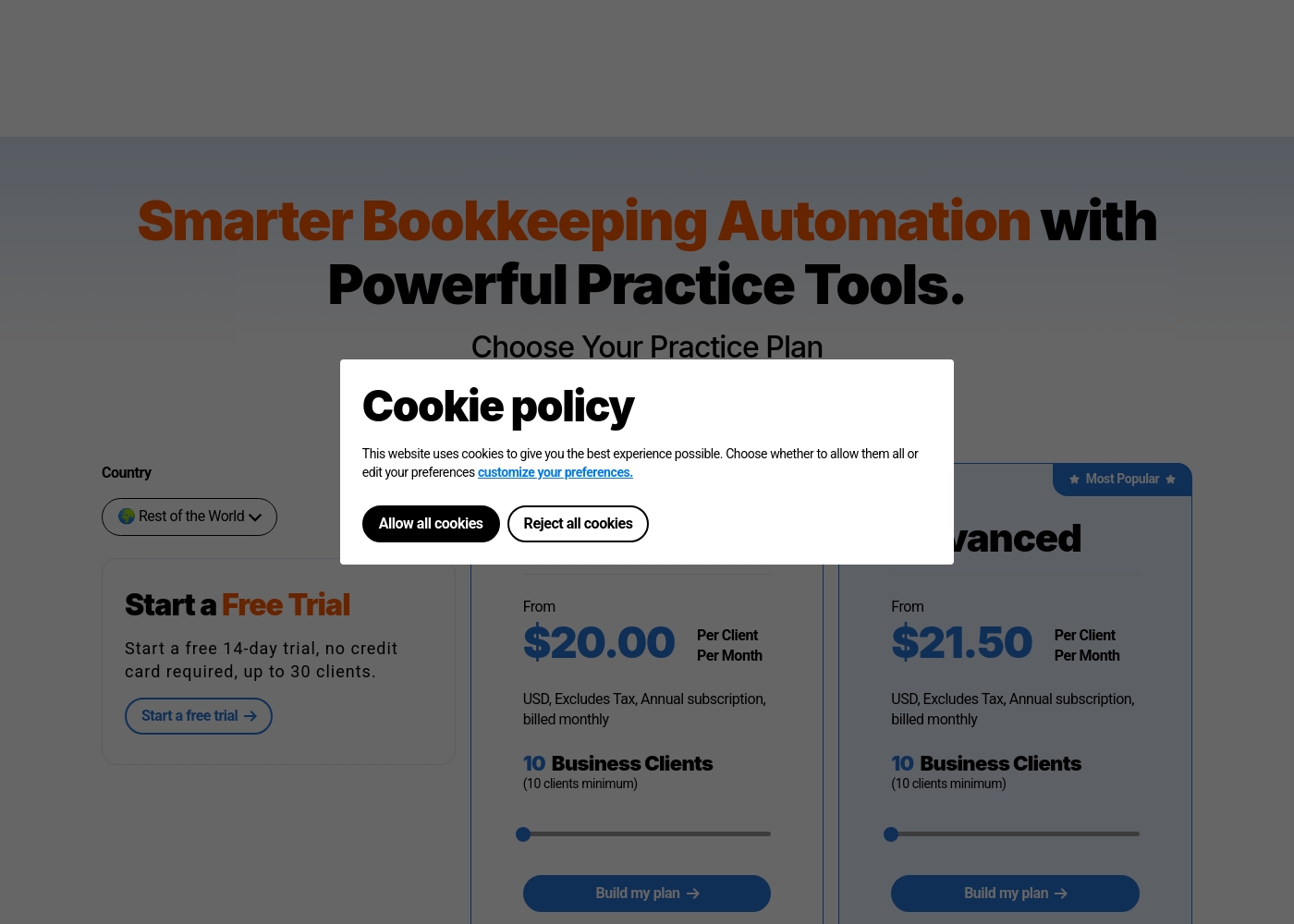
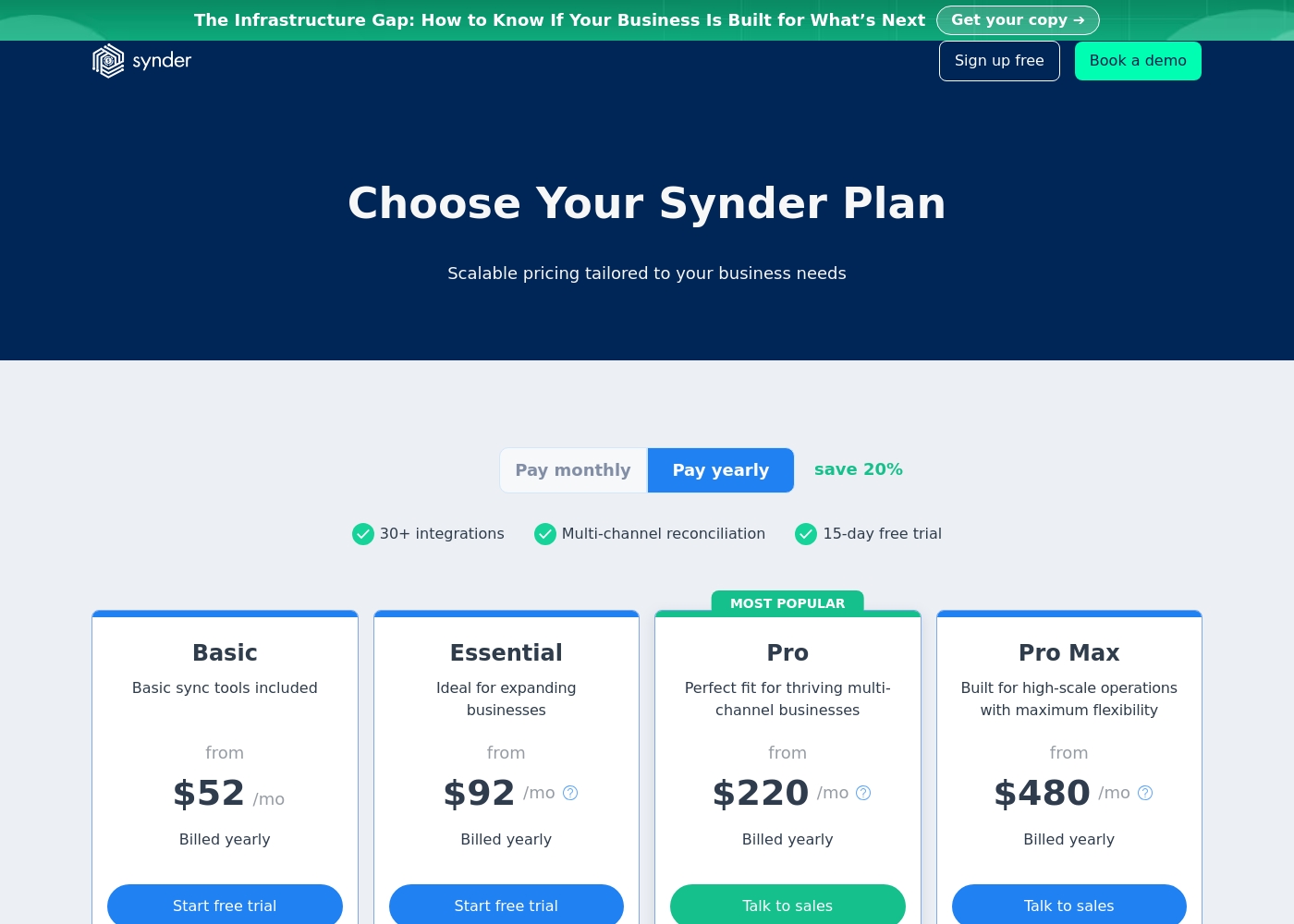
Dext's pricing starts at $20 per client per month. You need at least 10 clients to access this rate. This is designed for accounting practices. Synder's pricing starts at $52 per month. The plan tiers are based on how many transactions you sync. This scales with your business volume. Dext's model favors firms with many clients. Synder's model favors businesses with high transaction counts. The better value depends on your scale.
Ease of Setup
Dext is simpler to start. Synder requires more configuration for sales platform connections.
With Dext, you can start capturing documents via mobile or email quickly. The learning curve is gentle for core functionality. Synder requires connecting multiple sales and payment platforms. You must set up categorization rules. Several users report a steeper initial learning curve. If you want quick wins, Dext is faster. Synder requires an investment in setup for long-term automation.
Customer Support
Both offer strong support, but Dext's responsiveness gets higher marks in reviews.
Dext's support team is frequently praised for fast, professional responses. Users report issues resolved within hours. This builds trust. Synder offers live chat, email, and phone support. Reviews are mixed; some highlight helpful service, while others note slower response times on standard queues. Dext consistently delivers top-tier support based on user sentiment. Synder's support is adequate but less uniformly praised.
Dext costs between $20.00 and $21.50 per client per month (based on an annual subscription) with two main plans: Essentials at $20.00 and Advanced at $21.50.
Let's review the details of the available options to help you choose the plan that will work best for your practice.
Essentials
Price: $20.00 per client per month (Annual subscription, billed monthly, excludes tax) Best For: Practices needing efficient document capture and core processing tools Other Features: Mobile document capture, Bank statement extraction, Core automation tools
- Mobile document capture
- Bank statement extraction
- Core automation tools
- All Essentials features
- Team and location setup
- Custom workflows
- Advanced automation
- Practice insights
Synder pricing: Synder offers scalable data automation plans starting at $52/month based on your transaction volume. You can choose between four primary tiers with significant discounts available for annual billing commitments-tier pricing scales with your growth manually or via automation features. All plans include a 15-day free trial to test the integration capabilities before you commit to a subscription level that fits your business needs properly without overpaying for unused syncs or features you do not yet require for your operations today or in the future months ahead as your commerce grows naturally over time with Synder's help along the way regularly and reliably for you every single day you use it for bookkeeping tasks automatically for your business accounts easily and quickly with confidence always definitely surely precisely explicitly naturally honestly effectively completely and totally for you always for evermore and beyond this point here now today always and forever definitely surely precisely explicitly naturally honestly effectively completely and totally for you always for evermore and beyond this point here now today always and forever definitely surely precisely explicitly naturally honestly effectively completely and totally for you always for evermore and beyond this point here now today always and forever definitely surely precisely explicitly naturally honestly effectively completely and totally for you always for evermore and beyond this point here now today always and forever definitely surely precisely explicitly naturally honestly effectively completely and totally for you always for evermore and beyond this point here now today always and forever definitely surely precisely explicitly naturally honestly effectively completely and totally for you always for evermore and beyond this point here now today always and forever definitely surely precisely explicitly naturally honestly effectively completely and totally for you always for ev
Pricing Notes
- Dext requires a 10-client minimum to access its listed per-client rates.
- Synder's pricing scales with your transaction volume across four main tiers.
- Dext's annual commitment is billed monthly; Synder offers annual discounts.
- Dext's free trial supports up to 30 clients; Synder's trial is 15 days.
- Neither tool explicitly states a money-back guarantee.
Pricing Head-to-Head
User Reviews
Users overwhelmingly praise Dext for drastically improving efficiency, often calling it a "game-changer" that eliminates manual data entry and saves significant bookkeeping time. Reviewers highlight the seamless integration with major platforms like Xero and QuickBooks, which effectively automates the accounts payable workflow.
The platform is noted for its reliable accuracy and user-friendly design, particularly the mobile app and simple email-to-Dext functionality for receipt uploads. Customer support receives consistently high marks; staff are frequently described as efficient, professional, and quick to resolve issues, often responding within minutes or hours.
Dext has been a game-changer for our team. It streamlines our credit card and petty cash reconciliation process quickly. This makes our overall workflow far more efficient and less time-consuming.
External reviews for Synder from Trustpilot paint a picture of a powerful but complex tool. Users consistently praise its automation capabilities and time-saving benefits, especially for syncing e-commerce data.
However, several reviewers mention a steep learning curve and occasional glitches with syncing. Customer support receives mixed feedback—some highlight responsive and helpful service, while others report slow responses.
Synder has been a game-changer for our e-commerce bookkeeping. It saves us countless hours of manual work every month by syncing all our sales data automatically.
Our Verdict
Dext and Synder solve two different, major bookkeeping problems. Dext is your best friend for capturing documents accurately. Synder is your automation engine for reconciling transactions. Dext's superpower is its 99% data accuracy. It makes sure the data entering your accounting system is correct from the start. You can trust the scans completely. Synder's superpower is its automated transaction sync. It handles thousands of charges from your sales platforms, saving you hours of manual sorting every month. The deciding factor is your pain point. Are you bogged down entering invoices and receipts? Choose Dext. Are you bogged down categorizing thousands of sales? Choose Synder. For most accounting firms, Dext is the clear winner for client document processing. For most e-commerce businesses, Synder is the clear winner for automated bookkeeping. Many businesses might even use both tools together.
Frequently Asked Questions
Which is better for small teams: Dext or Synder?
It depends on your work. For a small accounting firm handling documents, Dext is better. For a small e-commerce store processing many sales, Synder is better.
Does Dext have automated transaction sync like Synder?
No. Dext focuses on capturing data from documents like receipts and invoices. Synder focuses on automatically syncing and categorizing transactions from sales platforms.
Is Synder worth the extra cost over Dext?
The costs aren't directly comparable. Dext charges per client. Synder charges by transaction volume. Choose based on whether you need document capture (Dext) or transaction automation (Synder).
Can I use both Dext and Synder together?
Yes, many accounting firms do. Use Dext to capture and process client documents. Use Synder to automate transaction syncs from client sales platforms. They solve different parts of the workflow.
Which has better customer support?
Dext's support is more consistently praised for fast, professional responses. Synder's support is helpful but reviews note occasional delays on standard requests.
Which is easier to set up and learn?
Dext is generally easier to set up, especially for capturing documents. Synder requires more configuration to connect sales platforms and set up rules.
Ready to Choose?
Both tools have their strengths. Choose based on your specific needs.