Cognism vs Ignition
Cognism and Ignition serve completely different business needs, making this a unique comparison. Cognism is a B2B data platform for sales teams, while Ignition automates proposals and billing for service businesses. The choice hinges on whether you need leads or streamlined client payments.
Best for: B2B sales and marketing teams targeting European markets., Mid-market and enterprise revenue operations teams scaling pipeline.
Best for: Freelancers and agencies tired of manual invoicing., Consultants and service providers billing by project or retainer.
Strong European Data, But Pricy
We found Cognism to be a robust platform for B2B sales teams targeting Europe, with its phone-verified data and compliance focus standing out. Overall, it delivers real value for pipeline building, but the custom pricing and onboarding curve require careful consideration.
Pros
- Excellent phone-verified contact data for higher connect rates.
- Strong compliance and GDPR/CCPA adherence for European markets.
- Generally easy-to-use interface after initial setup.
- Responsive customer support is frequently praised.
Cons
- Pricing is opaque and generally considered expensive.
- Onboarding process can be challenging for new users.
- Data accuracy can be inconsistent or outdated in some cases.
- May not be ideal for very small teams or non-European markets.
Solid automation for getting paid faster.
We found Ignition to be a robust platform that truly automates the proposal-to-payment cycle, saving service businesses considerable admin time and improving cash flow. Overall, it's an excellent choice for firms wanting to professionalize their client onboarding and eliminate manual invoicing work.
Pros
- Automates proposals, agreements, and upfront billing in one flow.
- Helps eliminate manual payment chasing and reduces accounts receivable delays.
- Provides professional templates and tools to upsell and capture additional work.
- Saves significant admin time with bulk actions and automated renewals.
Cons
- Pricing, likely annual, may be a barrier for some budgets.
- Requires commitment to a specific workflow, not a simple standalone invoicer.
- Initial setup and learning curve can be steep for some users.
- May have limitations with deep integrations for non-standard accounting software.
AboutCognism
Cognism is a B2B data and sales intelligence platform designed for revenue teams selling into European markets. 🎯 It focuses on providing accurate, compliant contact data—especially phone-verified mobile numbers—to help sales and marketing teams identify and reach decision-makers. The platform is built for SMBs, mid-market, and enterprise teams who need to navigate Europe's complex regulatory landscape and diverse local markets.
AboutIgnition
Ignition is a platform for service businesses that want to automate proposals, agreements, and billing. 🔄 It's designed for professionals who bill clients for projects or recurring work. The goal is to make getting paid a seamless, automatic part of starting a new engagement.
Highlights
Feature Comparison
Features Overview
We highlight the main differences and pick a winner for each feature.
Core Platform
Cognism finds leads; Ignition closes and bills for them. They solve entirely different problems.
Cognism is a B2B data engine. It provides phone-verified contacts and company data for sales teams. Ignition is a proposal-to-payment platform. It automates agreements, collects payments, and manages billing for service businesses. Cognism helps you find who to sell to. Ignition helps you get paid for the work you do. Think of Cognism as your top-of-funnel data source. Ignition is your back-office automation for client revenue.
Data & Compliance
Cognism specializes in verified European data. Ignition doesn't handle business intelligence data.
Cognism focuses on GDPR/CCPA compliance and phone-verified mobile data. It refreshes senior contacts every 30 days. Ignition's data focus is on internal business metrics like pricing insights. It doesn't provide external market or contact data. Cognism's strength is navigating complex European data regulations. Ignition doesn't compete in this space. If you need compliant leads from Europe, Cognism is the clear choice. Ignition is irrelevant for this need.
Workflow Automation
Cognism automates data enrichment. Ignition automates the entire client billing lifecycle.
Cognism automates finding and enriching contacts in your CRM. It saves time on manual prospecting research. Ignition automates sending proposals, collecting signatures, and starting billing. It eliminates manual invoice chasing entirely. Cognism's automation is about lead generation. Ignition's automation is about revenue operations and getting paid. A sales team automates prospecting with Cognism. An agency automates client onboarding with Ignition.
Target Audience
Cognism serves B2B sales teams. Ignition serves service-based businesses and freelancers.
Cognism is built for SMB to enterprise sales teams. It's ideal for companies with 5+ reps selling in Europe. Ignition targets freelancers, agencies, and consultants. It's for anyone who bills clients for projects or retainers. Cognism helps businesses find new customers. Ignition helps businesses monetize and manage existing client relationships. A software company selling to enterprises would use Cognism. A marketing agency billing clients would use Ignition.
Pricing & Transparency
Cognism requires a custom quote. Ignition offers transparent, tiered public pricing.
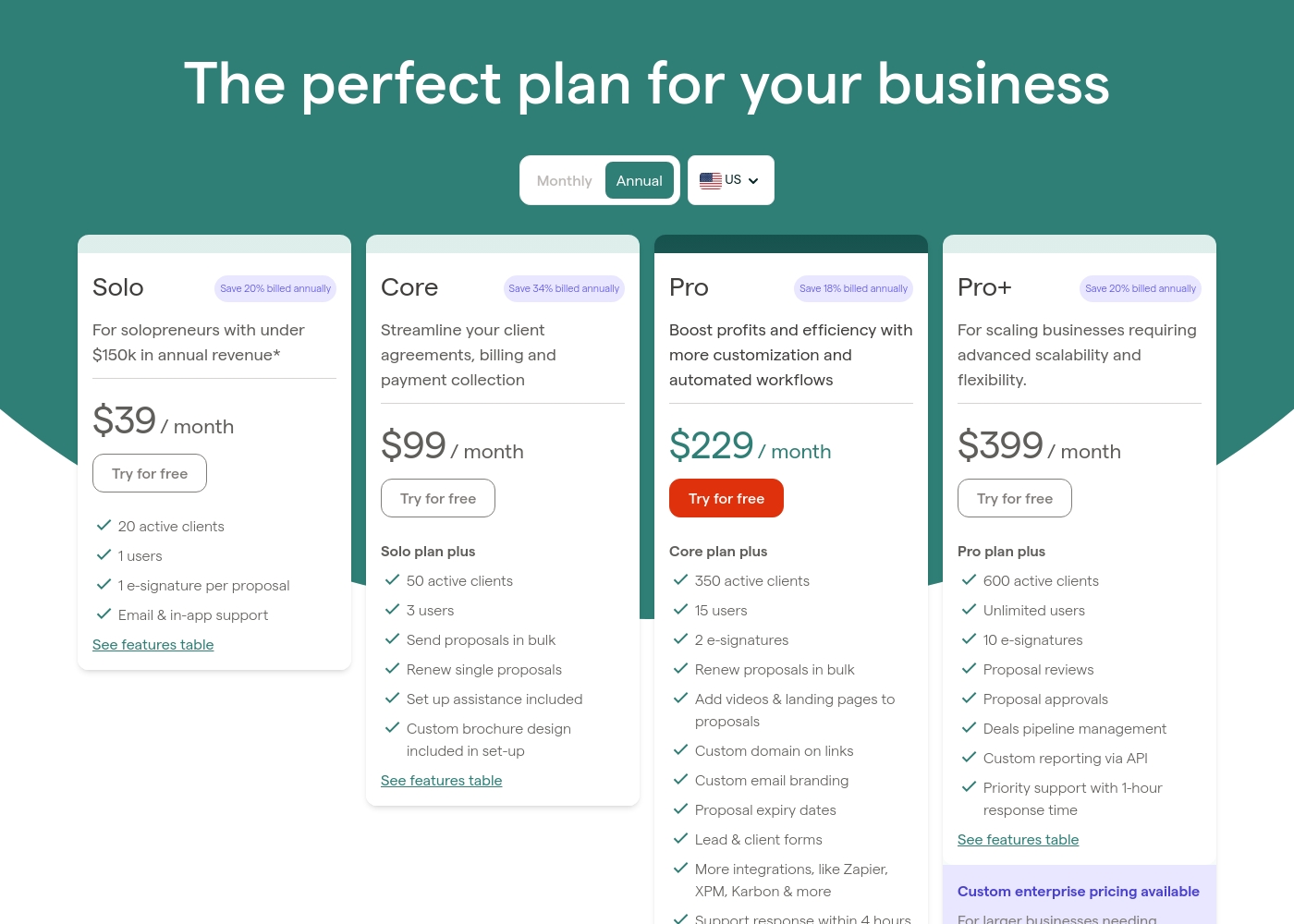
Cognism uses custom, subscription-based pricing with a credit system. You must contact sales for a quote. Ignition lists clear plan tiers with monthly or annual billing. Prices start at $49/month for the Solo plan. Cognism's opacity makes budgeting harder upfront. Ignition's transparency lets you calculate costs immediately. For predictable budgeting, Ignition wins. For custom enterprise deals, Cognism's model is standard.
CRM Integration
Both integrate with CRMs, but Cognism's are more deeply embedded for sales workflows.
Cognism integrates natively with Salesforce, HubSpot, and Pipedrive. Data flows directly into your sales CRM. Ignition integrates via Zapier and specific tools like XPM and Karbon. It's more about connecting to your accounting stack. Cognism's integrations are for lead flow into your sales pipeline. Ignition's are for connecting proposals to your financial systems. A sales rep uses Cognism's HubSpot integration daily. An accountant uses Ignition's XPM link.
Onboarding & Support
Both offer guided onboarding. Cognism emphasizes account managers; Ignition highlights response times.
Cognism provides a guided onboarding process. Pro plans include a dedicated account manager. Ignition offers setup assistance on Core plans and above. Support response times range from 1 to 4 hours based on plan. Cognism's support model feels more enterprise-focused. Ignition's is clearly tiered for different customer levels. Both companies have users who praise their support teams.
Scalability
Cognism scales by data volume and team seats. Ignition scales by number of clients and users.
Cognism scales for growing sales teams. You add seats and purchase more credits for larger outreach. Ignition scales for growing client bases. Higher plans support more active clients and users. Cognism's scale is about prospecting reach. Ignition's scale is about managing more client agreements. An enterprise sales org scales Cognism for global teams. An agency scales Ignition to handle more accounts.
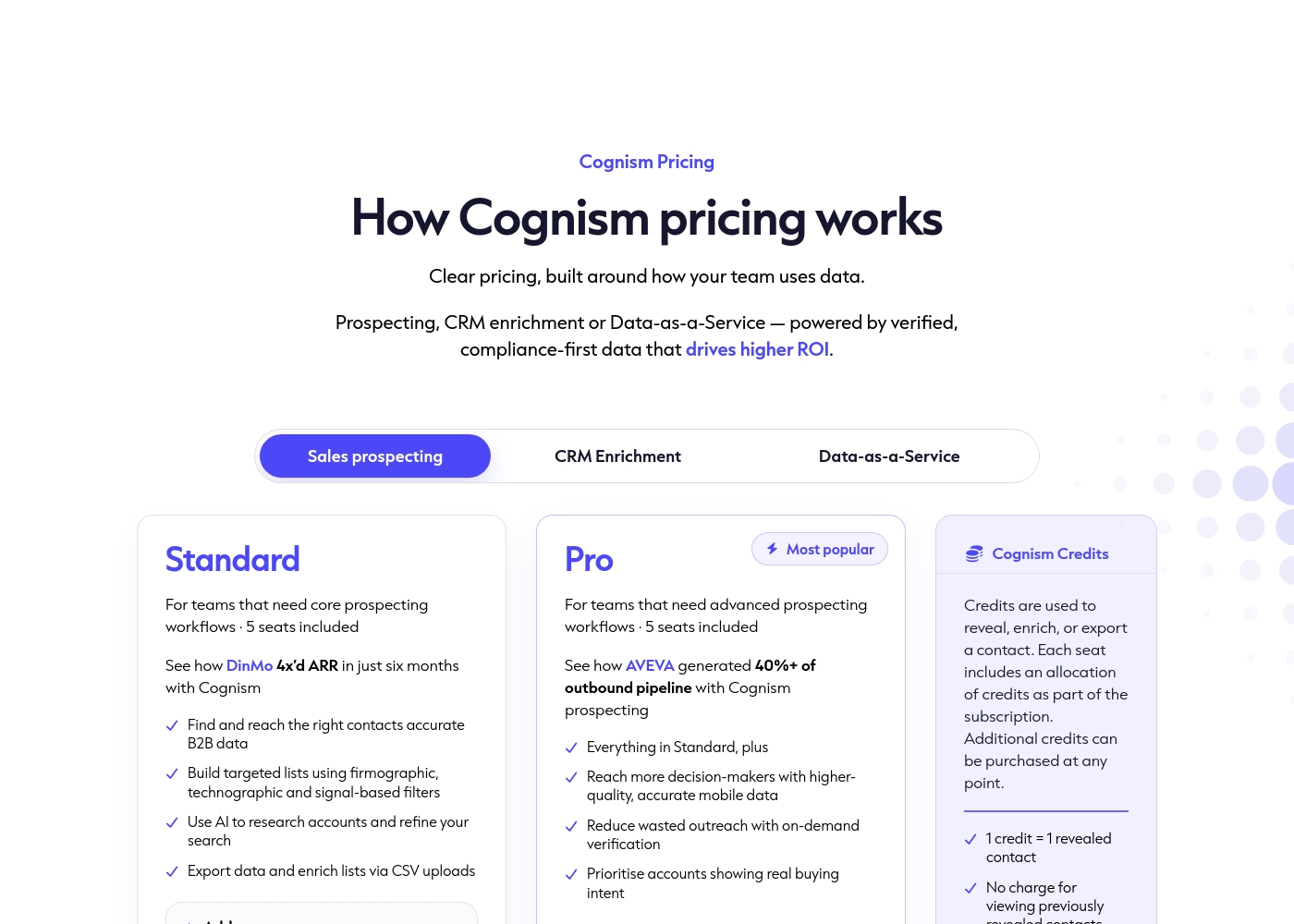
Cognism pricing: Cognism offers custom subscription-based pricing tailored to your team size and data needs. The platform features two core prospecting tiers, Standard and Pro, alongside available add-ons for CRM enrichment and API access segments to ensure you only pay for what you use.
All pricing and seats are designed to scale with your team's growth and data volume requirements. Please contact their sales team for a personalized quote tailored to your specific goals and seat requirements.
No prices are publicly listed, as each plan is custom-tailored to the business needs of the user. Their platform uses a credit-based model for revealing, enriching, or exporting company and contact records to keep your team up to date with the latest information.
Ignition pricing: Plans from 0 Plans range: 0–200
Pricing Notes
- Cognism pricing is completely custom and opaque, requiring a sales call.
- Ignition has clear, public pricing with tiers based on active clients and users.
- Cognism uses a credit system for data reveals, adding a usage-based cost on top of the subscription.
- Ignition offers significant savings with annual billing, but requires a commitment.
Pricing Head-to-Head
User Reviews
We found mixed sentiment in external reviews for Cognism. Users consistently praise the high accuracy and quality of phone-verified data, which helps connect with decision-makers.
Many also highlight the platform's ease of use and strong customer support. However, recurring complaints focus on high pricing that isn't transparent, onboarding challenges, and occasional data reliability issues, like outdated contacts.
The data quality is top-notch, especially the mobile numbers. It's made a real difference in our outreach. Support has been helpful whenever we had questions.
Based on external reviews, Ignition receives praise for automating proposals and billing, which users say saves significant time and eliminates payment chasing. Many appreciate the professional client experience and ease of use, especially for integrating agreements and upfront payments.
💡 However, recurring concerns include pricing, which some find expensive, and occasional technical glitches or integration issues. Support responsiveness is noted as a highlight by many, though a few mention a steep initial learning curve and that the annual billing model isn't ideal for all budgets.
Ignition has transformed our proposal and billing process. Getting payment details upfront means we never chase invoices anymore. The automation saves our team hours every week.
Our Verdict
Cognism and Ignition are not competitors. They solve completely different problems for different businesses. Choosing between them depends on your core need: finding leads or getting paid. Cognism's superpower is high-quality, compliant B2B data for Europe. Its phone-verified contacts promise higher connect rates for sales teams navigating complex markets. Ignition's superpower is automating the proposal-to-payment lifecycle. It eliminates manual invoicing and ensures you collect payment upfront, fixing cash flow headaches. The deciding factor is your biggest bottleneck. Is it filling your pipeline? Choose Cognism. Is it chasing payments and managing client admin? Choose Ignition. If you're a sales team hunting for European leads, Cognism is your tool. If you're a service business tired of invoicing, Ignition is your solution. They're best used by different teams for different goals.
Frequently Asked Questions
Can I use Cognism to send proposals and collect payments?
No. Cognism is a B2B data platform for finding contact information. It does not have proposal creation or billing features. For that, you need a tool like Ignition.
Does Ignition provide contact data for prospecting?
No. Ignition is designed for existing client relationships. It automates proposals and billing but does not provide external business data or contact lists.
Which is better for a sales team in Germany?
Cognism. It specializes in GDPR-compliant B2B data for European markets, including Germany. Ignition is for billing clients, not finding them.
Which is better for a freelance web developer?
Ignition. It automates sending project proposals and collecting payments upfront. Cognism is likely unnecessary unless you also run outbound sales campaigns.
How do the pricing models compare?
Cognism uses custom, opaque pricing with subscriptions and credits. Ignition offers transparent, tiered plans starting at $49/month. Ignition is more predictable for budgeting.
Do these tools integrate with each other?
They don't need to, as they serve different functions. Cognism feeds data into CRMs like Salesforce. Ignition connects to accounting tools. They operate in separate workflows.
Ready to Choose?
Both tools have their strengths. Choose based on your specific needs.