Clover vs Zettle
Clover and Zettle offer very different POS philosophies for small business owners. Clover provides comprehensive, integrated POS hardware tied to custom contracts. Zettle focuses on transparent, pay-as-you-go processing and superior mobile flexibility. Clover requires talking to sales; Zettle lets you start instantly for free.
Best for: Large retail stores needing comprehensive, fixed, vertical POS integration, Businesses processing high volumes requiring specific, heavily negotiated transaction rates
Best for: Mobile vendors, food trucks, and busy pop-up shops, Startups needing to accept payments instantly using only a smartphone
Unreliable support and costly hidden fees.
We found that the extensive negative user feedback concerning billing integrity and unresponsive support casts serious doubt on Clover's operational credibility. The reported frequency of undisclosed fees and sudden fund freezing highlights significant financial risk for users. Overall, we advise caution due to recurring documented sales misrepresentation and critical customer service failures.
Pros
- Provides a comprehensive POS system combined with card reader technology.
- Used by established banks as a standard merchant service provider.
- The system has been in use by some customers for many years.
Cons
- Customer support is frequently described as unprofessional and extremely difficult to reach.
- Users report high incidences of unexpected fees and unauthorized charges.
- Sales representatives allegedly misrepresent rates and contract terms.
- There are reports of customer funds being frozen without communication or timely release.
Simple Payment Processing, Needs Hardware Stability.
We find Zettle excels at providing straightforward, pay-as-you-go payment acceptance ideal for small sellers. Overall, while the transparent pricing and accessible customer support are excellent, persistent Bluetooth and proprietary hardware reliability issues must be addressed for consistent daily operation.
Pros
- Simple, pay-as-you-go pricing starting at 1.75% per transaction.
- Free core POS app available for inventory and reporting.
- Customer support is often responsive, knowledgeable, and easy to reach by phone.
- Mobile-ready system including convenient Tap to Pay functionality.
Cons
- Frequent connectivity issues, including slow Bluetooth pairing.
- Hardware reliability concerns (devices locking out or battery failure).
- Limited customer service availability on weekends (peak trading times).
- Higher transaction fees (up to 2.5%) for remote payments and invoices.
AboutClover
Clover provides essential tools for small businesses seeking better payment solutions. It integrates both a complete POS System and reliable Credit Card Reader technology. If you need a trustworthy platform to handle transactions and processing, Clover is ready to deliver. 💡
AboutZettle
PayPal Point of Sale, formerly Zettle by PayPal, provides modern tools for business owners. It focuses on making every workday easier by combining payment acceptance and sales tracking in one simple place. These products are made specifically to help you handle transactions smoothly and keep reliable records. ✅
A key component is the new PayPal Reader. This reader features a large touchscreen for a professional and smooth checkout experience. You can connect it via Bluetooth or use a stable connection with the included USB-C cable. New, eligible business users can get this card reader starting from £29 (excluding VAT). Additional readers are priced at £69 (excluding VAT).
Highlights
Feature Comparison
Features Overview
We highlight the main differences and pick a winner for each feature.
Pricing Transparency
Zettle provides clear rates; Clover requires an opaque custom quote.
Clover requires you to contact sales to receive a highly customized and opaque quote. Their pricing model combines hardware, subscriptions, and transaction rates. You won't know the exact full cost until you speak with a representative and commit to a plan. Zettle uses a simple, published pay-as-you-go model for all transactions. Standard card rates are fixed at 1.75%, clearly defined upfront. There are absolutely no recurring software fees. The fundamental difference is the risk of misrepresentation, which is high with Clover's customized quotes. Zettle’s transparent rates allow you to easily calculate your costs beforehand. If you value predictability, Zettle eliminates the high financial risks associated with Clover’s opaque pricing structure.
Contract Commitment
Zettle has no contract; Clover is difficult and costly to terminate.
The Clover structure appears to lock small businesses into complex, inescapable service agreements. Users report severe difficulty, including high penalty fees, when attempting cancellation. Zettle operates solely on a pay-as-you-go model with zero long-term commitments required. You are free to stop using Zettle at any time without penalty. This is a major fork: Clover demands total commitment, while Zettle offers complete transactional freedom. Zettle makes testing the service low-risk and hassle-free.
Customer Support
Zettle support is great; Clover support is widely cited as terrible.
Clover's customer support experience is widely cited by users as atrocious and unresponsive. Users report frustrating hours spent being transferred while trying to resolve serious billing issues. Zettle is highly praised for its accessible, knowledgeable phone support provided by real people. Agents resolve issues quickly, making customer support a true strength of Zettle. If you value issue resolution, Zettle provides peace of mind while Clover introduces immense stress. Zettle’s support reputation is a massive advantage here.
Mobile Flexibility
Zettle uses phones as terminals; Clover requires dedicated hardware.
Clover is known for integrated POS terminals, suggesting a comprehensive, fixed system configuration. It is less suited for businesses on the move. Zettle provides extreme mobile flexibility by offering the free Tap to Pay feature instantly. This feature allows you to utilize only your existing smartphone (Apple or Android) as a secure payment terminal. Zettle is perfect for markets or mobile service providers needing instant payment acceptance anywhere. Clover lacks this instant, hardware-free flexibility.
Hardware Requirement
Zettle hardware is optional; Clover hardware is essential and proprietary.
Clover typically requires the purchase or lease of its proprietary POS equipment and dedicated card readers. You must use their branded hardware to operate the system. Zettle's core processing runs freely on your smartphone using the Tap to Pay feature. While dedicated readers are low-cost, you can start accepting payments instantly without buying any hardware. Zettle separates the free software from optional hardware; Clover strictly enforces their proprietary integrated ecosystem. The optional Zettle reader starts as low as £29 for new users.
Hidden Fees Risk
Clover users report high hidden fees; Zettle pricing is predictable.
Clover users consistently report experiencing unauthorized charges, undisclosed fees, and aggressive billing practices. This appears to be a systemic issue with their contracts. Zettle’s cost structure is simple, fixed based on transaction volume, with no recurring software fees. This means significantly lower risk of unexpected subscription or terminal fees. The financial trust risk is extremely high with Clover due to repeated negative testimony regarding unfair charges. Zettle offers superior financial predictability.
Data Reporting & POS Features
Both offer core reporting; Zettle includes staff tracking in the free app.
Clover provides a comprehensive POS combining payment processing and essential business management tools. The depth of reporting capabilities is often tied to higher, custom subscription tiers. Zettle's powerful, free POS app includes robust features like inventory management and staff performance tracking. It provides comprehensive, real-time sales reports instantly within the application. Both offer core functionality, but Zettle is more transparent about the specific, valuable features offered within its free ecosystem. For transparency and accessibility, Zettle excels here.
Transaction Reliability
Clover has hardware failure risk; Zettle has connection stability concerns.
Clover systems are designed to deliver fast, streamlined transaction flows for improved efficiency. However, reports of major hardware failure shortly after the short warranty period undermine reliability claims. Zettle's processing is fast, but users frequently report frustrating Bluetooth connection dropouts between the reader and the POS tablet. This causes significant delays during peak times. For real-world consistent performance, both Zettle and Clover face critical flaws reported by daily users. Neither is fully reliable right out of the box.
While specific details are unavailable here, Clover operates as a comprehensive POS and payment processing provider. This means your required pricing components will likely include hardware costs, ongoing transaction fees, and subscription fees for software access.
This tier’s details are unclear, but typically a base plan suits small businesses needing core payment processing and basic inventory management functions. It's a great starting point for new operations or those looking to modernize their existing system.
Without explicit information, we can only infer that a higher tier would offer expanded features like advanced customer loyalty programs or detailed employee management tools. Businesses with high transaction volumes or multiple locations often find these robust packages essential.

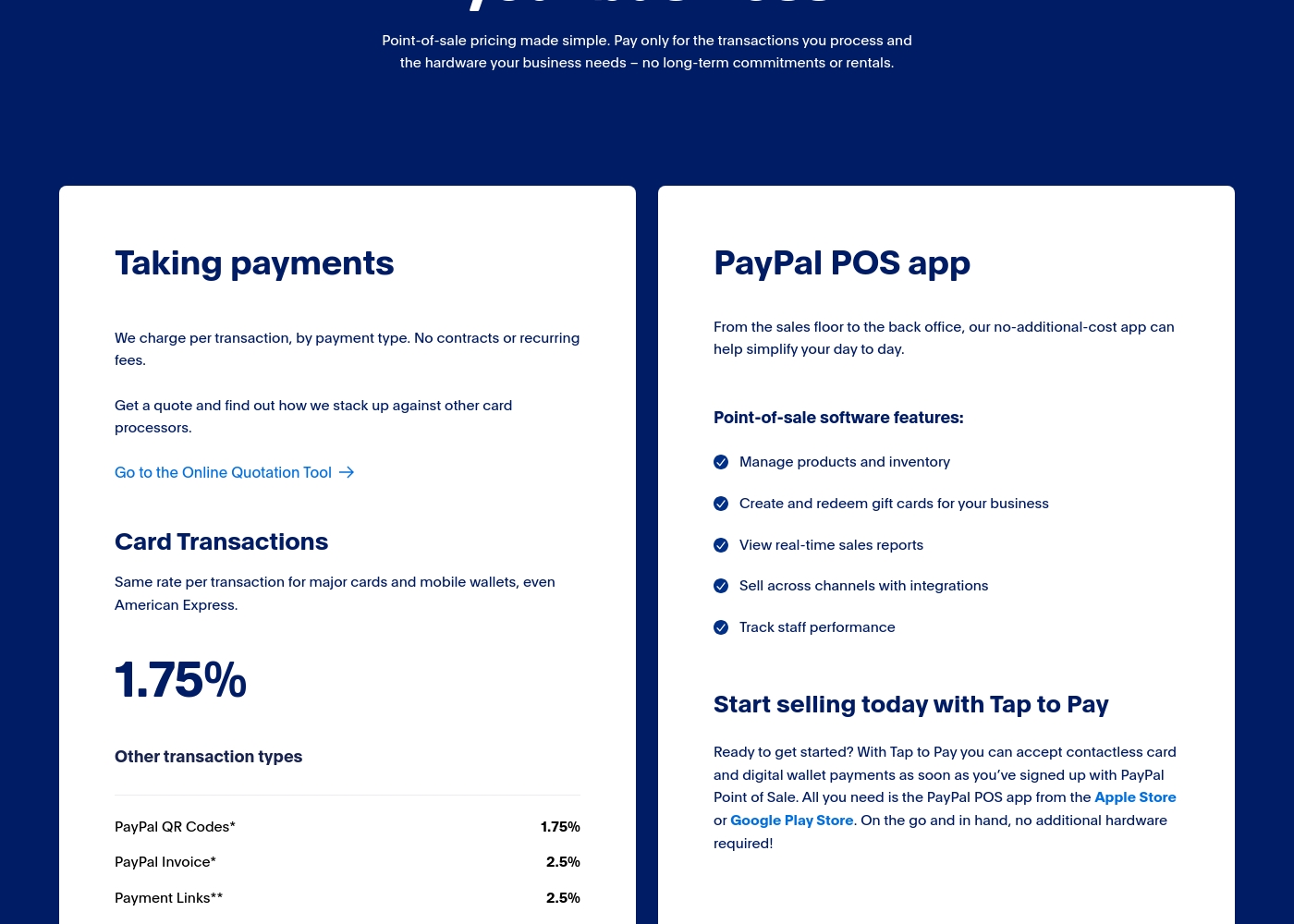
Zettle focuses on simple, transaction-based pricing. You only pay for the payments you process and the hardware your specific business needs. There are no long-term contracts or recurring fees for the software.
PayPal POS App (Software)
Price: No additional cost Best For: Businesses needing core POS functions without monthly subscription costs. Other Features:
- Manage products and inventory
- Create and redeem gift cards
- View real-time sales reports
- Sell across channels with integrations
- Track staff performance
This app acts as your central POS hub. It's included at no additional cost and provides robust tools to handle sales, inventory, and staff management right from your mobile device. Just sign up and download the app to streamline your daily operations. You can even start taking payments right away using Tap to Pay on your existing phone or tablet.
- No additional cost
- Manage products and inventory
- Real-time sales reports
- Tap to Pay enabled
- 1.75% rate for card transactions
- Includes major cards and mobile wallets
- Includes PayPal QR Codes
- No contracts or recurring fees
- Tailored fee structure
- Requires monthly card transactions over £10,000
- Dedicated sales assistance
Pricing Notes
- Clover requires direct contact with sales for any pricing information, which often results in customized, opaque rates.
- Zettle is transparent: the core POS app is free, and standard in-person card payments are 1.75%.
- Clover users frequently report hidden fees and unauthorized charges not mentioned in initial quotes.
- Zettle operates on a true pay-as-you-go basis, eliminating recurring software subscription fees and long-term contracts.
- Hardware for Zettle is a one-time purchase starting at £29; Clover's hardware cost is high and associated with long-term lock-in.
Pricing Head-to-Head
User Reviews
The external sentiment for Clover is decisively negative, particularly apparent in the high volume of concerns raised on Trustpilot. The most recurring complaint centers on atrocious customer service.
Users report spending hours attempting to resolve basic issues, often being transferred repeatedly or failing to reach helpful representatives. Financially, many users feel deceived.
I spent over six hours dealing with support trying to stop invalid billing charges. They kept bouncing me between tech support and their 3rd party merchant service provider. This is the worst customer support I have ever experienced.
Users generally find the Zettle (PayPal POS) system easy to use and convenient, making it ideal for small or mobile businesses. Many users praise the card reader for its reliability and speed during transactions.
A significant point of positive feedback revolves around customer support. Agents are often described as prompt, knowledgeable, and helpful, often resolving issues quickly with a real person on the line, which is rare in this industry.
Great for payments and we received excellent customer service. They are quick to answer the phone, and you speak to a friendly person, not a bot. They took the time to resolve my issue easily.
Our Verdict
If you are choosing a POS system, your decision balances flexibility against operational risk. Zettle is the clear winner for almost every small business based on user feedback. Clover offers comprehensive integration but introduces far too much operational and financial risk. Zettle provides financial freedom; Clover demands commitment and often causes deep frustration. Clover's superpower is its deeply integrated POS infrastructure combining hardware and proprietary software. It’s built for streamlining transaction flow in a complex fixed retail setting. However, Clover pricing is opaque, requiring a custom quote that consistently leads to hidden, unauthorized charges. Zettle excels in transparency, ease of use, and incredible customer support responsiveness. Its primary strength is flexibility, allowing you to use Tap to Pay instantly with just your phone. Zettle’s simple 1.75% transaction rate and no-contract policy make financial planning straightforward and predictable. For most users, the deciding factor is business integrity and support quality. Clover users report frequent frozen funds and unauthorized fees, amplified by unresponsive support. Zettle consistently provides prompt, helpful human support when needed, minimizing business interruptions. Choose Zettle if you prioritize predictable costs and reliable customer support for your mobile or small storefront operation. Only choose Clover if your business specifically requires their integrated hardware platform and you are willing to navigate documented risks of high fees and contract lock-in.
Frequently Asked Questions
Which POS has better customer support: Clover or Zettle?
Zettle has demonstrably better customer support compared to Clover. Zettle users praise prompt, knowledgeable phone support from real people. Clover users report unprofessional, unresponsive help and extreme difficulty resolving major billing issues.
Which system is cheaper overall: Clover or Zettle?
Zettle is generally much cheaper due to its transparent 1.75% transaction fee and free core POS app. Clover requires expensive proprietary hardware, monthly subscription fees, and often features unexpected, hidden charges.
Does Zettle require me to buy a card reader like Clover does?
No, Zettle offers a free Tap to Pay feature that utilizes your existing smartphone as a terminal. Clover typically mandates the purchase or lease of its proprietary hardware and integrated POS system for use.
Which POS is better for a mobile business or pop-up shop?
Zettle is far superior for mobile use due to its flexibility and Tap to Pay functionality. Zettle's pay-as-you-go model and transparent pricing suits temporary setups better than Clover’s integrated contracts.
What is the biggest financial risk when choosing Clover over Zettle?
The biggest risk with Clover is financial uncertainty, including hidden fees, unauthorized charges, and reports of frozen working capital. Zettle offers predictability through published, fixed transaction rates.
Can Zettle handle inventory tracking and staff performance?
Yes, the free Zettle POS app includes robust management tools. These features allow you to track product inventory levels and monitor individual employee performance efficiently.
Ready to Choose?
Both tools have their strengths. Choose based on your specific needs.