IFTTT vs Splunk
IFTTT and Splunk solve completely different problems. IFTTT automates simple tasks between apps. Splunk analyzes massive amounts of data for security and performance. You're likely choosing based on your core need.
Connettività vasta, ma prestazioni inaffidabili.
Pro
- Vasto ecosistema che collega oltre 900 diversi servizi e app.
- Piano gratuito permanente disponibile per testare le esigenze di automazione di base.
- I livelli Pro offrono funzionalità avanzate per sviluppatori come webhook e codice di filtro.
- Gli Applet multi-azione consentono flussi di lavoro complessi da un singolo trigger.
Contro
- Problemi di affidabilità gravi e frequenti; gli applet sono spesso in ritardo o non riescono ad attivarsi.
- Modello di prezzo aggressivo e costante riduzione della funzionalità del piano gratuito.
- L'assistenza clienti è segnalata come poco reattiva e aderisce a politiche severe di non rimborso.
- Gli utenti esprimono una profonda mancanza di fiducia a causa delle limitazioni fluttuanti delle funzionalità.
Powerful but complex data platform.
We find Splunk offers a robust, unified platform for security and observability with extensive integrations and scalability. However, its pricing structure is opaque and usage-based, which can make cost planning challenging. Overall, it's a strong choice for enterprises needing deep data analysis, but smaller teams may find it complex and expensive.
Pro
- Unified platform for security and observability.
- Over 2,000 integrations with various data sources.
- AI and automation for threat response.
- Handles massive data volumes at scale.
Contro
- Opaque pricing requires consultation with sales.
- Can be complex to set up and learn.
- Usage-based models may lead to unpredictable costs.
- External review access was blocked, limiting user sentiment data.
Informazioni suIFTTT
IFTTT è la piattaforma no-code leader progettata per un'automazione potente sia nella tua vita lavorativa che in quella domestica. Offre un modo semplice per connettere oltre 900 servizi diversi, inclusi strumenti come Google Calendar, Spotify e YouTube, utilizzando semplici Applet. Puoi automatizzare da qualsiasi luogo e in qualsiasi momento, grazie alle app dedicate per iOS e Android, garantendo una produttività continua. È costruito su una vasta comunità di oltre 27 milioni di utenti e più di 900 brand che utilizzano già la piattaforma. 💡
Informazioni suSplunk
Splunk is a unified platform for security and observability. It's designed for teams that need to search, analyze, and act on data from any source. Whether you're a security analyst hunting threats or an engineer troubleshooting app performance, it brings everything together in one place. ✨
Punti salienti
Confronto delle funzionalità
Panoramica funzionalità
Evidenziamo le principali differenze e scegliamo un vincitore per ogni funzionalità.
Core Purpose
IFTTT automates tasks between apps. Splunk analyzes data for security and performance.
IFTTT is a no-code automation platform. It connects over 900 services like Google Calendar and Spotify. You create simple "if this, then that" rules called Applets. Splunk is a unified platform for security and observability. It ingests and analyzes logs, metrics, and traces from any source. It's built for IT and security teams. The key difference is focus. IFTTT simplifies daily tasks. Splunk provides deep visibility into complex systems. For example, IFTTT can email you when it rains. Splunk can help you find the cause of a server outage.
Ease of Use
IFTTT is simple and no-code. Splunk is powerful but requires technical expertise.
IFTTT is designed for everyone. You don't need coding skills to build automations. The interface is straightforward, guiding you through creating Applets step-by-step. Splunk has a steeper learning curve. It uses its own search language (SPL) for complex queries. Setting up data ingestion and dashboards often requires technical knowledge. If you want quick, simple automation, IFTTT wins. For analyzing system data, Splunk is the professional choice, but it takes time to master.
Integration Ecosystem
Both offer vast integrations, but for different purposes. IFTTT for apps, Splunk for data.
IFTTT connects over 900 consumer and business apps. These include social media, productivity tools, and smart home devices. The focus is on enabling simple automations between them. Splunk integrates with over 2,000 data sources. This includes servers, cloud services, databases, and network devices. It's designed to ingest massive volumes of machine data. IFTTT's ecosystem is for linking app workflows. Splunk's is for collecting and analyzing operational data across your entire infrastructure.
Automation Power
IFTTT offers simple, multi-step automations. Splunk provides advanced, AI-powered workflows.
IFTTT uses Applets. Paid plans allow multi-action Applets, where one trigger starts several steps. You can also use filter code for basic logic. Splunk offers automated investigation and response playbooks. These can use AI to detect threats and trigger complex sequences of actions. It's built for incident response. IFTTT automates routine tasks. Splunk automates security and operational responses at scale, making it far more powerful for complex scenarios.
Mobile Experience
Both have strong mobile apps for monitoring and control on the go.
IFTTT has dedicated iOS and Android apps. You can manage Applets, receive notifications, and trigger automations from your phone. It emphasizes continuous productivity. Splunk also has mobile apps. They let you monitor dashboards, respond to alerts, and search data from your mobile device. It's designed for IT and security teams working remotely. Both provide solid mobile access. IFTTT's app feels more like a consumer tool, while Splunk's is a professional monitoring app.
Security & Observability
Splunk is built for this. IFTTT offers basic connectivity, not deep security features.
Splunk's core platform unifies security and observability. It provides AI-powered threat detection, high-fidelity alerts, and automated response. You get a single view across your entire stack. IFTTT connects services securely but isn't a security platform. It doesn't analyze logs, detect threats, or provide system visibility. It's an automation layer. For monitoring, troubleshooting, and securing IT systems, Splunk is the specialized, powerful tool. IFTTT is not an alternative for these use cases.
Pricing Model
IFTTT has clear, tiered pricing. Splunk's pricing is customized and usage-based.
IFTTT offers a Free plan and two paid tiers: Pro ($2.99/mo) and Pro+ ($8.99/mo). Prices are per user and based on Applet count and features. It's straightforward. Splunk's pricing is not public. It's based on data volume (Ingest) or activity metrics. You must contact sales for a quote. Costs can scale with your usage. IFTTT is predictable and accessible. Splunk's cost is tailored but can be complex and enterprise-level.
Customer Support
IFTTT offers tiered support. Splunk provides enterprise-grade support, details on request.
IFTTT includes support with paid plans. Pro+ users get prioritized support. Some user reviews report issues with responsiveness. Splunk's support details and SLAs are not public. For an enterprise platform, they likely offer comprehensive support plans, but you need to contact sales. Given the product complexity, Splunk likely offers more robust support options, but they aren't transparently listed like IFTTT's.
IFTTT costa tra $0,00 e $107,88 all'anno con tre piani: IFTTT Free a $0,00, IFTTT Pro a $35,88/anno e IFTTT Pro+ a $107,88/anno.
Esploriamo in dettaglio le tre opzioni di piano disponibili per trovare la giusta quantità di automazione per le tue esigenze.
IFTTT Free
Prezzo: $0,00 / per sempre Siti Web Supportati: N/D - Piattaforma di Automazione Ideale per: Iniziare con l'automazione Politica di Rimborso: Non specificata esplicitamente Altre Funzionalità:
- 2 Applet
- Velocità standard degli Applet
- Usa Applet fai-da-te o pubblicati
- Esecuzioni illimitate di Applet
- Accesso gratuito all'app mobile e semplici integrazioni no-code
- 2 Applet
- Velocità standard degli Applet
- Usa Applet fai-da-te o pubblicati
- Esecuzioni illimitate di Applet
- Accesso gratuito all'app mobile
- 20 Applet
- Velocità Applet più veloci
- Applet multi-azione
- Webhook
- Applet Twitter
- Applet illimitati
- Tutte le funzionalità di Pro
- Servizi AI
- Connetti più account per servizio
- Usa query e codice di filtro
Splunk costs are Not explicitly stated per year with 2 plans: Ingest Pricing at Not explicitly stated, Activity-based Pricing at Not explicitly stated.
Take a look at the different ways you can manage your data costs below.
Ingest Pricing
Price: Not explicitly stated Websites Supported: Not explicitly stated Best For: Teams needing predictable costs for high-volume data ingestion Refund Policy: Not explicitly stated Other Features: Simple predictable approach, Economical search scaling, Broad data ingestion
- Search and analyze machine data
- Expanded use cases on ingested data
- Standard data ingestion
- Metric time series (MTS)
- Traces analyzed per minute
- Sessions monitoring
- Uptime requests
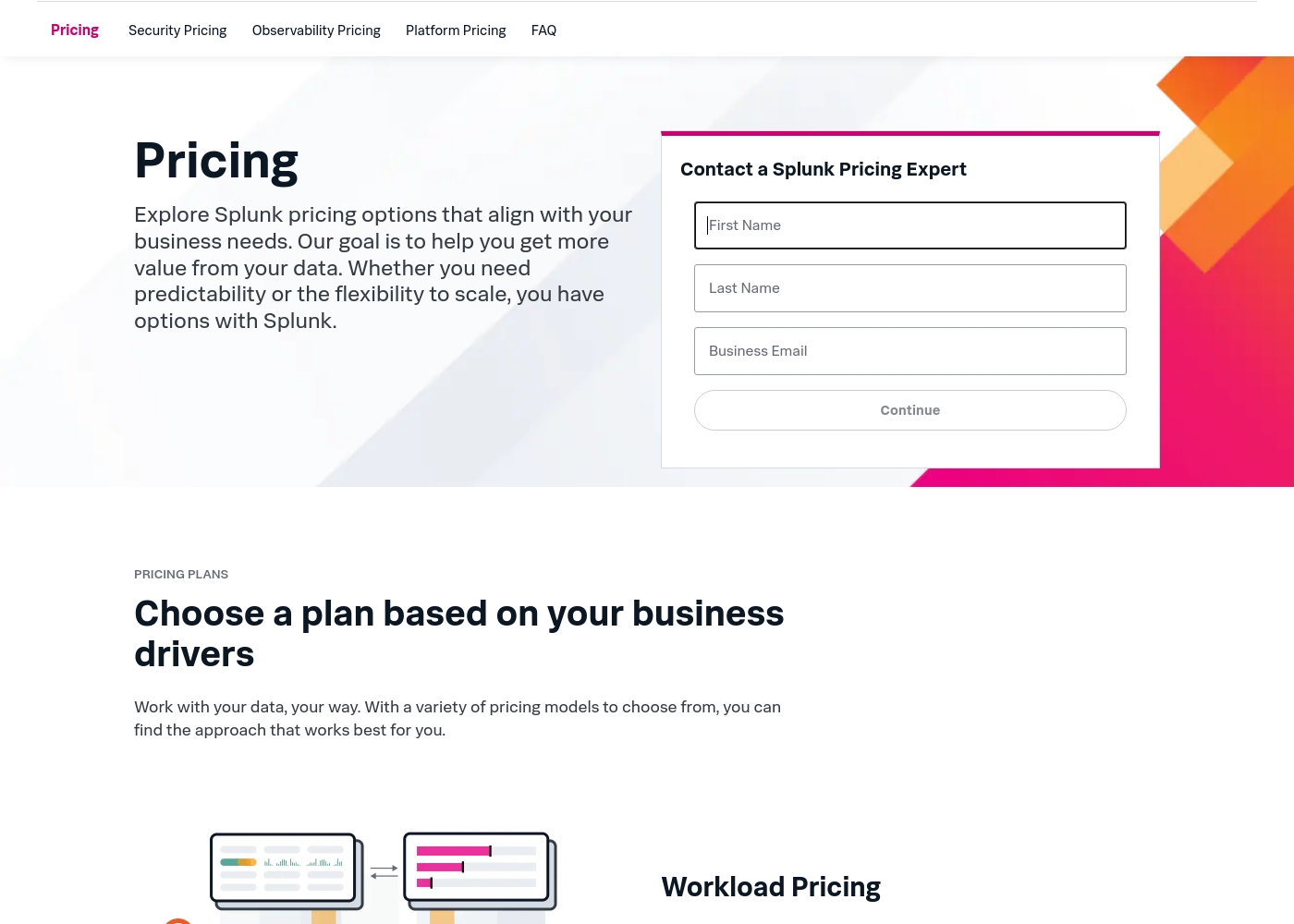
Pricing Notes
- IFTTT has a clear, public pricing structure. Splunk requires a sales consultation for quotes.
- IFTTT's Free plan is limited to 2 Applets. Splunk offers a free trial but no permanent free tier.
- IFTTT's costs are predictable per user. Splunk's costs scale with data volume or activity, which can be variable.
- Both offer free trials for their paid features, allowing you to test before committing.
Pricing Head-to-Head
Recensioni degli utenti
Il feedback esterno per IFTTT dipinge un quadro di estrema insoddisfazione degli utenti, in particolare tra i clienti di lunga data che hanno sperimentato la piattaforma prima delle significative riforme dei prezzi. L'affidabilità è un problema centrale; molti utenti segnalano che gli Applet sono molto inaffidabili, soffrendo di fallimenti o gravi ritardi, a volte fino a diverse ore.
Il reclamo più frequente riguarda il passaggio a un modello commerciale aggressivo. Gli utenti si sentono ingannati dalla frequente e sostanziale riduzione del limite di Applet del piano gratuito, sceso a soli due, spingendoli inutilmente verso livelli a pagamento che trovano troppo costosi.
Questo servizio potrebbe essere eccezionale, ma sfortunatamente è molto inaffidabile ora. Non attiva correttamente gli attivatori e il ritardo aumenta fino al punto in cui ci vogliono diverse ore per l'esecuzione. Abbiamo bisogno di automazione stabile, non di ritardi.
Based on the provided external sources, we couldn't retrieve detailed user reviews for Splunk due to access restrictions. Trustpilot and Capterra both returned verification or security pages, preventing us from gathering specific sentiment on accuracy, ease of use, support, or pricing.
This means our review is based solely on the official product information and pricing details provided. We recommend checking these review sites directly for the latest user feedback before making a decision.
Il nostro verdetto
This isn't a close contest. IFTTT and Splunk are for completely different jobs. IFTTT is your friendly app connector. Splunk is your powerful data analyst. IFTTT's superpower is simplicity. It connects over 900 services like Google Calendar and Twitter. You can automate daily tasks in minutes without writing code. Splunk's superpower is deep analysis. It ingests data from over 2,000 sources across your entire tech stack. It helps security and IT teams find problems and stop threats. The deciding factor is your core need. Choose IFTTT to automate simple tasks between your favorite apps. Choose Splunk to understand and protect complex IT systems. For everyday app automation, IFTTT is the clear winner. For enterprise data analytics and security, Splunk is the professional standard. They serve different worlds.
Domande frequenti
Which is better for a small team: IFTTT or Splunk?
For a small team needing simple automations, IFTTT is better. It's affordable and easy to use. Splunk is designed for larger teams with complex data analysis needs.
Can I use Splunk for simple app automations like IFTTT?
No, Splunk is not designed for simple app-to-app automations. It's a data analytics platform. Use IFTTT for tasks like posting to social media or getting weather alerts.
Is Splunk worth the cost for a small business?
Splunk is typically too expensive and complex for small businesses. Its value is for organizations with significant IT infrastructure to monitor. IFTTT offers a more cost-effective solution for small teams.
Does IFTTT have security features like Splunk?
No, IFTTT is an automation tool, not a security platform. It doesn't analyze logs or detect threats. Splunk is built specifically for security and observability use cases.
How do the mobile apps compare?
Both have solid mobile apps. IFTTT's app manages your automations. Splunk's app lets you monitor systems and respond to alerts on the go. They serve different purposes.
Which tool has better customer support?
Support details vary. IFTTT lists tiered support for paid plans. Splunk's enterprise support details require contacting sales. Both have options, but Splunk likely offers more robust plans for larger deployments.
Pronto a scegliere?
Entrambi gli strumenti hanno i loro punti di forza. Scegli in base alle tue esigenze specifiche.