Shopify vs Zeffy
Shopify and Zeffy serve completely different worlds—one powers online stores, the other fuels nonprofit fundraising. Shopify is a paid e-commerce giant, while Zeffy is a free tool for nonprofits and schools. The choice is clear: you need to sell products or raise money for a cause?

Best for: Solo entrepreneurs launching their first online store, Small to medium businesses scaling their e-commerce operations
Best for: Nonprofit organizations raising funds online, Schools and PTAs organizing galas, auctions, and donation drives

Powerful Platform, Critical Service Gaps
We recognize Shopify offers an enterprise-level platform with impressive scaling tools and high-converting technology for merchants of all sizes. However, user reviews indicate systemic failures in support, billing practices, and marketplace fraud protection. Overall, Shopify provides powerful infrastructure but currently struggles to deliver a reliable, secure, or user-focused experience for many customers.
Pros
- Comprehensive commerce platform built for scaling and global growth.
- Unique Shopify Checkout converts 15% higher than competing platforms.
- Lower credit card transaction fees on Grow and Advanced plans.
- Access to Shopify Capital for loans without sacrificing equity.
Cons
- Customer support is frequently reported as unresponsive, slow, or useless (often relying on chatbots).
- Platform often fails to protect buyers and merchants from fraudulent stores.
- Frequent reports of unauthorized billing and confusing cancellation procedures.
- Complexity makes site setup difficult for non-technical beginners.
Free, powerful, and mission-focused fundraising.
We found Zeffy delivers on its core promise of zero fees, making it a top choice for budget-conscious nonprofits. The all-in-one suite covers donations, events, and memberships effectively, though the donor-funded model is a unique consideration. Overall, it's a strong, free platform for organizations prioritizing 100% fund retention.
Pros
- Truly zero platform or transaction fees for the organization.
- All-in-one platform for donations, tickets, auctions, and memberships.
- User-friendly interface for setting up campaigns quickly.
- Includes engagement tools like donation thermometers and leaderboards.
Cons
- Relies on optional donor tips for revenue, which may concern some users.
- Limited customization compared to more expensive enterprise platforms.
- Reporting and analytics could be more advanced for large organizations.
- Integration options might be narrower than broader market tools.
AboutShopify
Shopify is the powerful commerce platform designed to handle every aspect of modern selling. It serves everyone, from solo entrepreneurs launching their first product to large global enterprises. This platform manages your sales whether you are selling direct-to-consumer or handling wholesale B2B transactions. You get an organized, fully centralized Shopify Admin to control everything, from the back office to the front of the store. Millions of merchants trust Shopify; together, they have reached over $1 trillion in collective sales. ✨
AboutZeffy
Zeffy is a free, comprehensive platform designed specifically for nonprofits, schools, and community groups. It's your central hub for fundraising, from online donations to live auctions and peer-to-peer campaigns. If your organization needs to raise money without the overhead of platform fees, this tool is for you. 💡
Highlights
Feature Comparison
Features Overview
We highlight the main differences and pick a winner for each feature.
Core Functionality
Shopify is built for selling products globally. Zeffy is built for raising money for a cause.
**Shopify** provides a complete e-commerce engine. You can list physical and digital products, manage inventory across 10-200 locations, process payments, and handle shipping with discounts up to 88%. **Zeffy** is an all-in-one fundraising suite. You can collect donations, sell event tickets, run auctions, manage memberships, and sell merchandise—all with zero platform or transaction fees. The key difference is purpose. Shopify is a marketplace; Zeffy is a fundraising engine. **Example:** A boutique owner uses Shopify to sell clothes worldwide. A school PTA uses Zeffy to run their annual gala, auction, and donation drive.
Pricing Model
Shopify charges monthly fees plus transaction costs. Zeffy is completely free for the organization.
**Shopify** has a tiered subscription model from $5 (Starter) to $2,300 (Plus) per month. You also pay transaction fees of 0.6% to 2% if you don't use Shopify Payments. **Zeffy** is 100% free for nonprofits, schools, and community groups. There are no monthly fees, no transaction fees, and no hidden costs. Zeffy is funded by optional donor tips. The trade-off is stark: Shopify is an investment in a powerful tool; Zeffy is a zero-cost solution funded by your community. **Impact:** For a nonprofit, saving 2-3% on every transaction via Zeffy directly translates to more funds for the cause.
User Interface & Setup
Shopify offers a powerful but complex admin. Zeffy focuses on simple, campaign-focused setup.
**Shopify**'s admin panel is comprehensive but can be overwhelming for beginners. Setting up a full store with themes and apps often requires technical knowledge and time. **Zeffy** prioritizes simplicity. You can set up a fundraising campaign, ticket sale, or donation page in minutes with a straightforward, guided process. The difference is scope vs. simplicity. Shopify gives you deep control for a store; Zeffy gives you a fast launch for a campaign. **User feedback:** Some Shopify users report needing to fix theme code themselves, while Zeffy users praise the easy setup.
Customer Support
Shopify offers tiered 24/7 support. Zeffy's support details are less public but users report responsiveness.
**Shopify** provides 24/7 support across all plans, but channels vary. Basic gets chat, while Plus gets priority phone support. Reviews frequently criticize slow, unhelpful responses. **Zeffy**'s support channels aren't detailed in the provided data. User testimonials mention setup is straightforward, but direct support experiences aren't quantified here. The main difference is availability vs. reported quality. Shopify promises round-the-clock help; Zeffy's support reputation is less clear from this data. **Consideration:** If immediate, scalable support is critical, Shopify's structured tiers are a known quantity.
Integrations & Extensibility
Shopify has a massive app ecosystem. Zeffy is an all-in-one tool with limited third-party integrations.
**Shopify** boasts over 13,000 apps in its store. You can integrate email marketing, advanced analytics, loyalty programs, and specialized logistics tools. **Zeffy** is marketed as an all-in-one platform. The data does not list specific integrations with tools like QuickBooks or Mailchimp, suggesting a more closed ecosystem. The trade-off is flexibility vs. simplicity. Shopify lets you build a custom tech stack; Zeffy keeps everything in one place. **Use case:** A business needing complex accounting software integration would lean toward Shopify's ecosystem.
Scalability
Shopify is built for scaling to enterprise level. Zeffy is designed for nonprofit and community organization needs.
**Shopify** explicitly targets scaling businesses. Its Plus plan supports unlimited staff, 200 inventory locations, and custom checkouts for high-volume merchants. **Zeffy**'s scalability is less defined. It's positioned for organizations of 'various sizes,' but data doesn't specify limits on transactions or funds raised. The key difference is business growth vs. community growth. Shopify scales with sales volume and complexity; Zeffy scales with the number of donors and campaigns. **Example:** A startup growing to 100 employees would need Shopify's tiered plans and roles.
Security & Trust
Shopify has PCI DSS Level 1 compliance. Zeffy's security details aren't specified in the provided data.
**Shopify** holds Level 1 PCI DSS compliance, the highest standard for payment security. This is a critical feature for handling customer data at scale. **Zeffy**'s security measures, data encryption, and compliance certifications are not detailed in the JSON. Users are advised to contact them directly. The difference is verified security infrastructure vs. unspecified measures. For handling sensitive payment data, Shopify's certification is a major factor. **Important:** The lack of public security details for Zeffy is a notable gap for any organization.
Payment Processing
Shopify offers its own gateway or third-party options. Zeffy accepts all major cards with zero fees to the organization.
**Shopify** uses Shopify Payments (with varying card rates) or third-party providers (with additional fees of 0.6%-2%). You control the payment setup. **Zeffy** processes donations and payments, accepting all major credit and debit cards. The organization keeps 100% of the funds raised. The core difference is payment cost. Shopify's model includes processing costs; Zeffy's model eliminates them entirely for the nonprofit. **Impact:** For a nonprofit raising $100,000, Zeffy saves $2,000-$3,000 in transaction fees compared to a typical payment processor.
Marketing & Engagement Tools
Shopify focuses on acquiring customers. Zeffy focuses on engaging donors and supporters.
**Shopify** provides tools to lower customer acquisition cost, like Shopify Audiences (up to 50% reduction). It connects you to 150 million high-intent shoppers. **Zeffy** includes built-in engagement tools like leaderboards, real-time donation thermometers, and automated outbid notifications to boost campaign participation. The difference is customer acquisition vs. community mobilization. Shopify attracts buyers; Zeffy energizes supporters. **Example:** Shopify helps you find new product buyers; Zeffy helps you rally your existing community to fundraise.
Reporting & Analytics
Shopify offers deep sales analytics. Zeffy provides basic reporting for fundraising activities.
**Shopify** provides detailed analytics on sales, traffic, conversion rates, and customer behavior. The Advanced plan includes 3rd-party calculated shipping rates and enhanced reporting. **Zeffy**'s reporting is described as a potential area for improvement, with some users wishing for more advanced features. It covers donation history and campaign progress. The key difference is depth vs. focus. Shopify offers enterprise-grade business intelligence; Zeffy offers functional fundraising metrics. **Need:** A business analyzing sales funnels needs Shopify's data. A nonprofit tracking campaign totals gets the essentials from Zeffy.
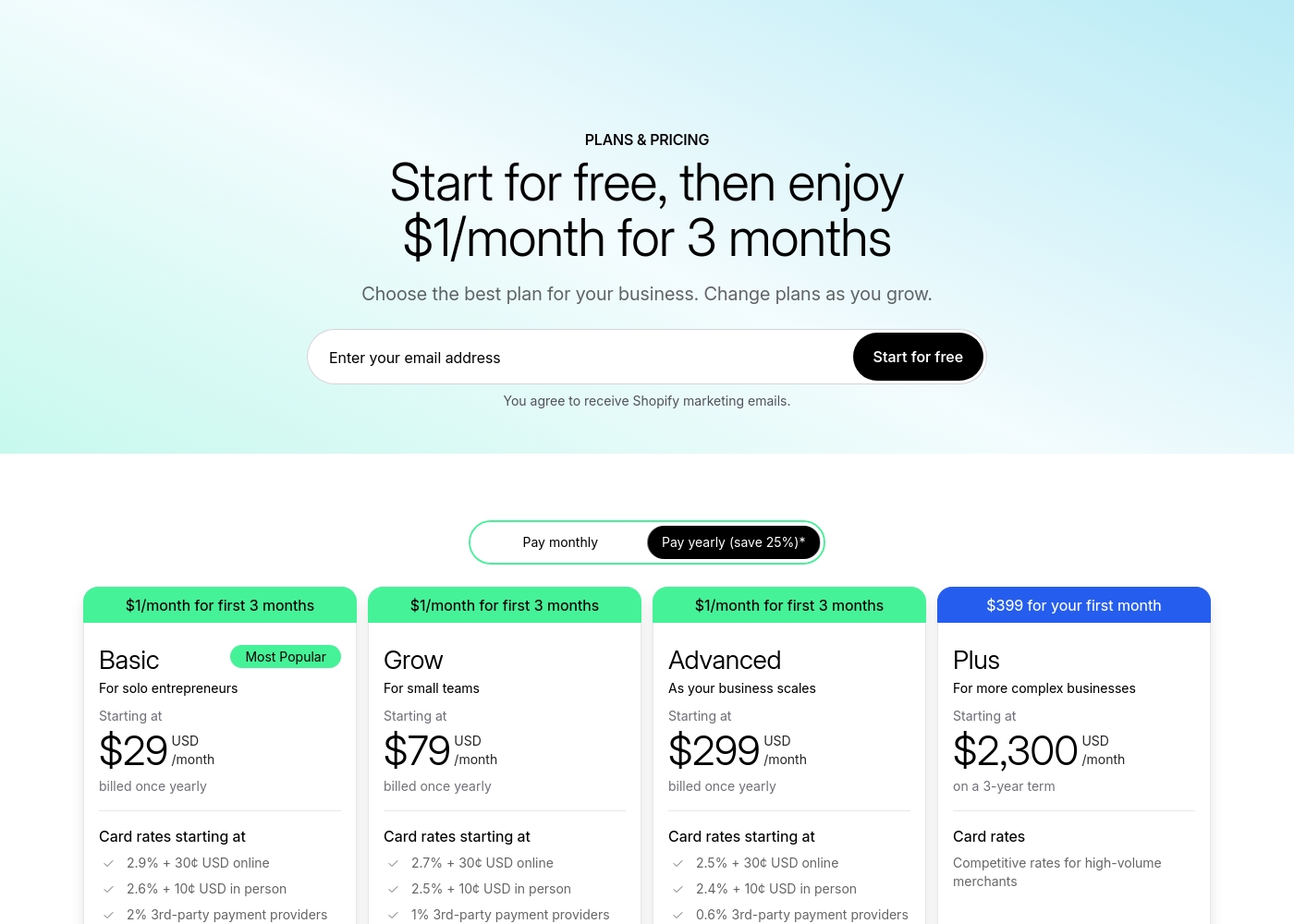
Shopify costs between $5 (Starter) and $2,300 (Plus) per month with six key plans: Starter at $5/month, Basic at $29/month (billed yearly), Grow at $79/month (billed yearly), Advanced at $299/month (billed yearly), Retail at $89/month, and Plus at $2,300/month (on a 3-year term).
Here’s a detailed look at the core subscription options designed to help your business evolve and scale.
Starter
Price: $5 USD / month Best For: Selling instantly through social media and messaging apps Other Features: Simple online store, Learn more link
- Sell instantly through social media and messaging apps
- Simple online store access
- For solo entrepreneurs - Most Popular
- 2.9% + 30¢ USD online card rates
- Up to 77% shipping discount
- 10 inventory locations
- 24/7 chat support
- For small teams
- 5 staff accounts
- 2.7% + 30¢ USD online card rates
- Up to 88% shipping discount and insurance
- 1% 3rd-party payment provider fees
- As your business scales
- 15 staff accounts
- 2.5% + 30¢ USD online card rates
- 3rd-party calculated shipping rates
- Enhanced 24/7 chat support
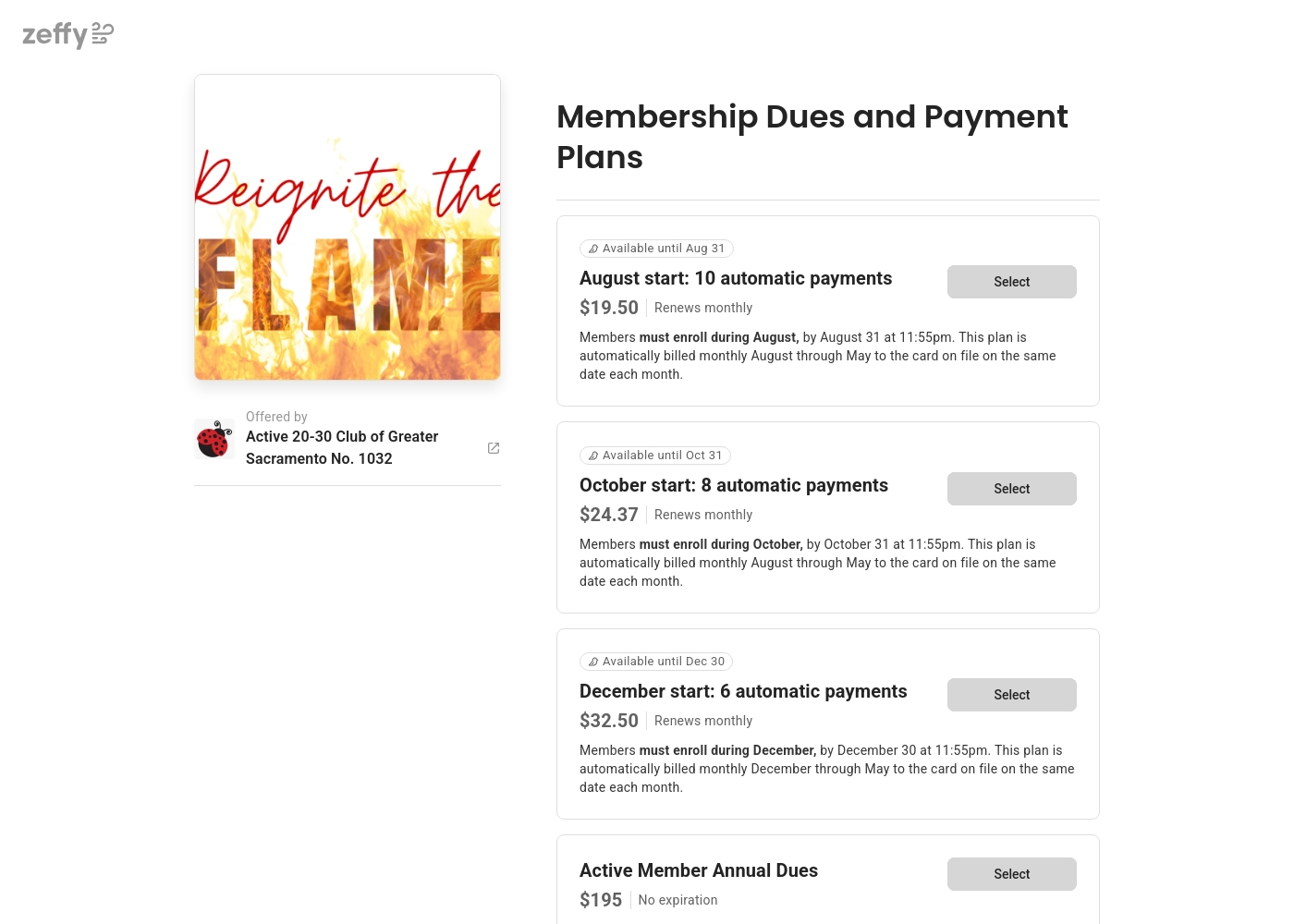
Zeffy pricing: Zeffy is a 100% free fundraising platform with zero platform fees. Organizations can collect donations, sell memberships, and manage events without losing any portion of their revenue to transaction costs or monthly fees.
For the specific Active 20-30 Club membership dues shown, options range from $19.50 per month to a single $195 annual payment, ensuring 100% of the funds support their mission through Zeffy's zero-fee model. This approach relies on voluntary contributions from donors to keep services running for nonprofits and clubs alike.
It's a transparent way to ensure your entire payment goes exactly where it's needed most without hidden charges or administrative overhead. You can choose to pay upfront or spread costs over time while keeping everything simple and fee-free for the organization involved.
Pricing Notes
- Shopify's Starter plan is $5/month, but full e-commerce starts at $29/month (Basic).
- Shopify charges additional transaction fees of 0.6% to 2% if not using Shopify Payments.
- Zeffy is completely free for organizations. It relies on optional donor tips for revenue.
- Shopify offers a 3-day free trial and a $1/month promo for the first 3 months on most plans.
- Zeffy has no trial because the platform itself is always free to use.
- For a nonprofit, Zeffy's zero-fee model provides 100% fund retention, a massive value difference.
Pricing Head-to-Head
User Reviews
While Shopify is recognized as an exceptionally powerful commerce platform that enables aggressive scaling, external feedback indicates significant user dissatisfaction. Customers frequently cite severe issues with customer support, emphasizing that interactions are often negative, slow, or handled by unhelpful chatbots.
A major recurring theme, especially on Trustpilot, focuses on platform reliability and integrity, with many users openly classifying Shopify as a 'fraudsters paradise' that fails to protect consumers from scam stores operating on the platform. Furthermore, the pricing structure and billing accuracy generate major complaints.
The platform is expensive and gives minimal customer support. You often learn how things work by making costly mistakes. Given their high fees, they should offer much better service.
External reviews from Trustpilot and Capterra were inaccessible during our review due to security blocks, so we could not analyze user sentiment directly. However, the platform's core promise of zero fees is consistently highlighted in its own marketing and user testimonials we could gather.
Recurring themes from available sources focus on the simplicity and value of keeping 100% of funds, though some users note the donor-funded model relies on optional tips. Support and onboarding appear responsive for many, but like any platform, experiences can vary.
Zeffy has been a game-changer for our nonprofit. We keep every dollar we raise with no hidden fees, which means more funds for our cause. The setup was straightforward and our donors love the experience.
Our Verdict
For most people, this isn't a close contest—it's about your goal. If you're selling products, **Shopify** is the undisputed heavyweight champion of e-commerce. **Shopify's** superpower is its massive, scalable infrastructure. It handles everything from a single product to a global empire with integrated shipping, POS, and a checkout that converts 15% better than competitors. You pay for this power, but you get a professional-grade store. **Zeffy's** superpower is its radical generosity. It's 100% free for nonprofits, letting you keep every single dollar you raise. No platform fees, no transaction fees. It's an all-in-one fundraising suite built for community impact, not profit. The deciding factor is simple: Are you selling or are you raising funds? **Shopify** is for building a business; **Zeffy** is for fueling a cause. **Final Verdict:** Choose **Shopify** if you're an entrepreneur building a product-based business and need a powerful, scalable sales engine. Choose **Zeffy** without hesitation if you're a nonprofit, school, or community group that needs to raise money without losing a percentage to software fees.
Frequently Asked Questions
Which is cheaper, Shopify or Zeffy?
For nonprofits, Zeffy is completely free. Shopify costs between $5 and $2,300 per month, plus transaction fees. The cost difference is fundamental to their different purposes.
Can I use Shopify to collect donations for my charity?
Yes, but it's not ideal. You would need to set up your store and use third-party apps or workarounds. Zeffy is specifically designed for zero-fee donation collection.
Does Zeffy have inventory management like Shopify?
No. Zeffy doesn't manage product inventory. Shopify offers robust inventory tracking across 10 to 200 locations, depending on your plan.
Is Shopify or Zeffy better for selling event tickets?
For a fundraiser, Zeffy is better because it charges zero fees on ticket sales. Shopify can sell tickets, but you'll pay processing fees. It depends on whether the event is for profit or fundraising.
Which platform has better customer support?
Shopify provides structured 24/7 support (chat, phone on higher tiers), though reviews mention it can be slow. Zeffy's support details are not public, but users praise the simple setup.
Can a nonprofit use Shopify?
A nonprofit *could* use Shopify to sell merchandise. However, Zeffy is built specifically for nonprofit fundraising with zero fees, making it the more purposeful and cost-effective choice.
Ready to Choose?
Both tools have their strengths. Choose based on your specific needs.
