ShipEngine vs ShipperHQ
ShipEngine and ShipperHQ handle logistics, but they serve different parts of the shipping process. ShipEngine focuses on label creation and fulfillment speed via API integration. ShipperHQ masters complex rate calculation at checkout to boost conversions. You must prioritize either front-end conversion control or back-end fulfillment power.
Best for: Developers requiring a powerful, performant shipping API for custom systems., E-commerce businesses needing a single integration for quick label creation.
Best for: E-commerce stores with intricate shipping rules (perishables, restrictions)., Merchants struggling with high cart abandonment due to unclear shipping costs.
Pros
Cons
Essential control for complex logistics problems.
We recognize ShipperHQ as a powerful solution for e-commerce platforms facing intricate shipping challenges and high cart abandonment rates. Overall, it provides the necessary automation and transparency needed to manage sophisticated rate calculation logic directly at the customer checkout.
Pros
- Effectively reduces cart abandonment by offering transparent delivery options.
- Allows full control over complex shipping rules (e.g., product restrictions, dimensional packing).
- Features seamless integration with over 50 worldwide carriers.
- Provides specific delivery dates and expedited shipping options at checkout.
Cons
- Specific tiered pricing is not publicly disclosed.
- Configuration of detailed shipping rules can be complex and time-consuming.
- Plan costs scale based on monthly rate lookup requests, limiting high-volume use on lower tiers.
- The product does not offer a standard money-back guarantee policy.
AboutShipEngine
At its core, ShipEngine is a modern, reliable shipping API. Think of it as the central brain that connects all your shipping tasks. It’s built for developers and the merchants they support. You can plug it into your existing systems—like a marketplace, warehouse management tool, or a custom app—and get everything shipping in minutes. 💡 It’s designed to be the engine that powers your entire logistics operation.
AboutShipperHQ
ShipperHQ is a powerful solution that lives right in your online store's cart and checkout. It connects your e-commerce platform seamlessly to the carriers and logistics services you already rely on. Using your specific business logic, it calculates and displays the most compelling shipping options available to your customer. It’s the top-of-funnel tool that creates unified logistics from the moment the order is placed to when it is fulfilled. This service is available across major platforms like Shopify, BigCommerce, Adobe, and more, and integrates instantly with over 50 worldwide carriers. ✅
Highlights
Feature Comparison
Features Overview
We highlight the main differences and pick a winner for each feature.
Role in Logistics Flow
ShipEngine focuses on fulfillment after the sale. ShipperHQ masters rate calculation at checkout.
ShipEngine is a Multi-Carrier Shipping API built for high performance fulfillment. It handles label creation, tracking, and returns post-purchase. This back-end focus automates fulfillment systems efficiently. ShipperHQ sits squarely in the cart and checkout process. It uses complex logic to calculate rates for the customer instantly. This front-end conversion engine helps reduce cart abandonment significantly. The tools serve different masters; ShipEngine is for fulfillment, and ShipperHQ is for selling. Neither ShipEngine nor ShipperHQ directly competes in the same operational step. Decide if your pain point is generating labels quickly or showing accurate rates to buyers efficiently.
Shipping Labels
ShipEngine creates labels and customs documents instantly. ShipperHQ cannot print labels.
ShipEngine's core function is creating compliant shipping labels quickly for volume shippers. It connects to over 200 carriers to automate fulfillment tasks. The platform handles necessary customs documentation seamlessly. ShipperHQ focuses exclusively on rate calculation and presentation at the checkout stage. It requires integration with external fulfillment software for label printing. You must use a separate system alongside ShipperHQ to finalize the shipment. This is a critical distinction for your logistics stack implementation. ShipEngine is a complete label generation solution. Choosing ShipEngine simplifies the back-end technology needed for generating finalized shipment materials.
Complex Logic Control
ShipperHQ manages business rules for product restrictions. ShipEngine focuses on general speed and validation.
ShipperHQ uses custom business logic to restrict options shown to shoppers. This control is vital for managing perishable goods or regulated items safely. It also handles sophisticated needs like dimensional packing accuracy automatically. ShipEngine automates label creation and order data consolidation from all sources. Its logic focuses on maximizing efficiency, comparison, and address validation. ShipEngine supports large volume API calls. If you sell simple drop-ship items, ShipEngine is sufficient. If you sell items requiring freight or hazmat rules, ShipperHQ is necessary. ShipperHQ gives merchants precise control over which options customers see, boosting conversion rates.
Carrier Coverage
ShipEngine connects users to a significantly larger carrier pool. ShipperHQ supports fewer carriers globally.
ShipEngine boasts integration with over 200 global carriers via a single API connection. This vast network provides extensive flexibility for rate comparison. Users can also access ShipEngine’s great discounted carrier rates. ShipperHQ integrates instantly with over 50 worldwide carriers for robust rate calculation. This coverage handles major providers necessary for e-commerce platforms. The focus remains on depth of rule capability, not connection breadth. ShipEngine is the clear choice if hyper-global reach across a vast provider network is key. ShipEngine provides greater flexibility for finding the cheapest rate across all options.
Cost Transparency
ShipEngine has clear pricing structure beginning with a free plan. ShipperHQ pricing is not publicly stated.
ShipEngine offers a functional $0 Free plan and the Advanced plan starts at $75 monthly. Pricing is usage-based on labels/API calls, but starting costs are transparent. These defined pricing limits aid budgeting clearly. ShipperHQ lists five well-defined tiers from Essentials to Enterprise. However, the actual monthly prices for these tiers are not explicitly stated online. You must request a quote. ShipEngine offers transparent pricing structure, which helps new businesses budget. You must contact sales or install the app to get ShipperHQ’s actual costs. This lack of transparency makes comparing the true ROI of ShipperHQ difficult before engaging their sales team.
LTL/Freight Calculation
ShipperHQ supports complex LTL and freight calculations explicitly. ShipEngine focuses on parcel shipping.
ShipperHQ handles LTL Freight calculation directly at the cart automatically. It shows live quotes, transit times, and accessorial fees instantly. This is crucial for brands selling large or heavy products. ShipEngine focuses on standard parcel shipping elements like labels, tracking, and address validation. The data does not indicate native support for complex LTL rating logic. ShipEngine is clearly oriented toward high-volume smaller package fulfillment. If your products require specialized freight handling, ShipperHQ is the reliable tool. ShipEngine users likely need supplementary tools for heavier goods.
Developer Tools
ShipEngine provides a wider suite of resources for developers. ShipperHQ primarily offers an SDK.
ShipEngine provides extensive resources like API documentation, SDKs, and a free sandbox environment. Its Elements tool allows developers to embed features quickly. ShipEngine emphasizes rapid feature integration in minutes. ShipperHQ also provides an SDK to build custom integrations with POS or ERP systems. ShipperHQ focuses its integration on seamless e-commerce platform connectivity. For custom, rapid development, ShipEngine's Elements and 30-day sandbox trial offer greater flexibility. ShipEngine is clearly the more developer-centric utility. Winner: A
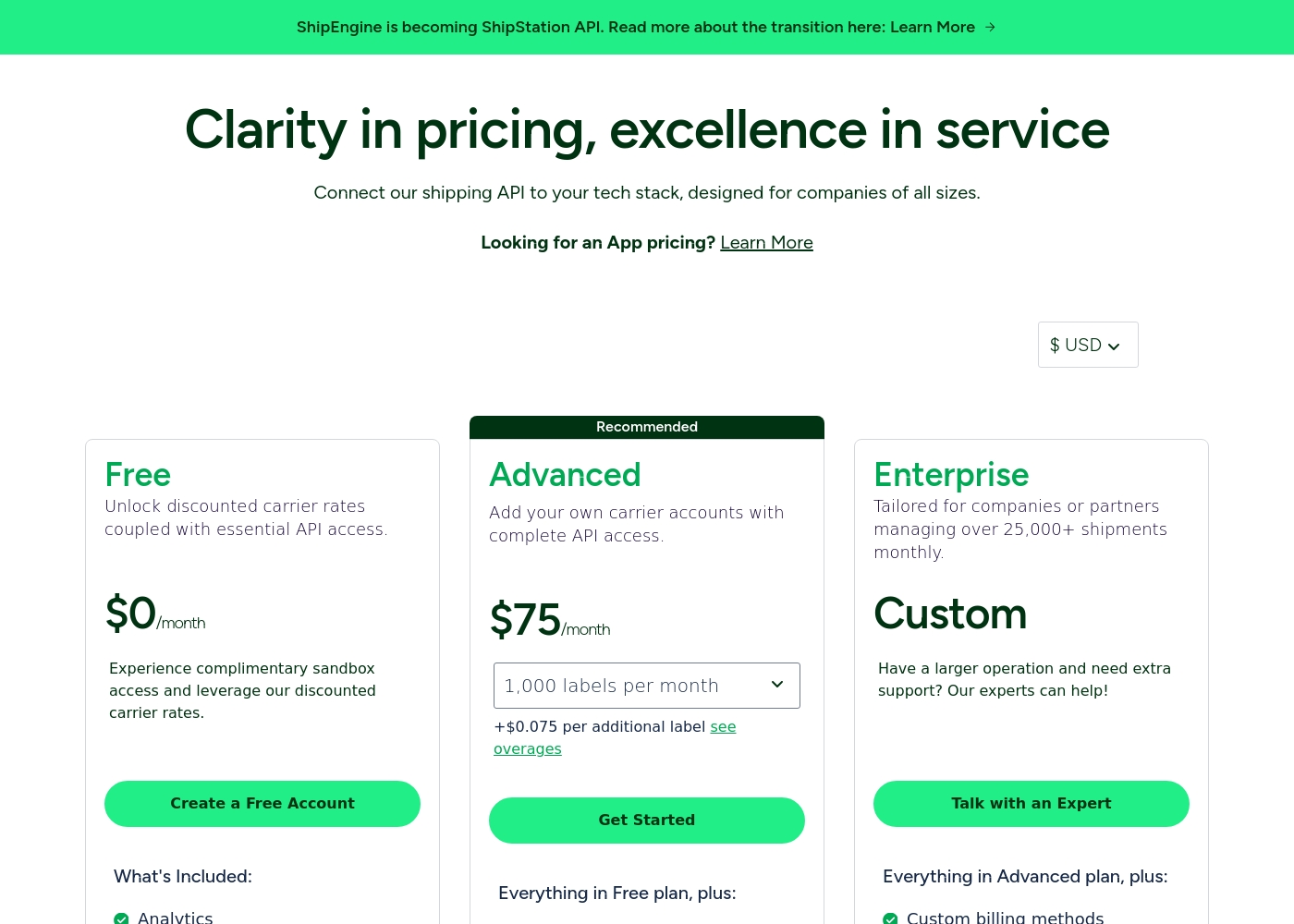
ShipEngine pricing: ShipEngine offers a transparent pricing structure starting with a free tier and scaling to usage-based paid plans starting at $75/month. You can choose to stick with ShipEngine's carrier rates for free or bring your own accounts with an Advanced plan.
house. Note: ShipEngine is transitioning to ShipStation API.
Individual plan names and features are detailed below. Tracking and address validation API calls may incur additional costs based on volume.
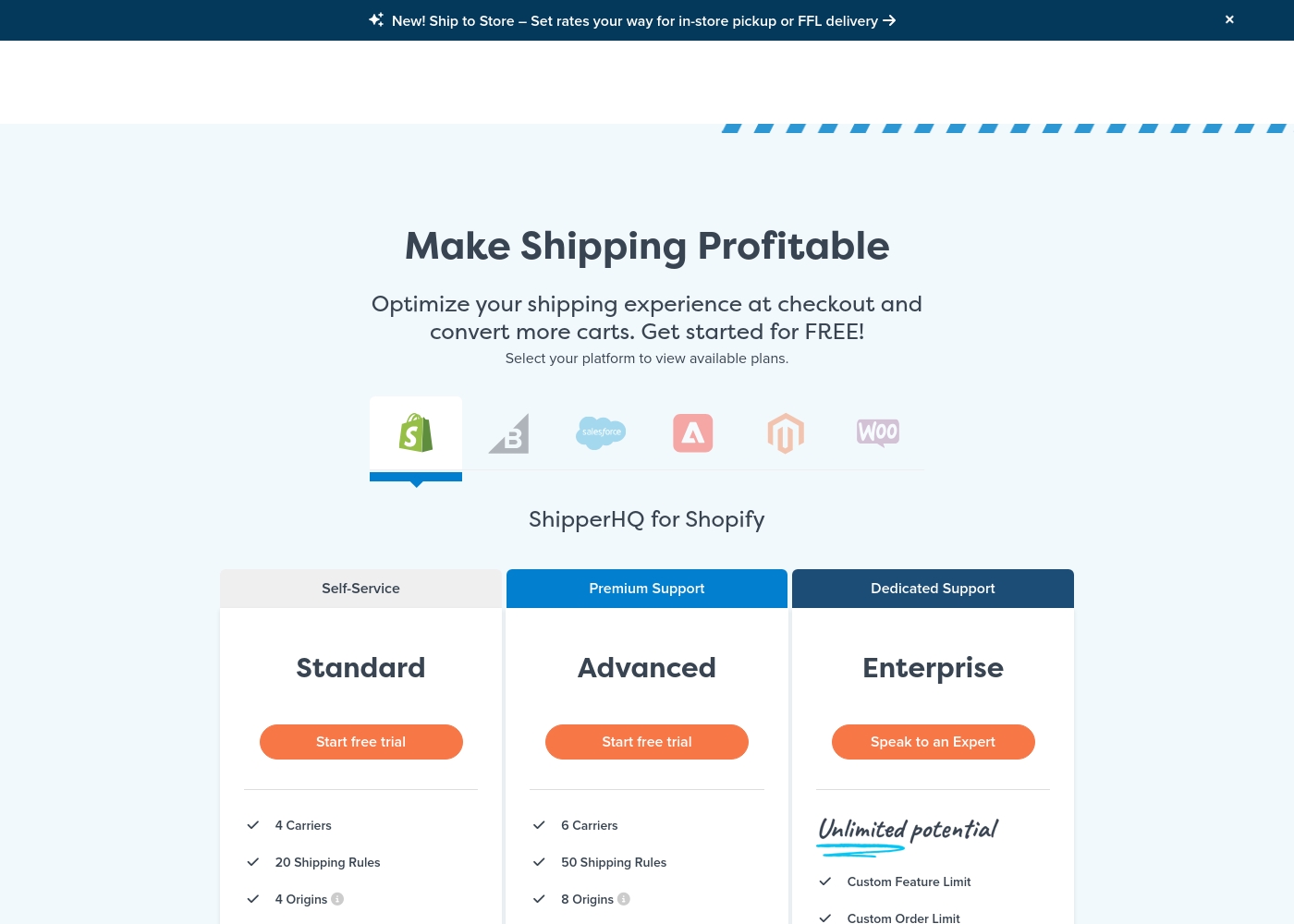
ShipperHQ offers flexible plans designed to fit sellers on various e-commerce platforms like Shopify, Adobe, and WooCommerce. The limits on each plan focus on crucial metrics like the number of carriers, shipping rules, and monthly rate lookup requests.
Essentials
Best For: Very low-volume sellers or new setups Refund Policy: Cancellation available anytime; no refund provided if canceled before next auto-renewal Other Features:
- 2 Carriers
- 5 Shipping Rules
- 2,000 monthly shipping requests
- Select 1 Advanced Feature
This plan provides the basic tools for managing shipping rates. It's best if you're just starting out and need simple rule configuration for a minimal number of carriers.
- 2 Carriers
- 5 Shipping Rules
- 2,000 Monthly Shipping Requests
- Select 1 Advanced Feature
- 5 Boxes (Dimensional Packing)
- 4 Carriers
- 30 Shipping Rules
- 5,000 Monthly Shipping Requests
- Select 2 Advanced Features
- 30 Boxes (Dimensional Packing)
- 6 Carriers
- 50 Shipping Rules
- 10,000 Monthly Shipping Requests
- Up to 3 Advanced Features
- Basic + Phone Support
- 8 Carriers
- 100 Shipping Rules
- 20,000 Monthly Shipping Requests
- Up to 4 Advanced Features
- Priority Dedicated Support
Pricing Notes
- ShipEngine has a functional $0 Free plan leveraging its discounted carrier rates immediately.
- The Advanced ShipEngine plan starts at $75/month for 1,000 labels, plus $0.075 per overage label.
- ShipperHQ's specific monthly pricing is not publicly disclosed for any plan tier.
- ShipperHQ's cost scales based on Monthly Shipping Requests, limiting high-volume use on lower tiers.
- Shopify users are automatically charged for ShipperHQ Standard after the 15-day trial unless they uninstall.
Pricing Head-to-Head
User Reviews
ShipperHQ addresses the critical challenge of complex shipping logistics and customer expectations during checkout. The platform aims to deliver high accuracy in rate calculation, which is essential when integrating multiple carriers and adhering to specific product restrictions.
Users rely on ShipperHQ for reliability, as rate errors can severely impact conversion rates. Due to the inherent complexity of managing numerous shipping rules and advanced features (like dimensional packing), successful onboarding and configuration are key factors for new users.
Our Verdict
The decision between ShipEngine and ShipperHQ depends on where your logistics pain point sits. ShipEngine is the back-end API champion for generating labels and tracking shipments fast. ShipperHQ dominates the front-end checkout process with complex rate calculations. You likely need both ShipEngine and ShipperHQ if your products are complex and volume is high. ShipEngine’s superpower is its sheer volume and speed for developers. ShipEngine connects you to over 200 global carriers through one API connection. You can use ShipEngine’s $0 Free plan to access discounted postage rates instantly. The platform excels at automating label creation and providing essential address validation. ShipEngine scales easily up to 25,000+ labels for enterprise users. ShipperHQ’s strength lies in controlling the customer's buying experience perfectly. ShipperHQ handles incredibly complex product logic, like dimensional packing or restricted items. It explicitly provides crucial LTL freight quotes and accurate delivery dates instantly at checkout. Brands rely on ShipperHQ to increase conversions by up to 50% through rate transparency. If you are a developer for a high-volume parcel shipper and need fast labels, choose ShipEngine. If your e-commerce store sells complex products and needs perfect checkout logic, ShipperHQ is essential. Use ShipEngine for fulfillment speed, but rely on ShipperHQ for maximizing your revenue at checkout.
Frequently Asked Questions
Which platform handles actual label creation: ShipEngine or ShipperHQ?
ShipEngine is built specifically to create compliant shipping labels and customs documents. ShipperHQ exclusively calculates rates displayed at checkout. ShipperHQ requires a separate fulfillment solution for label generation.
Is ShipperHQ necessary if I already use ShipEngine?
Yes, if you have complex products or freight requirements. ShipEngine focuses on fulfillment speed post-purchase. ShipperHQ is needed to define complex rules and show accurate delivery dates to the buyer effectively.
Does ShipEngine or ShipperHQ offer a free plan?
ShipEngine offers a $0 Free plan which includes discounted carrier rates and a sandbox environment. ShipperHQ does not offer a free ongoing plan. ShipperHQ only provides a 15-day free trial for its paid tiers.
Which is better for integrating complex shipping rules?
ShipperHQ specializes in complex logic, including dimensional packing and restricted items criteria. ShipperHQ applies business rules at the checkout funnel to limit available options. ShipEngine focuses on validation and fulfillment automation.
Which tool supports more carrier integrations?
ShipEngine supports over 200 global carriers through its single API integration. ShipperHQ integrates consistently with over 50 worldwide carriers. ShipEngine offers a wider network for rate comparison.
How do the pricing models differ between ShipEngine and ShipperHQ?
ShipEngine pricing is clearly based on labels generated and API calls, starting at $75/month for 1,000 labels. ShipperHQ pricing is based on Monthly Shipping Requests, and the cost is not publicly available beforehand.
Ready to Choose?
Both tools have their strengths. Choose based on your specific needs.