Norton VPN vs OpenVPN
Norton VPN and OpenVPN tackle privacy from completely different angles. Norton VPN is great for consumers prioritizing streaming and easy privacy features. OpenVPN is designed for enterprise compliance and secure corporate remote access. Here’s how to choose your necessary level of security.
Best for: Individuals needing simple, reliable privacy across multiple devices, Families who stream geo-blocked content on Smart TVs (Apple TV, Google TV)
Best for: Regulated industries needing HIPAA, PCI-DSS, and SOC 2 compliance, Businesses implementing a Zero Trust network access strategy
Trusted VPN security built for peace of mind.
We find Norton VPN highly effective primarily because it is bundled within a robust, trusted security platform. Its core privacy features are strong and reliable, ensuring protection even for less tech-savvy users. Overall, we recommend Norton for users prioritizing comprehensive security over purely specialized VPN usage.
Pros
- Seamless integration with Norton's comprehensive security suite (360/LifeLock).
- Includes advanced privacy tools (Double VPN, Kill Switch, IP Rotation).
- User-friendly interface, operating effectively in the background.
- Highly reliable performance praised by long-term users.
Cons
- High annual renewal costs are frequently criticized by users.
- Loyalty discounts or reward systems appear insufficient.
- The core VPN product is primarily tied to expensive security bundles.
- Occasional reports of excessive notifications or pop-ups.
Flexible security built for compliance.
We see OpenVPN provides a strong foundation for Zero Trust access, featuring flexible deployment options and robust security controls that meet strict compliance goals like HIPAA and SOC 2. Overall, it is a feature-rich solution economical for businesses, but they must weigh the compliance focus against reported issues related to functional reliability and performance lag.
Pros
- Provides flexible security solutions (CloudConnexa or Access Server).
- Robust Zero Trust features and access controls are implemented.
- Meets strict regulatory compliance standards (HIPAA, SOC 2).
- Feature-rich Free plan is available for up to three seats.
Cons
- External users report serious issues with platform lag and poor UX.
- Setup and onboarding can be difficult and time-consuming.
- Customer support responsiveness is reported as inadequate by users.
- Self-hosted Access Server is considered extremely overpriced by some clients.
AboutNorton VPN
Norton VPN is an easy-to-use virtual private network designed for both speed and protection. It creates an encrypted tunnel for your online activity, securing your sensitive data. This reliable connection ensures your privacy wherever you browse, even on unsafe public Wi-Fi. It’s an ideal solution for accessing content globally while maintaining your private life with a strict no-log policy. ✅
AboutOpenVPN
OpenVPN is a trusted provider of secure networking solutions tailored for small, medium, and enterprise businesses. It's recognized as the #1 Business VPN and is specifically trusted by over 20,000 organizations. This widely used solution provides a protected, encrypted tunnel for sensitive data. It ensures your devices can securely connect to business assets, even when crossing unsecured public networks. The core product is a high-performance, fast-deploying Zero Trust VPN solution. 💡
Highlights
Feature Comparison
Features Overview
We highlight the main differences and pick a winner for each feature.
Security Approach
Norton VPN focuses on deep consumer privacy features like IP rotation. OpenVPN prioritizes enterprise Zero Trust network access control.
Norton VPN uses bank-grade encryption and a strict no-log policy for all users. It features IP Rotation and Double VPN to add extra anonymity layers. OpenVPN builds its security on Zero Trust principles and granular access control. CloudConnexa includes advanced protection like content filtering and Intrusion Detection (IDS/IPS). The core difference is consumer anonymity versus corporate network segmentation. Norton VPN protects the individual browser session better. OpenVPN protects the entire private network structure by enforcing specific user access roles.
Compliance Support
OpenVPN excels by meeting stringent industry compliance needs. Norton VPN does not integrate with regulatory standards.
Norton VPN focuses purely on individual user privacy and protection from scams and malware. It is not designed to assist with major regulatory requirements. OpenVPN helps businesses achieve SOC 2 Type 2, ISO/IEC 27001:2022, and GDPR standards. It is explicitly HIPAA compliant for healthcare organizations. If compliance like HIPAA or PCI-DSS is mandatory, OpenVPN is the clear and necessary choice. Norton VPN cannot meet these rigorous business requirements. This specialization makes OpenVPN mandatory for regulated industries like finance and healthcare operations.
Ease of Use
Norton VPN is designed for immediate ease of use and automated connections. OpenVPN setup requires significant technical knowledge and configuration.
Norton VPN automatically connects the user to the fastest available server seamlessly. Installation is quick, and the one-click interface is very simple to manage. OpenVPN setup, particularly the self-hosted Access Server, can be complex and time-consuming. Users report significant lag and poor UX in the browser authentication process. Norton VPN is accessible to any user immediately, offering a seamless experience across devices. OpenVPN prioritizes flexibility and deep configuration over immediate simplicity. If you value plug-and-play simplicity for daily browsing, Norton VPN is far more appropriate.
Streaming & Media
Norton VPN is optimized for cross-border streaming and dedicated Smart TV support. OpenVPN is not geared toward consumer streaming needs.
Norton VPN actively features streaming optimization for smoother viewing without buffering. It supports Smart TV apps for Apple TV and Google TV access. OpenVPN is focused on securing internal corporate assets and encrypted network traffic. It offers no specific features or optimizations for consumer streaming use cases. Norton VPN is the clear choice if you want to bypass geo-restrictions for international content. OpenVPN's use case is purely professional security and access. The integrated Ad Blocker feature in Norton VPN further enhances the overall consumer browsing and viewing experience.
Pricing & Scalability
Norton VPN is priced per device for low volume users. OpenVPN uses a flexible per-seat model, scaling better for large teams.
Norton VPN limits protected devices to 10 maximum, making it great for individuals or small families. Pricing starts very low, though renewal costs can be complex. OpenVPN CloudConnexa scales using a per-seat model, offering volume discounts. It easily supports 500+ concurrent users on its Enterprise plans. Norton VPN is cost-efficient for a few personal devices. OpenVPN is designed to manage and secure hundreds of corporate users dynamically. OpenVPN also provides an excellent Free plan offering up to three seats forever for evaluating corporate security.
Deployment Flexibility
OpenVPN offers self-hosted and cloud options for architectural control. Norton VPN is an external, closed ecosystem app.
Norton VPN is installed via simple, managed applications for common operating systems and Smart TVs. The user manages nothing beyond the in-app settings. OpenVPN provides both the managed CloudConnexa service and the highly flexible Access Server. Access Server allows deployment on Docker, Linux, and major virtualization tools. Businesses needing to integrate VPN access into specific, complex cloud infrastructure must choose OpenVPN. Norton VPN provides zero deployment flexibility. This architectural flexibility makes OpenVPN suitable for niche security needs and full IT control.
Integrated Ecosystem
Norton VPN integrates supplementary consumer security tools like antivirus capabilities. OpenVPN builds a comprehensive corporate network suite.
Norton VPN Plus bundles include real-time malware protection, AI scam detection, and 10 GB of Cloud Backup. It focuses on holistic consumer protection. OpenVPN CloudConnexa integrates Zero Trust controls, content filtering, and intrusion detection systems (IDS/IPS). It connects entire distributed networks. If you need a consumer security bundle, Norton VPN is superior due to included antivirus and storage. OpenVPN tracks corporate access infrastructure. The Virus Protection Promise offered by Norton VPN Plus provides financial assurance absent from OpenVPN plans.
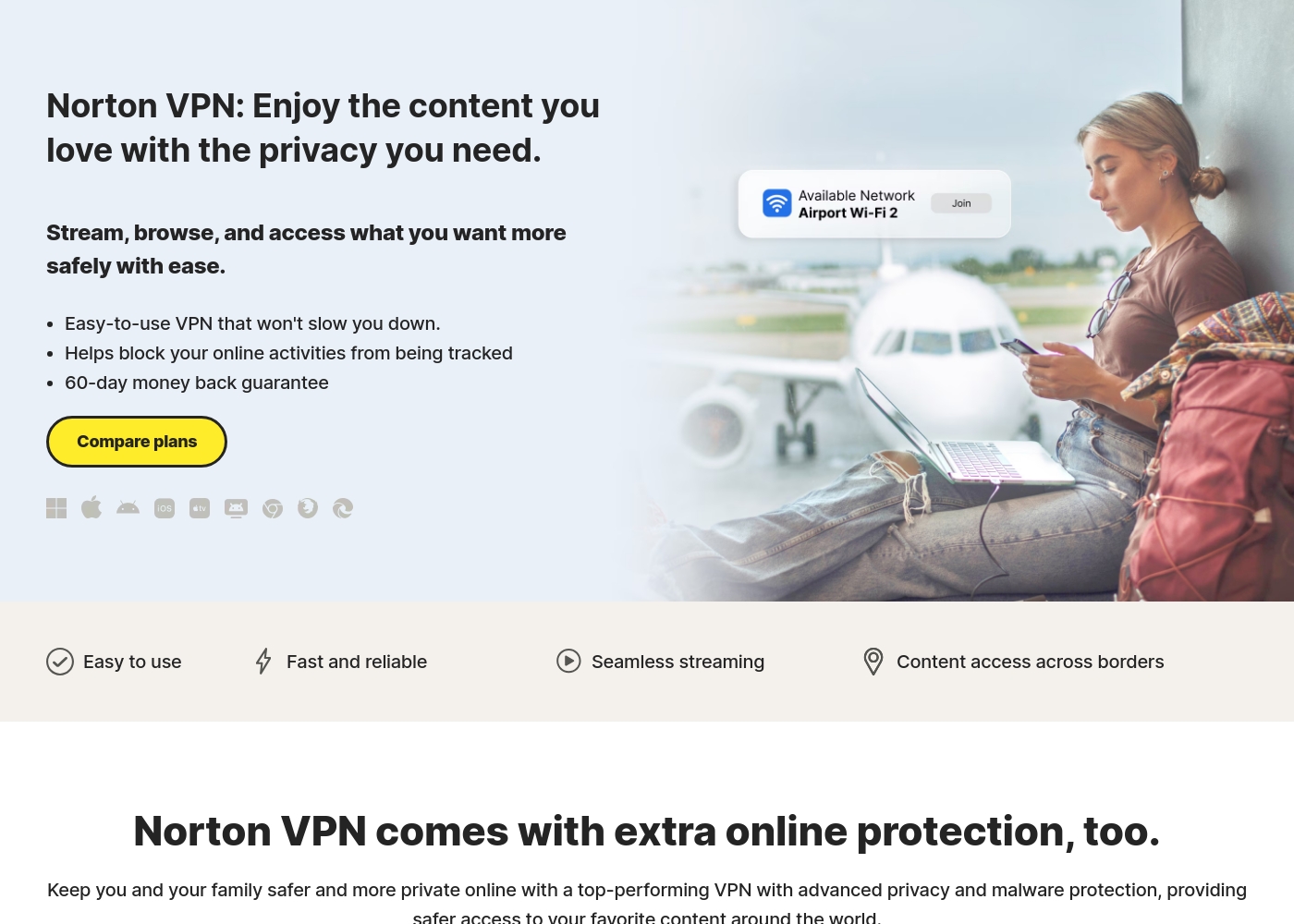
Norton VPN costs between $79.99 and $129.99 per year with three plans: Standard at $79.99/year, Plus at $109.99/year, and Ultimate at $129.99/year.
We offer several annual subscription choices to fit your specific privacy and security needs, broken down below. Note that all listed prices are for the first year of service.
Norton VPN Standard
Price: $79.99 first yr. (Annual) Best For: Basic privacy protection and streaming on personal devices. Refund Policy: 60-day money-back guarantee Other Features:
- Protects up to 5 devices total
- Strict no-log policy
- Kill Switch protection
- IP Rotation and Double VPN
- Ad Blocker for browsers
- Protect up to 5 devices
- No-log policy
- Kill Switch
- IP Rotation and Double VPN
- Ad Blocker
- Protect up to 5 devices
- Includes all Standard features
- AI-powered scam detection and real-time malware protection
- 100% Virus Protection Promise
- Password Manager
- Protect up to 10 devices
- Includes all Plus features
- 50 GB Cloud Backup
- Parental Controls
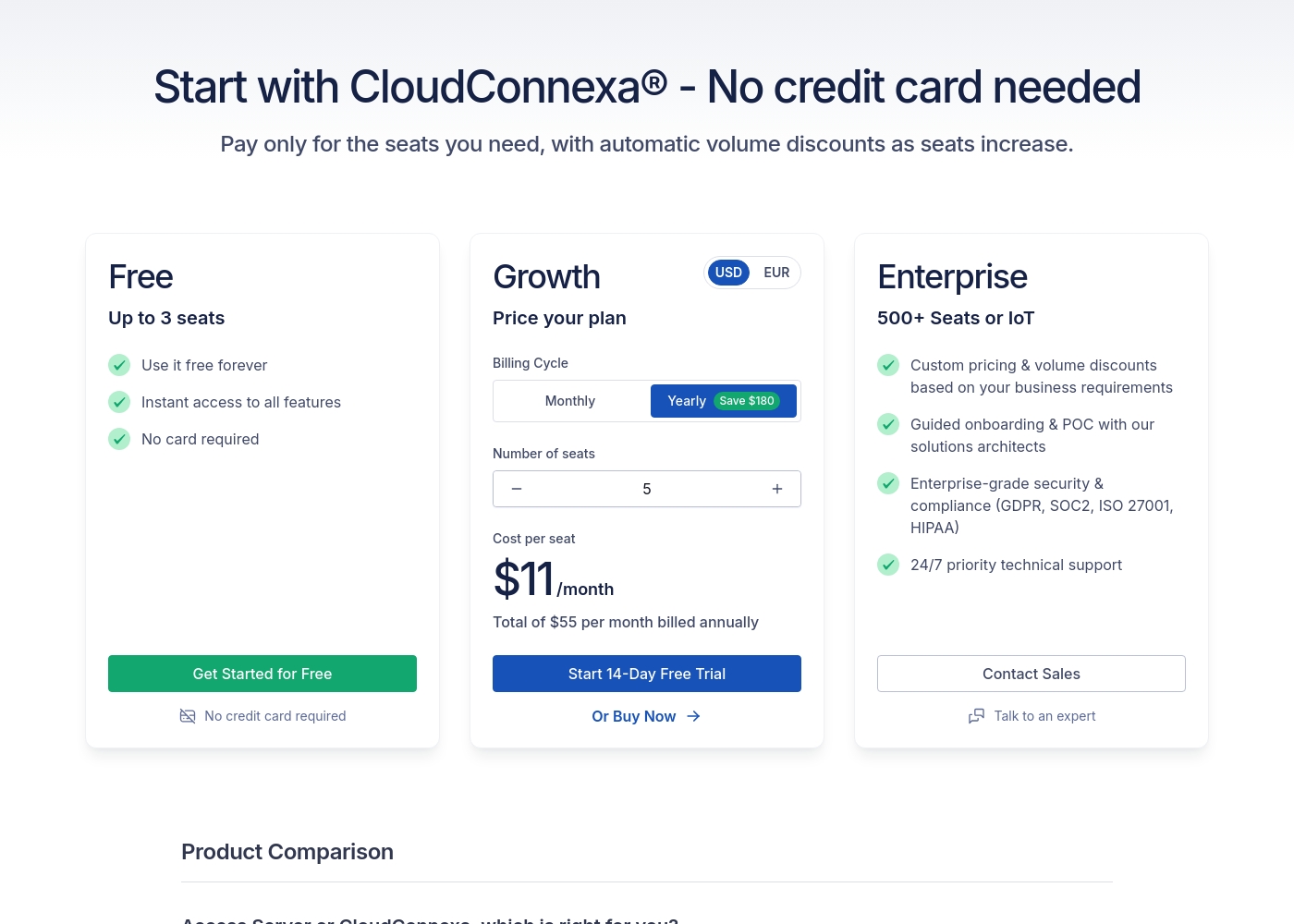
OpenVPN CloudConnexa costs between Free and Custom per year with 3 plans: Free (up to 3 seats), Growth ($11/seat/month billed annually), and Enterprise (Custom Pricing).
OpenVPN also offers two solutions—CloudConnexa and Access Server—but the most straightforward pricing structure is provided for the cloud-delivered CloudConnexa plans detailed below.
Free
Price: Free forever Best For: Small teams or testing Other Features:
- Up to 3 seats
- Use it free forever
- Instant access to all features
- No credit card required
- Up to 3 seats
- Use it free forever
- Instant access to all features
- No card required
- Pay only for the seats you need
- Automatic volume discounts
- Includes 14-Day Free Trial
- Scale seats up or down on demand
- Custom pricing & volume discounts
- Guided onboarding & POC with solution architects
- Enterprise-grade security & compliance (GDPR, SOC2, ISO 27001, HIPAA)
- 24/7 priority technical support
Pricing Notes
- Norton VPN starts very cheaply but users report renewal pricing can be high and confusing.
- OpenVPN's CloudConnexa offers a robust Free plan for up to three seats forever.
- OpenVPN is priced per seat or connection, making it ideal for scaling corporate teams.
- Norton VPN offers a 60-day money-back guarantee; OpenVPN only offers credit for unused funds if you cancel.
Pricing Head-to-Head
User Reviews
The overall external sentiment for Norton is overwhelmingly positive, reflecting a 4.6-star rating across tens of thousands of reviews on Trustpilot. Reviewers consistently praise the robust, comprehensive nature of the security suite, which includes the secure VPN and identity protection services like LifeLock.
Users report feeling peace of mind, knowing their data is protected from online threats and scammers. The software is widely considered reliable and easy to use, operating efficiently in the background with regular scans and quick alerts, even for users who are not tech-savvy.
I have been using Norton since its beginning and rely on the protection it offers. The comprehensive performance and security, especially with LifeLock, simply outperform rival products.
User feedback on Trustpilot paints a largely negative picture, although this reflects a small sample size of nine reviews. The recurring themes critically focus on reliability and user experience.
Several users describe the platform as "extremely laggy," noting poor UX, especially with the browser authentication process. Functionality is also strongly challenged; one reviewer claimed the platform is fundamentally broken and fails to block expected threats like viruses or DDoS attacks, contradicting its advertising claims.
The user experience for the browser authentication is very poor and complex. It is constantly extremely laggy, which makes daily operations unnecessarily frustrating for mandated users.
Our Verdict
The decision between Norton VPN and OpenVPN is actually quite simple: Are you a security-conscious consumer or a compliance-driven corporation? Norton VPN offers easy, polished personal security and streaming optimization. OpenVPN provides highly configurable enterprise network access and Zero Trust controls. This comparison is truly a battle of consumer convenience versus corporate compliance. Norton VPN’s superpower is making strong online privacy effortless and enjoyable. It simplifies security with automated fast server connections and a superior user interface. Norton VPN even integrates automatic ad blocking and dedicated optimization for smoother streaming content. If you want seamless cross-border access on your Apple TV or Google TV, Norton VPN is built precisely for that need. OpenVPN's unmatched strength lies in architectural control and robust compliance features. It secures the network perimeter and enforces Zero Trust access, not just the user's current device. OpenVPN helps businesses tackle demanding regulatory standards like HIPAA and SOC 2 compliance easily. Its granular access controls enforce the principle of least privilege required in modern IT. The ultimate deciding factor comes down to your required deployment flexibility and user count. Norton VPN is strictly limited to 10 devices maximum; it simply cannot scale for large organizations. If you need to manage 50+ remote employees, OpenVPN’s flexible per-seat pricing and scalability are necessary. OpenVPN's self-hosted Access Server also gives IT full architectural oversight. Choose Norton VPN if you are prioritizing individual anonymity, easy geo-blocked streaming, and integrated consumer security protection. Select OpenVPN if you are managing a company network in a regulated industry requiring auditability and enterprise control. Norton VPN wins on ease of use, but OpenVPN is essential for corporate compliance needs.
Frequently Asked Questions
Which is better for streaming geo-blocked content: Norton VPN or OpenVPN?
Norton VPN is definitely better for streaming and media access. It features streaming optimization and supports Smart TV apps like Apple TV and Google TV. OpenVPN focuses on corporate network connections, not consumer media.
Does Norton VPN offer Zero Trust capabilities like OpenVPN?
No, Norton VPN is a consumer product focused on device-level privacy. OpenVPN is built around Zero Trust Network Access (ZTNA). OpenVPN enforces least privilege access across corporate networks.
Which VPN is better for business use and scalability: Norton VPN or OpenVPN?
OpenVPN is superior for business use and scales easily for large teams. Its pricing is per-seat, supporting 500+ users. Norton VPN is limited to 10 devices maximum and lacks corporate features.
Which software supports HIPAA and SOC 2 regulatory compliance?
OpenVPN is specifically designed to meet stringent requirements like HIPAA and SOC 2. Norton VPN is a consumer tool and does not offer compliance certifications or features.
Is Norton VPN cheaper than OpenVPN for an individual user?
Yes, Norton VPN typically starts cheaper on an annual basis for one person with low device counts. However, OpenVPN offers a robust Free plan for up to three seats.
What deployment flexibility does OpenVPN offer that Norton VPN does not?
OpenVPN offers a choice between the managed CloudConnexa and the self-hosted Access Server. You can deploy Access Server on Linux, Docker, or IaaS providers. Norton VPN only offers a standard managed application.
Ready to Choose?
Both tools have their strengths. Choose based on your specific needs.