Identity Guard vs Zander
Identity Guard and Zander both offer robust identity protection, but they focus on different specialties. Identity Guard emphasizes lightning-fast alerts and comprehensive family coverage for multiple adults. Zander provides superior digital security bundles and wins massively on overall affordability and annual pricing.
Best for: Large multi-adult households (4-5 adults), Customers prioritizing deep 3-Bureau credit report coverage
Best for: Budget-conscious individuals/couples seeking low annual costs, Users prioritizing proactive digital security (VPN/Antivirus necessary)
Effective Monitoring, But Watch The Renewals.
We recognize Identity Guard's strength lies in its fast alert system and top-tier "White Glove" fraud resolution team, both of which consistently earn high praise from users. Overall, we score it moderately high for excellent support during crises, but we must deduct points due to recurring complaints regarding opaque renewal pricing and platform usability issues.
Pros
- Alerts are delivered quickly—often within minutes of an event.
- Support staff is highly trained, knowledgeable, and responsive (White Glove Fraud Resolution).
- Comprehensive family plans cover up to five adults and unlimited children.
- High-tier plans cover 3-Bureau credit monitoring and investment account monitoring.
Cons
- Users report significant, unexpected renewal price increases (up to 29%).
- Website/platform is sometimes reported as difficult or confusing to navigate.
- Customer service confusingly handles pricing, billing, and refunds.
- Information given by representatives regarding credit coverage has been inaccurate.
Financially Strong, Operational Issues Reported
Zander presents a compelling product package backed by strong financial recognition and comprehensive ID theft protection features. We note that the basic plans are very affordable, and the Elite bundles offer great value with added digital security tools. Overall, we find Zander to be financially dependable but must urge caution regarding its reported aggressive sales tactics and significant gaps in claims experience.
Pros
- Recognized for financial strength and operational excellence
- Competitive tiered pricing starting low at $6.75/month
- Elite bundles include valuable extras like VPN, CreditLock, and Antivirus
- Comprehensive ID theft recovery coverage up to $2 million
Cons
- Extremely high pressure and relentless sales/solicitation calls reported
- Customer claim processing may deny incidents categorized as 'scam' instead of 'fraud'
- External review volume is extremely low (only 4 reviews)
AboutIdentity Guard
Identity Guard is a proven identity protection service. They have been protecting consumers for over 25 years.
They monitor essentials like your name, SSN, and driver's license number. It’s designed for both individuals and families.
Family plans cover up to five adults and unlimited kids. Users can manage their security and stay updated using the Identity Guard mobile app.
AboutZander
Zander is a top-tier agency recognized nationwide for its high standards and commitment to those they serve. They recently earned the prestigious 2025 Best Practices Agency honor. This designation confirms Zander is a highly-rated firm built on solid, proven foundations. Essentially, Zander is structured specifically to deliver the best possible solutions and unwavering service to clients like you. ✅
Highlights
Feature Comparison
Features Overview
We highlight the main differences and pick a winner for each feature.
Pricing & Value
Zander is significantly more affordable, costing almost half the price for its premium features. Identity Guard offers comprehensive options, but they come at a much higher price point.
Identity Guard's Individual Ultra plan costs $25.00 monthly with annual billing. This is the top tier offering specialized asset coverage. Zander’s competitive pricing is hard to beat, with its Elite Bundle Individual plan only costing $11.99 per month. Zander successfully bundles VPN and Antivirus software at this very reasonable price. Identity Guard offers a generous 60-day money-back guarantee, reducing the risk of commitment. Zander does not explicitly state any refund policy, which reduces transparency for new users. Overall, Zander delivers superior value, especially when compared feature-to-feature with Identity Guard's expensive top tier plan.
Family Coverage Scope
Identity Guard is the clear winner for large households needing extensive adult coverage. Zander is best suited for traditional family units with two adults and children.
Identity Guard has fantastic family plans, covering up to five adults under one single subscription. It also includes monitoring for an unlimited number of children. Zander’s Family plans cover two adults and all dependent children for free under that account. This is sufficient for most smaller, nuclear families. If you have multiple adult dependents, roommates, or multi-generational living, Identity Guard accommodates them better. Identity Guard also offers higher family insurance coverage, up to $5M. Zander caps its family coverage at $2 million for stolen funds and expenses. Identity Guard provides more flexibility and a bigger safety net for larger households.
Credit Monitoring Depth
Identity Guard provides full 3-Bureau credit monitoring, a feature Zander does not advertise. Zander focuses only on the Experian CreditLock.
Starting with its Total plan, Identity Guard includes comprehensive 3-Bureau credit monitoring and reporting. This tracks changes across Equifax, Experian, and TransUnion. Zander’s monitoring features do not explicitly mention 3-Bureau coverage for credit files. It only notes the inclusion of an Experian CreditLock feature in its Elite Bundle. If monitoring all three credit bureaus is a non-negotiable priority for you, Identity Guard is the better choice. Catching inaccuracies on one bureau is essential for credit health. While Zander offers credit lock and financial account monitoring, Identity Guard offers a more complete picture of your overall credit status.
Integrated Digital Tools
Zander bundles premium digital defense tools like a VPN and Antivirus software. Identity Guard only provides basic utility tools.
Zander’s Elite Bundle includes UltraVPN and UltraAV, which provides a key layer of device and online activity protection. These are highly valuable, proactive security tools. Identity Guard includes a basic Safe Browsing Tool and a secure Password Manager in its plans. These are useful but less comprehensive than Zander's bundled software. If you want a one-stop shop for identity theft and general device security, Zander provides tremendous bundled value. Identity Guard requires you to purchase a separate VPN or Antivirus solution. Zander makes active digital protection easy by integrating these essentials right into the Elite Bundle, ensuring users browse securely.
Alert Speed & Notification
Identity Guard explicitly states their alert system is significantly faster, reducing potential fraud damage. Zander offers sufficient, standard monitoring alerts.
Identity Guard claims that its alert system can notify users up to four times faster than many competing services. This speed is critical for mitigating losses during an attack. Zander provides timely alerts for Dark Web findings, SSN usage, and account takeover attempts in its Elite plan. Zander does not advertise specific speed metrics. Receiving faster alerts means you can freeze accounts or challenge applications more quickly. Identity Guard’s focus on speed is a key competitive edge. Both Identity Guard and Zander monitor similar data points, but Identity Guard’s rapid notification capability is a significant benefit in a crisis.
Restoration Services
Identity Guard offers specialized 'White Glove' resolution, while Zander provides unlimited, 24/7/365 recovery support. Both offer expert help.
Identity Guard offers White Glove Fraud Resolution in its Ultra plans, meaning dedicated experts fully handle the complex restoration process. Identity Guard’s support reviews are highly positive. Zander includes Unlimited Recovery Services and assures 24/7/365 access to customer and recovery services. This ensures help is available whenever identity theft occurs. The White Glove service from Identity Guard suggests a higher level of dedicated, personal case management. However, Zander’s assurance of unlimited recovery services in all its plans means comprehensive expert help is accessible to all subscribers.
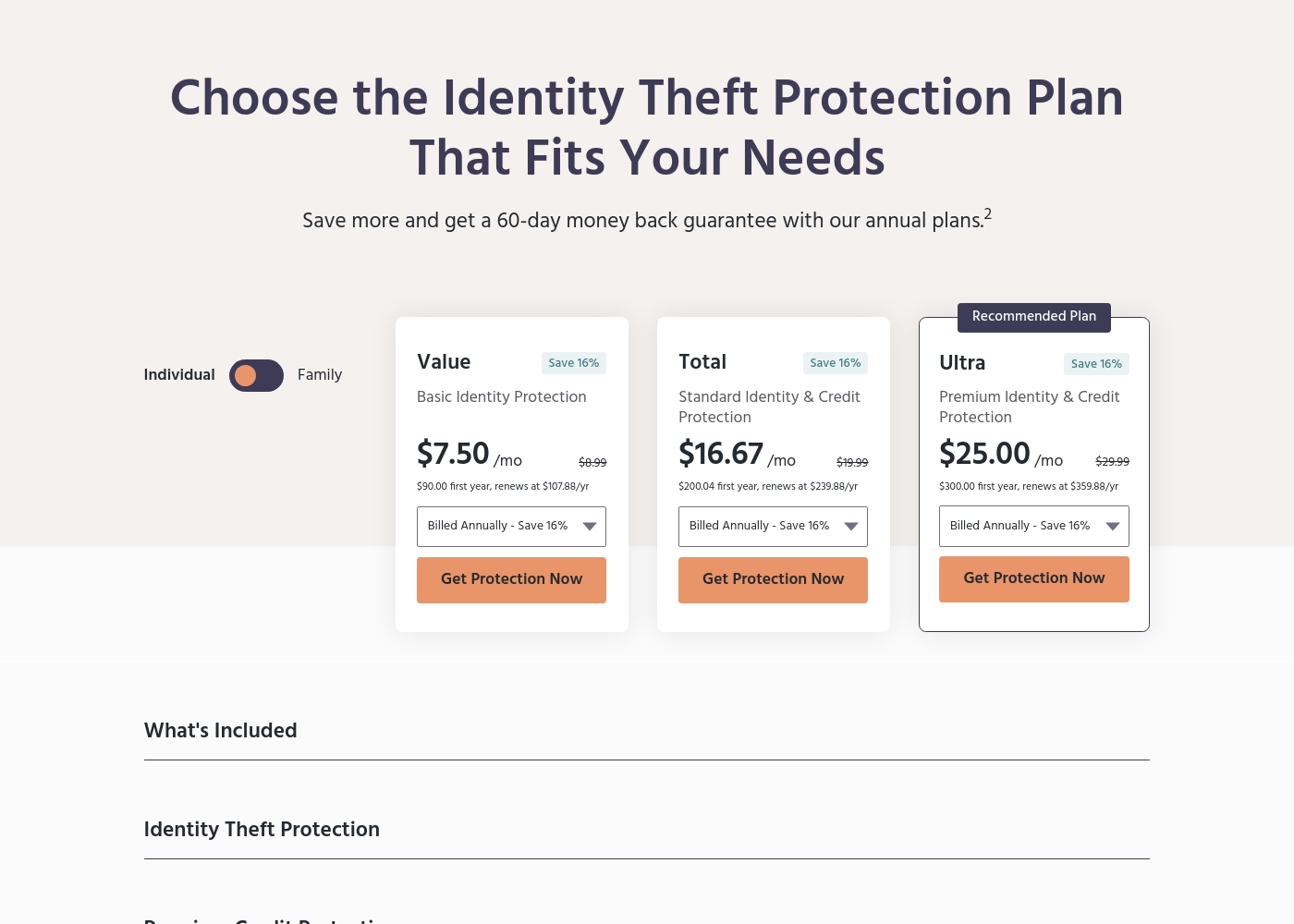
Identity Guard costs between $7.50 and $39.99 per month with three plans: Value (Basic) starting at $7.50/mo, Total (Standard) starting at $16.67/mo, and Ultra (Premium) starting at $25.00/mo (based on Individual annual rates).
Identity Guard helps you find the right level of protection for your needs. Plans are available for both individuals and families, and you can save money by choosing annual billing.
Value (Basic Identity Protection) - Individual Plan
Price: $7.50 per month (Billed annually at $90.00 for the first year) Best For: Basic Identity Protection Refund Policy: 60-day money back guarantee (on annual plans) Other Features:
- $1 Million Identity Theft Insurance
- Data Breach Notifications and Dark Web Monitoring
- Safe Browsing Tool and Password Manager
- US-Based Customer Care Team
- $1 Million Identity Theft Insurance
- White Glove Fraud Resolution
- Data Breach Notifications
- Dark Web Monitoring
- All Value features
- Bank Account Monitoring
- 3-Bureau Credit Monitoring
- Monthly Credit Score*
- 3-Bureau Annual Credit Report (Premium Credit Protection)
- All Total features
- Social Media Monitoring
- Credit & Debit Card Monitoring
- 401K & Investment Account Monitoring
- Home & Auto Title Monitoring
- All Individual Value features
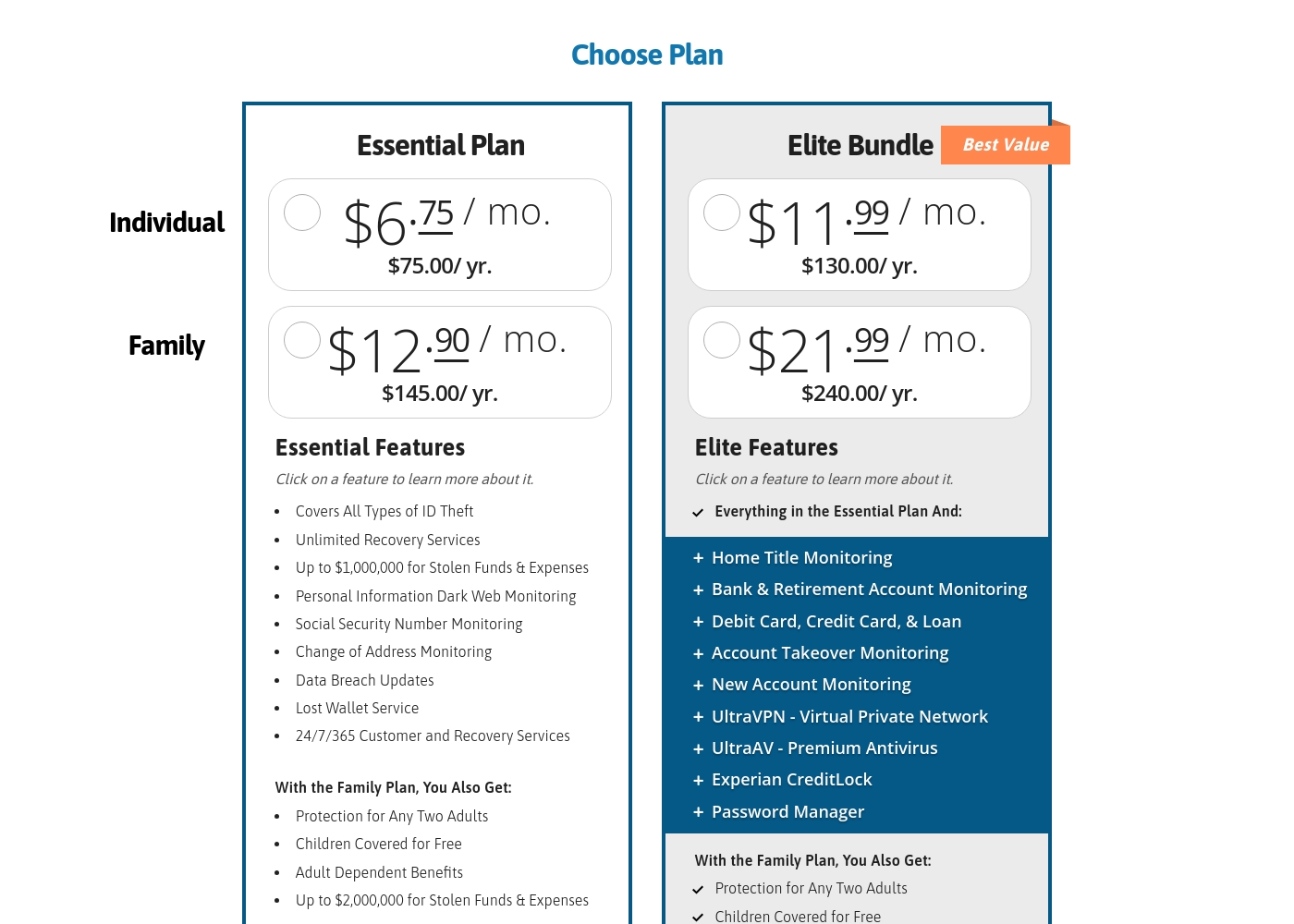
Zander costs between $75.00 and $240.00 per year with four options: Essential Plan Individual at $75.00, Essential Plan Family at $145.00, Elite Bundle Individual at $130.00, and Elite Bundle Family at $240.00.
You'll see all four subscription options in the pricing overview below. Let's break down exactly what you get with each of these comprehensive identity protection plans.
Essential Plan (Individual)
Price: $75.00/year or $6.75/mo. Best For: Individuals needing robust basic ID theft protection and recovery services. Other Features:
- Covers All Types of ID Theft
- Unlimited Recovery Services
- Up to $1,000,000 for Stolen Funds & Expenses
- Personal Information Dark Web Monitoring
- 24/7/365 Customer and Recovery Services
- Covers All Types of ID Theft
- Unlimited Recovery Services
- Up to $1,000,000 for Stolen Funds & Expenses
- Personal Information Dark Web Monitoring
- Social Security Number Monitoring
- Includes all Essential Plan features
- Protection for Any Two Adults
- Children Covered for Free
- Adult Dependent Benefits
- Up to $2,000,000 for Stolen Funds & Expenses
- Includes everything in the Essential Plan
- Home Title Monitoring
- Bank & Retirement Account Monitoring
- Debit Card, Credit Card, & Loan Monitoring
- Account Takeover Monitoring
- Includes all Elite Bundle features
- Protection for Any Two Adults
- Children Covered for Free
Pricing Notes
- Identity Guard includes a generous 60-day money-back guarantee on all annual plans.
- Zander is the affordability champion; its top-tier Elite Bundle is nearly half the cost of Identity Guard's comparable Ultra plan.
- Identity Guard users frequently report significant, sometimes unexpected, price increases upon renewal.
- Zander does not clearly state a money-back guarantee or refund policy, increasing commitment risk.
- Identity Guard offers superior family coverage with up to $5M insurance, compared to Zander's $2M max.
- Annual subscriptions save money with both Identity Guard and Zander versus monthly payments.
Pricing Head-to-Head
User Reviews
Identity Guard (which appears closely associated with Aura in recent feedback) receives mixed but generally positive reviews. Many users praise the highly effective and knowledgeable customer support agents, often highlighting specific staff for providing patient, clear guidance during fraud resolution.
Customers appreciate the speed of alerts; the service frequently notifies them of potential identity checks or data leaks within minutes, often days before others systems. However, recurring issues present significant concerns.
I was in good hands with Bibi. She patiently guided me through contacting retailers and credit companies after an attack. She is knowledgeable, and I now realize the high value of this service after interacting with her.
Zander’s external feedback is extremely limited and highly polarized, resulting in a low 2.7/5.0 TrustScore based on only four recent reviews. Users who had positive experiences noted the company’s helpful support and follow-up when setting up both term life insurance and identity theft protection.
They were appreciative of being offered great options, such as no-medical-exam policies, and receiving useful monthly ID theft monitoring updates. However, the negative feedback highlights two serious operational issues.
Zander is great! They helped me get term life insurance and ID theft protection setup easily. They followed up throughout the process and kept me updated. The ID theft protection service is great, and I appreciate the helpful monthly update email I receive regarding any online ID issues.
Our Verdict
Choosing between Identity Guard and Zander hinges on your budget and desired feature set. Zander delivers incredible digital tools at a much lower price point overall. Identity Guard focuses on rapid-fire alerts and superb restoration aid. Identity Guard is clearly unbeatable for large families and intensive credit oversight. Identity Guard secures up to five adults and provides full 3-Bureau credit reporting. Plus, Identity Guard claims its alerts are four times faster, limiting real fraud damage quickly. Zander offers superior digital value, perfect for the modern digital user who watches their wallet. Zander bundles a premium VPN and Antivirus into its Elite plan. No other tool offers such a powerful digital security package this cost-effectively. The final decision comes down to credit depth versus device protection. If 3-Bureau credit monitoring is essential, pick Identity Guard. If you want high-quality digital tools bundled cheaply, Zander is the clear winner here. Choose Identity Guard if you run large, multi-adult households or need deep credit reporting. Opt for Zander if you need cost-effective protection that actively includes high-quality digital security software.
Frequently Asked Questions
Which is better for large families: Identity Guard or Zander?
Identity Guard is significantly better for large families needing broader adult coverage. Identity Guard covers up to five adults and unlimited children under one plan. Zander limits coverage to only two adults along with dependent children.
Does Zander offer 3-Bureau credit monitoring like Identity Guard?
No, Zander does not advertise comprehensive 3-Bureau credit monitoring in its plans. Identity Guard provides full 3-Bureau monitoring starting at its Total tier. Zander focuses only on an Experian CreditLock feature.
Is Zander a cheaper identity protection option than Identity Guard?
Yes, Zander is the more affordable option across all comparable tiers. Zander's Elite Bundle costs only $11.99/mo, while Identity Guard's feature-matched Ultra plan costs $25.00/mo.
Why should I choose Identity Guard over Zander?
Choose Identity Guard if you need 3-Bureau credit monitoring and lightning-fast fraud alerts. Identity Guard also offers a much wider safety net with up to $5 million in family theft insurance and a 60-day guarantee.
What digital security tools does Zander include that Identity Guard doesn't?
Zander’s Elite Bundle includes a premium UltraVPN and UltraAV Antivirus software. Identity Guard only offers a standard safe browsing tool and a password manager for proactive defense.
Does Identity Guard or Zander offer a better money-back guarantee?
Identity Guard offers a better guarantee with a clear 60-day money-back policy on annual plans. Zander does not explicitly state a money-back guarantee or refund option for its subscriptions.
Ready to Choose?
Both tools have their strengths. Choose based on your specific needs.