ID Resolve vs Identity Guard
ID Resolve and Identity Guard both offer expert identity protection services. ID Resolve focuses heavily on expert resolution after theft occurs. Identity Guard emphasizes comprehensive prevention through fast alerts and asset monitoring. The key difference is proactive monitoring versus post-facto cleanup support.
Best for: Individuals who only need high-quality expert backup for cleanup after a confirmed breach., Users who prioritize 100% stable, predictable long-term subscription costs.
Best for: Families needing comprehensive coverage for multiple adults and children (up to 5 adults)., Individuals requiring 3-Bureau credit reporting and monthly credit scores.
Pros
Cons
Effective Monitoring, But Watch The Renewals.
We recognize Identity Guard's strength lies in its fast alert system and top-tier "White Glove" fraud resolution team, both of which consistently earn high praise from users. Overall, we score it moderately high for excellent support during crises, but we must deduct points due to recurring complaints regarding opaque renewal pricing and platform usability issues.
Pros
- Alerts are delivered quickly—often within minutes of an event.
- Support staff is highly trained, knowledgeable, and responsive (White Glove Fraud Resolution).
- Comprehensive family plans cover up to five adults and unlimited children.
- High-tier plans cover 3-Bureau credit monitoring and investment account monitoring.
Cons
- Users report significant, unexpected renewal price increases (up to 29%).
- Website/platform is sometimes reported as difficult or confusing to navigate.
- Customer service confusingly handles pricing, billing, and refunds.
- Information given by representatives regarding credit coverage has been inaccurate.
AboutID Resolve
AboutIdentity Guard
Identity Guard is a proven identity protection service. They have been protecting consumers for over 25 years.
They monitor essentials like your name, SSN, and driver's license number. It’s designed for both individuals and families.
Family plans cover up to five adults and unlimited kids. Users can manage their security and stay updated using the Identity Guard mobile app.
Highlights
Feature Comparison
Features Overview
We highlight the main differences and pick a winner for each feature.
Core Focus
ID Resolve emphasizes cleanup, while Identity Guard focuses heavily on fast prevention.
The standard ID Resolve plan is resolution-focused only. It waits for confirmed theft before intervention happens quickly. Prevention comes only with the higher-priced ID Resolve 360 plan. All Identity Guard plans include proactive dark web monitoring features. They specifically claim their security alerts are delivered up to four times faster. Identity Guard believes prevention is the best initial defense. ID Resolve offers a base package without monitoring included. Identity Guard always includes proactive monitoring technology in its core plans. If you skip the ID Resolve 360 plan, the service won't warn you of early warning signs. Identity Guard is better for proactive users who want to stop fraud before it starts.
Credit Monitoring
Identity Guard offers comprehensive 3-bureau credit monitoring; ID Resolve lacks explicit features.
The available data for ID Resolve does not mention specific credit monitoring features. The service protects your financial reputation via specialists. This protection likely focuses on resolution, not routine tracking. Identity Guard's Total and Ultra plans include full 3-Bureau credit monitoring. Users also get a monthly credit score update included in their bill. This is vital for comprehensive financial health tracking. Identity Guard provides essential credit reporting and scores across its mid-tiers. ID Resolve's core plans omit this deep financial oversight for users. If tracking your credit score monthly is a priority, Identity Guard is the clear choice.
Family Coverage
Identity Guard offers robust plans for large families; ID Resolve limits coverage to individuals and spouses.
ID Resolve only details individual coverage options. Spouse coverage is available for an extra, undisclosed cost. There are no expansive, multi-adult family protection plans listed. Identity Guard's Family plans cover up to five adult members seamlessly. They also automatically include identity protection for an unlimited number of children. This simplifies household security significantly. Identity Guard supports households with multiple adults and children incredibly well. ID Resolve is far more restricted in its coverage model. Large families should definitely choose Identity Guard for unified, cost-effective household coverage.
Pricing Stability
ID Resolve offers predictable pricing; Identity Guard is cheap initially but renews higher.
ID Resolve pricing is simple and linear: $13.25/month for basic resolution coverage. Annual pricing is proportional and not heavily discounted. What you pay initially is the stable renewal price. The Identity Guard basic plan starts cheaper, $7.50/month annually for the first year. However, customers report significant, unexpected renewal price increases after the introductory period. Their initial pricing is highly promotional. ID Resolve offers pricing transparency and stability year over year. Identity Guard offers greater initial savings but potentially higher future costs. ID Resolve is better for accurate long-term budgeting.
Asset Monitoring
Identity Guard protects high-value assets like titles and 401Ks; ID Resolve lacks direct monitoring.
The data shows ID Resolve 360 aims to protect money and financial reputation. It does not list monitoring for specific non-standard or unique assets like property titles. Their protection is broad but less specific. Identity Guard's premium Ultra plan monitors Home and Auto Titles specifically. It also tracks 401K and Investment Accounts for fraud attempts. This offers top-tier, specialized asset security. Identity Guard Ultra targets monitoring for high-net-worth individuals or real estate owners. ID Resolve does not offer this fine-grained level of asset monitoring. If you own substantial property or retirement accounts, Identity Guard Ultra is essential.
Insurance & Guarantee
Identity Guard provides clear $1M+ insurance; ID Resolve's insurance details are not provided.
Information on explicit financial reimbursement or insurance amounts for ID Resolve is missing. The service focuses heavily on efficient, active resolution efforts. They help protect your financial standing after an event. Identity Guard consistently provides robust Identity Theft Insurance in all plans. Coverage ranges from $1 million up to $5 million depending on the plan chosen. This reimburses certain fees and losses. Identity Guard provides greater clarity and a confirmed substantial financial safety net. Identity Guard also includes a 60-day money-back guarantee on annual plans. Knowing you have $1M+ insurance coverage offers significant financial peace of mind.
Resolution Quality
Both services use dedicated, U.S.-based experts for guaranteed identity theft cleanup.
ID Resolve guarantees U.S. based resolution specialists on staff. They spring into immediate action when identity theft is detected. These experts promise to manage the complex cleanup process fully. Identity Guard provides 24/7/365 access to US-Based Fraud Agents. The premium Ultra plan offers specialized White Glove Fraud Resolution support. Both services provide highly competent professional assistance. Both companies prioritize expert, domestic resolution to minimize user hassle and time. Identity Guard offers slightly better accessibility with 24/7/365 availability. For thorough recovery management, both systems are top-tier. If fast, hassle-free recovery is your goal, both ID Resolve and Identity Guard deliver exceptional service.
Digital Toolset
Identity Guard bundles security tools; ID Resolve does not list these proactive features.
ID Resolve's primary focus is on detection and cleanup using advanced proprietary technology. Included supplemental tools like safe browsing or password managers are not mentioned within the plans. The service is outcome-focused. Every Identity Guard plan includes essential integrated digital tools. Users get a secure Password Manager and a Safe Browsing Tool. These features are designed to promote better daily digital hygiene. Identity Guard provides complimentary tools to actively prevent daily security compromises. ID Resolve focuses its technology purely on finding existing fraud. Identity Guard bundles necessary cyber security functions into their service offerings.
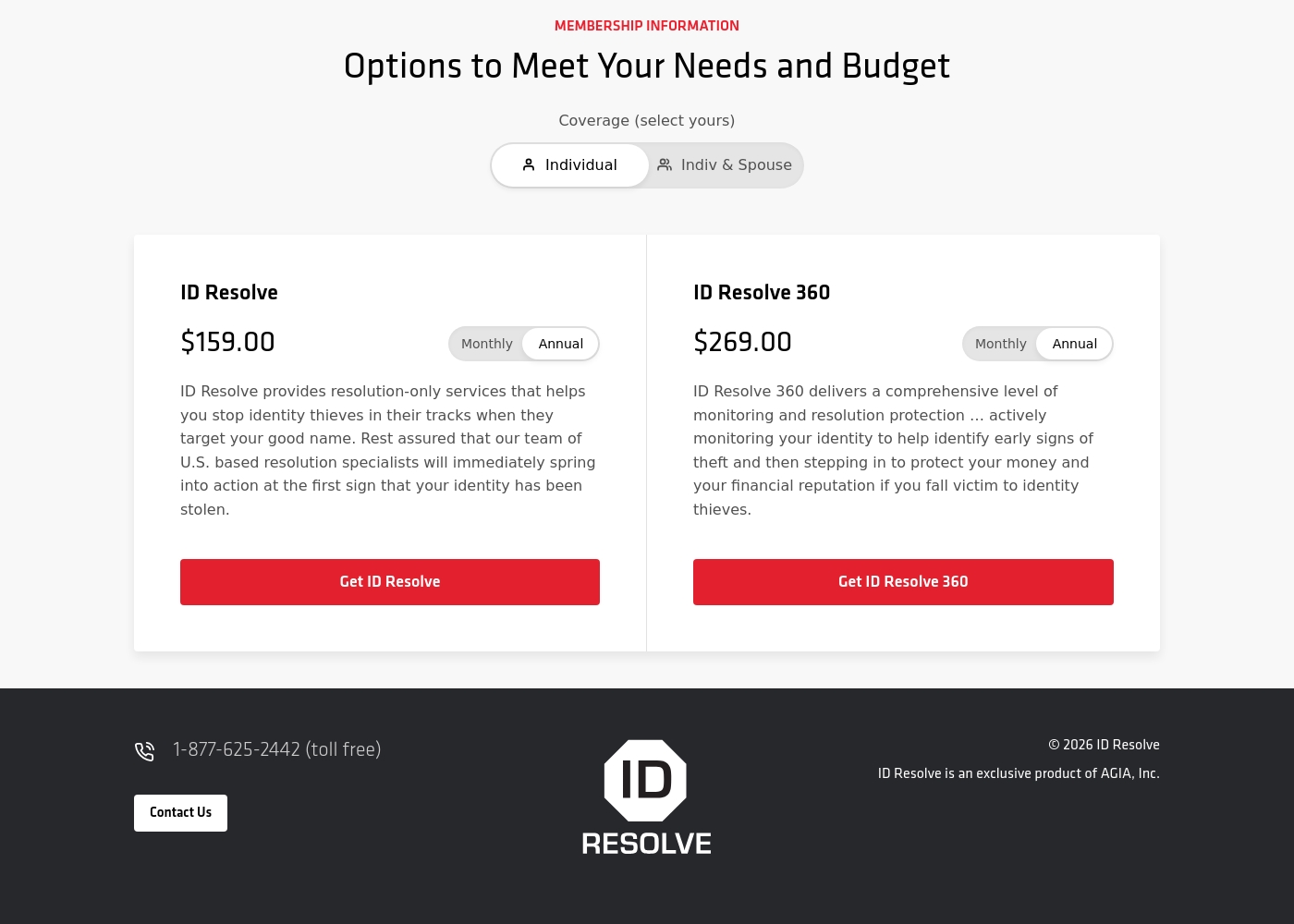
ID Resolve pricing: ID Resolve offers identity protection plans starting at $13.25 per month or $159.00 per year. Protect yourself quickly now.
You will love how easy it works. Choose your level immediately.
You are ready to start now without stress anyway. Protect your identity starting right now.
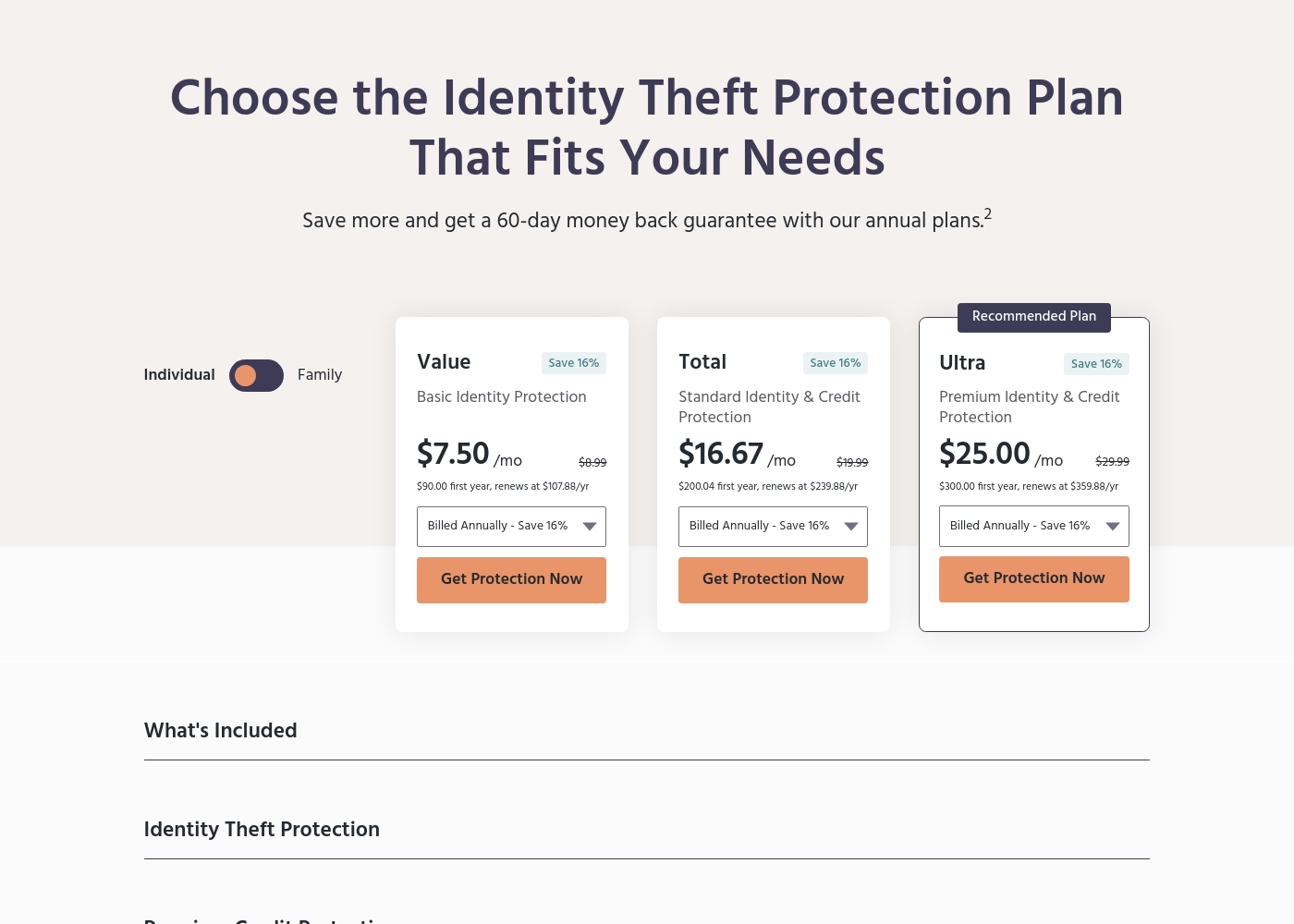
Identity Guard costs between $7.50 and $39.99 per month with three plans: Value (Basic) starting at $7.50/mo, Total (Standard) starting at $16.67/mo, and Ultra (Premium) starting at $25.00/mo (based on Individual annual rates).
Identity Guard helps you find the right level of protection for your needs. Plans are available for both individuals and families, and you can save money by choosing annual billing.
Value (Basic Identity Protection) - Individual Plan
Price: $7.50 per month (Billed annually at $90.00 for the first year) Best For: Basic Identity Protection Refund Policy: 60-day money back guarantee (on annual plans) Other Features:
- $1 Million Identity Theft Insurance
- Data Breach Notifications and Dark Web Monitoring
- Safe Browsing Tool and Password Manager
- US-Based Customer Care Team
- $1 Million Identity Theft Insurance
- White Glove Fraud Resolution
- Data Breach Notifications
- Dark Web Monitoring
- All Value features
- Bank Account Monitoring
- 3-Bureau Credit Monitoring
- Monthly Credit Score*
- 3-Bureau Annual Credit Report (Premium Credit Protection)
- All Total features
- Social Media Monitoring
- Credit & Debit Card Monitoring
- 401K & Investment Account Monitoring
- Home & Auto Title Monitoring
- All Individual Value features
Pricing Notes
- ID Resolve uses consistent, non-discounted pricing for long-term budget predictability.
- Identity Guard offers significantly lower introductory pricing, starting at $7.50/month for the basic annual plan.
- Identity Guard customers must beware of substantial renewal price hikes (up to 29%) after the first promotional year.
- Identity Guard provides a generous 60-day money-back guarantee on annual plans, offering a risk-free start.
- ID Resolve pricing covers individual use; spouse coverage is additional but price details are undisclosed.
Pricing Head-to-Head
User Reviews
Identity Guard (which appears closely associated with Aura in recent feedback) receives mixed but generally positive reviews. Many users praise the highly effective and knowledgeable customer support agents, often highlighting specific staff for providing patient, clear guidance during fraud resolution.
Customers appreciate the speed of alerts; the service frequently notifies them of potential identity checks or data leaks within minutes, often days before others systems. However, recurring issues present significant concerns.
I was in good hands with Bibi. She patiently guided me through contacting retailers and credit companies after an attack. She is knowledgeable, and I now realize the high value of this service after interacting with her.
Our Verdict
ID Resolve and Identity Guard are both reliable identity protection options. But they serve two very different user profiles right now. If your priority is comprehensive pre-crime prevention, Identity Guard wins easily. If you value budgeting simplicity and assured expert cleanup, ID Resolve is appealing. ID Resolve's superpower is its straightforward, dependable resolution service. The standard ID Resolve plan is resolution-only coverage at a predictable rate of $13.25/month. ID Resolve guarantees immediate action from U.S. based resolution specialists. You choose ID Resolve if you want guaranteed cleanup without pricing fluctuations. Identity Guard leads with superior, comprehensive monitoring and alert speed. Their alerts are up to four times faster than competitors, reducing damage potential quickly. Identity Guard offers essential 3-Bureau credit monitoring in its mid- and high-tier plans. Family plans cover up to five adults and unlimited children easily. The deciding factor is whether you require broad monitoring and credit oversight. Identity Guard bundles robust features like 3-Bureau credit tracking and specialized asset monitoring. Identity Guard offers clearer financial protection with up to $5 million in insurance. ID Resolve’s basic plan is purely reactive until you upgrade to the 360 premium plan. Final Verdict: Identity Guard is the better choice for the majority of users and families. Choose Identity Guard if you need proactive defense and advanced credit tracking. Pick ID Resolve if you are looking for simple, predictable pricing and assured expert resolution services.
Frequently Asked Questions
Which is better for families: ID Resolve or Identity Guard?
Identity Guard is significantly better for families than ID Resolve. Identity Guard offers plans covering up to five adults and unlimited children. ID Resolve only explicitly mentions individual or spousal coverage options.
Does ID Resolve offer 3-Bureau credit monitoring like Identity Guard?
No, ID Resolve’s listed features do not include 3-Bureau credit monitoring. Identity Guard includes this crucial feature in its Total and Ultra plans. ID Resolve focuses more on resolving financial fraud after it occurs.
Is Identity Guard cheaper than ID Resolve?
Identity Guard is cheaper initially, starting at $7.50/month annually for the first year. ID Resolve starts at $13.25/month with stable pricing. Identity Guard users report high price hikes upon renewal.
Which service offers faster alerts to prevent identity theft?
Identity Guard claims their alerts are delivered up to four times faster than competitors. For rapid, proactive notification, Identity Guard is the winner. ID Resolve focuses on rapid action once theft is detected.
Do both Identity Guard and ID Resolve use U.S.-based resolution specialists?
Yes, both services emphasize the use of dedicated, U.S.-based resolution specialists. This ensures high-quality support and local expertise in handling complex identity restoration tasks.
Does Identity Guard or ID Resolve offer specialized asset monitoring for wealth?
Identity Guard offers superior asset monitoring in its Ultra plan. This includes monitoring for Home/Auto Titles and 401K/Investment accounts. ID Resolve does not detail these specialized features.
Ready to Choose?
Both tools have their strengths. Choose based on your specific needs.