ExpressVPN vs FastVPN
ExpressVPN and FastVPN appear competitive but differ wildly in user trust and reliability. ExpressVPN is the industry gold standard for audited security and performance stability. FastVPN offers incredibly low introductory pricing but faces severe, documented user complaints regarding billing and service integrity.
Best for: Individuals prioritizing verified, audited digital security above cost, Large families and power users needing security for up to 14 simultaneous devices
Best for: Users who absolutely must have the lowest possible introductory price point, People primarily concerned with unblocking specific 4K streaming services like Disney+
Reliable performance supported by expert assistance.
We reviewed ExpressVPN’s robust security features, noting its independently audited no-logs policy and advanced TrustedServer technology. External feedback confirms users experience consistent reliability and ultra-fast connections globally, praising the expert customer support for its promptness. Overall, we confidently recommend ExpressVPN as a high-performing privacy tool, despite its premium price point.
Pros
- Globally praised for connection reliability and speed.
- Strict, independently audited no-logs policy and TrustedServer technology.
- Exceptional, prompt, and patient human customer support.
- Highly effective at bypassing geographic restrictions and censorship.
Cons
- Premium pricing is significantly higher than many competitors after the initial discounted term.
- Occasional difficulties accessing major streaming services (e.g., Netflix, YouTube TV) that detect the VPN.
- Some users reported issues with subscription renewals and auto-cancellations.
Major Trust Issues and Billing Warnings
We note FastVPN offers attractive introductory rates and claims a strong no-log policy supported by a wide server network. However, we cannot overlook the severe and recurring user complaints regarding unauthorized charges and accounts frozen shortly after payment. Overall, we urge extreme caution when considering this provider due to major risks related to service reliability and immediate financial transparency.
Pros
- Highly competitive introductory pricing rates advertised.
- Strict no-log policy guarantees user anonymity.
- Claimed access to a large network of 2700+ servers.
- Known for fast connection speeds, according to some reports.
Cons
- Frequent reports of severe unauthorized credit card charges.
- Accounts may be frozen shortly after paying for the subscription.
- Customer service allegedly ignores or refuses cancellation requests.
- Users report requests for government ID verification after purchase.
AboutExpressVPN
ExpressVPN is the World’s #1 premium VPN service built for individual privacy needs. A VPN, or virtual private network, establishes a secure connection to the internet. When you connect, your traffic goes through an authenticated, encrypted tunnel that nobody can view. This process prevents hackers, governments, and your internet provider from seeing your destination or activity. 💡
The VPN server acts like a proxy for your web activity. Instead of your real IP address, websites only see the address of the VPN server. This professional, commercial VPN service offers server locations in 105 countries, ensuring reliable speed and global flexibility. 🌎
AboutFastVPN
FastVPN is a straightforward way to keep your online life private and secure. Getting started with the service is easier than you might think. Downloading the VPN is one of the simplest ways to protect your data privacy.
It works by ensuring all your Internet traffic is encrypted. This simple step protects your private data, especially when you shop safely on public Wi-Fi. It also gives you the freedom to browse anonymously. We love the strict no-log policy 💡, which guarantees that your online activity is never tracked or logged.
Highlights
Feature Comparison
Features Overview
We highlight the main differences and pick a winner for each feature.
Security & Trust
ExpressVPN offers audited, verifiable security; FastVPN faces major trust and reliability complaints.
ExpressVPN employs TrustedServer technology, ensuring that user data is never written onto hard drives. Its strict no-logs policy has been independently audited and verified for user peace of mind. This verified system offers true best-in-class encryption. FastVPN guarantees anonymity through a claimed strict no-logs policy and encryption. Details on the specific protocols used for security are not explicitly stated by FastVPN itself. The core difference is verification; ExpressVPN provides evidence of its security claims with audits. FastVPN's severe billing issues undermine any confidence in their stated privacy policy. Choose ExpressVPN if privacy means verifiable, independently proven security controls. FastVPN's alleged practices make it a risky choice despite the privacy claims.
Pricing Model
FastVPN is cheaper upfront; ExpressVPN is more expensive but provides payment stability and trust.
ExpressVPN requires a large initial payment for a 28-month contract to achieve its lowest monthly rates. Their prices renew significantly higher, ranging from $100 to $200 annually. FastVPN offers promotional introductory rates as low as $1.00 per month for the first year. Subsequent renewals, while increasing, remain relatively lower than ExpressVPN's standard rates. The key problem with FastVPN is the alleged severe issues with unauthorized charges and frozen accounts after payment. Despite its premium cost, ExpressVPN offers dependable service and hassle-free subscription management. If you are wary of financial surprise or loss, ExpressVPN is the safer long-term choice for reliability.
Server Network Size
FastVPN reports a higher server count; ExpressVPN covers more unique geographic locations.
ExpressVPN focuses on a wide global presence, offering server access across 105 total countries. This extensive reach is critical for reliable geo-unblocking worldwide. FastVPN boasts a large network that exceeds 2700 total servers in over 100 global locations. A high server count often translates to potentially lower latency and better speeds for connectivity. ExpressVPN offers five more country locations, giving slightly better geographic flexibility. However, FastVPN’s reported 2700+ servers provide more connection options and distribution points. FastVPN is technically superior in server volume; make sure the servers you need are functional and reliable.
Device Connections
ExpressVPN secures up to 14 devices; FastVPN does not disclose its simultaneous usage limit.
ExpressVPN clearly supports a high number of simultaneous connections, ranging from 10 devices in Basic to 14 in the Pro plan. This large capacity is perfect for securing every device in a modern, connected home. FastVPN fails to explicitly state the maximum number of devices supported per subscription. This omission makes upfront planning extremely difficult for users with multiple technical requirements. ExpressVPN is transparent and guarantees coverage for families and power users needing 10+ devices. You risk wasting your money on FastVPN if your household exceeds its undisclosed device limit.
Customer Support & Trust
ExpressVPN offers exceptional assistance; FastVPN users report refused cancellations and ignored refunds.
ExpressVPN customer support is highly praised in reviews for being prompt, expert, and effective via 24/7 live chat. They are known for handling technical issues swiftly and processing cancellations and refunds easily. FastVPN provides 24/7 support, but its reputation is severely damaged by numerous user complaints. Users report that attempts to cancel or get refunds are often ignored or refused entirely by FastVPN staff. ExpressVPN provides professional service; FastVPN provides service associated with fraudulent business models. Pick ExpressVPN if you expect responsive help or might need a refund under the 30-day guarantee.
Bonus Security Features
ExpressVPN includes identity defense suites; FastVPN offers strictly core VPN functions.
ExpressVPN bundles valuable digital security tools in its advanced tiers, like a dedicated Password Manager. The Identity Defender suite offers essential services like credit scanning and identity theft insurance. FastVPN maintains a bare-bones feature set, focusing only on the basic VPN tunnel and streaming access. It lacks any bundled tools for wider cybersecurity or identity protection. ExpressVPN positions itself as a robust digital security solution beyond just basic masking. FastVPN is suitable only if you already use separate security software for passwords and identity monitoring.
Streaming Capability
FastVPN guarantees 4K streaming access; ExpressVPN is highly reliable but sometimes detected by platforms.
ExpressVPN is generally excellent at changing location and accessing geo-restricted content while traveling. However, it, like many VPNs, sometimes struggles accessing major streaming services like Netflix. FastVPN claims to have invested in a custom network and dedicated servers optimized for reliable 4K streaming. This specialized infrastructure aims to access platforms like Netflix and Disney+ easily. If reliable, high-quality streaming access is your absolute highest priority, FastVPN makes the stronger feature claim. While ExpressVPN works most of the time, FastVPN explicitly targets performance for demanding video services.
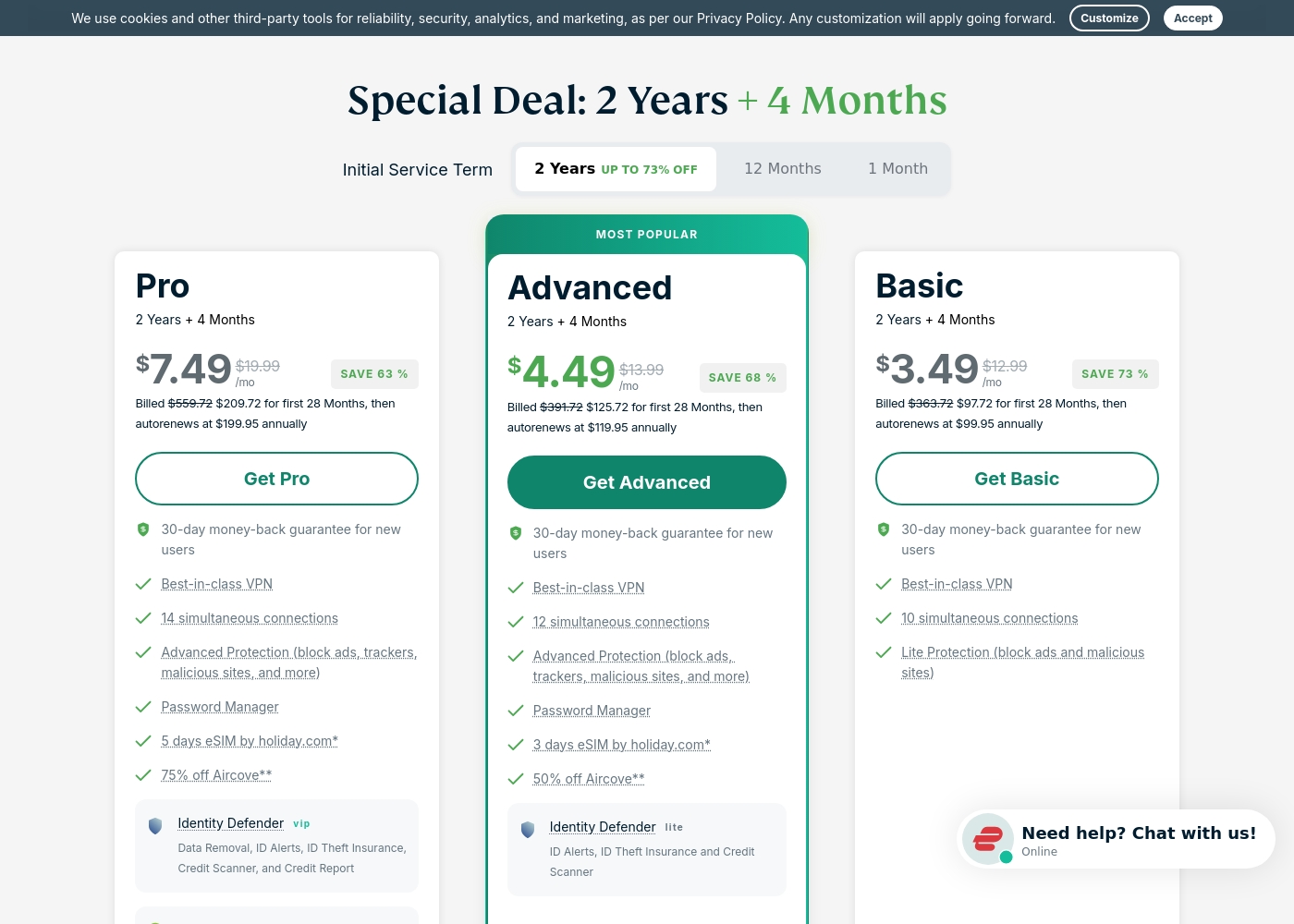
ExpressVPN costs between $3.49 and $7.49 per month (based on an initial 28-month commitment) with three plans: Basic at $3.49, Advanced at $4.49, and Pro at $7.49.
You'll find ExpressVPN offers tiered pricing designed to fit various needs for security and extra benefits when you commit to the initial 2 years plus 4 months contract. This special deal offers savings up to 73% off the original price.
Basic
Price: $3.49 per month (billed $97.72 for the first 28 months) Websites Supported: 10 simultaneous connections Best For: Essential security and value searching Refund Policy: 30-day money-back guarantee for new users Other Features: Best-in-class VPN, Lite Protection (block ads and malicious sites)
- 10 simultaneous connections
- Best-in-class VPN
- Lite Protection (block ads and malicious sites)
- Billed $97.72 for the first 28 months
- Renews annually at $99.95
- 12 simultaneous connections
- Best-in-class VPN
- Advanced Protection (block ads, trackers, malicious sites)
- Password Manager
- 3 days eSIM by holiday.com*
- 14 simultaneous connections
- Best-in-class VPN
- Advanced Protection (block ads, trackers, malicious sites, and more)
- Password Manager
- 5 days eSIM by holiday.com*
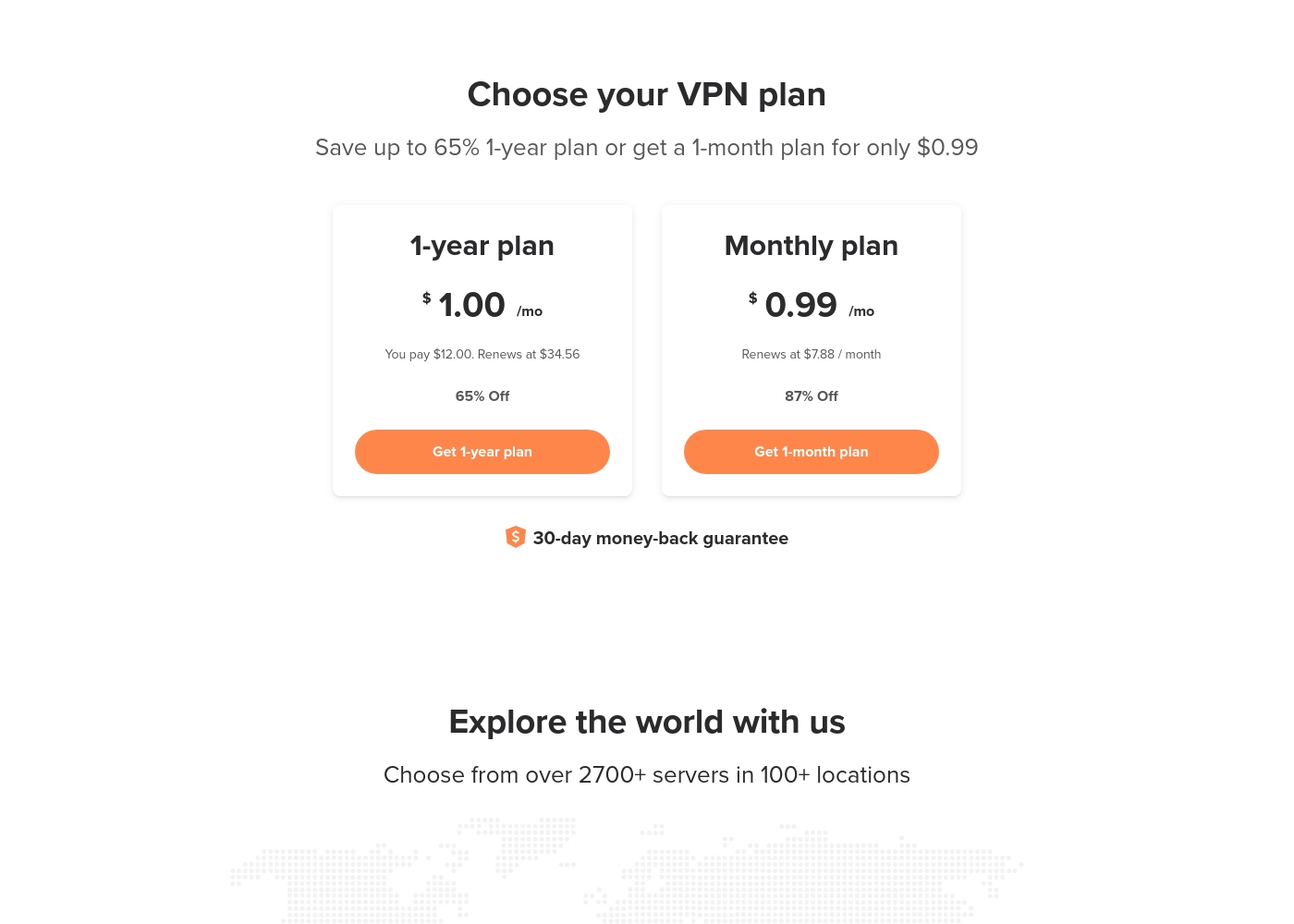
FastVPN costs between $0.99 and $7.88 per month with two plans: 1-year plan at $12.00 and Monthly plan at $0.99/month.
Here is a simple breakdown of the current plan structure.
1-year plan
Price: $1.00 per month (Billed $12.00 upfront annually) Refund Policy: 30-day money-back guarantee Other Features:
- Initial 65% discount included
- Renews annually at $34.56
- Access to 2700+ servers in 100+ locations
- Billed annually at $12.00 initial rate
- Renews annually at $34.56
- Initial 65% discount
- Billed monthly at $0.99 initial rate
- Renews monthly at $7.88
- Initial 87% discount
Pricing Notes
- FastVPN offers steeply discounted introductory pricing, appealing to extreme budget seekers.
- ExpressVPN requires a large, upfront commitment for its advertised lower monthly rates.
- Both services increase dramatically upon standard annual renewal; FastVPN remains cheaper overall at renewal.
- Critically, FastVPN users report frequent unauthorized credit card charges and ignored cancellation requests, casting doubt on its long-term financial viability.
- ExpressVPN pricing provides security and trust, which many users find worth the premium cost.
Pricing Head-to-Head
User Reviews
Users frequently describe ExpressVPN as highly reliable and effective for secure internet access, especially in censored regions. Many reviewers value its critical ability to bypass geographic restrictions, allowing access to streaming content worldwide.
Positive feedback consistently highlights the intuitive user interface and compatibility across numerous devices (including TV apps). While some users note that ExpressVPN is priced higher than competitors, they generally agree the superior connection reliability, fast speeds, and extensive global server network (105 countries) justify the cost, confirming it offers great value.
I've used Express VPN for years now. It may not be the cheapest option, but it is the best one for sheer connection reliability. It offers great value for the high level of service you receive.
External reviews for FastVPN are polarized, showing a stark contrast between older positive experiences and severe recent complaints. A small segment of users praised the service for being very fast, user-friendly, and highly affordable, noting decent server availability and helpful support for specific site issues.
However, the dominant recent feedback highlights critical issues related to billing and service reliability. Users frequently allege unauthorized credit card charges, sometimes for unexpectedly large sums like $225.60, even when auto-renewal was disabled.
I’ve used Fast VPN for about two weeks now. It’s incredibly fast; while other VPNs take half an hour to connect, this took less than 10 seconds. You also get to pick the location for the fastest server, which is a big help.
Our Verdict
If your goal is reliable privacy and peace of mind, ExpressVPN wins this comparison decisively. While FastVPN offers tempting low initial prices, the severe trust issues reported by users are impossible to ignore. You risk significant financial headaches choosing FastVPN over a verified provider like ExpressVPN. ExpressVPN is the high-performance option favored by security experts worldwide. It backs its service with audited no-logs policies and unique TrustedServer technology. Furthermore, ExpressVPN supports up to 14 devices and provides valuable extras like Identity Defender and a Password Manager. FastVPN’s strength lies purely in its aggressive introductory pricing and volume. It boasts over 2700 servers and claims dedicated optimization for smooth 4K streaming platforms. However, FastVPN’s quality support is dubious; users report being ignored when requesting refunds and account closure. The deciding factor here is trust: Do you prioritize spending $1.00 now or avoiding stress later? Choose ExpressVPN if you need certainty regarding security, billing, and customer service. Avoid FastVPN unless you are prepared to potentially fight to stop unauthorized credit card charges. Stick with ExpressVPN for long-term reliability and verified security guarantees. FastVPN is suitable only for short-term, high-risk, budget-driven use cases, if at all.
Frequently Asked Questions
Which VPN is better for streaming: ExpressVPN or FastVPN?
FastVPN explicitly claims to use dedicated servers optimized for 4K streaming access. They target platforms like Netflix and Disney+ reliably. ExpressVPN is also excellent but occasionally struggles when major streaming services detect the VPN. Choose FastVPN if 4K reliability is your top streaming priority.
Does ExpressVPN offer better security than FastVPN?
Yes, ExpressVPN offers stronger, verifiable security and trust. It uses TrustedServer technology and its critical no-logs policy is independently audited. FastVPN claims a no-logs policy but users report severe issues with account verification and frozen accounts.
How many devices can I connect simultaneously on each service?
ExpressVPN supports between 10 and 14 simultaneous connections, depending on your chosen plan tier. FastVPN does not disclose its maximum limit on simultaneous device usage. If you need 10+ devices secured, ExpressVPN guarantees that coverage.
Is FastVPN's low introductory rate worth the risk?
The initial cost for FastVPN is very low, but users frequently report unauthorized charges afterward. FastVPN also renews at a significantly higher rate than the promotion. The financial risk linked to FastVPN is generally not worth the initial savings.
What is the main difference in server network size and reach?
FastVPN reports a large volume of over 2700 servers across 100+ locations globally. ExpressVPN hosts servers in 105 countries, offering slightly broader geographic reach. ExpressVPN focuses on performance and quality in 105 regions.
Does ExpressVPN include any additional identity protection tools?
Yes, ExpressVPN’s Advanced and Pro plans include extra features like a Password Manager. The Pro plan adds the Identity Defender vip suite complete with credit report access and ID theft insurance. FastVPN does not bundle any secondary security tools.
Ready to Choose?
Both tools have their strengths. Choose based on your specific needs.