Etsy vs Sellfy
Etsy and Sellfy both let creators sell unique items online. Etsy offers massive market access but uses high transaction fees. Sellfy provides total control and zero transaction fees via subscription. Which model is right for maximizing your profit margins?
Best for: Hobby sellers testing a few unique handmade items for the first time., Sellers of niche vintage goods where marketplace traffic is essential.
Best for: Digital creators selling large courses, music, or design files (up to 20GB)., Sellers with existing social media traffic who want to monetize directly.
Unique finds, operational headaches.
We recognize Etsy’s powerful concept of offering unique, handmade goods and strong personalization options. However, external reviews reveal chronic operational issues, particularly concerning system stability and customer care responsiveness. Overall, the platform’s valuable market niche is severely undermined by widespread failures impacting key reliability factors for both buyers and sellers.
Pros
- Access to a vast selection of unique, handmade, and vintage items.
- Enables strong product personalization (engraving, embroidery).
- Pricing model uses low listing fees rather than mandatory monthly subscriptions.
- Effective platform for supporting independent and small businesses.
Cons
- Customer support is widely reported as unhelpful, inadequate, or entirely nonexistent.
- Both buyer and seller accounts are frequently suspended without clear reason or explanation.
- High incidence of misleading product listings and scam sellers (poor accuracy).
- Widespread reliability issues concerning delivery, shipping delays, and faulty tracking.
Zero fees, simple selling for creators.
We found Sellfy to be an incredibly efficient, all-in-one platform tailored for creators who prioritize simplicity and cost savings. Its zero-transaction-fee model and built-in marketing tools offer exceptional value, starting at just $22 per month when billed annually. Overall, we confidently recommend Sellfy for easily scaling digital or physical product sales while maintaining total control.
Pros
- No platform transaction fees, improving profitability immediately.
- Extremely fast setup and user-friendly interface for first-time sellers.
- Supports digital, subscriptions, physical, and high-quality print-on-demand products.
- Includes essential growth tools like affiliate marketing and conversion features.
Cons
- Limited payment processing options (primarily Stripe and PayPal Business).
- Store designer offers basic functionality for advanced users seeking complex customization.
- Users report difficulty when trying to implement additional languages.
- Custom shipping labels cannot be fully branded.
AboutEtsy
Etsy is a vibrant online marketplace dedicated to all things distinctive and handmade or vintage. It is where you find items beyond the typical store purchase, ensuring your shopping feels personal. This destination is perfect for shoppers looking for original items, spanning from mugs and home goods to jewellery and apparel. Etsy focuses on delivering gifts as special as the recipient, prioritizing unique craftsmanship. It's a great place to discover essential items tailored to specific hobbies too. 💡
AboutSellfy
Sellfy is an ideal, all-in-one platform built specifically for skilled creators and modern online businesses. It focuses on simplicity without sacrificing the results you need. If you hate complexity, Sellfy makes getting started easy.
You can upload and sell almost anything right away. This includes digital downloads like courses, music, art, and videos. You can also manage complex needs like physical products inventory or use the simple print-on-demand service. Sellfy helps you replace multiple tools with one efficient dashboard. 💡
Highlights
Feature Comparison
Features Overview
We highlight the main differences and pick a winner for each feature.
Pricing Model & Fees
Etsy charges high transaction fees; Sellfy uses subscription with zero transaction fees.
Etsy has no monthly fees, charging only $0.20 per listing. However, you pay a steep 6.5% transaction fee upon sale. High-volume Etsy sellers may also face a mandatory additional 15% Offsite Ad fee. Sellfy uses a flat monthly subscription based on your annual sales volume. Plans start low at $22 per month when billed yearly. You keep 100% of your sales revenue since Sellfy takes 0% transaction fees. This dramatically improves profit margins. Etsy's fee model is cheaper only for low-volume, hobby sellers. Sellfy is designed for maximizing profitability as you scale your business. Choose Sellfy if you plan to sell consistently and grow your revenue. For a profitable online business, removing the transaction fee burden is critical. Sellfy guarantees maximum returns on every single sale.
Product Versatility
Sellfy supports digital and POD; Etsy focuses solely on handmade and vintage.
Etsy is famous for its specialized unique, handmade, and vintage goods. Sellers rely on Etsy's audience seeking personalized physical products. The platform is less suited for creators focused on large digital files. Sellfy is built for selling digital products like courses, music, or large art files. It supports file sizes up to 20GB on its Premium plan. Sellfy also offers physical goods, subscriptions, and an integrated print-on-demand service. If you are a digital creator or want to sell recurring subscriptions, Sellfy is superior. Etsy confines you largely to physical and unique vintage sales. This restriction limits growth potential for many modern creative businesses. Sellfy lets you launch T-shirts or digital courses using one dashboard. Etsy requires external tools and payment of additional high transaction fees.
Customer Support
Sellfy support is excellent and responsive; Etsy support is notoriously poor.
Etsy customer support is consistently reported as inadequate, unhelpful, or completely nonexistent. Accounts are frequently suspended without clear reason or explanation. Reliability issues and poor communication frustrate existing sellers. Sellfy provides 24/7 dedicated email support with all paid subscriptions. Users frequently praise Sellfy staff members for their timely and helpful responsiveness. Premium subscribers receive an elevated level of Priority support. The stark difference in available support is a major deciding factor for sellers. Sellfy mitigates risk by guaranteeing access to help when you need it most. Etsy leaves sellers vulnerable to confusing platform decisions and account issues. High reliability means less downtime and lost revenue for your store. Sellfy helps ensure operations run smoothly, unlike the unreliable service from Etsy.
Marketing Tools
Sellfy includes growth features; Etsy relies entirely on external marketplace ads.
Etsy relies on its massive marketplace search function for traffic generation. It makes the Offsite Ads fee mandatory for sellers over a certain volume threshold. Crucially, Etsy provides no built-in conversion tools for sellers. Sellfy includes a powerful, full marketing suite in Business plans and above. This includes affiliate marketing features and product upselling functionality. Sellfy also offers integrated email marketing capabilities. Sellfy empowers you to grow conversions and increase average order value (AOV) directly. Etsy forces sellers to pay for external advertising managed by the platform. You get superior control and tools with Sellfy. Use Sellfy's built-in tools to recover abandoned carts automatically. You must rely on external software to achieve similar results with an Etsy store.
Selling Destination
Etsy gives huge traffic; Sellfy offers flexible store embedding.
Etsy provides immediate, massive visibility to millions of targeted buyers globally. People visit Etsy specifically seeking unique and handmade items. This built-in traffic is Etsy’s most significant core advantage for new users. Sellfy is a standalone storefront; you must drive your own external traffic. However, Sellfy allows simple embedding of the entire store experience onto existing websites. You can easily use widgets or Buy Now buttons anywhere. New sellers often get faster initial traction on Etsy due to its audience base. Established creators with existing traffic benefit more from Sellfy's flexibility. Sellfy provides the tools; Etsy provides the audience. If you have a large Instagram or YouTube following, Sellfy lets you monetize instantly. An Etsy shop requires competing with millions of other sellers for visibility.
Payouts and Control
Sellfy gives instant payouts; Etsy uses managed payments that can be withheld.
Etsy manages all payments using Etsy Payments; funds can sometimes be withheld. Sellers relying solely on this platform risk having their cash flow restricted. Branding is necessarily limited within the marketplace's existing structure. Sellfy ensures instant payouts directly to your connected PayPal or Stripe account. This allows immediate access to your revenue upon purchase. Sellfy also offers deep customization via its store customizer and supports custom domains. Sellers gain superior cash flow management and security with Sellfy's direct payouts. Etsy controls access to your earnings and the look of your shop. Financial control belongs to the Sellfy user. Avoid the major stress of withheld funds reported by some Etsy sellers. Sellfy guarantees instant access to your money.
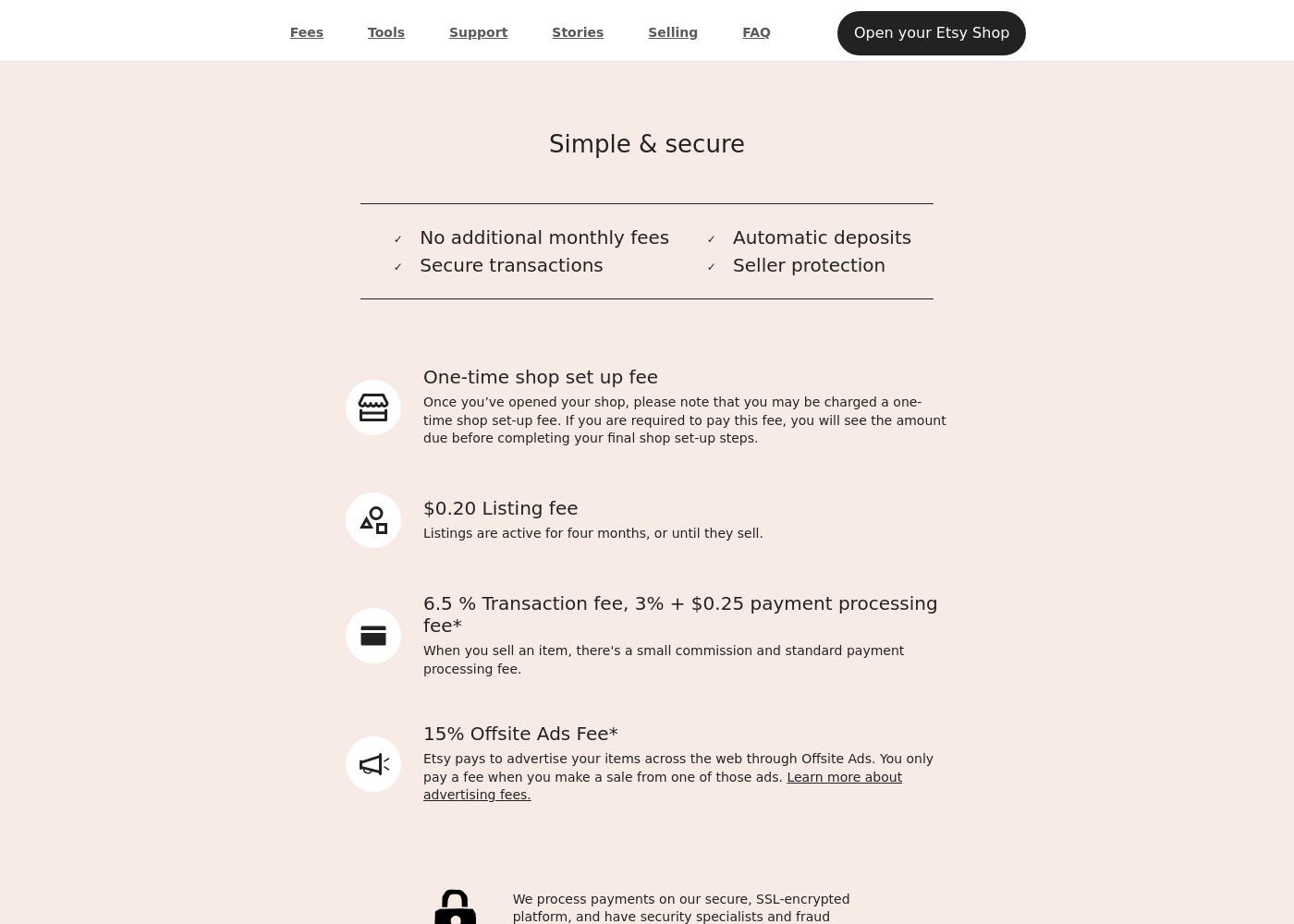
Etsy costs primarily involve fees when you list items or make a sale, with no mandatory additional monthly fees. The minimum fixed fee is $0.20 per listing, and transaction fees start at 6.5% plus a payment processing fee.
To understand how selling on Etsy works, we break down the necessary fees you should expect when setting up your shop and selling products.
Listing Fee
Price: $0.20 per listing Best For: All sellers who want to publish items on the platform Other Features:
- Listings are active for four months
- Fee applies until the item sells
- $0.20 USD per listing
- Active for four months or until sold
- Required to publish item
- 6.5% Transaction fee on sale price
- 3% + $0.25 Payment processing fee
- Only paid upon successful sale
- 15% fee when a sale is generated by an ad
- Etsy handles advertising on major external sites
- Optional for most sellers
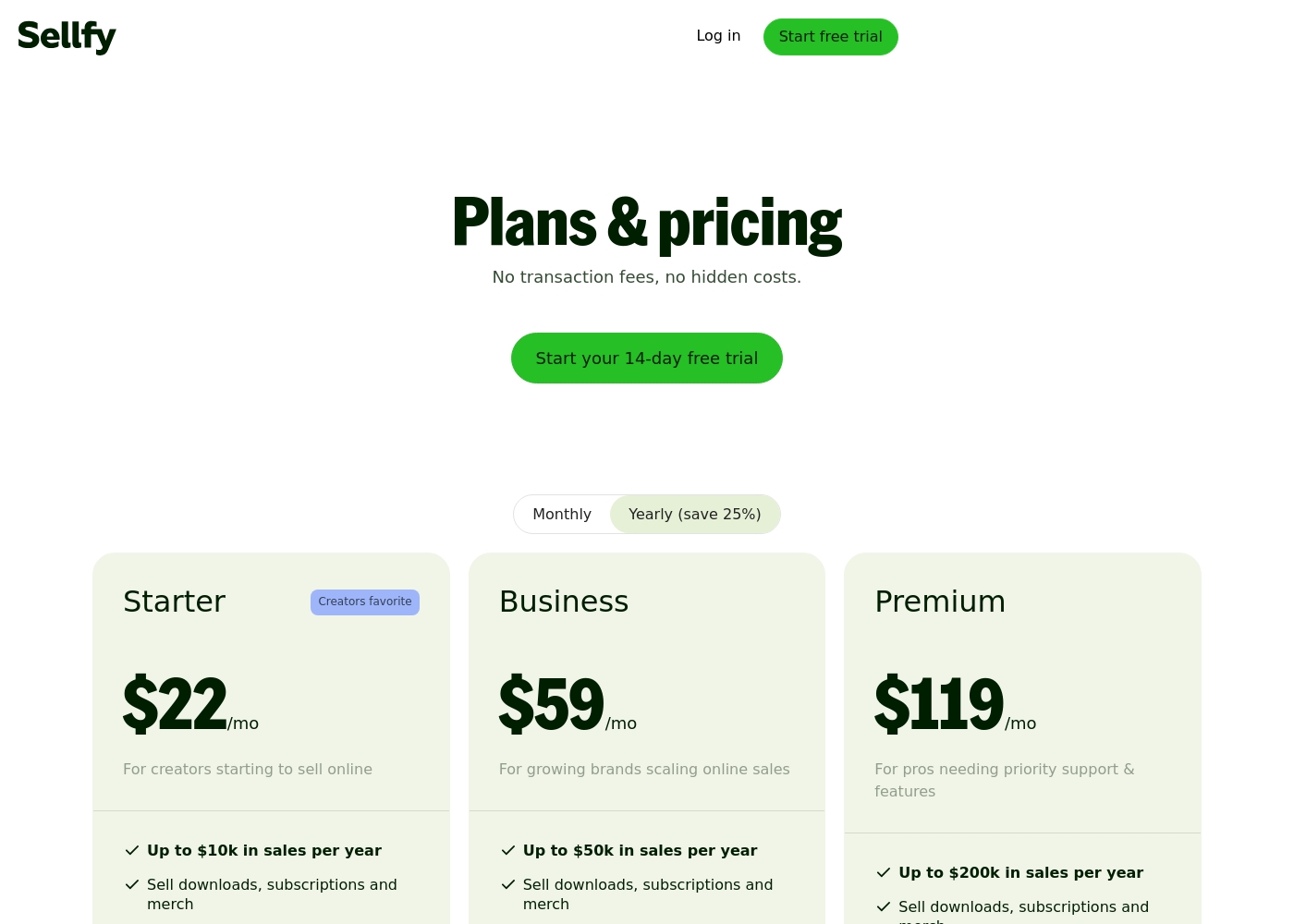
Sellfy costs between $22 and $119 per month (when billed yearly) with three plans: Starter at $22/month, Business at $59/month, and Premium at $119/month.
These plans are designed to scale alongside your business growth. When you choose annual billing versus monthly, you will save 25% on your total subscription cost.
Starter
Price: $22/mo (billed annually) or $29/mo (monthly) Best For: Creators starting to sell online Refund Policy: 30-day money-back guarantee Other Features:
- Up to $10k in sales per year
- Unlimited products (downloads, subscriptions, merch)
- Email marketing with 2,000 free credits
- Maximum product file size is 10GB
- 0% transaction fees
- Sell downloads, subscriptions, and merch
- Unlimited products
- Email marketing (2,000 credits)
- Core marketing features
- 0% transaction fees
- All core features
- Email marketing (10,000 credits)
- Custom fields
- Growth features (Product upselling, Cart abandonment, Affiliate marketing)
- 0% transaction fees
- All Business features
- Email marketing (50,000 credits)
- Advanced options
- Product and design migration
Pricing Notes
- Etsy charges a high 6.5% transaction fee plus payment processing fees on every sale.
- Sellfy uses a subscription model but compensates by charging 0% transaction fees on all sales.
- Sellfy's price tiers are based on annual sales volume, ensuring 0% fees up to $200k/year.
- Etsy is initially cheaper for very low volume or hobby sellers due to the minimal listing fee.
- Sellfy offers a 14-day free trial and a 30-day money-back guarantee after subscribing.
- Exceeding Sellfy's yearly sales limits may incur a 2% overage fee without upgrading the plan.
Pricing Head-to-Head
User Reviews
The public sentiment regarding Etsy is highly critical, ranking extremely low with a multitude of negative experiences reported by both buyers and sellers. While the core idea of supporting independent creators is valued, the platform’s execution is consistently criticized.
A major theme is the failure of support responsiveness: users find customer service unhelpful, inaccessible, and often described as providing only generic responses. Reliability is another significant issue; many buyers report items arriving late, tracking numbers failing, or not receiving their purchases at all.
My account was permanently banned for absolutely no reason, and they will not specify why. I tried contacting support repeatedly about the suspension, but I only received generic, unhelpful messages in return. It’s frustrating.
Reviewers overwhelmingly praise Sellfy for its user-friendliness and affordable structure, highlighting that setup, product uploading, and sales management are quick and easy, even for first-time sellers. Customers frequently mention the platform’s great pricing, noting it's more affordable than competitors because it charges no transaction fees.
Users value its comprehensive features, which successfully support digital products, subscriptions, and even reliable print-on-demand services. Customer support is consistently commended for being helpful and responsive; specific staff members received praise for their timely assistance.
This is the best platform I’ve tried for my mini business. It offers a full set of features for digital, physical, and print-on-demand products. The functionality, speed, and instant money transfer are all perfect.
Our Verdict
Choosing between Etsy and Sellfy is ultimately a choice between instant traffic and long-term profit control. While Etsy offers massive, immediate audience access, for almost every serious, scaling seller, Sellfy is the superior platform. Etsy's biggest strength is its massive, high-intent marketplace audience. New sellers benefit instantly from millions of shoppers seeking unique handmade goods. If you sell vintage items or focus on highly personalized physical commissions, Etsy can provide crucial visibility. Sellfy’s superpower is its crucial zero transaction fee model. Keeping 100% of your sales maximizes profitability, especially when sales volume increases. Sellfy is purpose-built for modern creators selling digital files, offering up to 20GB size limits, subscriptions, and built-in marketing tools. The critical deciding factor is the fee structure and product type. If you sell digital content, the seamless experience on Sellfy is invaluable. If you scale past low volume, Etsy’s cumulative 6.5% fees plus ad costs quickly become punitive. Sellfy guarantees profitability and significantly better seller support. Choose Sellfy if you sell digital content, want zero transaction fees, and need total brand control. Use Etsy only if you absolutely require its inherent marketplace traffic for unique, primarily physical, items. Based on reliability and profitability, Sellfy is the clear winner for business growth.
Frequently Asked Questions
Which platform is better for selling digital products, Etsy or Sellfy?
Sellfy is purpose-built for digital goods, supporting files up to 20GB. It also offers digital subscriptions for recurring revenue. Etsy focuses on physical goods and doesn't offer these specialized digital features.
Does Sellfy charge transactional fees like Etsy?
No, Sellfy charges 0% transaction fees on all sales revenue on paid plans. Etsy charges a high 6.5% transaction fee plus payment processing fees. Sellfy is much better for maximizing profitability at scale.
Can I use Sellfy if I already have an existing website?
Yes, Sellfy makes embedding very simple across any existing website. You can use simple widgets to integrate the entire shopping experience. Etsy offers a separate tool to power a custom website linked to your shop.
Is customer support better on Etsy or Sellfy?
Sellfy support is consistently praised for being responsive, dedicated, and helpful 24/7. Etsy receives widespread, critical reviews citing unhelpful or entirely absent support interactions. Sellfy wins easily here.
Which tool is best for new sellers just starting out?
Etsy provides faster initial visibility due to its millions of shoppers. However, Sellfy is arguably safer due to its user-friendly setup and higher reported reliability. Sellfy offers a 14-day free trial to get started.
Does Sellfy support Print-on-Demand (POD) like Etsy?
Yes, Sellfy integrates print-on-demand services directly into your storefront. Etsy does not include native POD features. This makes launching custom merchandise easier on Sellfy.
Ready to Choose?
Both tools have their strengths. Choose based on your specific needs.