DualEntry vs Quickbooks
DualEntry and Quickbooks are both AI-powered accounting platforms, but they serve very different needs. DualEntry focuses on unifying multi-entity financials and automating complex workflows. Quickbooks offers a more traditional, tiered approach for small to mid-sized businesses. Here's a quick guide to help you choose the right one.
Best for: Multi-entity businesses needing a unified financial view, Finance teams looking to reduce month-end close time
Best for: Solo entrepreneurs or small businesses with 1-5 employees, Startups looking for a quick, 5-minute setup and free trial
Powerful but unproven at scale
We find DualEntry to be a comprehensive, AI-driven ERP solution aimed at simplifying multi-entity financial operations. Overall, it promises significant efficiency gains like faster closes and unified reporting, but the lack of accessible external user reviews prevents us from validating core claims about reliability, support, and real-world performance.
Pros
- Claims to unify multi-entity financials into a single view
- Promises AI-powered automation for tedious tasks like transaction categorization
- Advertises a dramatic reduction in month-end close time
- Offers 13,000+ native integrations to connect with existing tools
Cons
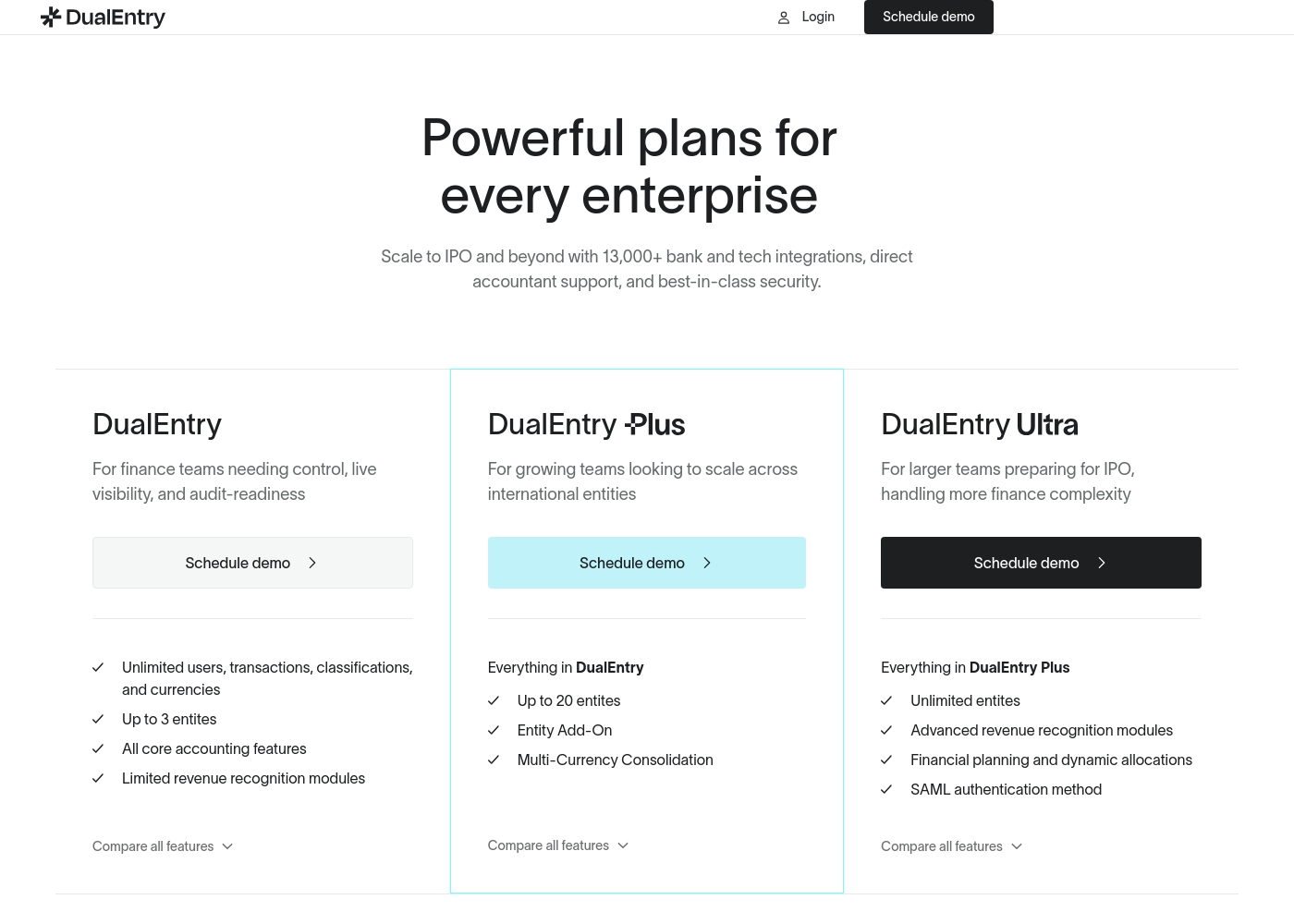
- Pricing is not transparent and requires a custom quote
- No accessible external user reviews to validate claims of reliability or support
- Specific details on implementation complexity or training are not provided
- The platform's actual performance and stability are unverified from user feedback
Power, Precision, and Painful Support.
We observe that QuickBooks offers market-leading feature depth and scalability, catering strongly to diverse business needs and growth stages with its tiered plans and AI tools. Overall, however, the severe and repeated reports of poor customer support and reliability issues necessitate caution, significantly hindering its operational effectiveness for many users.
Pros
- Scalable plans supporting solo operations up to 25 users.
- Customized experience based on specific business size and needs.
- Integration of advanced AI tools like Intuit Assist and Accounting Agents.
- Includes a 30-day free trial period for risk-free testing.
Cons
- Customer service is consistently reported as inefficient and unhelpful.
- Aggressive and frequent increases in subscription pricing.
- Software is frequently unstable, unreliable, and prone to accounting errors.
- Constant, unplanned user interface updates frustrate long-time users.
AboutDualEntry
DualEntry is a modern, cloud-based ERP system built for finance teams, especially those handling multiple entities. 🧠 It's an all-in-one platform that consolidates your financial operations—from the general ledger and accounts payable to revenue recognition and reporting. It's designed for companies that have outgrown basic accounting software but need a more intuitive, integrated solution than traditional ERPs.
AboutQuickbooks
QuickBooks is a system designed to support modern businesses, regardless of their size. It’s built to personalize the site experience using simple criteria, like how many employees you have. ✨
Whether you are running a large team or operate as "Just me," the system aims to tailor features specifically to your needs. This focus on customization helps pave the way for successful business growth.
Highlights
Feature Comparison
Features Overview
We highlight the main differences and pick a winner for each feature.
Ease of Use
DualEntry is built for fast, intuitive use by finance teams. QuickBooks offers a personalized setup but has been called clunky by users.
DualEntry promises a "seamless by design" experience focused on usability for finance teams. It aims to eliminate the frustration of traditional ERPs. QuickBooks starts with a tailored onboarding that asks about your business size. However, users frequently complain about constant interface changes making navigation difficult and slow. The key trade-off is DualEntry's modern, unified interface versus QuickBooks' familiar but often frustrating UX. DualEntry seems better for teams needing a clean, modern tool to manage complex data. QuickBooks can work for simpler setups but might frustrate users over time.
Collaboration & Teamwork
DualEntry has unlimited users and dedicated support. QuickBooks has strict user limits and reports of poor support.
DualEntry includes unlimited users and transactions on all plans. It also provides dedicated accountant support via multiple channels like Slack and phone. QuickBooks limits users to 1-25 across its four plans. While it offers free accountant access, customer service is widely reported as inefficient and unhelpful. The difference is clear for scaling teams. DualEntry's unlimited users and direct support are a major advantage for growing finance departments. QuickBooks' user caps and support issues can be a significant headache as your team expands.
Automation & AI
DualEntry uses AI to automate complex, multi-entity workflows. QuickBooks offers AI agents for specific, smaller tasks.
DualEntry's AI automates bank-fee processing, transaction categorization, and expense management. It's designed to handle the tedious work of multi-entity finance. QuickBooks provides specialized AI agents like the Accounting Agent for posting transactions and the Payments Agent for handling funds. These are helpful for streamlining daily tasks. The trade-off is scale. DualEntry's automation targets high-level, complex workflows that save days of work. QuickBooks' AI is more focused on individual tasks within a smaller business context. For deep automation, DualEntry has the edge.
Reporting & Analytics
DualEntry offers unified, real-time reporting across all entities. QuickBooks provides KPI analysis but is limited by its tiered structure.
DualEntry gives you a single, unified view of all your entities in real-time. It eliminates the need to stitch together reports from different systems. QuickBooks' Advanced plan includes a Finance Agent for KPI analysis and financial planning. However, its reporting is tied to individual plans and user limits. The key difference is consolidation. DualEntry's strength is providing a complete financial picture across a complex organization. QuickBooks offers good analytics for simpler, standalone businesses. If you manage multiple entities, DualEntry's reporting is far more powerful.
Mobile Experience
DualEntry's mobile experience isn't detailed. QuickBooks provides a free, secure mobile app.
DualEntry's documentation doesn't provide specific details about its mobile app or mobile-specific features. The focus is on its cloud-based, web-accessible platform. QuickBooks explicitly states that its subscription includes a free mobile app. This allows you to manage your business and access data securely from a smartphone or tablet. Without data on DualEntry's mobile offering, we can't make a direct comparison. However, QuickBooks' mobile access is a clear, documented feature for on-the-go management.
Customer Support
DualEntry offers dedicated, multi-channel support. QuickBooks support is frequently criticized as unhelpful.
DualEntry provides support via dashboard, Slack/MS Teams, phone, video, email, and live chat. Dedicated accountant support is part of the service. QuickBooks offers phone support that's free during the trial and with a paid subscription. However, user reviews are overwhelmingly negative, citing long hold times and unresolved issues. The contrast is stark. DualEntry's support model is built for hands-on, accountant-led implementation. QuickBooks' support is a major pain point for many users. This is a critical difference for anyone who needs reliable help.
Integration Ecosystem
DualEntry boasts 13,000+ native integrations. QuickBooks connects to 300+ apps.
DualEntry claims over 13,000 native integrations, covering banks, payroll, CRMs, and more. This is designed to connect your existing tech stack without a rip-and-replace. QuickBooks integrates with over 300 apps you currently use. While 300+ is substantial, DualEntry's 13,000+ is in a different league. For businesses with a complex, established toolset, DualEntry's integration depth is a major advantage. QuickBooks' ecosystem is sufficient for many small businesses but may fall short for highly customized tech stacks.
Pricing Model
DualEntry uses custom quotes with unlimited users. QuickBooks has transparent, tiered pricing with user limits.
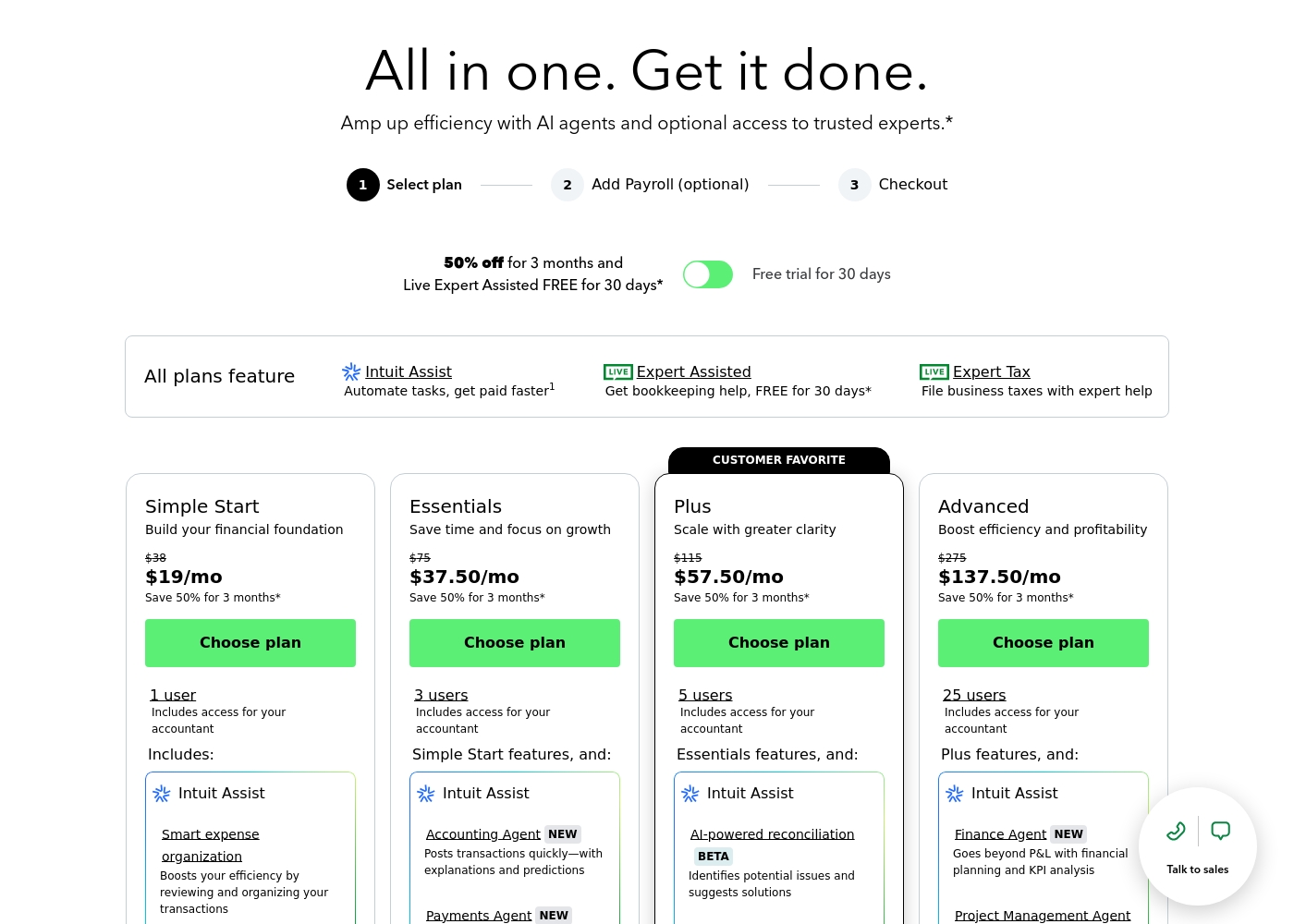
DualEntry's pricing is not publicly listed; you must schedule a demo for a custom quote. All plans include unlimited users and transactions. QuickBooks offers four clear tiers from $38 to $275 per month, with user caps (1-25). The trade-off is transparency versus flexibility. QuickBooks lets you see costs upfront and choose a plan that fits your budget. DualEntry's custom pricing means you get what you pay for, but it's opaque. For businesses wanting predictable, visible costs, QuickBooks wins. For those needing unlimited scale, DualEntry's model could be better.
Learning Curve
DualEntry is designed for quick, accountant-led implementation. QuickBooks has a faster initial setup but more frequent changes.
DualEntry promises live implementation within 4-6 weeks, with data ingested in 24 hours. This is a hands-on process with dedicated support. QuickBooks can be set up in about five minutes once you sync your bank or credit card. However, its interface changes frequently, which can frustrate users. The key difference is the learning curve's nature. DualEntry has a structured, guided onboarding. QuickBooks is quicker to start but has a steeper, ongoing curve due to constant updates. For complex financials, DualEntry's structured approach might be easier long-term.
Scalability
DualEntry scales with unlimited users and entities. QuickBooks scales to 25 users across its tiers.
DualEntry is built for growing businesses, with unlimited users and transactions on all plans. Higher plans allow unlimited entities. QuickBooks scales from 1 user (Simple Start) up to 25 users (Advanced). The trade-off is flexibility. DualEntry's unlimited model is ideal for rapidly expanding teams and multi-entity structures. QuickBooks' tiered structure is more suited for smaller, incremental growth. For a business planning significant growth, DualEntry's scalability is a clear advantage. QuickBooks might require you to switch plans or providers as you outgrow its limits.
DualEntry pricing: DualEntry provides enterprise-grade accounting software with three distinct tiers designed to scale with your business. While specific rates are available via custom quotes, all plans include unlimited users and transactions to support growth without penalty fees or extra costs for implementation support and training sessions with an accountant team member and more for you and your business and more and more and more more more more more more more more more more more more more more more more more more more more more more more more more more more more more more more more more more more more and more more more more and more and more more more and more more more more more more more more and more more more and more more more more more more more more more more more more more more more more more more more more more more more more more more more more more more more more more more more more and more more more more and more and more more more and more more more more more more more more and more more more more more more more more more more more more more more more more more more more more and more more more and more more more more more more more more more more more more more more more more more more more more more more more more more more more more more more more more more more more more more and more more more more and more and more more more and more more more more more more more more and more more more more more more more more more more more more more more more more more more more more and more more more and more more more more more more more more more more more more more more more more more more more more more more more more more more more more more more more more more more more more more and more more more more and more and more more more and more more more more more more more more and more more more more more more more more more more more more more more more more more more more more and more more more and more more more more more more more more more mo
QuickBooks costs between $38 and $275 per month with 4 plans: Simple Start at $38, Essentials at $75, Plus at $115, and Advanced at $275.
Here’s a closer look at what features and capacity are included with each plan.
Simple Start
Price: $38/month (or $19/month for 3 months) Best For: Building your financial foundation Other Features:
- 1 user access
- Includes access for your accountant
- Intuit Assist
- Smart expense organization
- 1 user access
- Includes access for your accountant
- Intuit Assist
- Smart expense organization
- 3 users access
- Simple Start features included
- Accounting Agent NEW
- Payments Agent NEW
- 5 users access
- Essentials features included
- AI-powered reconciliation (BETA)
- 25 users access
- Plus features included
- Finance Agent NEW (Financial planning and KPI analysis)
- Project Management Agent
Pricing Head-to-Head
User Reviews
We attempted to gather user feedback from Trustpilot and Capterra, but both sources were currently inaccessible due to security verification errors, preventing the collection of specific review snippets. This means we cannot synthesize external sentiment or identify recurring themes like accuracy, ease of use, or support responsiveness from user reviews. 🤔 Without these concrete data points, our final assessment relies solely on the provided product information from DualEntry's website.
User sentiment collected primarily from Trustpilot is overwhelmingly negative, frequently contrasting with the platform’s marketing promises of accuracy and seamless growth. While QuickBooks offers feature depth and personalized experiences, the recurring themes of frustration are significant among users.
Customers consistently report atrocious and unhelpful customer service, often involving extremely long holding times, multiple transfers, and conflicting information without resolution. Reliability is a major concern; users describe the software as unstable, prone to costly accounting errors, and sometimes necessitating external accountant intervention.
I spent almost three months migrating from the Desktop to the Online version. The transition was supposed to be easy, but I had constant issues. Customer support was unknowledgeable and unable to assist me thoroughly.
Our Verdict
If you're managing multiple entities and need to close books fast, DualEntry is the clear winner. Its AI-powered automation and unlimited users are built for complex finance teams. DualEntry's superpower is unifying your entire financial operation into one view. It can cut your month-end close from 20 days to just 1 day, which is game-changing. With 13,000+ integrations, it connects everything you already use without a rip-and-replace. QuickBooks' superpower is its accessible, tiered pricing and quick setup. It's perfect for solo entrepreneurs and small businesses who need basic accounting with AI agents. You can be up and running in 5 minutes and try it risk-free for 30 days. The deciding factor is your business complexity. DualEntry is for growing companies outgrowing basic software. QuickBooks is for smaller, simpler operations that need straightforward tools. In short, choose DualEntry if you're scaling with multiple entities and need deep automation. Choose QuickBooks if you're a small business wanting an affordable, easy-to-start solution. Both have their place, but they solve very different problems.
Frequently Asked Questions
Which is better for small teams: DualEntry or Quickbooks?
Quickbooks is generally better for small teams, especially those with 1-5 employees. It offers transparent pricing starting at $38/month and a free 30-day trial. DualEntry is designed for larger finance teams managing multiple entities.
Does DualEntry have a free trial like Quickbooks?
No, DualEntry does not currently offer a free trial. It uses a hands-on, accountant-led implementation process instead. Quickbooks provides a 30-day free trial that doesn't auto-renew.
Is Quickbooks worth the extra cost over DualEntry?
The cost comparison is tricky because DualEntry requires a custom quote. Quickbooks is more transparent, with plans from $38-$275/month. For small businesses, Quickbooks may offer better value, but DualEntry's unlimited users and features might justify a higher price for growing teams.
Can I migrate from DualEntry to Quickbooks easily?
DualEntry includes data migration as part of its implementation. Quickbooks also offers tools for importing data, but the ease of migration depends on your specific setup. Both platforms aim for a smooth transition.
Which tool has better customer support?
DualEntry offers dedicated support via Slack, phone, video, email, and live chat, with accountant-led implementation. Quickbooks has phone support, but user reviews frequently complain about poor service and long hold times.
Which is better for multi-entity businesses?
DualEntry is specifically built for multi-entity financials, providing a unified view across all entities. Quickbooks can handle multiple entities but may require separate subscriptions or more manual work, making it less efficient for complex operations.
Ready to Choose?
Both tools have their strengths. Choose based on your specific needs.