Drip vs Etsy
This is an apples-to-oranges comparison, but a common one. Drip is a powerful email marketing tool for your online store. Etsy is the marketplace where you sell your handmade or vintage goods.
Best for: E-commerce brands (Shopify, BigCommerce, WooCommerce), Course creators and educators
Best for: Artisans and crafters selling handmade goods, Sellers of unique vintage items
Powerful for e-commerce, but check the support.
We find Drip to be a highly capable email automation platform built specifically for B2C e-commerce. Its visual builder and smart segmentation are standout features for creating personalized customer journeys. Overall, it's a strong choice for online brands, provided your team can manage the learning curve and verify support levels.
Pros
- Excellent visual workflow builder for automation
- Deep e-commerce integrations (Shopify, WooCommerce)
- Powerful, behavior-based segmentation tools
- Free migration for large lists (17,500+)
Cons
- Pricing can become expensive as contacts scale
- Some users report slow or inconsistent customer support
- Requires integration with compatible platforms
- Advanced features may have a learning curve
Unique finds, operational headaches.
We recognize Etsy’s powerful concept of offering unique, handmade goods and strong personalization options. However, external reviews reveal chronic operational issues, particularly concerning system stability and customer care responsiveness. Overall, the platform’s valuable market niche is severely undermined by widespread failures impacting key reliability factors for both buyers and sellers.
Pros
- Access to a vast selection of unique, handmade, and vintage items.
- Enables strong product personalization (engraving, embroidery).
- Pricing model uses low listing fees rather than mandatory monthly subscriptions.
- Effective platform for supporting independent and small businesses.
Cons
- Customer support is widely reported as unhelpful, inadequate, or entirely nonexistent.
- Both buyer and seller accounts are frequently suspended without clear reason or explanation.
- High incidence of misleading product listings and scam sellers (poor accuracy).
- Widespread reliability issues concerning delivery, shipping delays, and faulty tracking.
AboutDrip
Drip is an email marketing automation platform built for B2C companies that sell online. Whether you're an e-commerce brand, a course creator, or a travel provider, it gives you the tools to move beyond generic newsletters. It's designed to be a powerful yet simple engine for driving revenue through personalization. 💡
AboutEtsy
Etsy is a vibrant online marketplace dedicated to all things distinctive and handmade or vintage. It is where you find items beyond the typical store purchase, ensuring your shopping feels personal. This destination is perfect for shoppers looking for original items, spanning from mugs and home goods to jewellery and apparel. Etsy focuses on delivering gifts as special as the recipient, prioritizing unique craftsmanship. It's a great place to discover essential items tailored to specific hobbies too. 💡
Highlights
Feature Comparison
Features Overview
We highlight the main differences and pick a winner for each feature.
Core Purpose & Function
Drip automates email marketing for your existing store. Etsy is the entire store and marketplace.
Drip is a specialized email tool. It connects to platforms like Shopify to send automated, personalized messages. You use it to market products you already sell elsewhere. Etsy is a full online marketplace. It provides the storefront, the audience, and the payment processing. You sell your unique items directly to shoppers browsing Etsy. The key difference is infrastructure. Drip is a marketing engine. Etsy is the entire sales ecosystem. For example, Drip would send an abandoned cart email to a customer who left your Shopify store. Etsy would be the platform where that customer found your handmade jewelry in the first place.
Pricing & Fees
Drip charges monthly based on your contact list. Etsy takes a cut of each sale.
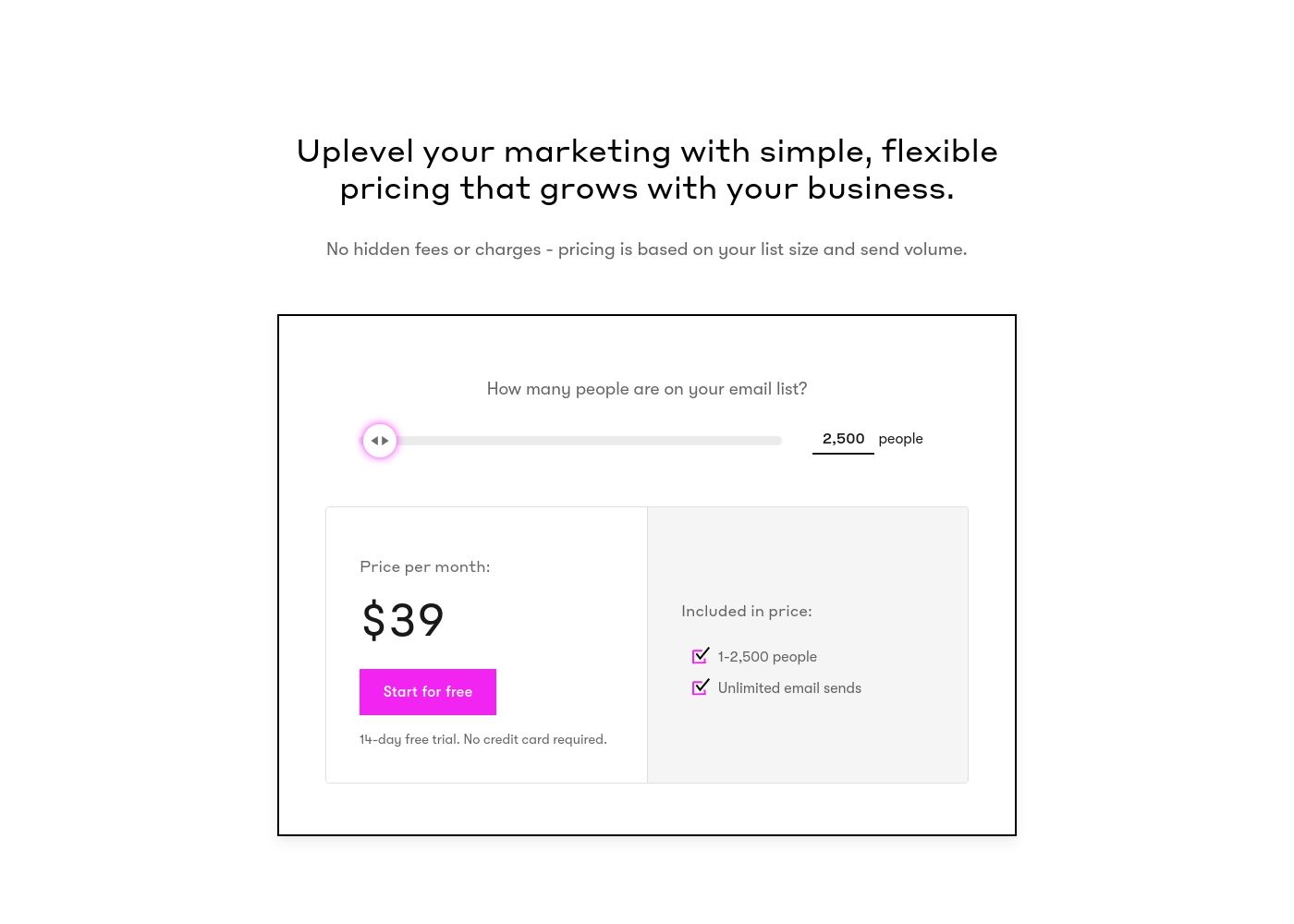
Drip's pricing starts at $39/month for up to 2,500 contacts. You pay for the marketing tool, and your email sends are unlimited. Etsy has no monthly fee. You pay $0.20 per listing and a 6.5% transaction fee plus payment processing when you make a sale. This is a fixed cost vs. variable cost model. Drip is a predictable marketing expense. Etsy's costs only come when you earn revenue. For a brand doing $10k/month on Shopify, Drip's fee is a flat line item. For an Etsy seller, fees are a percentage of their top line.
Ease of Use & Setup
Drip connects to your store; Etsy IS your store. Both have learning curves.
Drip requires you to connect it to your e-commerce platform first. Once connected, its visual builder makes creating emails relatively straightforward. Etsy's setup involves creating a shop, writing listings, and photographing products. It's the work of building a business, not just connecting a tool. Drip has a learning curve for advanced automation. Etsy has a learning curve for product presentation and SEO. A Drip user might spend a day setting up a welcome flow. An Etsy seller might spend a week perfecting their first 10 product listings.
Customer Support & Reliability
Drip has strong reported satisfaction. Etsy's support is a major user complaint.
Drip highlights a 97.3% customer satisfaction score. Users can get live chat support and fast email responses. Etsy reviews are filled with complaints about unhelpful, generic customer support. Sellers report issues with account suspensions and withheld funds. The difference is stark. Drip's support is positioned as a key feature. Etsy's support is a significant pain point for its users. This could determine your day-to-day experience. One helps you succeed; the other might block you.
Target Audience & Use Case
Drip is for B2C brands marketing their own store. Etsy is for creators selling unique items.
Drip is ideal for e-commerce brands, course creators, and travel providers. It's for anyone with an existing store needing better marketing. Etsy is designed for makers of unique, handmade, or vintage goods. It's for creators who need a marketplace to reach buyers. You choose Drip if you already have a shop. You choose Etsy if you need the shop and the audience. An apparel brand on Shopify uses Drip. A jewelry maker who works from home uses Etsy.
Drip pricing: Drip offers a flexible, usage-based subscription starting at $39/month for up to 2,500 people. Pricing scales based on your email list size and includes a 14-day free trial with no credit card required to start browsing its powerful automation tools tool and visual builder.
Your monthly cost increases as your audience grows, but you always get features like unlimited email sends and onsite campaigns. This ensures you only pay for what you actually use while accessing expert support and pre-built marketing playbooks right from the start.
You can cancel your subscription at any time within your billing settings if your business needs change. This model is specifically designed for e-commerce brands looking for deep segmentation and personalized customer journeys without enterprise-level complexity or hidden fees.
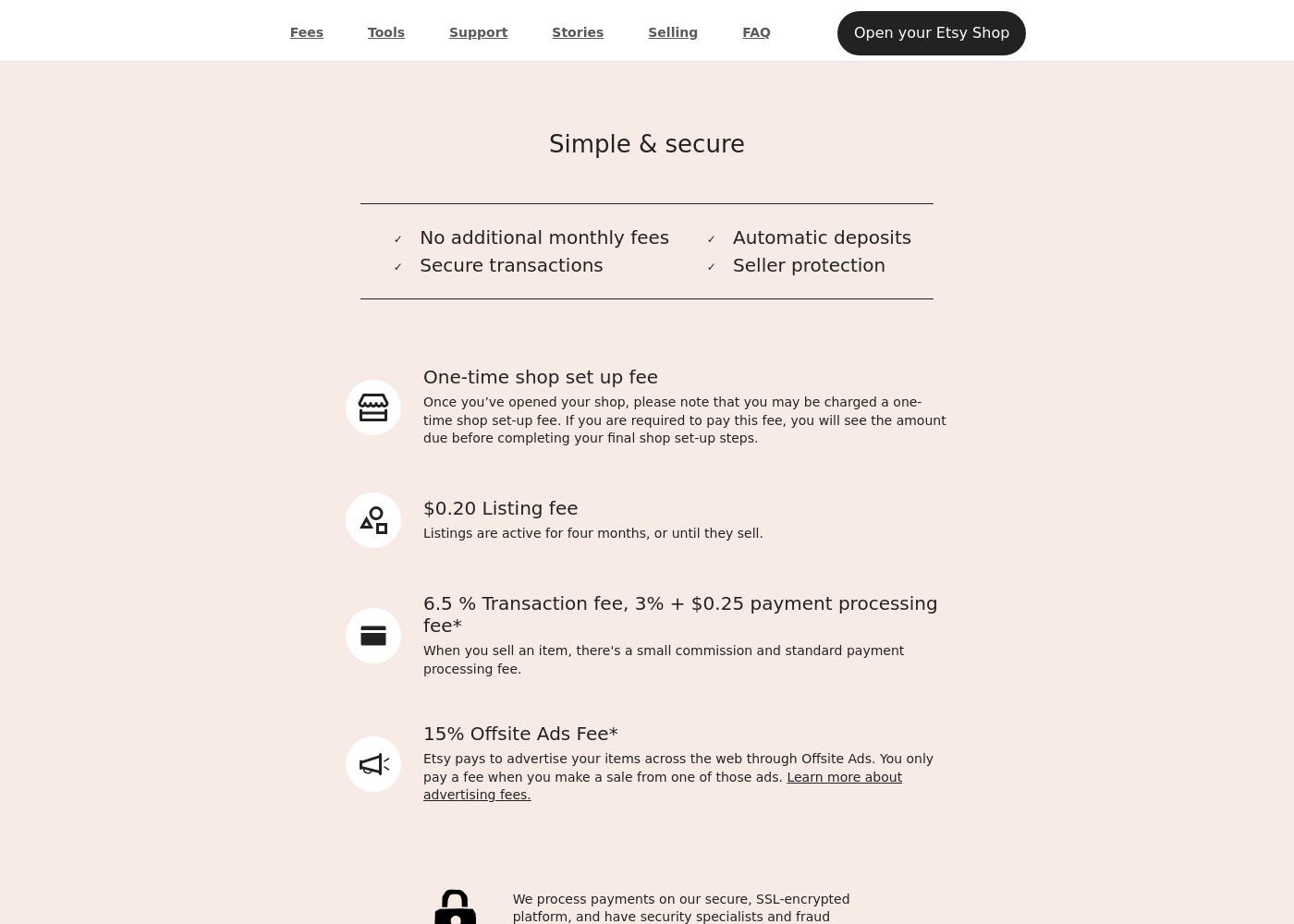
Etsy costs primarily involve fees when you list items or make a sale, with no mandatory additional monthly fees. The minimum fixed fee is $0.20 per listing, and transaction fees start at 6.5% plus a payment processing fee.
To understand how selling on Etsy works, we break down the necessary fees you should expect when setting up your shop and selling products.
Listing Fee
Price: $0.20 per listing Best For: All sellers who want to publish items on the platform Other Features:
- Listings are active for four months
- Fee applies until the item sells
- $0.20 USD per listing
- Active for four months or until sold
- Required to publish item
- 6.5% Transaction fee on sale price
- 3% + $0.25 Payment processing fee
- Only paid upon successful sale
- 15% fee when a sale is generated by an ad
- Etsy handles advertising on major external sites
- Optional for most sellers
Pricing Notes
- Drip is a fixed monthly marketing cost based on list size. Etsy has no monthly fee but takes ~9.5% of each sale price.
- For low-volume sellers, Etsy's fee model is cheaper. For high-volume brands, Drip's flat fee provides predictable costs.
- Drip offers a 14-day free trial with no credit card. Etsy has no trial; you pay as you go.
Pricing Head-to-Head
User Reviews
We found a mixed bag of user sentiment from Trustpilot, as the Capterra link was inaccessible. Reviews praise Drip's powerful automation and segmentation for driving revenue, with many noting its ease of use for e-commerce.
💡 On the downside, several users report frustration with customer support responsiveness and occasional platform glitches. Pricing is frequently cited as a concern, with some feeling the cost can escalate quickly as contacts grow.
Drip's automation tools are top-notch. We set up abandoned cart sequences that really boosted our recovery rate. The visual builder makes it easy to see the customer journey.
The public sentiment regarding Etsy is highly critical, ranking extremely low with a multitude of negative experiences reported by both buyers and sellers. While the core idea of supporting independent creators is valued, the platform’s execution is consistently criticized.
A major theme is the failure of support responsiveness: users find customer service unhelpful, inaccessible, and often described as providing only generic responses. Reliability is another significant issue; many buyers report items arriving late, tracking numbers failing, or not receiving their purchases at all.
My account was permanently banned for absolutely no reason, and they will not specify why. I tried contacting support repeatedly about the suspension, but I only received generic, unhelpful messages in return. It’s frustrating.
Our Verdict
This comparison isn't about which tool is better—it's about which job you need done. For email marketing, Drip wins. For selling handmade goods, Etsy wins. Drip's superpower is turning browsers into buyers. Its automation and segmentation tools let you send hyper-personalized emails at scale. It's a growth engine for your existing online store. Etsy's superpower is providing an instant marketplace. It connects you to millions of shoppers specifically looking for unique, handmade, or vintage items. It's a sales channel from day one. The deciding factor is your starting point. If you already have a store and need to boost sales, choose Drip. If you need a platform to host and sell your creations, choose Etsy. Final verdict: They serve entirely different purposes. Use Drip to market your products. Use Etsy to sell them. Many brands might even use both—selling on Etsy while building their own store with Drip marketing.
Frequently Asked Questions
Can I use Drip to send emails to my Etsy customers?
Not directly. Drip integrates with e-commerce platforms like Shopify, not with Etsy. You would need to export customer data from Etsy, which is not recommended or supported. They are separate ecosystems.
Which is cheaper to start: Drip or Etsy?
Etsy is cheaper to start. There's no monthly fee; you only pay $0.20 per listing. Drip requires a monthly subscription starting at $39, though it offers a 14-day free trial.
I sell on Shopify. Should I use Drip or Etsy?
Use Drip. It integrates directly with Shopify to automate your email marketing. Etsy is a separate marketplace; you could list some products there, but it won't integrate with your Shopify store's marketing.
Is Etsy a good platform for selling handmade jewelry?
Yes, Etsy is designed for unique, handmade goods like jewelry. It has a built-in audience for these items. Be mindful of the ~9.5% total fees per sale and potential support issues.
Does Drip have a free plan?
Yes, Drip offers a free plan for up to 2,500 people. This is great for small stores starting out. Paid plans unlock more features and support as your list grows.
Why are there so many bad reviews for Etsy?
Common complaints include unhelpful customer support, arbitrary account suspensions, and shipping reliability. Many sellers feel the platform doesn't adequately protect them.
Ready to Choose?
Both tools have their strengths. Choose based on your specific needs.