Divvy vs Travel Code
Divvy and Travel Code both tackle business spending, but they come from different angles. Divvy is free software built around a corporate card, while Travel Code is a paid unified travel and expense platform. Your choice depends on whether you need a simple card-first tool or a comprehensive travel management system.
Best for: Small to midsize businesses needing a free expense management tool., Companies comfortable using the BILL Divvy Card for all corporate spending.
Best for: Mid-market teams (100-2,000 employees) consolidating travel, expenses, and cards., Finance teams needing automated reconciliation and faster month-end closes.
Great Features, Crippling Support Issues.
We find that BILL Spend & Expense provides a powerful and free expense management platform with excellent features like real-time control and accounting integration. However, external reliability reports surrounding poor customer support, massive payment delays, and unexpected account closures are major concerns we see repeatedly mentioned by users. Overall, we cannot recommend this platform for essential business operations until substantial improvements are made to operational reliability and customer service responsiveness.
Pros
- Expense management software is offered completely free of charge.
- Provides real-time spend visibility and customizable budget controls.
- Users can issue unlimited virtual and physical cards easily.
- Seamless integration capabilities with major accounting systems (QuickBooks, NetSuite).
Cons
- Critically poor or non-existent customer support and responsiveness.
- Frequent reports of delayed payments and intentional holding of funds (4+ business days for ACH).
- Difficult and confusing setup and onboarding processes.
- Recurring issues with reliability; accounts are blocked or closed suddenly, often without explanation.
Unified travel platform for modern finance.
We find Travel Code to be a solid, unified solution for companies looking to consolidate their travel, expense, and card management. It offers clear value through its single ledger and onboarding speed. Overall, it's a compelling option for mid-market teams aiming to replace multiple point solutions.
Pros
- Unified platform for travel, expenses, and cards on a single ledger.
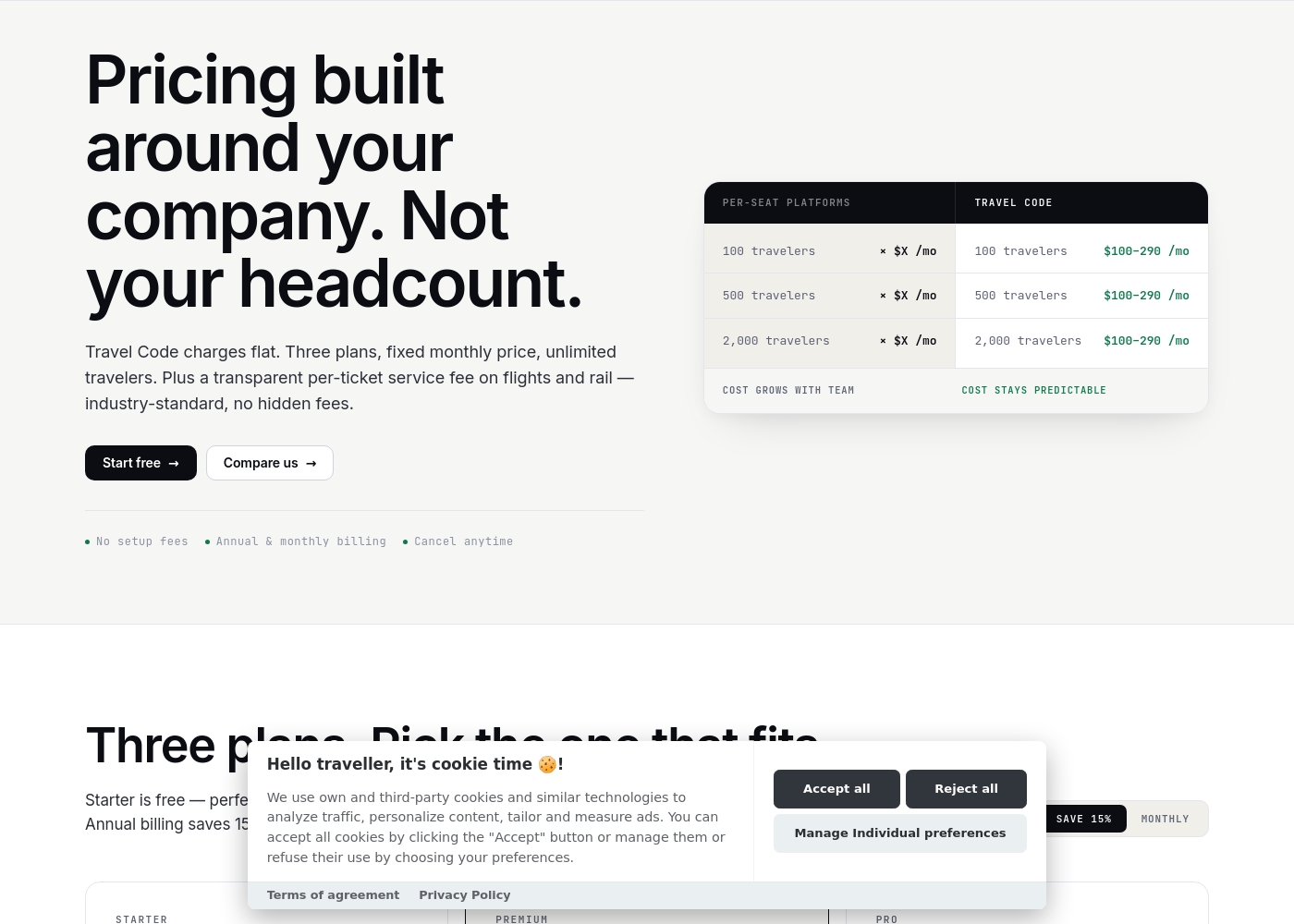
- Transparent, predictable flat-rate pricing without per-seat fees.
- Promises fast onboarding from legacy systems (around 9 days).
- Automated reconciliation and a dedicated tool for recovering unused credits.
Cons
- External review data was unavailable, so user sentiment is unverified.
- Pricing may be less cost-effective for very small teams beyond the free tier.
- Dependence on a single vendor for core financial processes.
- The promised speed and savings may vary based on individual company complexity.
AboutDivvy
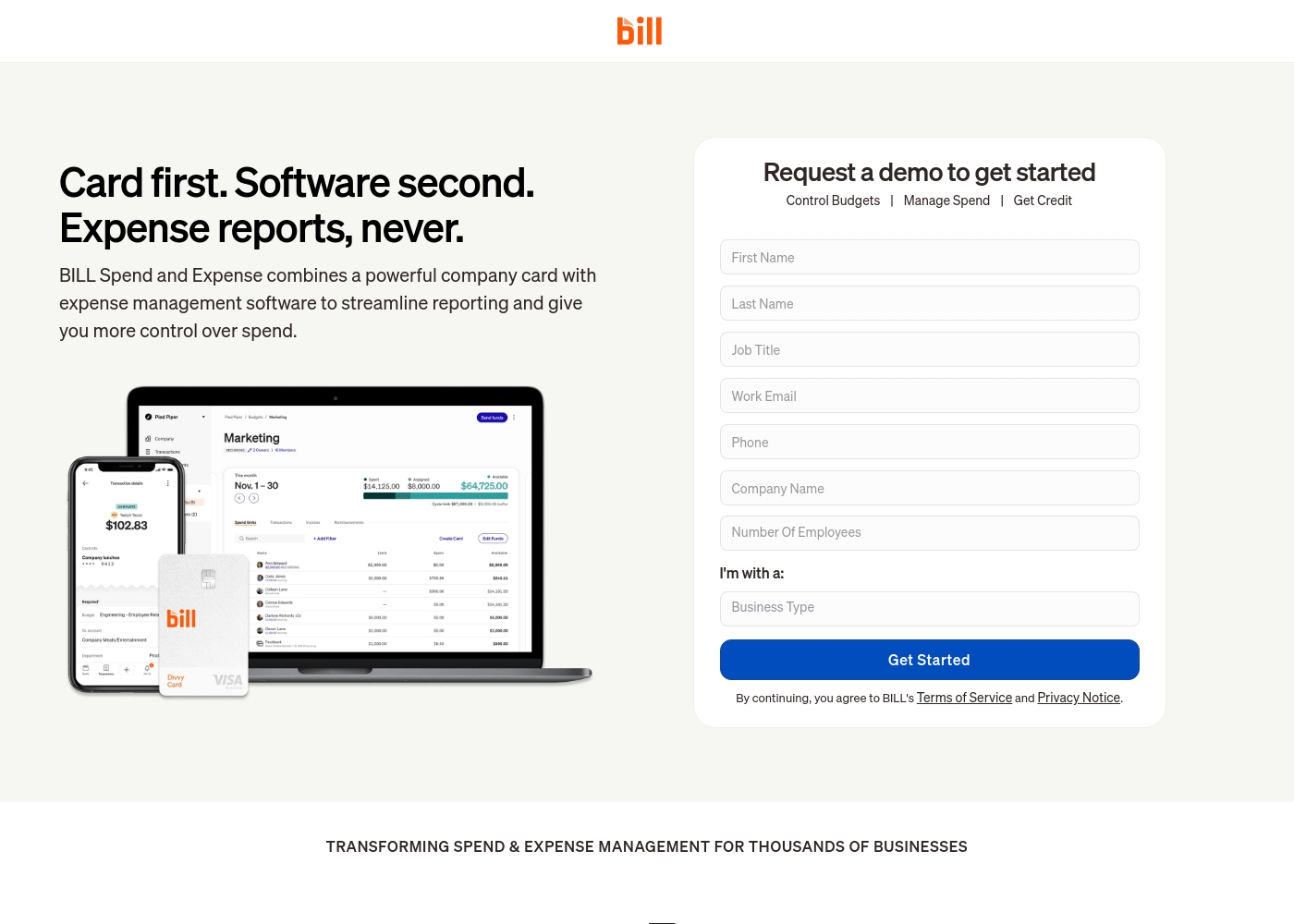
BILL Spend & Expense (formerly Divvy) is an all-in-one expense management platform built for modern businesses. ✅ It blends free, world-class software with access to the BILL Divvy Card. This unique combination helps small or midsize companies achieve greater control.
It focuses on transforming spend and expense management by emphasizing control, simplicity, and savings. The ultimate goal is to eliminate manual expense reports entirely.
AboutTravel Code
Travel Code is a unified corporate travel, expense, and card management platform. 🧳 It’s built for mid-market finance and travel teams who want to eliminate vendor sprawl and gain full visibility into spend. Think of it as your modern command center for all business travel.
Highlights
Feature Comparison
Features Overview
We highlight the main differences and pick a winner for each feature.
Pricing & Value
Divvy is free software tied to a card. Travel Code charges a flat monthly fee for its platform.
Divvy's expense management software is completely free. You only need to use the BILL Divvy Card. There are no hidden fees or contracts. This makes it a zero-cost entry point for spend management. Travel Code offers flat-rate pricing. Plans start at $0 for small teams, then $85 and $247 per month. This covers unlimited travelers. It's predictable and doesn't scale with headcount. The key difference is the model. Divvy's cost is tied to your credit card usage. Travel Code's cost is a fixed subscription for the platform itself. Your best choice depends on whether you prefer a card-first or a platform-first approach.
Travel Booking & Management
Divvy doesn't handle travel booking. Travel Code is built specifically for it.
Divvy focuses solely on expense management and corporate cards. It doesn't have features for booking flights, hotels, or managing travel itineraries. Its strength is post-purchase control. Travel Code is a unified travel platform. It lets you book flights, hotels, cars, and group travel. It shows compliant options first. It also has tools like RateGuard to auto-rebook for lower fares. If your company travels a lot, Travel Code is the clear winner. It consolidates booking, policy, and expense into one system. Divvy is better if you just need to manage card spending and expenses.
Expense Reconciliation
Travel Code automates receipt matching. Divvy offers basic expense tracking.
Travel Code uses line-by-line OCR to read receipts. It auto-matches expenses to bookings, card payments, and the general ledger. It even handles VAT splits. This can cut financial close cycles from 10 days to 3. Divvy provides real-time visibility and eliminates manual expense reports. Users report saving 12 hours per month. However, it lacks the advanced automation for receipt matching and reconciliation that Travel Code offers. The difference is automation depth. Travel Code's AI-driven process is more hands-off. Divvy is more about real-time control and simplicity. For finance teams, Travel Code's reconciliation is a major time-saver.
Card & Spending Control
Both offer virtual cards and spend limits. Divvy is more card-focused, Travel Code adds travel policy.
Divvy lets you issue unlimited physical and virtual cards. You can set budgets and controls. It's great for separating spending by department or project. Rewards are a key feature. Travel Code issues smart virtual cards with per-trip limits. Controls are real-time from web, mobile, or Slack. It ties card controls directly to travel policies and booking details. Divvy's strength is the integrated credit and rewards program. Travel Code's strength is the link between card controls and travel policy enforcement. Divvy is simpler for pure expense management; Travel Code adds travel-specific intelligence.
Customer Support
Divvy has serious support issues. Travel Code offers 24/7 support.
User reviews for Divvy are very negative about support. Customers report long hold times, unhelpful staff, and account blocks without explanation. This is a critical operational risk. Travel Code includes 24/7 in-platform support on all plans. Premium and Pro plans get priority support and a dedicated manager. There's no formal SLA mentioned, but support is consistently included. This is a clear win for Travel Code. Reliable support is essential for business tools. Divvy's support reputation is a major red flag. If you need help, Travel Code is the safer choice.
Onboarding & Migration
Divvy's setup is confusing. Travel Code promises a fast 9-day migration.
Users report Divvy's onboarding is difficult and confusing. You may need to watch videos and re-read documentation. Getting started can be a frustrating experience. Travel Code is built for fast migration. Most teams (100-500 employees) are fully migrated in about 9 days. It uses an AI Policy Builder to read existing PDF policies. You can be live on day one. The speed difference is significant. Travel Code's process is streamlined and designed for mid-market teams. Divvy's setup is a known pain point. If you need to get up and running quickly, Travel Code is better.
Security & Compliance
Travel Code has enterprise-grade security. Divvy's is basic.
Travel Code is SOC 2 Type II and GDPR audited annually. It offers IATA/ARC accreditation and multi-region data residency in the EU, US, and MENA. This is strong for enterprise and international teams. Divvy provides virtual cards for fraud protection. However, there's no mention of specific security certifications like SOC 2. Its compliance features are less detailed. For companies with strict security requirements, Travel Code's compliance posture is more robust. Divvy's security is more about card-level protection. Travel Code is better for regulated industries.
Integration Ecosystem
Both integrate with major accounting tools. Travel Code adds HR and SSO.
Divvy integrates with Intuit QuickBooks, Oracle NetSuite, and Sage Intacct. It's focused on accounting connections. Travel Code connects to QuickBooks, Xero, NetSuite, Sage Intacct, and SAP. It also supports HR systems like Workday and BambooHR via SCIM. SSO is available with Okta and Google. Travel Code has a broader integration ecosystem. It covers accounting, HR, and identity. Divvy is more limited to accounting. If you need a single platform that plugs into your entire stack, Travel Code is better.
User Interface & Experience
Divvy is card-first and simple. Travel Code is a unified, modern command center.
Divvy's design is centered around the corporate card. The mobile app is highly-rated. However, the setup and overall UX may feel confusing to some users. Travel Code is built as a single platform for travel, expenses, and cards. It has an AI assistant named Robert. The interface is designed for mid-market finance teams to see everything in one place. Divvy is more accessible for small teams needing basic control. Travel Code's UI is more comprehensive but may have a steeper learning curve. The best choice depends on your team's complexity and needs.
Divvy (BILL Spend & Expense) costs Free per month with one primary offering: Spend & Expense Software at Free.
The powerful software platform is offered at no charge, letting you focus on managing your business finances efficiently. Here is a breakdown of the single, comprehensive software offering.
Spend & Expense Software
Price: Free Best For: Businesses seeking robust, integrated spend management and corporate credit. Other Features:
- No hidden fees or contracts.
- Unlimited physical and virtual cards.
- Highly-rated, full-featured mobile app for all users.
- Support for reimbursements and expense tracking.
- Integrates with QuickBooks, NetSuite, and Sage Intacct.
- Free software, combined with access to the BILL Divvy Card
- No hidden fees or contracts
- As many physical and virtual cards as you need
- Highly-rated, full-featured mobile app
- Real-time visibility and customizable control over spend
Travel Code pricing: Travel Code offers flat-rate monthly plans starting at $0 for small teams, with paid tiers at $85 and $247 per month on annual billing. Unlike per-seat models, these plans support unlimited travelers for a predictable fixed price plus transparent ticket service fees. Plans range: $0–$800/month Billing options: Free plan, Monthly subscription, Yearly subscription, Usage-based pricing
Pricing Head-to-Head
User Reviews
The core offering of free expense software with integrated controls is attractive, yet user feedback delivers an extremely negative view of the service execution. Users report significant issues with customer support, frequently citing staff as non-responsive, difficult to reach, and lacking visibility across cases.
This critical operational failure contributes to major frustrations regarding reliability, especially around payment processing. Recurring themes include funds being held or delayed, often taking four or more business days for ACH/ePayments to clear.
This is the worst customer service experience I have ever had in my life. I spent over six hours this week on hold talking to clueless people who have no visibility into other support calls.
We were unable to access specific user reviews from Trustpilot or Capterra due to a 403 error and a missing URL. This means we cannot synthesize a balanced external sentiment summary based on actual user feedback. Our assessment is therefore based solely on the provided website and pricing details. We advise checking these review sites directly for the latest user experiences.
Our Verdict
If you need a simple, free tool to manage corporate card spending and expenses, Divvy is the clear choice. It's free, offers unlimited cards, and integrates with QuickBooks. However, be aware of its major support and reliability issues reported by users. Divvy's superpower is its zero-cost model. You get powerful spend controls, real-time visibility, and rewards without paying for software. This is ideal for small businesses focused on expense management alone. Travel Code's superpower is its unified platform for travel, expenses, and cards. It automates reconciliation, recovers airline credits, and enforces travel policies. For mid-market teams, this consolidation saves time and reduces vendor sprawl. The deciding factor is your core need. If you just need to control and track card spending, Divvy is simpler and free. If you need to manage corporate travel, expenses, and cards in one system, Travel Code is the better long-term investment. Final verdict: Choose Divvy if you want a free, card-first expense tool and can handle potential support issues. Choose Travel Code if you're a growing mid-market company that needs a comprehensive, integrated platform for travel and expenses.
Frequently Asked Questions
Is Divvy really free to use?
Yes, Divvy's expense management software is completely free. There are no hidden fees or contracts. You only need to use the BILL Divvy Card for your business spending.
Can Travel Code handle international travel and multi-region compliance?
Yes, Travel Code supports international teams. It offers multi-region data residency in the EU, US, and MENA for Pro plan customers. It is SOC 2 Type II and GDPR compliant.
Which tool is better for automating expense reconciliation?
Travel Code is better for automated reconciliation. It uses line-by-line OCR and auto-matches expenses to bookings and card payments. Divvy offers basic tracking but lacks this level of automation.
How quickly can I migrate from a legacy TMC to Travel Code?
Most teams (100-500 employees) are fully migrated in about 9 days. Larger programs (500-2,000 employees) typically take 2-3 weeks. Travel Code uses an AI Policy Builder to speed up the process.
Does Divvy have any travel booking features like Travel Code?
No, Divvy does not offer travel booking. It focuses on expense management and corporate cards. Travel Code is a unified platform for booking flights, hotels, and managing travel.
Which tool has better customer support?
Travel Code has better customer support. It offers 24/7 in-platform support with priority options. Divvy users report poor support, long hold times, and account issues.
Ready to Choose?
Both tools have their strengths. Choose based on your specific needs.