DataSnipper vs Zoho Books
DataSnipper and Zoho Books solve completely different problems. DataSnipper automates audit and finance data workflows. Zoho Books handles your business accounting. Here's how to pick the right one.
Best for: Audit and finance teams, Professionals doing bank confirmation matching
Best for: Solopreneurs and micro-businesses, Growing businesses needing full accounting
AI-Powered Audit Assistant
We found DataSnipper to be a specialized AI platform that genuinely tackles the repetitive data tasks in audit and finance. It promises significant time savings by automating data collection, extraction, and verification. Overall, it looks like a powerful tool for teams ready to embrace intelligent automation, though the lack of transparent pricing and external review details is a consideration.
Pros
- Automates repetitive data tasks like collection and extraction, promising major time savings.
- Focuses on enhancing accuracy by using AI to cross-reference and validate information.
- Designed to integrate with existing documents and workflows, minimizing disruption.
- Keeps humans in control with a 'human-led intelligence' approach.
Cons
- Pricing is not public and requires a custom proposal, lacking transparency upfront.
- No free trial or money-back guarantee is mentioned, increasing commitment risk.
- Core feature details beyond automation benefits are not deeply specified.
- No accessible external user reviews were found to verify claims or gauge satisfaction.
Scalable Accounting with Clear Value.
We find that Zoho Books provides a comprehensive and budget-friendly alternative to complex accounting systems. The scalability, permanent free tier, and full financial management capabilities are major strengths. Overall, this is a top recommendation for growing businesses needing feature-rich accounting without high legacy costs.
Pros
- Permanent Free plan available for micro-businesses.
- Highly scalable pricing structure with competitive annual rates.
- Cloud-based, comprehensive solution covering invoicing, inventory, and expenses.
- User-friendly interface simplifies daily financial tasks.
Cons
- Severe MFA reset issues reported across the Zoho suite can lock users out of accounts.
- Mixed reports regarding customer service responsiveness.
- All plans impose explicit annual limits on invoices and expenses.
- External accounting-specific feedback on accuracy and reliability is limited.
AboutDataSnipper
DataSnipper is an Intelligent Automation Platform designed for Audit and Finance teams. 💡 It acts as a virtual assistant, using AI to handle complex data workflows. The platform helps professionals gather information from multiple sources, pull out key details, and check everything for accuracy. It’s built to work with you, keeping humans in control.
AboutZoho Books
Zoho Books is comprehensive, cloud-based accounting software built specifically for growing businesses. It helps you manage your entire financial workflow seamlessly, integrating key functions into one place. You can handle everything from tracking expenses to controlling inventory and processing invoices. Because it’s available through mobile apps for iOS and Android, you can easily manage your books on the go. ✅
Highlights
Feature Comparison
Features Overview
We highlight the main differences and pick a winner for each feature.
Core Purpose
DataSnipper automates audit tasks. Zoho Books runs your entire business accounting. They're built for different jobs.
DataSnipper is an Intelligent Automation Platform for Audit and Finance teams. It uses AI agents to collect, extract, and verify data from documents. It's not for general accounting. Zoho Books is comprehensive cloud-based accounting software. It handles invoicing, expenses, inventory, and payroll. It's for running your business finances day-to-day. The key difference is scope. DataSnipper targets a specific workflow (audit). Zoho Books covers your whole financial operation. If you're an auditor, DataSnipper automates your data tasks. If you're a business owner, Zoho Books manages your money.
AI & Automation
DataSnipper uses AI for document verification. Zoho Books automates invoicing and workflows. Both save time, but in different ways.
DataSnipper's AI agents automatically collect data from multiple sources. They extract key details from PDFs and spreadsheets. The platform cross-references and verifies data points for accuracy. Zoho Books automates payment reminders and recurring invoices. It can set up workflows for emails and alerts. It simplifies tasks like bank reconciliation. DataSnipper's AI is for audit verification. Zoho's automation is for business processes like billing. DataSnipper saves audit teams hours on data gathering. Zoho Books saves business owners hours on manual bookkeeping.
Feature Set
Zoho Books offers a massive suite of accounting tools. DataSnipper is focused on audit automation. Zoho Books is far broader.
DataSnipper features include data collection, extraction, cross-referencing, and verification. It's designed for audit and finance workflows. It has basic to advanced plans. Zoho Books features include invoicing, expenses, inventory, projects, multi-currency, and 50+ reports. It covers the full accounting cycle. It has six tiers from Free to Ultimate. The difference is breadth. DataSnipper does one thing (audit data) very well. Zoho Books does many things (accounting) well. DataSnipper is a specialist tool. Zoho Books is a generalist platform.
User Interface
DataSnipper's UI is built for audit workflows. Zoho Books' UI is for general business accounting. One is specialized, one is general.
DataSnipper's interface is designed for audit and finance professionals. It's a human-led platform where you control the review. It integrates with existing documents. Zoho Books' interface is user-friendly and intuitive. It simplifies daily financial tasks. It's accessible via mobile apps on iOS and Android. DataSnipper's UI is task-specific. Zoho Books' UI is for general financial management. DataSnipper helps auditors work faster. Zoho Books helps business owners manage money easily.
Pricing Model
Zoho Books has transparent, public pricing. DataSnipper uses custom proposals. Zoho Books is much clearer upfront.
DataSnipper's pricing is custom and tailored to your organization. You need to book a demo for a proposal. The Basic, Professional, and Enterprise plans have no public prices. Zoho Books has six plans with clear monthly/annual prices. The Free plan is $0. The Ultimate plan is $240/month (billed annually). Extra users cost $2.50/month. The key difference is transparency. Zoho Books shows you the price. DataSnipper makes you ask. Zoho Books' pricing is predictable. DataSnipper's pricing is opaque.
Mobile Experience
Zoho Books has mobile apps for iOS and Android. DataSnipper doesn't mention a mobile app. Zoho Books wins for on-the-go access.
DataSnipper's documentation doesn't mention a mobile app. It's likely a desktop-based platform. It focuses on audit workflows at your desk. Zoho Books has robust mobile apps for iOS and Android. You can manage books on the go. You can record expenses and create invoices from anywhere. The difference is mobility. Zoho Books lets you work from your phone. DataSnipper appears to be a desktop tool. For field work or travel, Zoho Books is better. DataSnipper is for office-based audit work.
Customer Support
Both offer support, but Zoho Books has clearer tiers. DataSnipper promises 'world-class support' for Enterprise. Zoho Books has Email, Voice, and Chat.
DataSnipper offers 'world-class support and training' for Enterprise customers. Specific response times aren't public. You get a Customer Success Manager. Zoho Books support varies by plan. The Free plan has Email only. Other plans include Email, Voice, and Chat Monday-Friday. The difference is clarity. Zoho Books tells you what support you get. DataSnipper's support details are vague. Zoho Books' support is structured. DataSnipper's support is personalized.
Integration Ecosystem
DataSnipper integrates with existing audit workflows. Zoho Books integrates with the Zoho ecosystem and APIs. They connect to different worlds.
DataSnipper is designed to work with documents and data you already use. It integrates into existing audit and finance processes. It minimizes disruption. Zoho Books connects to bank feeds and online sales channels like Etsy and Amazon. It has API access for custom integrations. It works within the Zoho suite. The difference is context. DataSnipper fits into audit tools. Zoho Books fits into business tools. DataSnipper connects audit documents. Zoho Books connects sales and banking.
Scalability
Both scale from small to large teams. Zoho Books has a Free plan for solopreneurs. DataSnipper starts with Basic for smaller teams.
DataSnipper offers Basic, Professional, and Enterprise plans. Basic is for smaller teams. Enterprise is for large organizations needing standardization. Zoho Books offers six plans from Free to Ultimate. Free is for micro-businesses under $50K revenue. Ultimate supports 15 users and advanced analytics. The difference is starting point. Zoho Books has a free tier. DataSnipper doesn't. Both grow with your team. Zoho Books is more accessible at the low end.
User Reviews
Zoho Books has more public reviews. DataSnipper's reviews are limited. Both have decent ratings, but Zoho Books is more visible.
DataSnipper has a 4.3/5 rating, but external reviews are sparse. The Capterra page was unavailable. There's limited user feedback. Zoho Books has a 4.5/5 rating. It has reviews on Trustpilot and Capterra. Users praise its ease of use and value. Some report MFA reset issues. The difference is visibility. Zoho Books has more public feedback. DataSnipper's reviews are harder to find. Zoho Books' user sentiment is more documented.
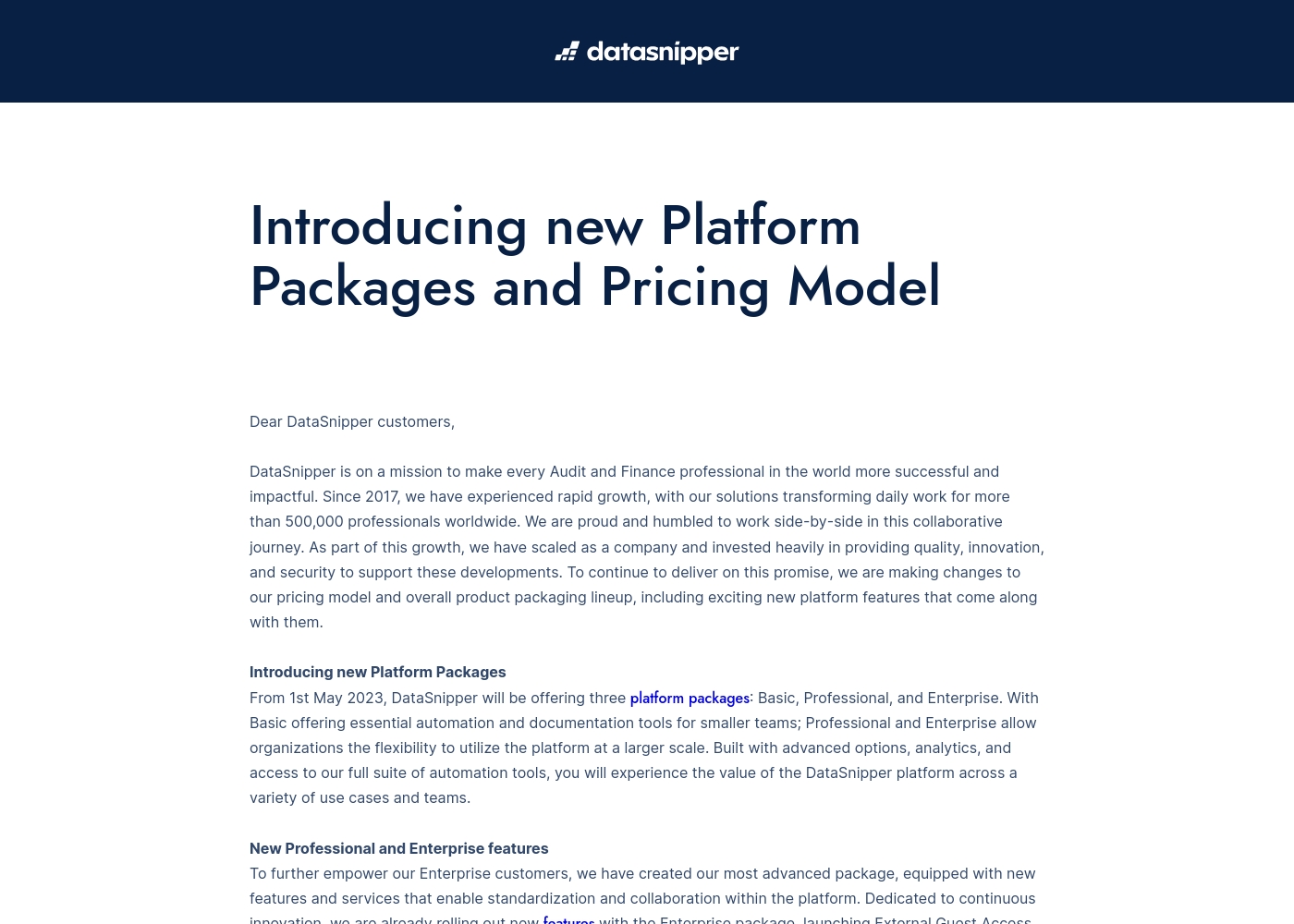
Take a look at the breakdown of our platform packages below to find your fit.
Basic
Best For: Smaller teams needing essential automation Other Features: Essential automation tools, Documentation tools
This plan is great for smaller audit or finance teams who want to start automating their workflows. It provides the core tools you need to document your work faster and more accurately.
- Essential automation tools
- Documentation tools
- Advanced options
- Advanced analytics
- Full suite of automation tools
- External Guest Access
- Advanced Reporting
- Company Templates
- Standardization tools
- World-class support & training
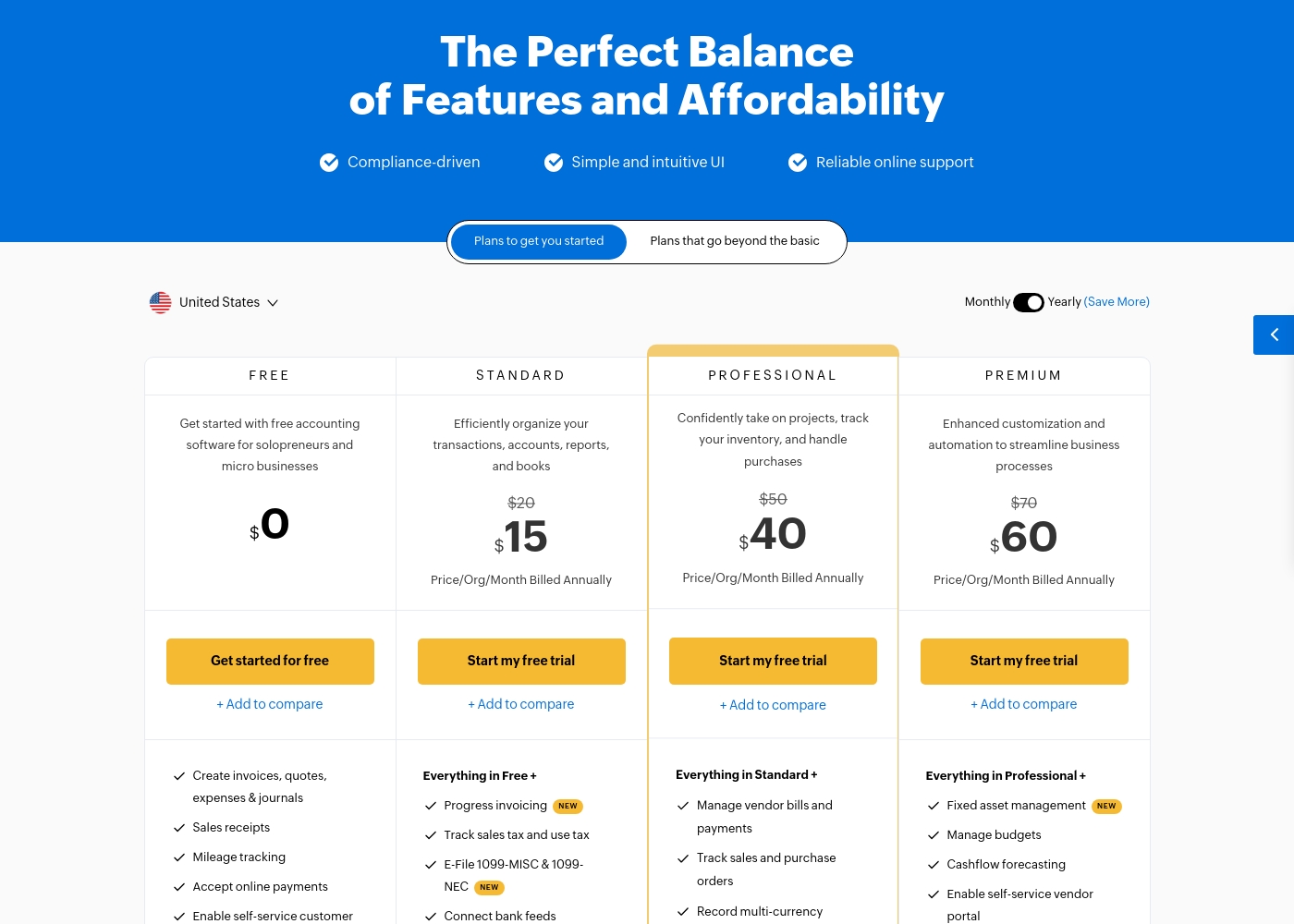
Zoho Books costs between $0 and $240 per month (billed annually) with six plans: FREE at $0, STANDARD at $15, PROFESSIONAL at $40, PREMIUM at $60, ELITE at $120, and ULTIMATE at $240.
Zoho Books offers plans built to grow with your company, from sole proprietors to large teams. Let's look closely at what is included in each option.
FREE
Price: $0.00 Best For: Solopreneurs and micro businesses (up to $50K annual revenue) Other Features:
- Create invoices, quotes, expenses, and journals
- Process sales receipts and track mileage
- Enable self-service customer portal
- Email Support (1 User + 1 Accountant)
- Create invoices, quotes, expenses & journals
- Sales receipts
- Mileage tracking
- Accept online payments
- Enable self-service customer portal
- Progress invoicing
- Track sales tax and use tax
- E-File 1099-MISC & 1099-NEC
- Connect bank feeds
- Generate divisional reports with reporting tags
- Manage vendor bills and payments
- Track sales and purchase orders
- Record multi-currency transactions
- Bill timesheets
- Project profitability
- Fixed asset management
- Manage budgets
- Cashflow forecasting
- Enable self-service vendor portal
- Set up custom domain
Pricing Head-to-Head
User Reviews
Based on the limited external data we could access, the Capterra review page was unavailable due to a security verification block, so we have no direct user review snippets to analyze. We cannot provide a balanced summary of recurring themes like accuracy, ease of use, or support responsiveness without actual user feedback.
Our review is therefore primarily based on the product information provided by DataSnipper, which highlights its focus on audit and finance automation. We recommend checking the external review platforms directly for current user sentiment.
While Zoho maintains an overall positive rating of 4.1/5 across thousands of reviews, most specific feedback provided recently centers on the Zoho Social tool, not the Books accounting software. Regardless, the consensus affirms Zoho’s commitment to excellent ease of use and high functional value.
Users consistently praise the platform for its intuitive interface, which streamlines workflows and simplifies multi-account management. Many appreciate that Zoho provides advanced functionality for a fraction of the cost of competitors, representing significant value for startups and small teams.
This platform offers huge functionality without the huge price tag. I used managers that cost ten times more, but Zoho offers the same key features and is incredibly user-friendly. It’s excellent value.
Our Verdict
DataSnipper and Zoho Books aren't direct competitors. They solve different problems entirely. DataSnipper's superpower is audit automation. It uses AI to collect, extract, and verify data from documents. It saves audit teams hours on repetitive tasks. Zoho Books' superpower is comprehensive accounting. It handles invoicing, expenses, inventory, and projects. It's built for growing businesses. The deciding factor is your job. If you're an auditor, DataSnipper is your tool. If you're a business owner, Zoho Books is your choice. Final verdict: Pick DataSnipper if you're an audit team handling complex data. Pick Zoho Books if you need full accounting for your business.
Frequently Asked Questions
Which is better for small teams: DataSnipper or Zoho Books?
Zoho Books is better for small teams needing accounting. It has a free plan and clear pricing. DataSnipper is for audit teams, not general business use.
Does DataSnipper have invoicing like Zoho Books?
No. DataSnipper doesn't offer invoicing. Zoho Books includes professional invoicing with payment reminders and online links.
Is Zoho Books worth the extra cost over DataSnipper?
It depends on your needs. Zoho Books has public pricing starting at $0. DataSnipper requires a custom proposal. Zoho Books offers more features for the price.
Can I migrate from DataSnipper to Zoho Books easily?
They serve different purposes. DataSnipper is for audit data. Zoho Books is for business accounting. Migration isn't straightforward as they don't overlap.
Which tool is better for data verification?
DataSnipper is better for data verification. Its AI cross-references and validates data points. Zoho Books has basic reconciliation, but not deep verification.
Does Zoho Books offer a free trial?
Yes. Zoho Books offers a 14-day free trial for all paid plans. DataSnipper doesn't mention a free trial; you need to book a demo.
Ready to Choose?
Both tools have their strengths. Choose based on your specific needs.