DataHawk vs Drip
DataHawk and Drip solve completely different problems for e-commerce businesses. DataHawk is your data command center, while Drip is your email marketing engine. Your choice depends on whether you need to understand your sales or communicate with your customers.
Best for: Multi-marketplace brands selling on Amazon and Walmart, E-commerce agencies needing unified client reporting
Best for: E-commerce brands (Shopify, BigCommerce, WooCommerce), Course creators and educators
Powerful Analytics, But Opaque Pricing
We see DataHawk as a strong contender for businesses needing a unified, AI-powered view of their ecommerce data. The platform promises to simplify complex analytics. Overall, it appears capable, but the custom pricing model and lack of public reviews are key considerations for potential buyers.
Pros
- Unifies data from multiple marketplaces into one dashboard.
- Includes AI-guided insights to uncover performance opportunities.
- Designed for ease of use, reducing manual data work.
- Scalable platform with features like daily alerts.
Cons
- Pricing is entirely custom and not publicly disclosed.
- Requires booking a demo for any cost information.
- No standard or transparent monthly/annual rates listed.
- Limited public user reviews make independent validation difficult.
Powerful for e-commerce, but check the support.
We find Drip to be a highly capable email automation platform built specifically for B2C e-commerce. Its visual builder and smart segmentation are standout features for creating personalized customer journeys. Overall, it's a strong choice for online brands, provided your team can manage the learning curve and verify support levels.
Pros
- Excellent visual workflow builder for automation
- Deep e-commerce integrations (Shopify, WooCommerce)
- Powerful, behavior-based segmentation tools
- Free migration for large lists (17,500+)
Cons
- Pricing can become expensive as contacts scale
- Some users report slow or inconsistent customer support
- Requires integration with compatible platforms
- Advanced features may have a learning curve
AboutDataHawk
DataHawk is a unified analytics platform for ecommerce. 🎯 It combines data from different sources into one place. The system uses artificial intelligence to help you understand your performance better. It’s designed for ecommerce businesses that want clearer, smarter insights.
AboutDrip
Drip is an email marketing automation platform built for B2C companies that sell online. Whether you're an e-commerce brand, a course creator, or a travel provider, it gives you the tools to move beyond generic newsletters. It's designed to be a powerful yet simple engine for driving revenue through personalization. 💡
Highlights
Feature Comparison
Features Overview
We highlight the main differences and pick a winner for each feature.
Core Purpose
DataHawk is for understanding your data. Drip is for acting on it with your customers.
DataHawk focuses on ingesting and analyzing marketplace data. It gives you a single view of sales, ads, and performance across channels like Amazon and Walmart. Drip focuses on customer communication. It uses your e-commerce data to trigger personalized emails that drive sales and retention. The key trade-off is insight versus action. DataHawk helps you answer 'What happened?' while Drip helps you answer 'What should we do next?'
Data Integration
DataHawk connects to marketplaces. Drip connects to your store and marketing stack.
DataHawk's strength is pulling data from Amazon, Walmart, and other marketplaces. It's built for multi-channel sales analytics. Drip connects directly to your e-commerce platform (Shopify, etc.) and over 50 other tools. It uses that data for customer journeys. You'll choose DataHawk if your data lives in marketplaces. You'll choose Drip if your data lives in your store and needs to trigger emails.
Automation & AI
DataHawk offers AI insights. Drip offers AI-powered workflow automation.
DataHawk uses AI to uncover performance opportunities and guide you within dashboards. Its automation is limited to daily alerts. Drip's automation is its core. You build visual workflows that automatically send emails based on customer behavior. Their segmentation uses AI to update itself. DataHawk's AI is for analysis. Drip's AI is for execution at scale.
Reporting & Dashboards
DataHawk provides executive dashboards. Drip provides campaign analytics.
DataHawk builds executive-ready dashboards to track high-level KPIs across marketplaces. It's designed for strategic overview. Drip's reporting focuses on email campaign performance: open rates, clicks, and revenue attributed to specific flows. DataHawk is for the business leader watching the big picture. Drip is for the marketer optimizing the next email.
Pricing & Value
DataHawk is a custom enterprise investment. Drip is a scalable, usage-based subscription.
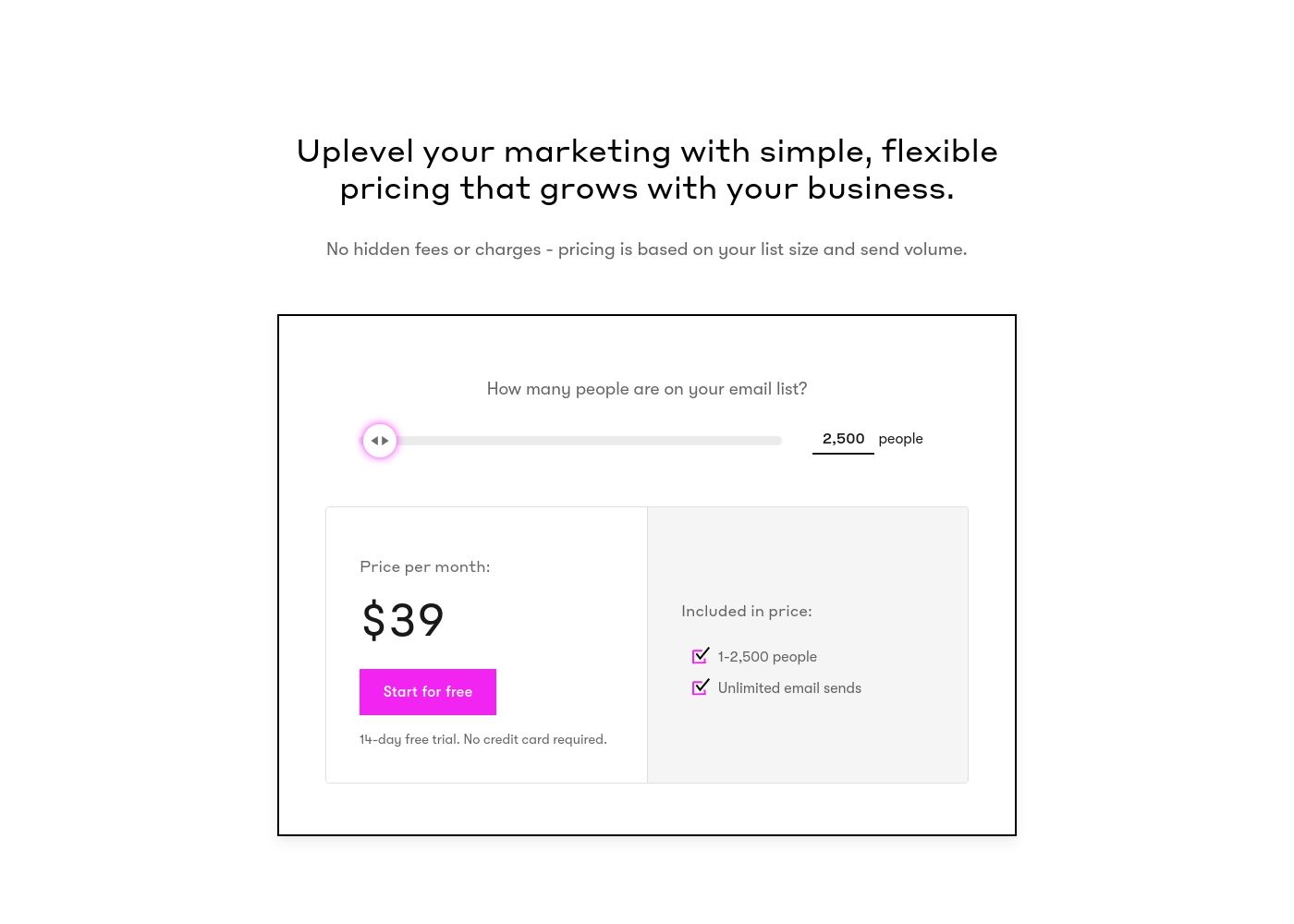
DataHawk uses custom annual plans based on your needs. Pricing is opaque and requires a demo. Drip's pricing starts at $39/month for up to 2,500 contacts and scales up. There's a 14-day free trial. DataHawk is a bigger upfront commitment. Drip lets you start small and pay as you grow.
Ease of Getting Started
DataHawk requires a sales process. Drip offers a self-serve trial.
To use DataHawk, you must book a demo and get a custom quote. Onboarding is guided but not instant. Drip offers a 14-day free trial you can start immediately. For large lists, they provide free migration and onboarding. You can test Drip today. With DataHawk, you're starting a sales relationship.
Customer Support
DataHawk's support is custom. Drip offers defined support tiers.
DataHawk's support details are not public. You'd need to confirm response times and channels during the sales process. Drip offers email support to all paid users. Live chat is available for plans $99/month or higher. Drip provides more transparent support expectations upfront.
Ideal Business Type
DataHawk is for multi-marketplace sellers. Drip is for direct-to-consumer brands.
DataHawk is ideal for brands or agencies managing data from Amazon, Walmart, and other marketplaces in one view. Drip is ideal for B2C brands selling directly via Shopify, BigCommerce, or WooCommerce. It's also great for course creators. Your sales channel determines the fit. Marketplace-heavy? DataHawk. Own your customer relationship? Drip.
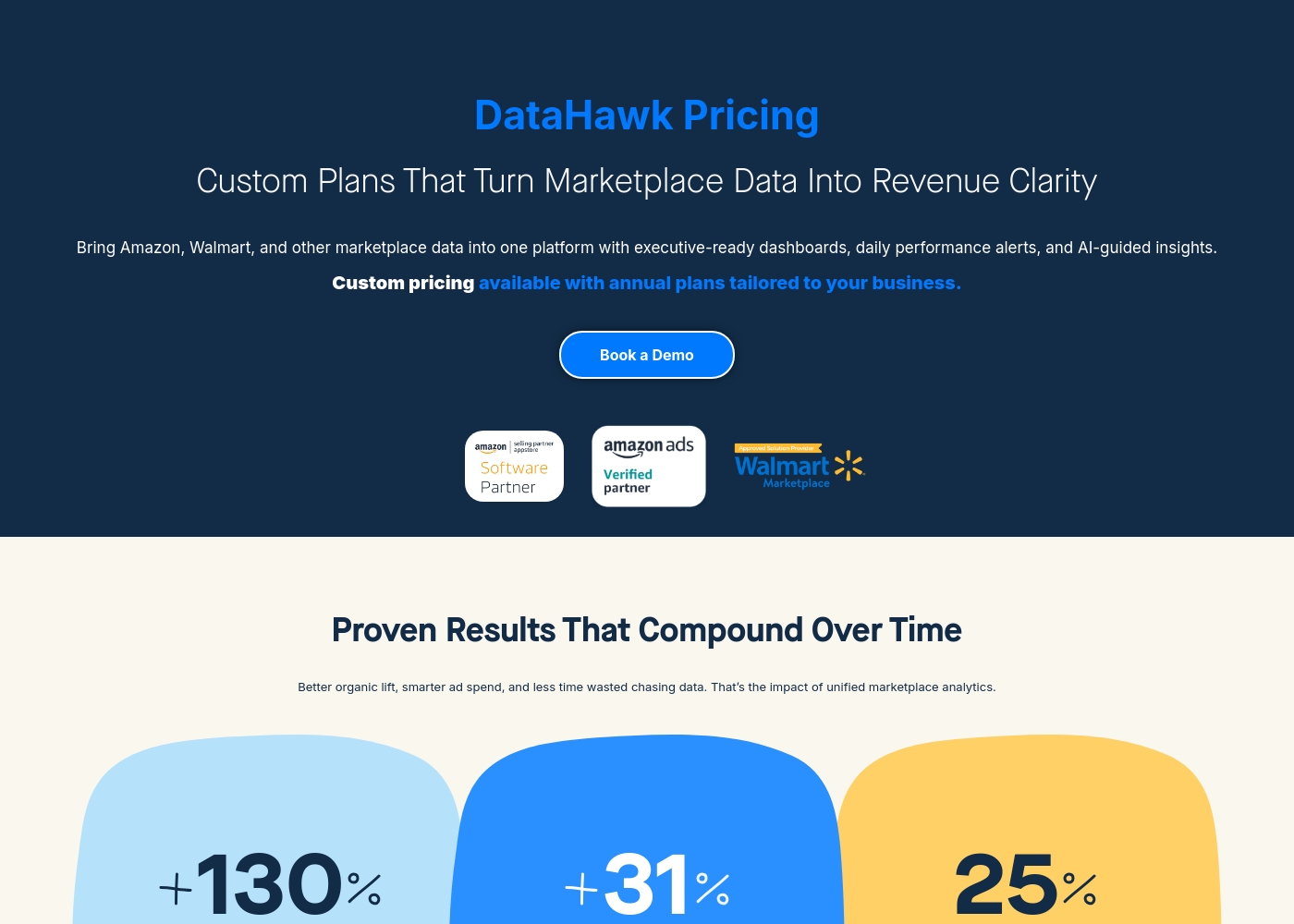
DataHawk pricing: DataHawk offers custom pricing models tailored specifically to your business needs and marketplace scale. Instead of flat fees, they provide annual plans based on the depth of analytics and connectivity required for your eCommerce operations Explorer dashboards and AI insights included everywhere. 🚀
Custom
Websites Supported: Amazon, Walmart, and other marketplaces Best For: Brands and agencies needing unified marketplace analytics and automated reporting Other Features: Executive-ready dashboards, Daily performance alerts, AI-guided insights, Amazon Ads partner verification, Walmart Marketplace integration
This plan is perfect for growing businesses that have outgrown manual spreadsheets. It brings multiple marketplace data sources into one clean view so you can focus on strategy rather than data cleaning. You get professional-grade tools regardless of your technical background.
Drip pricing: Drip offers a flexible, usage-based subscription starting at $39/month for up to 2,500 people. Pricing scales based on your email list size and includes a 14-day free trial with no credit card required to start browsing its powerful automation tools tool and visual builder.
Your monthly cost increases as your audience grows, but you always get features like unlimited email sends and onsite campaigns. This ensures you only pay for what you actually use while accessing expert support and pre-built marketing playbooks right from the start.
You can cancel your subscription at any time within your billing settings if your business needs change. This model is specifically designed for e-commerce brands looking for deep segmentation and personalized customer journeys without enterprise-level complexity or hidden fees.
Pricing Notes
- DataHawk pricing is fully custom and not publicly listed. You must book a demo for a quote.
- Drip pricing is transparent and scales with your contact list size and email volume.
- Drip offers a free 14-day trial with no credit card required.
- DataHawk emphasizes annual contracts, while Drip offers flexible monthly billing.
- Value comparison is difficult without a specific DataHawk quote, but Drip is accessible for SMBs.
Pricing Head-to-Head
User Reviews
We found that user sentiment on Trustpilot and Capterra is currently inaccessible due to technical blocks (CAPTERRA returns a 403 error, and Trustpilot requires browser verification). This means we cannot synthesize specific recurring themes like accuracy, ease of use, support, pricing, or onboarding from live reviews at this time. We advise checking the review platforms directly for the latest user feedback.
We found a mixed bag of user sentiment from Trustpilot, as the Capterra link was inaccessible. Reviews praise Drip's powerful automation and segmentation for driving revenue, with many noting its ease of use for e-commerce.
💡 On the downside, several users report frustration with customer support responsiveness and occasional platform glitches. Pricing is frequently cited as a concern, with some feeling the cost can escalate quickly as contacts grow.
Drip's automation tools are top-notch. We set up abandoned cart sequences that really boosted our recovery rate. The visual builder makes it easy to see the customer journey.
Our Verdict
DataHawk and Drip aren't really competitors—they're for completely different jobs. DataHawk's superpower is unifying chaos. It pulls all your Amazon and Walmart data into one clean, AI-powered dashboard. This is perfect if you're drowning in spreadsheets and need a single source of truth. Drip's superpower is automated, personal connection. It turns your Shopify data into smart email sequences that recover carts and boost loyalty. Customers using Drip's segments earn 5x more revenue. The deciding factor is your biggest pain point. If it's understanding what's happening across marketplaces, choose DataHawk. If it's turning traffic into sales through email, choose Drip. Pick DataHawk if you need analytics for multi-marketplace operations. Pick Drip if you need marketing automation for direct-to-consumer sales. For most online store owners, Drip is the more immediately actionable tool. DataHawk is for when data clarity is your top priority.
Frequently Asked Questions
Which is better for small teams: DataHawk or Drip?
Drip is generally better for small teams. It offers a 14-day free trial and transparent, usage-based pricing starting at $39/month. DataHawk requires custom annual plans and a demo process.
Can DataHawk send marketing emails like Drip?
No. DataHawk is an analytics platform, not an email marketing tool. It helps you understand performance. Drip is built specifically for email automation and customer communication.
Is Drip worth the extra cost over DataHawk?
It's not an 'extra cost' comparison, as they serve different purposes. Drip is for driving revenue through email. DataHawk is for analyzing data from marketplaces. The value depends on whether you need marketing automation or unified analytics.
Does Drip integrate with Amazon and Walmart like DataHawk?
No. Drip focuses on direct e-commerce platforms like Shopify, BigCommerce, and WooCommerce. DataHawk specializes in integrating with marketplaces like Amazon and Walmart.
Which tool has better customer support?
Drip provides more transparent support options, including email for all and live chat for higher-tier plans. DataHawk's support details are not publicly listed and would be part of a custom agreement.
Can I try DataHawk for free before buying?
No. DataHawk does not offer a public free trial. You need to book a demo for a custom quote. Drip offers a 14-day free trial with no credit card required.
Ready to Choose?
Both tools have their strengths. Choose based on your specific needs.