CyberGhost vs FastVPN
This comparison pits CyberGhost's proven reliability against FastVPN's deeply discounted rates. CyberGhost offers audited privacy guarantees and stronger security transparency. FastVPN provides a massive server count but comes with serious financial liability warnings. You must decide if saving money is worth the severe consumer risk.
Best for: Users prioritizing independently audited privacy and security checks, Families or individuals needing to cover 7 simultaneous devices
Best for: Users focused solely on getting the lowest possible introductory rate, Streaming connoisseurs who prioritize high total server count (2700+)
Strong Security and Excellent Value.
We found CyberGhost delivers high speeds and robust security, backed by an independent Deloitte No-Logs audit and excellent long-term pricing. The application is highly user-friendly across most major platforms and covers a generous seven devices simultaneously. Overall, the service is a strong choice for users prioritizing speed and privacy across multiple devices, though Linux users may face integration difficulties.
Pros
- Audited No-Logs policy verified by Deloitte adds major credibility.
- Blazing fast speeds supported by next-gen 10 Gbps servers.
- User-friendly interface and easy cross-platform installation.
- Extensive network of servers in 100 countries worldwide.
Cons
- Sub-optimal or obsolete support for certain Linux distributions (both CLI and GUI).
- Lack of clear details regarding auto-renewal and foreign currency pricing (e.g., USD vs. CAD) in subscription ads.
- The Windows application currently lacks a Split Tunneling feature.
Major Trust Issues and Billing Warnings
We note FastVPN offers attractive introductory rates and claims a strong no-log policy supported by a wide server network. However, we cannot overlook the severe and recurring user complaints regarding unauthorized charges and accounts frozen shortly after payment. Overall, we urge extreme caution when considering this provider due to major risks related to service reliability and immediate financial transparency.
Pros
- Highly competitive introductory pricing rates advertised.
- Strict no-log policy guarantees user anonymity.
- Claimed access to a large network of 2700+ servers.
- Known for fast connection speeds, according to some reports.
Cons
- Frequent reports of severe unauthorized credit card charges.
- Accounts may be frozen shortly after paying for the subscription.
- Customer service allegedly ignores or refuses cancellation requests.
- Users report requests for government ID verification after purchase.
AboutCyberGhost
A VPN, or Virtual Private Network, creates a secure tunnel for your data. CyberGhost VPN encrypts your traffic immediately after you connect to a server.
It masks your IP address so your real location stays hidden. This technology protects your digital identity everywhere you go.
It is an essential tool for avoiding snooping, tracking, and unwanted censorship online. Use it to keep sensitive information like passwords and financial transactions safe from cybercriminals, especially on public Wi-Fi.
AboutFastVPN
FastVPN is a straightforward way to keep your online life private and secure. Getting started with the service is easier than you might think. Downloading the VPN is one of the simplest ways to protect your data privacy.
It works by ensuring all your Internet traffic is encrypted. This simple step protects your private data, especially when you shop safely on public Wi-Fi. It also gives you the freedom to browse anonymously. We love the strict no-log policy 💡, which guarantees that your online activity is never tracked or logged.
Highlights
Feature Comparison
Features Overview
We highlight the main differences and pick a winner for each feature.
Security & Trust
CyberGhost's privacy claims are independently verified by Deloitte. FastVPN only self-declares a standard no-log policy.
CyberGhost underwent an independent audit by Deloitte to verify its No-Logs commitment. This audit adds serious credibility to CyberGhost's privacy claims. FastVPN asserts a strict no-log policy but offers no third-party verification details in the provided data. For ultimate privacy confidence, the Deloitte audit makes CyberGhost clearly superior. This distinction is crucial for users highly concerned about data anonymity.
Simultaneous Devices
CyberGhost explicitly supports 7 devices at once, offering clear coverage. FastVPN's guaranteed device limit is missing information.
CyberGhost delivers strong value by allowing 7 simultaneous connections per single subscription. This lets you cover laptops, phones, and tablets easily. FastVPN's data does not explicitly state the number of devices allowed concurrently. This lack of clarity is a potential major drawback for large households. If guaranteed device coverage is key for you, CyberGhost provides reliable numbers.
Server Network Size
FastVPN lists over 2700 total servers in 100+ locations globally. CyberGhost is in 100 countries but does not list a total server count.
FastVPN boasts a large infrastructure, listing over 2700 servers across its global network. CyberGhost emphasizes its massive geographical reach, offering servers in 100 countries worldwide. Both providers offer excellent access for bypassing geo-restrictions for global content. CyberGhost's reach is slightly wider in country count, but FastVPN reports higher total server volume. They are functionally equal in terms of global reach performance.
Speed Infrastructure
CyberGhost leverages high-performance 10 Gbps servers for proven speed. FastVPN claims 4K streaming but avoids specifying server architecture.
CyberGhost guarantees blazing performance using next-gen 10 Gbps servers globally. This advanced hardware ensures faster connectivity, ideal for seamless 4K streaming. FastVPN promises smooth 4K streaming access through its custom network and in-house servers. Without confirming 10 Gbps infrastructure, FastVPN's commitment to speed is less transparent. Therefore, CyberGhost is more transparent about its actual speed capabilities.
Pricing Structure
FastVPN offers ridiculously low introductory rates, but renewals jump sharply. CyberGhost's long-term structure is more stable and transparent.
FastVPN's intro costs start unbelievably low, such as $0.99 for the first month or $1.00/month annually. However, renewals jump sharply to $7.88/month or $34.56/year once the promotional term ends. CyberGhost starts at $2.19/month on its longest plan with slightly more predictable renewal costs. While CyberGhost is pricier initially, it offers more stable billing clarity than FastVPN’s heavy discounts and abrupt price hikes.
Money-Back Guarantee
CyberGhost provides a generous 45-day guarantee; FastVPN offers a shorter 30-day window.
For serious evaluation, CyberGhost provides a significant 45-day refund window on its six-month and annual plans. Even the shortest plan receives a 14-day guarantee. FastVPN offers a standard 30-day money-back guarantee for all of its subscription options. The extra 15 days from CyberGhost gives users much more time for comprehensive testing. Note that FastVPN users report difficulty getting refunds honored.
Trial Availability
CyberGhost offers a genuine free trial up to 7 days, depending on the device. FastVPN does not offer any complimentary free trial period.
You can try CyberGhost risk-free with device-specific trials supporting up to 7 free days. CyberGhost allows users to experience the full app before committing any money. FastVPN requires an upfront purchase before testing the service in any capacity. This lack of a trial forces users to rely entirely on the 30-day refund policy, which users report is unreliable.
Customer Support Rep
CyberGhost support is highly praised as professional and responsive. FastVPN support is riddled with complaints of refusal and fraud.
CyberGhost customers report very positive interactions, calling the support staff professional and efficient. Reviews suggest FastVPN customer service is problematic, often refusing cancellation requests. FastVPN users also report account freezes and demands for government ID verification after purchase. Based on critical user experience, CyberGhost is significantly more reliable and trustworthy.
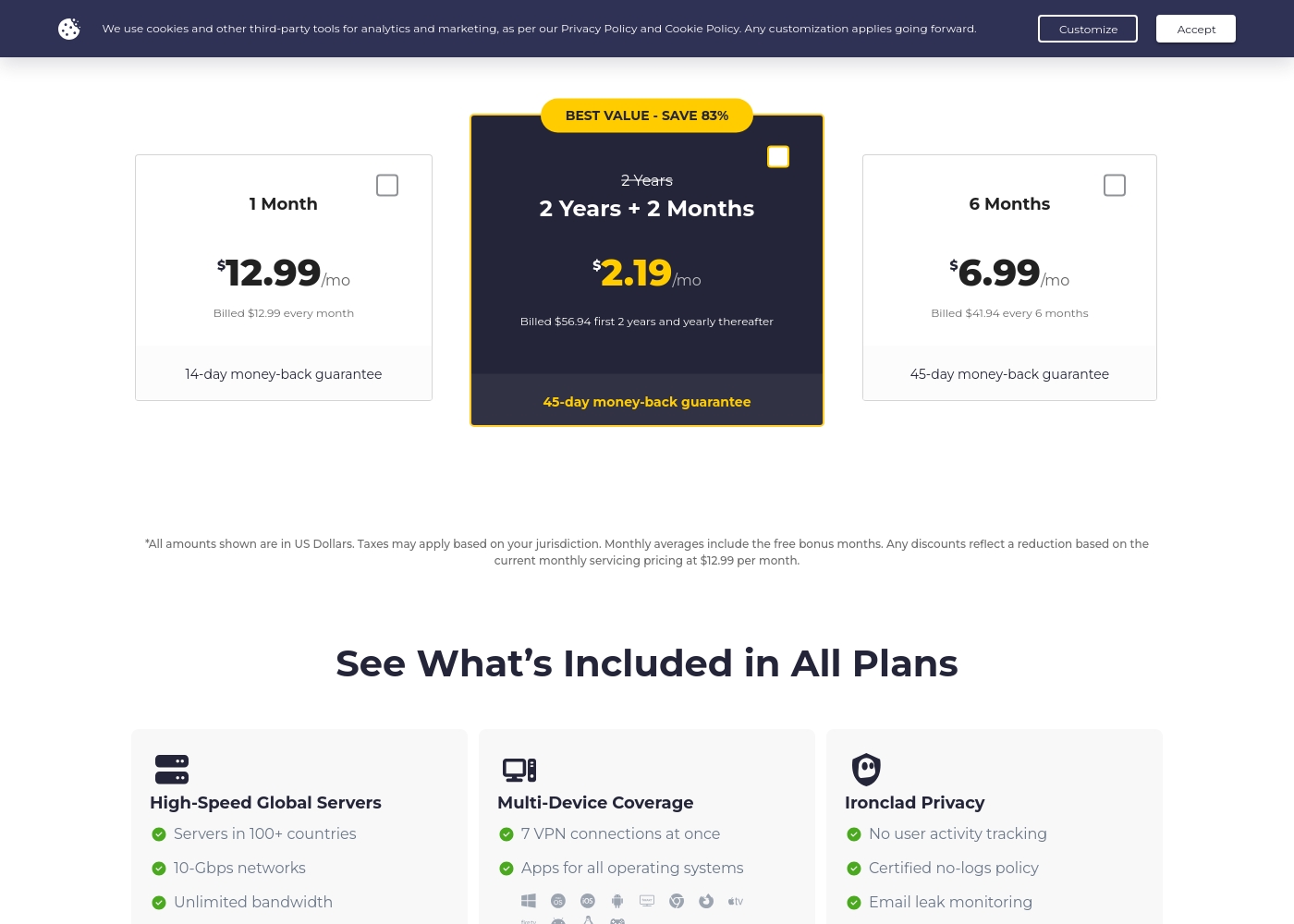
CyberGhost costs between $2.19 and $12.99 per month with three plans: 2 Years + 2 Months ($2.19/mo), 6 Months ($6.99/mo), and 1 Month ($12.99/mo).
You can select the plan that best fits your needs below. All options provide full access to our premium features, securing up to 7 devices simultaneously.
2 Years + 2 Months (Best Value)
Price: $2.19 per month (Billed $56.94 for the first 26 months, then $56.94 yearly thereafter) Best For: Users seeking the deepest discount for long-term protection Refund Policy: 45-day money-back guarantee Other Features:
- Save 83% off the standard monthly price
- Full VPN access with servers in 100+ countries
- Access to 10 Gbps networks and unlimited bandwidth
- Save 83%
- Best Value
- 45-day money-back guarantee
- 45-day money-back guarantee
- Billed semi-annually
- 14-day money-back guarantee
- Monthly billing
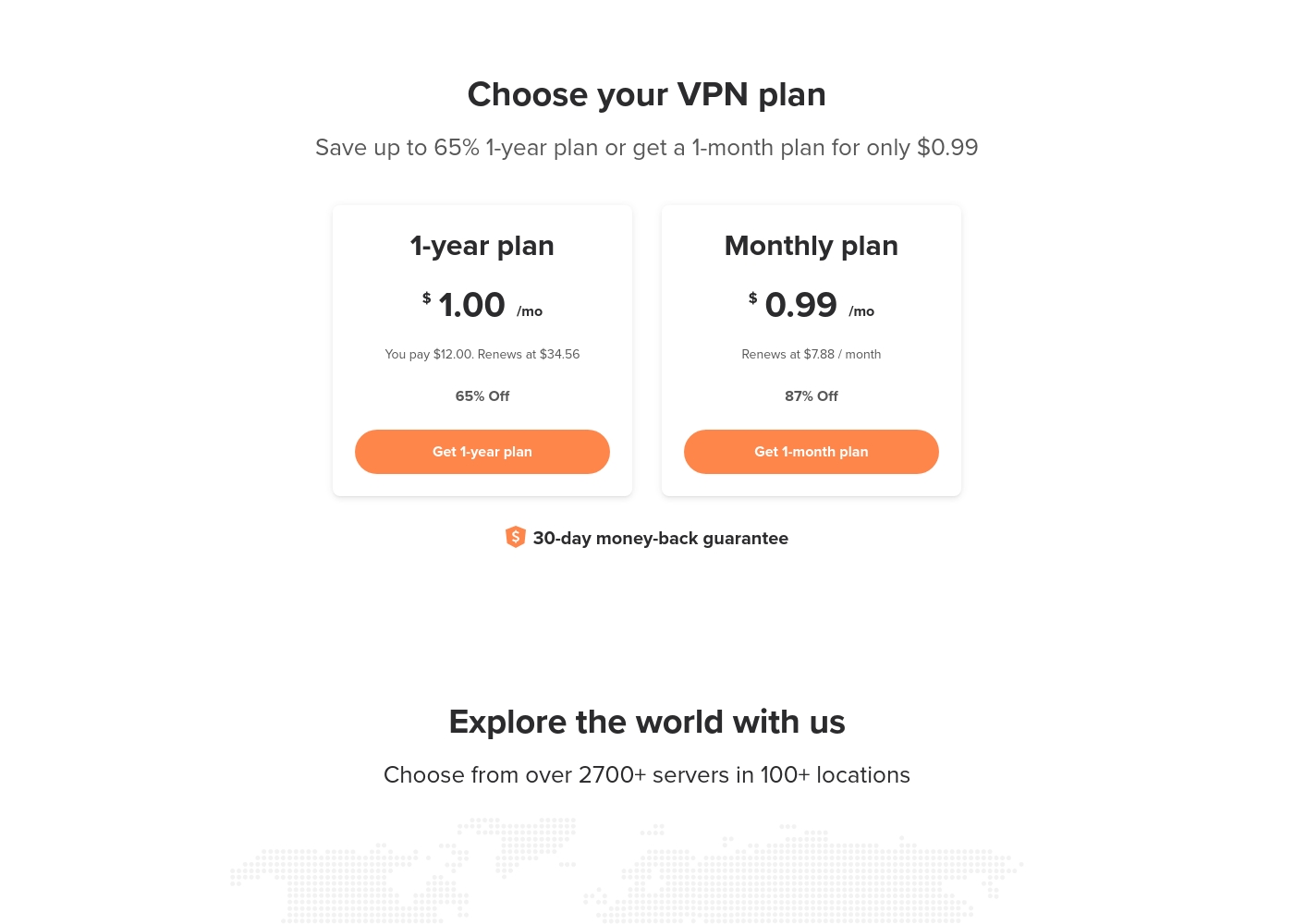
FastVPN costs between $0.99 and $7.88 per month with two plans: 1-year plan at $12.00 and Monthly plan at $0.99/month.
Here is a simple breakdown of the current plan structure.
1-year plan
Price: $1.00 per month (Billed $12.00 upfront annually) Refund Policy: 30-day money-back guarantee Other Features:
- Initial 65% discount included
- Renews annually at $34.56
- Access to 2700+ servers in 100+ locations
- Billed annually at $12.00 initial rate
- Renews annually at $34.56
- Initial 65% discount
- Billed monthly at $0.99 initial rate
- Renews monthly at $7.88
- Initial 87% discount
Pricing Notes
- FastVPN uses extremely aggressive introductory rates (starting at $0.99) that renew at significantly higher prices.
- CyberGhost's long-term plan is billed $56.94 for 26 months, offering a more stable and predictable long-term low rate.
- CyberGhost provides a superior 45-day money-back guarantee on longer terms, beating FastVPN’s 30-day standard guarantee.
- Extreme caution is advised: FastVPN users frequently report issues with unauthorized post-renewal charges and refused refund requests.
Pricing Head-to-Head
User Reviews
CyberGhost generally receives positive feedback from consumers, earning a strong overall rating of 4.0 stars across over 23,000 reviews. Customers frequently praise the user-friendliness of the application across various operating systems, noting the ease of installation and simple navigation.
Many users highlight the fast connections, the vast array of reliable servers, and its effectiveness for specialized activities like streaming and torrenting. The support team is often described as pleasant, responsive, and efficient when contacted.
Switching from a competitor has been worthwhile. I notice improved user-friendliness, speed, and overall clarity. The connection is great, and the app is very simple to use.
External reviews for FastVPN are polarized, showing a stark contrast between older positive experiences and severe recent complaints. A small segment of users praised the service for being very fast, user-friendly, and highly affordable, noting decent server availability and helpful support for specific site issues.
However, the dominant recent feedback highlights critical issues related to billing and service reliability. Users frequently allege unauthorized credit card charges, sometimes for unexpectedly large sums like $225.60, even when auto-renewal was disabled.
I’ve used Fast VPN for about two weeks now. It’s incredibly fast; while other VPNs take half an hour to connect, this took less than 10 seconds. You also get to pick the location for the fastest server, which is a big help.
Our Verdict
Choosing between CyberGhost and FastVPN is easy once you prioritize trust. While FastVPN’s introductory price looks amazing, CyberGhost offers verifiable security. CyberGhost is currently the safer and more reliable choice for almost every single user. This decision is less about features and more about vendor accountability. CyberGhost's real superpower is its accountability backed by third-party checks. Deloitte audited CyberGhost's No-Logs policy, proving their commitment to privacy. You also cover a generous 7 devices simultaneously with CyberGhost. Their servers in major locations boast 10 Gbps speeds for seamless 4K streaming experiences. FastVPN’s main draw is its shockingly low introductory pricing starting at $0.99 per month. FastVPN claims a massive network of over 2700 servers for extensive global access. However, user reviews routinely expose serious issues with FastVPN's billing and problematic customer support practices. The deciding factor here is digital and financial safety. Choosing FastVPN involves accepting serious risks of unauthorized credit card charges later on. CyberGhost provides reliable service, predictable renewal rates, and a 45-day money-back guarantee. If you prioritize peace of mind and transparency, choose CyberGhost. Skip the rock-bottom deals from FastVPN and invest in proven security instead. CyberGhost is best for families and those needing long-term speed and reliability. FastVPN is a gamble best left to users willing to risk their bank account details.
Frequently Asked Questions
Which VPN is better for streaming, CyberGhost or FastVPN?
Both CyberGhost and FastVPN support smooth 4K streaming and global access. CyberGhost is more transparent, listing 10 Gbps servers and specific stream-optimized protocols. FastVPN has a high server volume (2700+), but its reliability is highly questionable based on user feedback.
Why is CyberGhost's money-back guarantee longer than FastVPN's?
CyberGhost offers a superior 45-day money-back guarantee on all long-term plans. FastVPN offers a standard 30-day guarantee period. Furthermore, users report significant difficulty in receiving refunds promised by FastVPN customer support.
Can I trust the no-logs policy of FastVPN compared to CyberGhost?
You should place more trust in CyberGhost's No-Logs policy. CyberGhost submitted to an independent audit by Deloitte to verify its privacy claims. FastVPN asserts a no-logs policy but provides no third-party verification to back this critical claim.
Does FastVPN offer a free trial period like CyberGhost?
No, FastVPN does not offer any form of complimentary free trial. You must purchase a plan first, relying on the 30-day guarantee for risk mitigation. CyberGhost offers device-specific free trials up to 7 days, allowing users to test before buying.
Which VPN has clearer pricing after the introductory period ends?
CyberGhost has a much clearer, lower renewal rate after the initial term finishes. FastVPN’s renewal often results in a steep, sudden jump from the highly discounted introductory rate. User reviews frequently cite unauthorized or confusing charges from FastVPN.
Which service is better for covering multiple devices?
CyberGhost is definitely better for device coverage based on available data. CyberGhost explicitly supports 7 simultaneous device connections per user. FastVPN does not state the number of devices it supports concurrently in its marketing materials.
Ready to Choose?
Both tools have their strengths. Choose based on your specific needs.