CASTANET vs Leadfeeder
This comparison pits proactive LinkedIn outreach against reactive website visitor identification. CASTANET provides 24/7 automated prospecting sequences. Leadfeeder identifies anonymous companies visiting your high-intent web pages. Choosing correctly depends entirely on where your ideal leads start their journey.
Best for: Sales professionals highly focused on LinkedIn outreach strategies, Small sales teams needing reliable, drama-free 24/7 automation
Best for: Businesses with high website traffic needing B2B visitor identification, Marketing teams optimizing ad campaign ROI using behavioral intent data
Flexible automation for relationship builders.
We find CASTANET offers powerful 24/7 LinkedIn lead generation tailored for sales professionals focusing on relationship building. It neatly integrates with Zapier across all tiers, streamlining CRM export immediately. Overall, this is a highly targeted tool ideal for users who are ready to invest in serious automated outreach.
Pros
- Lead generation runs automatically 24 hours a day, 7 days a week.
- Zapier integration is included in all three pricing plans for seamless data syncing.
- Provides deep, specific insights (schools, groups) to help qualify prospects.
- Offers a 7-day free trial to test full functionality risk-free.
Cons
- The $99 Basic plan heavily limits campaigns and automation steps.
- The popular Sales Pro plan ($199/month) supports only one LinkedIn profile.
- No mention of discounted annual pricing options.
- No explicit money-back guarantee is detailed after the 7-day trial period.
Advanced B2B Lead Identification, High Risk.
We found Leadfeeder offers powerful B2B visitor identification features, including robust filtering and unique remote employee recognition capabilities. However, we note consistent customer reports detailing unresolved CRM integration failures and problematic auto-renewal billing policies that undermine its fundamental value proposition. Overall, the powerful features are currently overshadowed by serious concerns regarding support responsiveness.
Pros
- Highest company recognition rate available, identifying remote workers.
- Quick setup requiring a simple Google Analytics connection.
- Robust filtering system using over 50 firmographic and behavioral signals.
- Allows identification of companies engaging with ad campaigns.
Cons
- Reportedly flawed and unresolved two-way Dynamics CRM integration features.
- Aggressive annual auto-renewal policy lacking timely notification reminders.
- Customer support is frequently criticized as non-existent or unhelpful.
- High subscription cost scaling based significantly on volume of identified companies.
AboutCASTANET
CASTANET is an automated solution designed to simplify lead generation on LinkedIn. It is built for sales professionals who value relationship building over quick sales pitches 💡. The platform recognizes that building trust takes time, and it provides the tools to invest wisely in your prospects. You can communicate effectively with new connections and explain exactly why you are an excellent resource for them.
AboutLeadfeeder
Leadfeeder is a powerful tool designed to help salespeople, marketers, and agencies find hidden opportunities in their web traffic. Its unique technology scans incoming traffic and identifies the companies visiting your website based on their IP address. This works even if employees are working from home. Once identified, the tool helps you uncover exactly what those companies are interested in, confirming their true buying intent. This crucial data processing meets all necessary GDPR legislation requirements. ✅
Highlights
Feature Comparison
Features Overview
We highlight the main differences and pick a winner for each feature.
Core Purpose & Strategy
CASTANET automates proactive outreach; Leadfeeder focuses on identifying existing website intent.
CASTANET is engineered for automated, consistent 24/7 LinkedIn lead generation. It helps you proactively reach out and nurture prospects with automated sequences. You are actively sourcing and engaging new contacts daily. Leadfeeder is centered on instantly identifying anonymous companies already visiting your website. It leverages existing traffic and prioritizes leads based on their behavioral intent. It helps sales teams monitor the traps, not set them. The fundamental difference is push vs. pull marketing automation strategy. CASTANET pushes sales messages while Leadfeeder pulls insights from warm web traffic. If LinkedIn is your core sales pipeline, CASTANET is vital for execution. If your website is your main funnel, Leadfeeder delivers timely intelligence.
Integration Robustness
CASTANET relies on Zapier; Leadfeeder provides native, reliable two-way CRM sync.
CASTANET exports lead profile data automatically to CRMs using Zapier or Google Sheets. This offers flexibility but introduces reliance on a third-party connector. It seamlessly syncs to Slack for team alerts. Leadfeeder is built with native, two-way integrations for all major CRM platforms. This ensures automatic, real-time data synchronization directly into your existing tool stack. Native two-way integration, offered by Leadfeeder, is typically faster and more resilient than relying on Zapier for core data flow. CASTANET users accept this dependency. For organizations where fast, seamless data integrity is non-negotiable, Leadfeeder's native integrations are superior to CASTANET's Zapier-based method.
Pricing Model
CASTANET charges per user profile; Leadfeeder charges strictly by anonymous visitor volume.
CASTANET uses fixed pricing tiers, starting at $99/month, based on the number of profiles used. The top tier only includes three active LinkedIn profiles for $399/month. Scaling up user access is costly. Leadfeeder includes unlimited user seats across all its Paid plans. Pricing scales only according to the volume of unique companies identified visiting your domain monthly. It also offers a free plan. Leadfeeder provides better cost scalability for larger sales teams because user headcount doesn't increase the bill. CASTANET's profile-based pricing quickly becomes expensive for growing teams. Small teams only needing one dedicated LinkedIn profile might start cheaper with CASTANET. Large teams needing many users to access sales intelligence benefit from Leadfeeder’s unlimited user policy.
Lead Qualification
CASTANET uses social alignment data; Leadfeeder uses 50+ filters to grade intent.
CASTANET helps personalize outreach by showing prospect fit signals like schools or groups attended. This offers qualitative insight for crafting tailored messages. Leadfeeder uses over 50 firmographic and behavioral filters to score intent and qualify leads instantly. This includes tracking high-intent activities like viewing a pricing page. Leadfeeder's approach is designed for high-volume data analysis and quantitative prioritization. CASTANET is better for personalizing one-to-one manual or automated messages. If you process thousands of weekly website visitors, Leadfeeder's sophisticated filtering is crucial. CASTANET serves the hyper-personalization needed for LinkedIn connections.
Ad Campaign Impact
Leadfeeder tracks campaign ROI and engagement; CASTANET has no advertising oversight features.
CASTANET focuses exclusively on LinkedIn outreach automation and does not track marketing campaign performance metrics. It's a pure sales execution tool. Leadfeeder helps measure the full impact of digital campaigns, identifying every company engaging with your ads. It tracks non-direct results for better ROI optimization. Leadfeeder insight allows marketers to target specific keywords and optimize their spending based on real company engagement data. This capability is absent in CASTANET. Marketing teams focused on maximum ROI from paid digital advertising must rely on Leadfeeder for comprehensive visitor tracking and optimization data.
Service Reliability
CASTANET has high review stability; Leadfeeder users report serious support and renewal issues.
CASTANET receives generally positive reviews emphasizing reliable 24/7 automation and solid data export functions. Users find the tool works consistently as intended (4.3 rating). Leadfeeder reviews frequently describe frustrating experiences with unhelpful customer support and persistent integration bugs. Users also cite an aggressive auto-renewal billing policy. Operational stability is significantly higher for CASTANET, providing greater administrative peace of mind. Leadfeeder's superior features are often overshadowed by these severe service concerns. Teams prioritizing stable performance and clear billing practices should choose CASTANET, despite Leadfeeder's richer feature set.
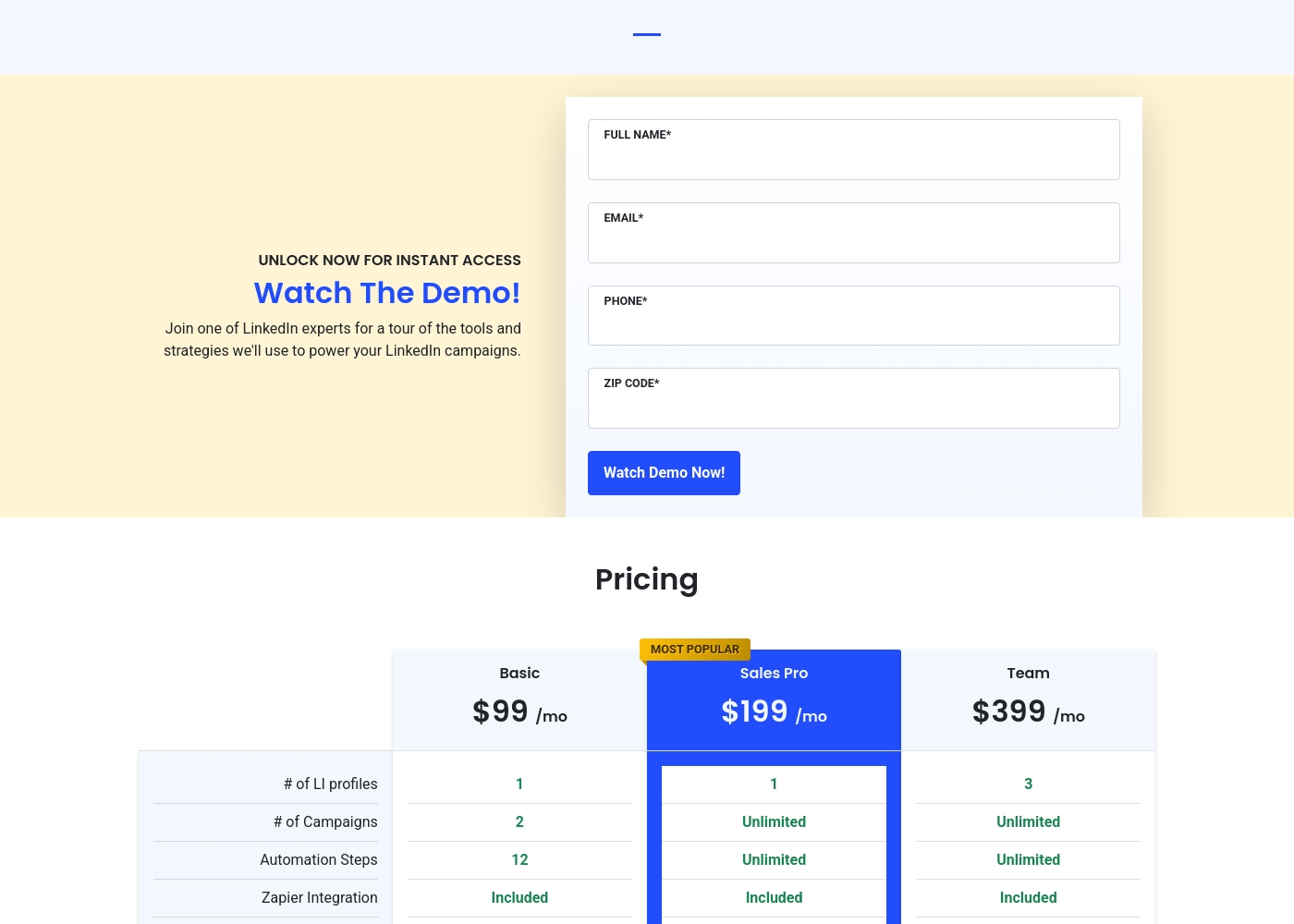
CASTANET costs between $99 and $399 per month with 3 plans: Basic at $99/mo, Sales Pro at $199/mo, and Team at $399/mo.
Let's break down what you get with each of the available monthly plans.
Basic
Price: $99/mo Websites Supported: 1 LI profile Other Features:
- 2 Campaigns
- 12 Automation Steps
- Zapier Integration
- 1 LinkedIn profile
- 2 Campaigns
- 12 Automation Steps
- Zapier Integration
- 1 LinkedIn profile
- Unlimited Campaigns
- Unlimited Automation Steps
- Zapier Integration
- 3 LinkedIn profiles
- Unlimited Campaigns
- Unlimited Automation Steps
- Zapier Integration
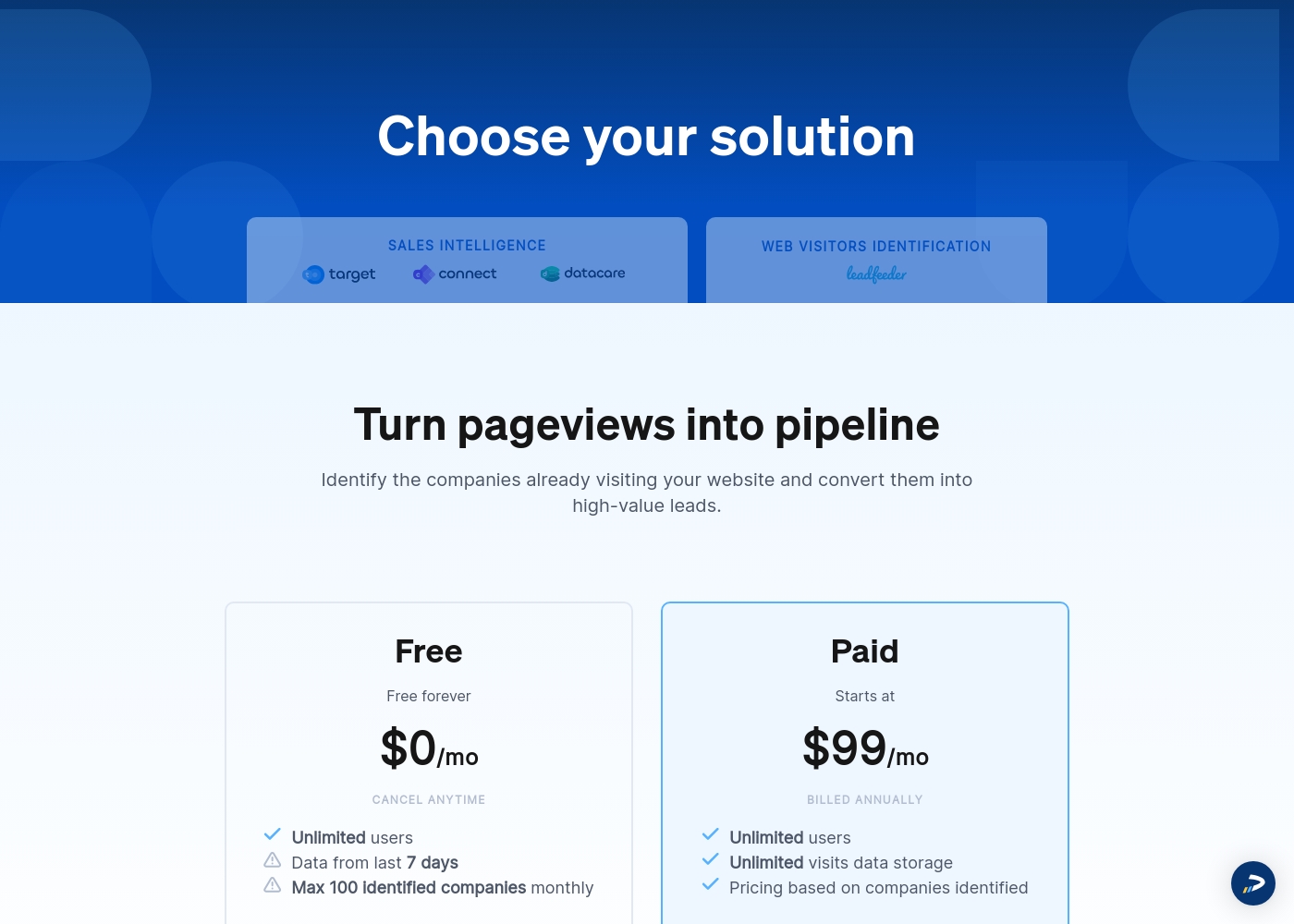
Leadfeeder costs between $0 and $99 per month (billed annually) with two plans: Free at $0 per month and Paid starting at $99 per month.
Here is a breakdown of what you get with each of the available identification solutions.
Free
Price: $0 per month Websites Supported: One per subscription (as subscriptions are priced per website) Best For: Small websites, evaluation, or testing the core feature set Refund Policy: Not applicable (It's free forever) Other Features: Unlimited users, data from the last 7 days, cancel anytime
- Free forever
- Unlimited users
- Verified company details (limited)
- Visitor data storage for the last 7 days
- Unlimited users
- Unlimited visits data storage
- All identified companies access
- Verified company details (firmographics & contact details)
- 25 contact export credits
Pricing Notes
- CASTANET pricing scales based on the number of active LinkedIn profiles/users.
- Leadfeeder offers a permanent Free plan, which CASTANET does not have.
- Leadfeeder's maximum pricing scales dynamically based on identified visitor volume (up to 40,000 companies).
- Leadfeeder charges per website monitored; multi-domain users pay more.
- Leadfeeder customers frequently report aggressive annual auto-renewal and billing issues.
Pricing Head-to-Head
User Reviews
We found no external user reviews on Trustpilot or Capterra at the time of this assessment, as evidenced by the lack of provided snippets. Therefore, we cannot synthesize common user themes, such as ease of use, support responsiveness, or the accuracy of lead generation, for CASTANET based on independent third-party feedback.
The platform’s capabilities must be evaluated solely based on its robust stated feature set and the clear pricing structure derived directly from the company’s website. Potential users should rely heavily on the 7-day free trial period offered by CASTANET to thoroughly test integration and performance before committing to a paid plan.
The customer feedback available paints a highly polarized picture of Leadfeeder. While users appreciate the core functionality—its ability to identify visiting companies and connect quickly with Google Analytics—recent experiences highlight significant operational and support issues.
Many users found the tool useful for generating leads when paired with high website traffic. However, recurring negative comments focus heavily on the financial practices.
Leadfeeder is a very useful tool and an honest company. It helps us correctly identify website visitors, which allows us to add high-quality prospects to our sales database. The support team has been genuinely helpful throughout our time using the product.
Our Verdict
This comparison truly pits two different sales strategies against each other. CASTANET is designed for proactive outreach, while Leadfeeder is for capitalizing on existing website intent. Neither tool fully replaces the other; they automate different pipeline stages. CASTANET's superpower is making routine LinkedIn prospecting completely hands-free. It provides critical, personalized 'fit' signals using shared schools or groups. CASTANET ensures your outreach sequences run consistently, delivering new leads daily without manual effort. If LinkedIn automation is the biggest drag on your time, CASTANET solves that problem directly. Leadfeeder is the champion of turning anonymous traffic into powerful sales intelligence. It gives unlimited users access to sophisticated filtering based on actual buying intent and page views. Leadfeeder's high recognition rate identifies companies, and its native two-way CRM sync keeps your data accurate. The deciding factor should be service stability versus raw feature depth. Leadfeeder offers superior features like unlimited users and ad tracking but comes with reported risks of poor support and tricky billing. CASTANET provides fewer features but demonstrates reliable performance and positive user sentiment. If you have high web traffic and manage complex advertising campaigns, Leadfeeder is the technical winner. If you are a sales professional or small team needing reliable, set-and-forget LinkedIn automation, stick with CASTANET for peace of mind and steady pipeline growth.
Frequently Asked Questions
Which is better for small teams: CASTANET or Leadfeeder?
If prospecting involves only 1-3 dedicated LinkedIn profiles, CASTANET is a good fit. Leadfeeder is better if you need multiple team members viewing web visitor data. Leadfeeder offers unlimited users on all plans, making it highly team-scalable.
Does CASTANET identify website visitors like Leadfeeder?
No, CASTANET is exclusively focused on automating LinkedIn lead generation and outreach sequences. Leadfeeder is specialized in using IP addresses to identify anonymous companies visiting your website. The tools operate in entirely different domains.
How do the integration methods compare between CASTANET and Leadfeeder?
Leadfeeder offers robust, native two-way integrations with major CRMs for seamless sync. CASTANET uses Zapier or Google Sheets to export lead data. If native two-way sync is critical, Leadfeeder is generally the stronger choice.
Is Leadfeeder worth the extra cost over CASTANET?
Leadfeeder's cost scales with unique visitors, potentially becoming expensive at high volume. However, Leadfeeder includes unlimited users and advanced marketing features that CASTANET lacks. Evaluate if those specific features justify Leadfeeder's complexity and usage cost.
Does Leadfeeder offer guaranteed data privacy or compliance?
Yes, Leadfeeder explicitly states it complies with necessary GDPR and CCA legislation requirements. CASTANET does not specify explicit data privacy compliance on its provided documentation.
Which tool provides better lead qualification signals?
Leadfeeder uses over 50 firmographic and behavioral filters showing strong buying intent. CASTANET provides qualitative social fit signals like schools or groups shared. Leadfeeder is better for intent at scale; CASTANET for personalization.
Ready to Choose?
Both tools have their strengths. Choose based on your specific needs.