Bark vs Net Nanny
This comparison pits cutting-edge AI detection against an established internet filtering veteran. Bark offers deep monitoring across 30+ applications, focusing on proactive, actionable alerts. Net Nanny focuses on robust web filtering but struggles with severe reliability issues reported by users. Let's see which solution secures your family better.
Best for: Families prioritizing deep content monitoring across social media (30+ apps), Parents needing specific conversation guidance for complex alerts (29+ categories)
Best for: Families focused strictly on dynamic web filtering and porn blocking on desktop devices, Users needing coverage for precisely 20 devices at the absolute lowest annual cost per device
Comprehensive AI Safety For Modern Families
We find Bark offers an essential, modern solution for digital parenting, leveraging advanced AI to monitor threats without excessive surveillance. The platform provides comprehensive coverage across various devices and social media platforms, including tamper-proof device options. Overall, Bark delivers robust protection and specific, actionable guidance for handling complex online safety issues.
Pros
- AI monitors 30+ social media platforms for severe issues like self-harm and bullying.
- System focuses only on potential threats, preserving a child's general privacy.
- Comprehensive controls cover screen time management, app blocking, and GPS location tracking.
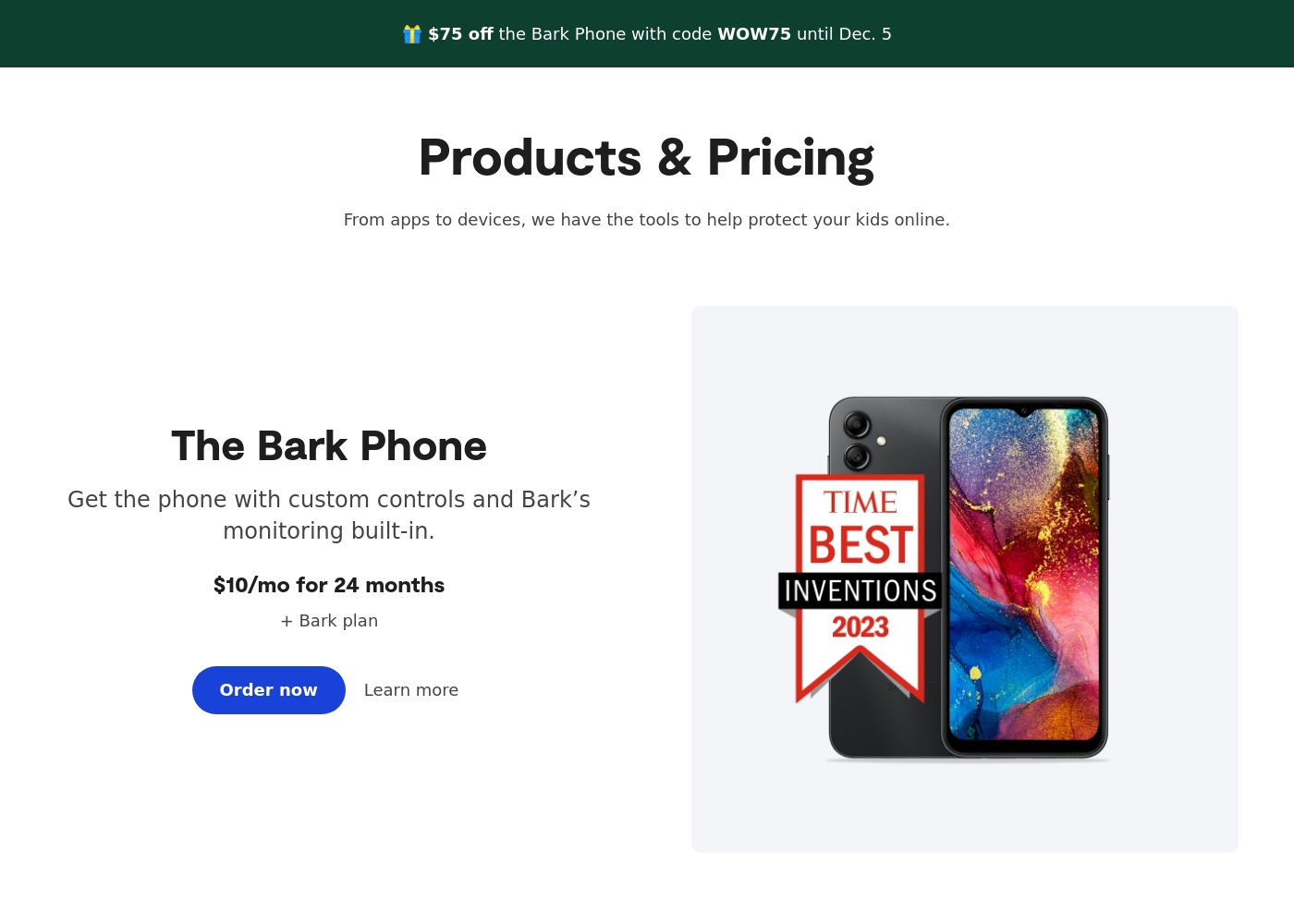
- Specialized options like the Bark Phone offer tamper-proof, built-in controls for a first device.
Cons
- Users have noted some complexity or inconsistency with the mobile app's user interface.
- The varied product line (App, Phone, Watch, Home) creates a complex overall pricing structure.
- The mandatory free trial registration requires a credit card and auto-enrolls into a paid subscription.
Unreliable protection paired with hidden costs.
We note Net Nanny boasts impressive dynamic filtering features and competitive volume pricing for large families. However, recent user feedback highlights critical operational failures, extreme difficulty managing subscriptions, and severely problematic customer service interactions. Overall, we advise prudence due to concerning reports regarding recurring billing practices and software reliability across platforms.
Pros
- Cost-effective protection for up to 20 devices annual plans.
- Includes dynamic filtering against adult content and sensitive material.
- Real-time alerts and visibility via the Family Feed feature.
- Full feature suite is included across all three annual pricing tiers.
Cons
- Software functionality is often unreliable (time limits fail, Mac freezing).
- Auto-renewal system is difficult or impossible to cancel online.
- Reports of severe bugs and inaccurate dashboard data tracking.
- Customer support is slow, unresponsive, and often unavailable.
AboutBark
Bark offers a comprehensive suite of digital safety tools designed for modern families. The system provides monitoring and parental controls across various device types, including phones, tablets, and home internet networks. Whether you need an optimized safety phone or just the software for existing devices, Bark offers solutions tailored to your needs. Their robust systems actively scan texts, emails, web browsers, and over 30 social media apps for concerning content. They have already covered 7.4 million children, indicating a strong commitment to digital protection. ✅
AboutNet Nanny
Net Nanny is widely trusted parental control software. It is consistently ranked as the Best Parental Control App. ✅ Millions of parents have trusted this software since 1996.
It’s designed to keep your kids safe from adult content when they browse online. The system allows children to use the internet safely while still being protected. It offers the visibility parents need today.
Highlights
Feature Comparison
Features Overview
We highlight the main differences and pick a winner for each feature.
Core Monitoring Approach
Bark provides deep AI content monitoring, whereas Net Nanny focuses on static and dynamic web blocking.
Bark uses advanced AI to scan messages, emails, and 30+ social platforms for risks across 29 categories. It provides expert guidance to help parents respond calmly. Bark is all about seeing exactly what the kids are communicating online. Net Nanny focuses heavily on being a dynamic filter and a strong porn blocker since 1996. It targets high-risk sensitive materials like suicide or weapons with instant web alerts. Net Nanny’s approach is effective website blocking and limiting access. The key difference is depth: Bark digs into conversational content while Net Nanny blocks web access. Bark wins by providing actionable conversational guidance. Bark helps parents turn alerts into discussions. Both tools catch dangerous search terms, but Bark’s system is designed for today's social landscape.
Device Coverage Model
Bark offers unlimited devices per family; Net Nanny uses a strict, capped device licensing model.
Bark Premium covers every child and unlimited devices in the family with the same subscription cost. Bark also offers dedicated, tamper-proof hardware like the Bark Phone and Watch. This provides consistent, unified protection for your whole family. Net Nanny uses annual licensing, offering plans for 1, 5, or up to 20 total devices only. To monitor iOS devices, you must purchase a 5 or 20-device Family Protection Pass. It is purely a software solution and lacks proprietary hardware. Bark’s unlimited device model is much more flexible for families constantly adding new gadgets. Net Nanny’s 20-device plan is very economical but strictly caps your device count. If you have more than 20 devices, or want a dedicated phone, Bark is your only option here.
Location Tracking
Bark includes robust live GPS tracking; Net Nanny does not offer any location monitoring features.
Bark offers comprehensive location awareness features, including live GPS tracking and location alerts. It allows children to use check-ins to signal they arrived safely at locations. These features work reliably across the Bark App and dedicated hardware. Net Nanny’s feature set does not include any explicit real-world location tracking or check-in capabilities. Net Nanny concentrates solely on monitoring online search history and web usage. They offer digital insight via the Family Feed Dashboard. For families prioritizing knowing their child’s physical location in real-time, Bark is essential. Net Nanny provides zero support for outside-the-home location safety. Bark's features help support peace of mind both online and in the real world.
Screen Time Control
Bark's screen time controls are reliable; Net Nanny's are widely reported as buggy and unreliable.
Bark allows parents to set healthy technology boundaries using custom schedules and the ability to pause the internet. Bark Home helps manage routines across connected home devices. Its controls are stable and integrated into the ecosystem. Net Nanny also attempts to offer time limits and screen management features. However, multiple user reviews complain that Net Nanny's time limits fail entirely on key apps like YouTube and Roblox. The dashboard may also report wildly inaccurate usage totals. Functionally, Net Nanny’s reported unreliability makes its screen time features virtually useless for many users. Bark delivers dependable execution critical for setting boundaries. When setting device restrictions, reliability trumps the feature list every time. Bark proves more dependable here.
User Reliability & Bugs
Bark is a consistent system (3.2 rating); Net Nanny struggles significantly with severe technical bugs (1.8 rating).
Bark users generally find the system easy to use and praise its comprehensive AI coverage. Minor complaints are usually logistical, resulting in a balanced 3.2 rating. The service generally works as advertised. Net Nanny reviews are overwhelmingly negative, citing severe bugs like time limits failing and devices freezing. Users report incompatibility with newer operating systems like Mac Monterey. The failure of core functionality is a drastic problem. Beyond technical flaws, Net Nanny customers report massive difficulty canceling auto-renewal and unauthorized charges. Bark has subscription friction, but Net Nanny's reported billing issues are severe. Net Nanny presents a significant financial and technical risk; Bark offers dependable functionality.
Pricing Structure
Net Nanny is cheaper per device on high volume plans; Bark offers unlimited devices and monthly billing options.
Bark offers monthly options starting as low as $5/month (Bark Jr) and includes unlimited devices per plan. While the monthly rate seems higher, it covers the whole family without worrying about exceeding capacity. Bark is priced based on feature depth and reliability. Net Nanny uses an annual license ranging from $39.99 for one desktop to $89.99 for 20 devices. The 20-device plan costs less than $5 per device annually. Pricing is straightforward: fixed annual cost based strictly on device count. Net Nanny wins on raw cost-per-device for large families needing 20 spots. However, Bark provides greater feature depth, reliability, and month-to-month flexibility. If you only need a few devices covered and want deep features, Bark is a better choice.
Reporting and Alerts
Bark provides contextual alerts with guidance; Net Nanny offers instant search activity reporting via Family Feed.
Bark sends smart alerts identifying risks across 29+ categories, scanning for threats in texts and social media. Crucially, Bark includes personalized reports and expert recommendations with every alert. This focuses on intervention and conversation. Net Nanny uses its Family Feed to provide instant reporting regarding all online search activities. Parents know what their children are looking up and when they looked it up. This provides clarity on search habits. Bark alerts are designed to start a meaningful conversation based on specific detected content. Net Nanny alerts are quick summaries of search volume and topics. Bark's detailed guidance sets it apart, helping parents coach their children effectively.
Bark costs between $49 and $99 per year, offering two main app subscription plans: Bark Jr at $49/year and Bark Premium at $99/year. Bark also offers devices like the Bark Watch and Bark Phone in device installment plans.
You can protect your family with Bark's powerful monitoring and parental controls through several options tailored to your needs. Note that the prices listed below for the App plans reflect the software subscription cost only.
Bark Jr
Price: $5/month or $49/year Websites Supported: Unlimited devices & accounts Best For: Families focused on basic control and location tracking Other Features:
- Gain control over screen time
- Block unwanted websites and apps
- Filter inappropriate content
- Track your child's whereabouts with live GPS
- Gain control over screen time
- Block unwanted websites and apps
- Filter inappropriate content
- Track your child's whereabouts with live GPS, location alerts, and check-in features
- Covers every child and device in the family
- Monitor and receive alerts for social media, phones, tablets, and computers
- Manage screen time
- Block specific websites and apps
- Track location
- Alerts for potential dangers (Parent’s top choice for comprehensive coverage)
Net Nanny costs between $39.99 and $89.99 per year with three plans: 1 Desktop at $39.99, 5 Devices Family Protection Pass at $54.99, and 20 Devices Family Protection Pass at $89.99.
Let's explore which annual Net Nanny package works best for your family's needs.
1 Desktop
Price: $39.99 / Year (Currently discounted from $49.99) Best For: Single device use on PC or Mac Other Features:
- Protect one desktop device
- Includes all Net Nanny features
- Supports Windows and macOS
- Protect one desktop device (PC or Mac)
- Includes all Net Nanny features
- Supported on Windows 10 & 11 and macOS 10.13 to 11.x
- Protect up to 5 total devices
- Includes all Net Nanny features
- Supports PC, Mac, and iOS devices
- Costs $11 per device/year
- 30% Off For A Limited Time
- Protect up to 20 total devices
- Includes all Net Nanny features
- Supports PC, Mac, and iOS devices
- Costs less than $5 per device/year
- Labeled 'Best Value'
Pricing Notes
- Bark offers a 7-day free trial on its subscription plans, providing a crucial low-risk entry point.
- Net Nanny uses an annual license model and does not explicitly advertise a free trial or money-back guarantee.
- Bark’s structure covers unlimited devices per family, while Net Nanny strictly limits coverage by license count (1, 5, 20).
- Net Nanny offers an incredibly low cost-per-device on its 20-device annual plan, but reliability is questionable.
- User reports indicate extreme difficulty canceling Net Nanny, often leading to unauthorized auto-renewal charges for years.
Pricing Head-to-Head
User Reviews
Bark receives generally positive feedback, especially concerning its effectiveness in digital safety. Users frequently praise the AI monitoring system, noting that it provides helpful alerts only when concerning content is detected.
This strikes a crucial balance between essential protection and maintaining a child's privacy. Many families feel safer using the service, often highlighting the reliability of location tracking and comprehensive screen time scheduling features.
The Bark Phone is excellent security. It’s better than the parental controls on a standard iPhone. Bark has truly saved my teenager’s life three or four times by alerting us to severe dangers. You get to monitor everything that matters, which provides essential peace of mind.
Net Nanny currently holds a very poor 2.1 rating on Trustpilot, reflecting widespread customer dissatisfaction. Users frequently report critical failures in core functionality and serious concerns regarding billing practices.
Recurring complaints revolve around system reliability; many users state the software does not work properly on modern devices, citing issues like apps ignoring set time limits, device freezes, and wildly inaccurate dashboard reporting (e.g., usage times ticking up five minutes per second). Beyond technical faults, customers vehemently criticize Net Nanny’s handling of subscriptions and auto-renewal.
The software doesn't work consistently after a restart; I always have to sign in manually. Since installing it, my Mac freezes frequently during downloads. I have not yet received any response from customer service about these issues.
Our Verdict
If you want a dependable parental control system that works, Bark is the modern, feature-rich winner. Bark provides much greater peace of mind for parents compared to Net Nanny's mixed results. Net Nanny struggles significantly with performance, technical bugs, and very alarming subscription complaints. Bark is the clear choice for comprehensive protection. Bark’s superpower is its AI-powered deep monitoring across 30+ social media apps and text messages. It actively scans conversations for risks like bullying and grooming in 29+ categories. Bark also provides crucial live GPS tracking and offers dedicated hardware like the Bark Phone. This holistic approach makes Bark a highly effective safety platform. Net Nanny's main draw is its legacy #1-Rated Internet Filter and cost-effective volume licensing. It can secure up to 20 devices annually for an incredibly low price per device. Net Nanny sends instant alerts for very dangerous searches like suicide or drugs, focusing mainly on web content blocking. However, reliability and support are the deciding factors here. Net Nanny users report that its core screen time limits fail and Mac devices freeze often. Bark ensures consistent functionality and better user satisfaction (3.2 rating vs. 1.8). You must choose Bark if you need a dependable system you can truly trust. Choose Bark for robust AI monitoring, social media scanning, and essential location tracking features. Only consider Net Nanny if you need extremely cheap, basic web filtering for many devices and are willing to risk serious technical bugs. Bark is simply the safer investment for your family.
Frequently Asked Questions
Which has better reliability and fewer technical bugs: Bark or Net Nanny?
Bark has a considerably better user rating (3.2 vs. 1.8) and is reported to operate reliably. Net Nanny users frequently cite severe functional bugs, including failed screen time limits and device freezing. Bark is the more reliable software choice.
Does Net Nanny offer location tracking like Bark?
No, Net Nanny does not offer live GPS location tracking, location alerts, or check-ins. Bark provides comprehensive, real-world location awareness features across its app and hardware devices. Bark is superior for tracking where your child is physically.
Which software provides deeper social media monitoring of internal content?
Bark provides significantly deeper monitoring, using AI to scan texts and content within 30+ social media apps. Net Nanny only provides high-level visibility into which apps are being used. Bark alerts you to context and danger within conversations.
Is Net Nanny cheaper than Bark for large families?
Net Nanny is cheaper by raw cost-per-device; its 20-device plan costs less than $5 per device annually. However, Bark offers unlimited devices for one family subscription price. Bark provides better long-term value due to its reliable feature set.
Does Bark require device licensing like Net Nanny?
No. Bark covers unlimited devices within a single family subscription (Basic or Premium plans). Net Nanny strictly limits coverage by license count (1, 5, or 20 devices) per annual subscription. Bark offers superior flexibility.
Is Net Nanny's internet filtering more effective than Bark's?
Net Nanny markets itself as the #1-Rated Internet Filter, focusing primarily on dynamic content blocking. Bark also has a robust web filter but specializes in AI monitoring across apps. Net Nanny’s filter is powerful, but Bark offers broader protection.
Ready to Choose?
Both tools have their strengths. Choose based on your specific needs.