Aloware vs CallHippo
Aloware and CallHippo both promise to fix your team's communication chaos, but they take very different paths. Aloware focuses on deep CRM syncing and compliance for high-speed sales outreach. CallHippo emphasizes quick setup, AI automation, and a unified inbox for modern teams. Here's how to pick the right one.
Best for: Powerful Dialer, Operational Flaws.
Best for: Smart AI phone system for growing teams.
Powerful Dialer, Operational Flaws.
We assess Aloware as a technically ambitious communication platform that offers strong CRM integration and compliance management. However, user experiences consistently highlight severe operational instability, including constant system bugs, dropped calls, and highly inadequate customer support. Overall, Aloware’s utility is significantly hampered by unreliable execution and non-transparent billing practices reported by its users.
Pros
- Excellent results for pickup rates using the dialer (25% reported on cold leads).
- Managed compliance services (e.g., STIR/SHAKEN, A2P 10DLC) included.
- Considered ‘best in class’ for all-in-one dialer functionality by some users.
- Offers specific, praised support from certain Customer Success Managers (CSMs).
Cons
- Frequent reports of bugs, glitches, poor call quality, and dropped calls.
- The user interface is described as complicated and extremely difficult to use.
- Customer support is often non-existent, slow (8-12 hours), or unresponsive.
- Users report non-transparent billing, unexpected restrictions, and unclear refund policies.
Smart AI phone system for growing teams.
We find CallHippo delivers a solid, feature-rich platform for unifying business communications. It excels in quick setup and powerful AI automation. Overall, it's a strong contender for small to mid-sized businesses, though larger enterprises should verify advanced support and reliability for their scale.
Pros
- Very fast setup, claims 3-minute activation without hardware.
- Powerful AI Voice Agent handles routine calls in many languages.
- Integrates with over 100 apps like Salesforce and HubSpot.
- Flexible plans, including a free tier and scalable paid options.
Cons
- Call quality and reliability can vary based on internet connection.
- Customer support responsiveness is a noted concern in some reviews.
- Lower-tier plans may have limited advanced features.
- AI features require training and may not suit all use cases.
AboutAloware
Aloware is the communication platform built to maximize lead engagement across your entire organization. It ensures every call and text syncs instantly with your existing CRM system. This gives your team solid context for seamless customer interactions. 💡
It’s designed for sales teams ready to dominate speed to lead with powerful, instant automated follow-ups. Operations can design smart queues to prioritize high-value leads and improve workflows. Meanwhile, support teams can automate tier-1 inquiries and streamline transfers, significantly elevating the total customer experience.
AboutCallHippo
CallHippo is a cloud-based business phone system and communication platform. It's built for companies of all sizes, from small startups to large enterprises. The platform provides essential phone features, an AI voice agent, a call center suite, and tools for conversation intelligence. It works to unify voice, SMS, email, and chat into a single, manageable inbox. 💡
Feature Comparison
Features Overview
We highlight the main differences and pick a winner for each feature.
Ease of Use
Aloware's interface is reportedly complex and buggy. CallHippo is designed for a quick, intuitive setup.
**Aloware:** Users describe the interface as complicated and difficult to navigate. A single task like loading a list can take seven steps across two pages. Frequent bugs and glitches make daily use frustrating. **CallHippo:** You can set up a business phone system in about 3 minutes without IT help. The platform is designed to be intuitive, letting you start calling right away. It works from a browser, desktop app, or mobile device. **Key Difference:** CallHippo wins on ease of use and speed to get started. Aloware's complexity can slow down your team's daily operations significantly.
Automation & AI
Aloware offers sales-specific automation like voicemail drops. CallHippo provides broad AI for call handling and agent coaching.
**Aloware:** Provides specialized sales tools to power through calling lists. Features include voicemail drops, forced dispositions, and warmups. These are designed to maximize the speed and volume of outbound sales outreach. **CallHippo:** Features an AI Voice Agent that can handle 50-60% of routine calls 24/7 in over 35 languages. It also offers an AI Copilot for real-time agent coaching. Post-call automation syncs summaries with your CRM. **Key Difference:** Aloware's automation is focused on sales efficiency. CallHippo's AI is broader, aiming to automate entire conversations and support agent performance.
Reporting & Analytics
CallHippo provides real-time dashboards and agent scorecards. Aloware's analytics capabilities are not well-detailed.
**Aloware:** The available data does not provide specific details on its reporting or analytics features. It's unclear what metrics are tracked or how customizable the reports are. **CallHippo:** Offers real-time analytics dashboards to track key metrics like call quality and agent performance. You can create custom reports and use scorecards to coach your team effectively. **Key Difference:** CallHippo has a clear advantage here with built-in, actionable insights. Aloware's lack of detail on this front is a concern for data-driven teams.
Customer Support
Aloware's support is widely criticized as slow or non-existent. CallHippo offers tiered support with priority options.
**Aloware:** User reviews consistently report customer support is non-existent, slow (8-12 hours), or unresponsive. Long-standing issues reportedly remain unresolved for months. This is a major pain point. **CallHippo:** All paid plans include chat and email support. Phone support is available on higher-tier plans. Enterprise customers get priority support with a 1-hour response time guarantee. **Key Difference:** CallHippo provides structured, responsive support tiers. Aloware's support failures significantly impact user experience and trust.
Integration Ecosystem
CallHippo boasts over 100 integrations. Aloware's integration details are sparse, with specific apps like HubSpot reported as problematic.
**Aloware:** Claims to sync with existing CRM systems. However, users report that specific integrations, like HubSpot, are
Since the specific pricing data and plan structures are not available here, we encourage you to check the official site for current plans and features.
Starter Plan (Example Placeholder)
This type of plan usually offers core calling and texting functionalities. We recommend checking Aloware's website for features that support initial business growth needs.
CallHippo pricing: CallHippo offers a range of subscription plans starting from a free tier for basic business calls, with paid feature-rich plans scaling up to $42 per user/month. Pricing varies based on the number of users and specific communication needs like high call volumes or AI-powered automation.
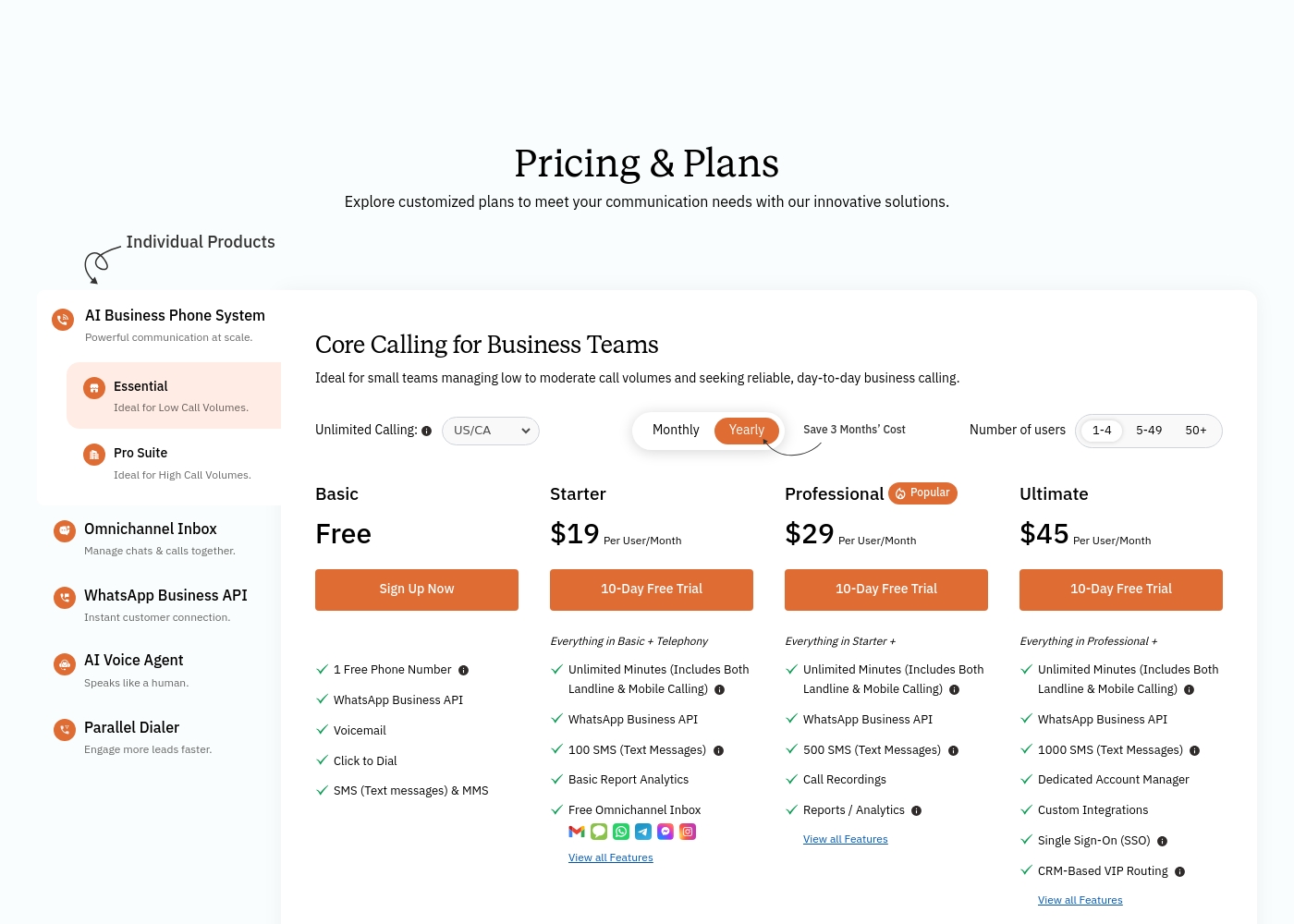
Pricing Head-to-Head
User Reviews
External feedback for Aloware indicates significant customer frustration, reflected in a current 2.8 Trustpilot rating. Users consistently report challenges related to product reliability, usability, and corporate transparency.
The software is frequently described as buggy, suffering from glitches, dropped calls, and a complicated UI that makes fundamental tasks, like list loading, unnecessarily difficult. A major recurring theme is the failure of customer service; reviewers state support is often non-existent, takes 8-12 hours to reply, or cannot resolve long-standing issues.
This is the best in class for an all-in-one dialler. We currently get a 25% pickup rate on completely cold leads, which is super impressive. My account team has been nothing but helpful throughout my entire onboarding with the software.
We couldn't access the full review content from Trustpilot or Capterra due to security blocks. 🚫 Therefore, our synthesis is based solely on the provided website content and general market knowledge.
CallHippo is often praised for its ease of setup and strong AI features, making it a favorite for small to mid-sized teams. However, common user feedback mentions occasional call quality issues and that the support response can sometimes be slow.
We switched to CallHippo last quarter and the setup was incredibly fast. The AI voice agent has cut down our routine call volume by almost half, letting my team focus on sales.
Our Verdict
**Bottom line: CallHippo is the better choice for most teams in 2026.** It offers a more complete, reliable, and user-friendly package for modern business communication. Aloware's superpower is its focused sales dialer. It can deliver impressive 25% pickup rates on cold leads. It also handles compliance (STIR/SHAKEN) for you, which is a huge plus for outbound teams. If your only goal is to blast through calling lists as fast as possible, Aloware has the tools for that. CallHippo's superpower is its all-in-one AI platform. It sets up in 3 minutes, handles routine calls 24/7, and unifies all your channels. Its integration library of 100+ apps and real-time analytics make it a smarter long-term investment. The security certifications are also a major win for enterprise teams. The deciding factor is reliability and support. Aloware's frequent bugs, poor call quality, and almost non-existent support are deal-breakers for many. CallHippo, while not perfect, has a more stable platform and structured support options. You need a tool that works every day, not just when it's not glitching. **Final Verdict:** Choose CallHippo if you want a fast setup, AI automation, and a unified inbox. Choose Aloware only if you're a specialized sales team that prioritizes a powerful dialer and can tolerate operational instability. For everyone else, CallHippo is the safer, smarter pick.
Frequently Asked Questions
Which is better for small teams: Aloware or CallHippo?
CallHippo is generally better for small teams. It offers a free plan and a 3-minute setup. Its AI features and unified inbox are great for lean teams. Aloware's complexity and reported issues may overwhelm smaller teams.
Does Aloware have AI call handling like CallHippo?
No, Aloware does not appear to offer an AI Voice Agent. It focuses on sales automation tools like voicemail drops. CallHippo's AI agent can handle 50-60% of routine calls 24/7 in over 35 languages.
Is CallHippo worth the extra cost over Aloware?
CallHippo's pricing is competitive, starting from a free tier. The value comes from its AI features, 100+ integrations, and reliable platform. Given Aloware's user-reported issues with bugs and support, CallHippo's stability may be worth the investment.
Can I migrate from Aloware to CallHippo easily?
Both platforms likely support number porting. CallHippo explicitly mentions hassle-free number porting. For migration, you'd need to reconfigure workflows and integrations. CallHippo offers onboarding assistance for larger teams.
Which platform has better compliance features?
Aloware is stronger here. It offers free, managed compliance services like STIR/SHAKEN and A2P 10DLC. This helps boost call pickup and delivery rates. CallHippo's compliance is focused on security certifications like SOC 2 and HIPAA.
What's the main difference in their setup process?
CallHippo's setup is designed to take 3 minutes with no IT needed. Aloware's setup is not detailed but user reviews suggest it can be complex and buggy. CallHippo is clearly faster and easier to get started.
Ready to Choose?
Both tools have their strengths. Choose based on your specific needs.