20NINE vs Keap
People pick between 20NINE's credit-first approach and Keap's automation-driven growth. 20NINE targets underserved markets; Keap focuses on leads and forecasting. Here’s how to decide, quickly.
AI power for financial inclusion.
We recognize 20NINE's highly ambitious goal of digitizing informal economies using advanced AI credit scoring and next-generation payments. The unique solution excellently bridges the financial gap for millions otherwise ignored by traditional banking systems. Overall, 20NINE offers a powerful, high-impact platform, though its undisclosed custom pricing limits public transparency.
Pros
- Utilizes advanced AI for credit scoring informal economies.
- Crucial focus on financial inclusion for underserved markets.
- Delivers next-generation digital payment solutions (Blipply platform).
- Empowers micro-retailers to expand their market reach.
Cons
- Pricing plans and fee structures are not publicly disclosed.
- Lacks transparency regarding specific subscription tiers.
- No mention of a free trial or free access option.
- Lack of specific user reviews for the Blipply financial platform.
High price, high risk platform.
We found that Keap promises powerful automation for faster growth, but current user feedback indicates significant instability and high friction points in essential areas. Overall, the steep starting cost combined with serious, recurring complaints about billing practices and unresponsive client support make this platform a major risk.
Pros
- Robust core marketing and sales automation capabilities.
- Access to expert coaching and in-depth training resources.
- Includes detailed features for lead capture and nurturing.
- U.S.-based call-in support available during business hours.
Cons
- High starting price ($299/month) plus a mandatory, separate implementation fee.
- Unreliable core functionality, leading to mass opt-outs and automation failures.
- Billing practices are frequently reported as misleading, involving overcharging or hidden fees.
- Cancellation process is intentionally difficult, requiring multiple steps and often forcing extra payments.
About20NINE
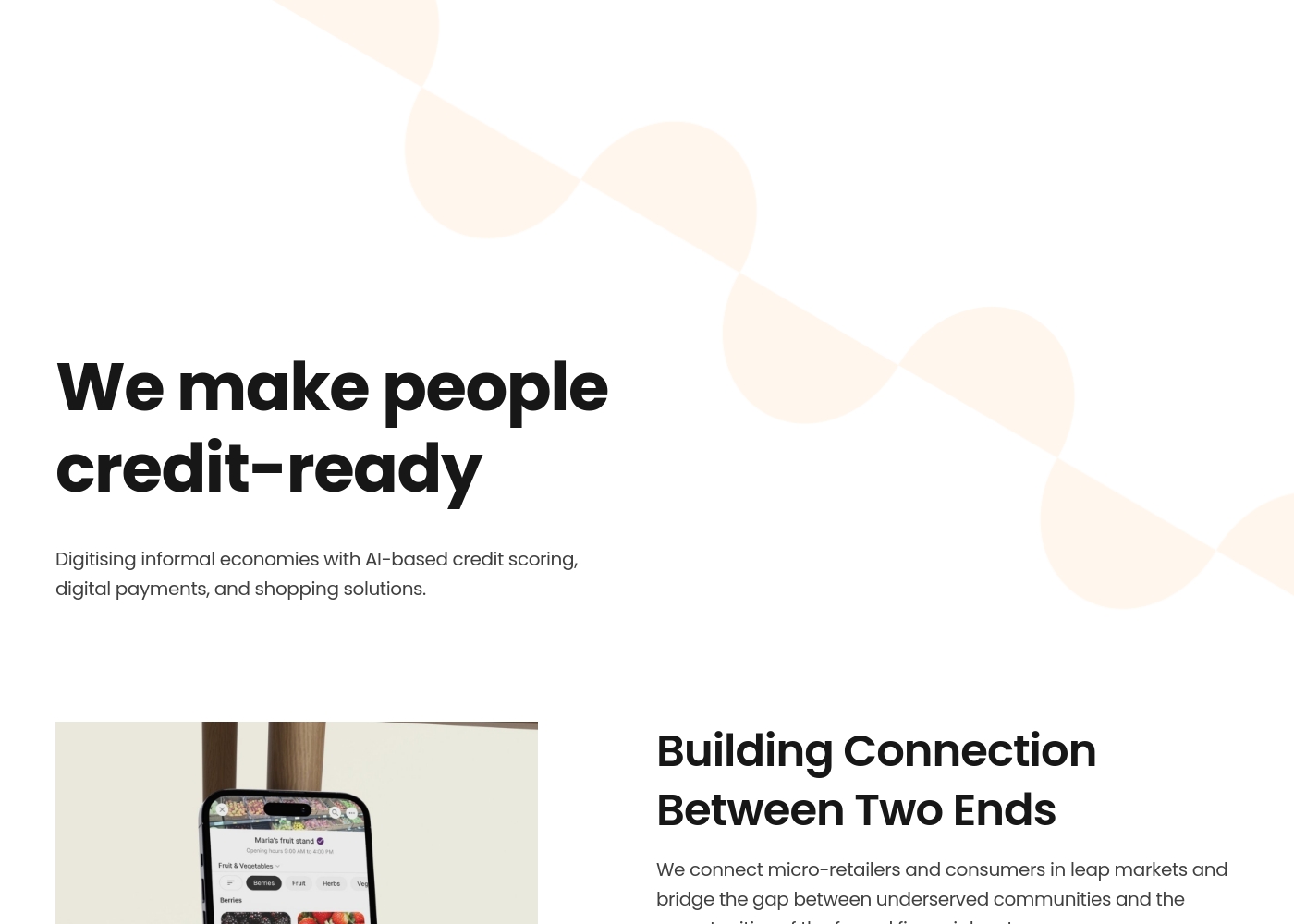
20NINE is building connections between two ends of the financial spectrum. We're bridging the gap between consumers and micro-retailers in leap markets and the formal financial system. The company uses advanced AI-based credit scoring to help both micro-retailers and their customers become credit-ready.
This platform leverages the rise of mobile phones, ushering in a new era of financial accessibility where traditional banking infrastructure is limited. For the millions of micro-retailers who are the backbone of local economies, 20NINE empowers them to expand their reach and transition from cash dominance. ✅ Their platform, Blipply, delivers seamless and accurate shopping experiences, designed for both online and in-store use.
AboutKeap
Keap helps businesses achieve powerful outcomes like faster growth. It focuses on important steps like generating more leads and securing an increase in revenue. Using Keap also results in putting more money directly in your pockets. It's a tool designed for business owners who want measurable results and professional success. 💡
This approach allows businesses to save time per week. By implementing automation, companies can dramatically increase how much work they get done. You can maximize efficiency using the existing team you already have.
Highlights
Feature Comparison
Features Overview
We highlight the main differences and pick a winner for each feature.
AI Credit Scoring
20NINE uses AI to assess creditworthiness for informal economies. Keap focuses on automation.
20NINE relies on AI credit scoring designed for informal economies and micro-retailers.Keap emphasizes automation, not AI-based credit scoring for underserved markets.Difference: 20NINE prioritizes inclusion and credit access; Keap prioritizes workflow efficiency.Real-world impact: A mom-and-pop shop gains credit access and smoother monthly payments.
Digital Payments Platform
20NINE enables next-gen digital payments via mobile, separate from Keap’s core suite.
20NINE leverages mobile tech for cashless payments, expanding financial access.Keap centers on automation and growth, not a native mobile payment platform.Difference: 20NINE drives inclusion; Keap centers on sales workflow automation.Real-world impact: Merchants can accept mobile payments without traditional cards.
Blipply Shopping Experience
20NINE delivers seamless online and in-store shopping via Blipply.
20NINE connects micro-retailers with customers through Blipply for smooth shopping.Keap offers no Blipply-style shopping platform in its core feature set.Difference: Blipply emphasizes shopper experience; Keap emphasizes automation depth.Real-world impact: Shoppers enjoy quick checkouts, boosting repeat purchases.
Micro-Retailer Empowerment
20NINE focuses on mom-and-pop shops and 70% local consumption.
20NINE targets underserved micro-retailers, expanding their market reach.Keap targets small teams needing leads and revenue growth.Difference: 20NINE aims at inclusion; Keap aims at growth velocity.Real-world impact: Micro-enterprises unlock credit and broaden sales channels.
Automation Depth
Keap provides deep automation for sales and marketing workflows.
Keap automates follow-ups, lead nurturing, and task management.20NINE relies on AI scoring and payments, not broad automation flows.Difference: Keap handles repeatable tasks; 20NINE handles credit and payments.Real-world impact: Teams save time and keep more deals moving.
Forecasting & Revenue Visibility
Keap offers forecasting and pipeline visibility for teams.
Keap shows where the next sale is coming from with forecasts.20NINE focuses on credit and payments rather than forecasting dashboards.Difference: Keap prioritizes revenue visibility; 20NINE prioritizes access to credit.Real-world impact: Marketing runs more predictable campaigns with Keap.
Lead Capture & Nurture
Keap captures and nurtures leads automatically at scale.
Keap automates capture, segmentation, and timely follow-ups for leads.20NINE emphasizes credit scoring rather than lead nurturing workflows.Difference: Keap drives lead-to-sale funnel; 20NINE supports credit access.Real-world impact: Sales teams convert more leads with automated follow-ups.
Pricing Transparency
Pricing clarity varies; 20NINE uses custom pricing, Keap’s is not public.
20NINE typically offers custom enterprise pricing; explicit tiers aren’t published.Keap pricing details aren’t publicly disclosed; customers report concerns.Difference: Both have opaque pricing; neither publishes a clear plan.Real-world impact: Budget planning requires direct quotes and negotiations.
Onboarding & Migration
Onboarding support varies; both consult on large deployments.
20NINE mentions custom onboarding in enterprise deals.Keap provides onboarding resources for small teams, but migration help isn’t detailed.Difference: Both rely on vendor guidance during setup; no universal migration path.Real-world impact: Smooth onboarding reduces time-to-value for complex deployments.
Security & Compliance
Neither product explicitly details security/compliance in public docs.
20NINE notes focus on FinTech; security specifics aren’t published here.Keap’s security stance isn’t detailed in the provided materials.Difference: Both require deeper security briefings for audits.Real-world impact: Enterprises should request formal security attestations before signing.
20NINE pricing details are not explicitly stated, nor are any plans visible in the provided materials.
You should contact 20NINE directly to inquire about costs for their digital payment and credit-scoring services, as pricing appears customized.
Custom Enterprise Solution
Price: Not explicitly stated Websites Supported: Not explicitly stated Best For: Organizations focused on bridging the gap between underserved communities and formal financial systems Refund Policy: Not explicitly stated Other Features:
- AI-based credit scoring for informal economies
- Next-generation digital payment solutions (Blipply platform)
- Empowerment of micro-retailers to expand their reach
- Solutions designed for emerging markets and cash-dominant communities
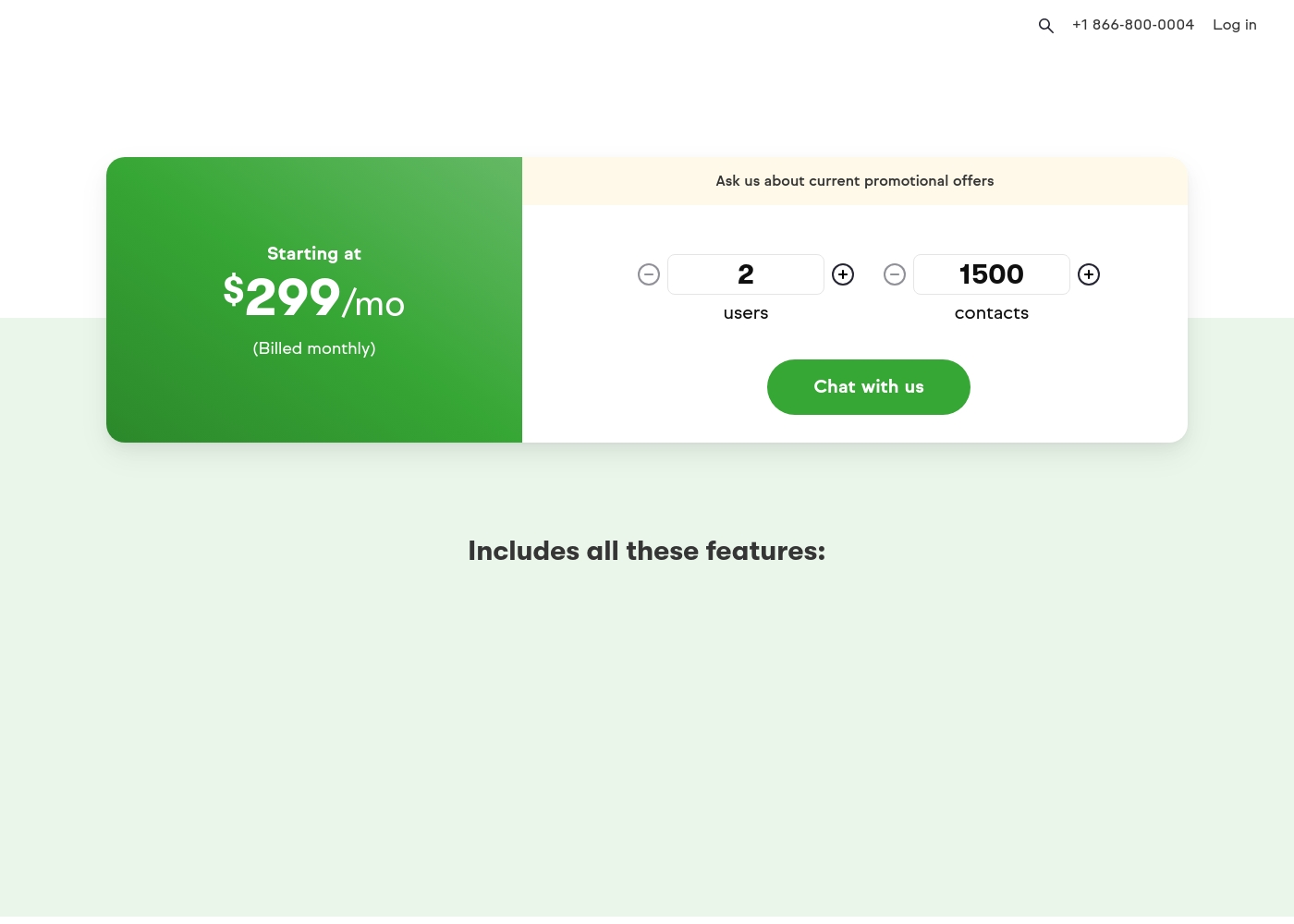
Keap costs $299 per month, starting with the base subscription, which includes 2 users and 1,500 contacts.
Since pricing scales based on your business size, let's explore the fundamental components of this relationship management system and the costs associated with scaling your usage.
Keap Core Subscription (Starting Price)
Price: $299/month (Billed monthly) Contacts/Users Included: 1,500 contacts and 2 users Best For: Small businesses needing comprehensive CRM, robust automation, and strategic customer follow-up. Refund Policy: Early termination fee of $299 applies for canceling an annual contract. Other Features:
- Includes Tier 1 Text Marketing (500 messages, 100 voice minutes).
- U.S.-based call-in support during business hours.
- 24/7 online chat support.
- Free access to Keap Academy and its online learning platform.
- Includes 2 user licenses
- Includes 1,500 contacts
- Tier 1 Text Marketing included (500 messages, 100 voice minutes)
- U.S.-based customer support (M-F business hours)
- 24/7 online chat support
Pricing Notes
- 20NINE pricing isn’t published; expect quotes tied to scale and market needs.
- Keap pricing isn’t published; customers report rising costs and unclear charges.
- No public free plan or trial details for either tool; pilots may be possible via sales.
Pricing Head-to-Head
User Reviews
Trustpilot reviews for a company using the 20NINE name show a strong overall rating of 4.7 stars based on 26 reviews, categorized as Excellent. However, the provided user feedback specifically applies to a different entity: an established Dutch web hosting and web development service, not the AI credit scoring platform focused on emerging markets.
We found only one concrete sentiment snippet regarding the quality of service. This limited feedback, derived from the related web host entity, consistently emphasizes strong support responsiveness.
This team provides fine contact and a super-fast helpdesk. Their responsiveness really sets them apart in the technology sector.
The overwhelming sentiment across Trustpilot reviews, which result in a 1.2/5 rating, is highly negative, particularly concerning customer support and aggressive billing practices. Users frequently report being repeatedly overcharged or facing material price increases ($600 a year for templates) that are hidden deep within email correspondence.
Reliability is a major concern: core automation features often fail or act unexpectedly, with accounts experiencing silent mass opt-outs and new leads being incorrectly marked as unsubscribed, severely disrupting nurture campaigns. Many long-term customers find the platform complex, citing a terrible user interface and painful feature limitations.
I've been on support five times over two hours trying to fix issues with contacts getting duplicate emails. Support couldn't resolve the critical issue, and now I have spam complaints from customers. The support quality and attention to detail are simply terrible.
Our Verdict
Bottom line: if you prioritize credit access and digital payments, choose 20NINE. If you need automation, forecasting, and steady leads, pick Keap. Both tools can win depending on your top goal. 20NINE's superpower is AI-based credit scoring for informal economies. It unlocks credit opportunities where traditional lenders struggle, and it complements next-gen mobile payments. Keap's superpower is its deep automation engine, turning repetitive tasks into time saved and predictable growth. The deciding factor is your primary objective. If you serve micro-retailers and require credit insights, 20NINE is a smarter fit. If your team craves lead generation, nurture flows, and forecasting, Keap keeps your pipeline moving. In short, 20NINE wins for inclusion-driven scaling; Keap wins for process-driven growth. Consider pairing one for credit access and the other for automation where you need both.
Frequently Asked Questions
Which is better for small teams: 20NINE or Keap?
If you need AI credit scoring and digital payments, pick 20NINE. If automation and forecasting matter more, go Keap. Your choice hinges on your top priority.
Does 20NINE have AI credit scoring like Keap?
Yes, 20NINE uses AI credit scoring designed for informal economies. Keap focuses on automation, not credit scoring.
Is Keap worth the extra cost over 20NINE?
Pricing isn’t publicly disclosed for Keap or 20NINE. Keap users report price increases and unclear charges. ROI depends on automation needs and scale.
Can I migrate from 20NINE to Keap easily?
Public migration details aren’t stated. You should check onboarding resources and migrations support for both.
What integrations does Keap support?
Keap’s integrations aren’t listed publicly. Check Keap’s integrations page for compatibility specifics.
Who is Keap best for?
Keap is built for small businesses needing more leads, revenue, and predictable sales.
Ready to Choose?
Both tools have their strengths. Choose based on your specific needs.