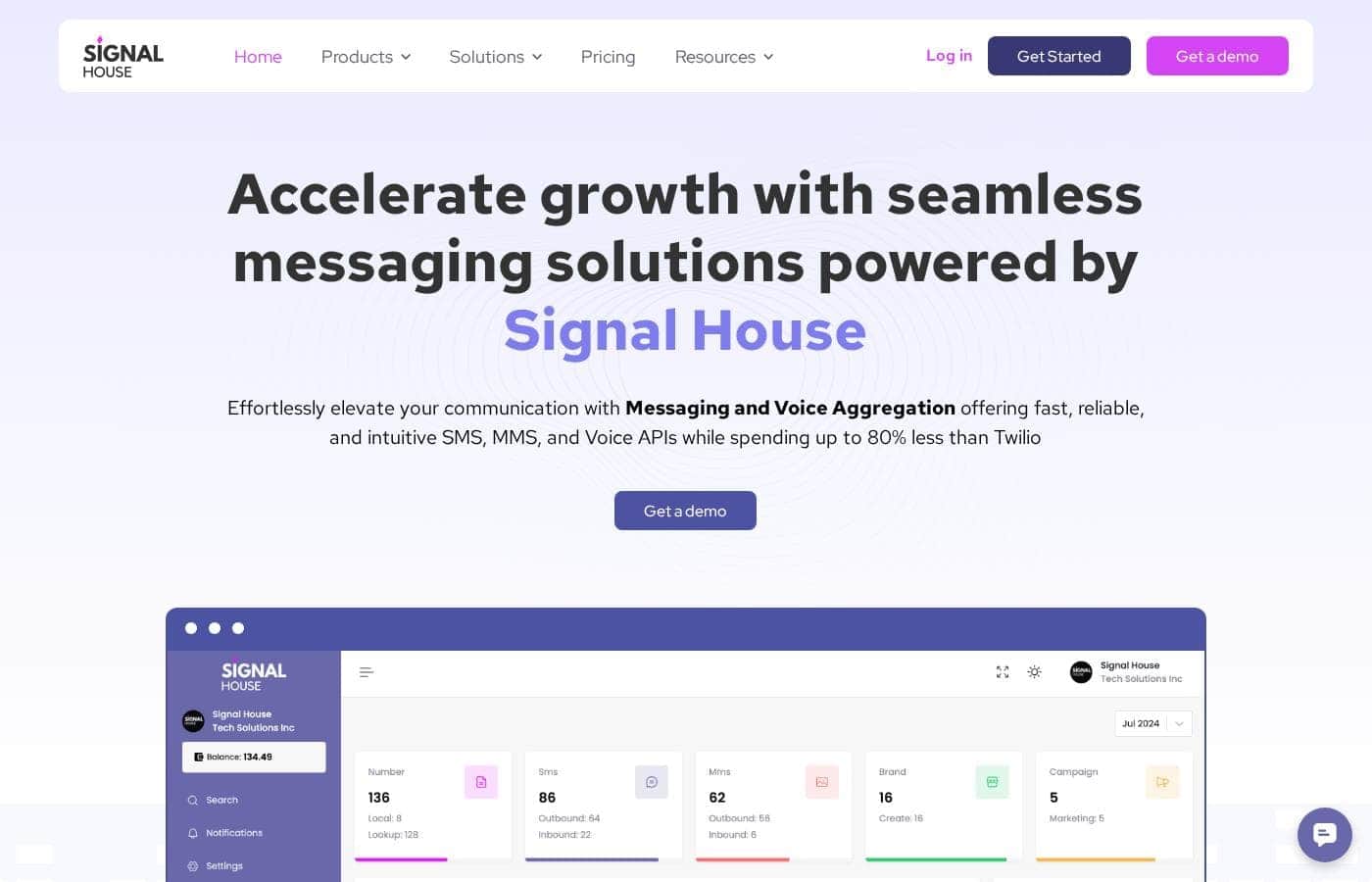
Signal House uses transparent, usage-based pricing rather than fixed plan tiers. You can estimate your monthly spend with its online pricing tool, and the company claims savings of up to 80% versus Twilio.
Signal House uses transparent, usage-based pricing that costs up to 80% less than Twilio, and you can estimate your exact monthly spend with its built-in pricing tool.
There are no fixed plan tiers to compare here, so here's how the model works and what your money actually buys. 💸
How Signal House pricing works
Signal House keeps things simple. Instead of bundled packages, you pay based on the messaging you use, and the site offers a tool to estimate your monthly expenditure before you commit. The company built its reputation on clear and transparent pricing, and it publishes savings comparisons so you can benchmark costs against the big CPaaS providers.
- Up to 80% less than Twilio
- Up to 90% less than Plivo
- Up to 78% less than Vonage
- Up to 80% less than Sinch
- Up to 90% less than Soprano
Those aren't small margins. Customers who switched from Twilio told Signal House they now save between $25,000 and $40,000 per month.
What your spend covers
Paying Signal House gets you SMS, MMS, Group SMS, and messaging APIs, all with a claimed deliverability rate above 95%. The FAQ also stresses there are no bundled products or upsells, so you're paying for core messaging services rather than features you won't use. Rapid 10DLC campaign approvals and hands-on support round out the offer.
This model suits teams sending real message volume — think retail promotions, appointment reminders, or API-driven notifications. If you only send a handful of texts a month, a flat-rate competitor may be easier to budget. Before you sign, confirm your expected message volumes and any one-time costs, such as 10DLC registration, so your estimate holds up.
For exact numbers, use Signal House's pricing estimator or book a demo with their team. That's the fastest way to get a quote that matches your volume.