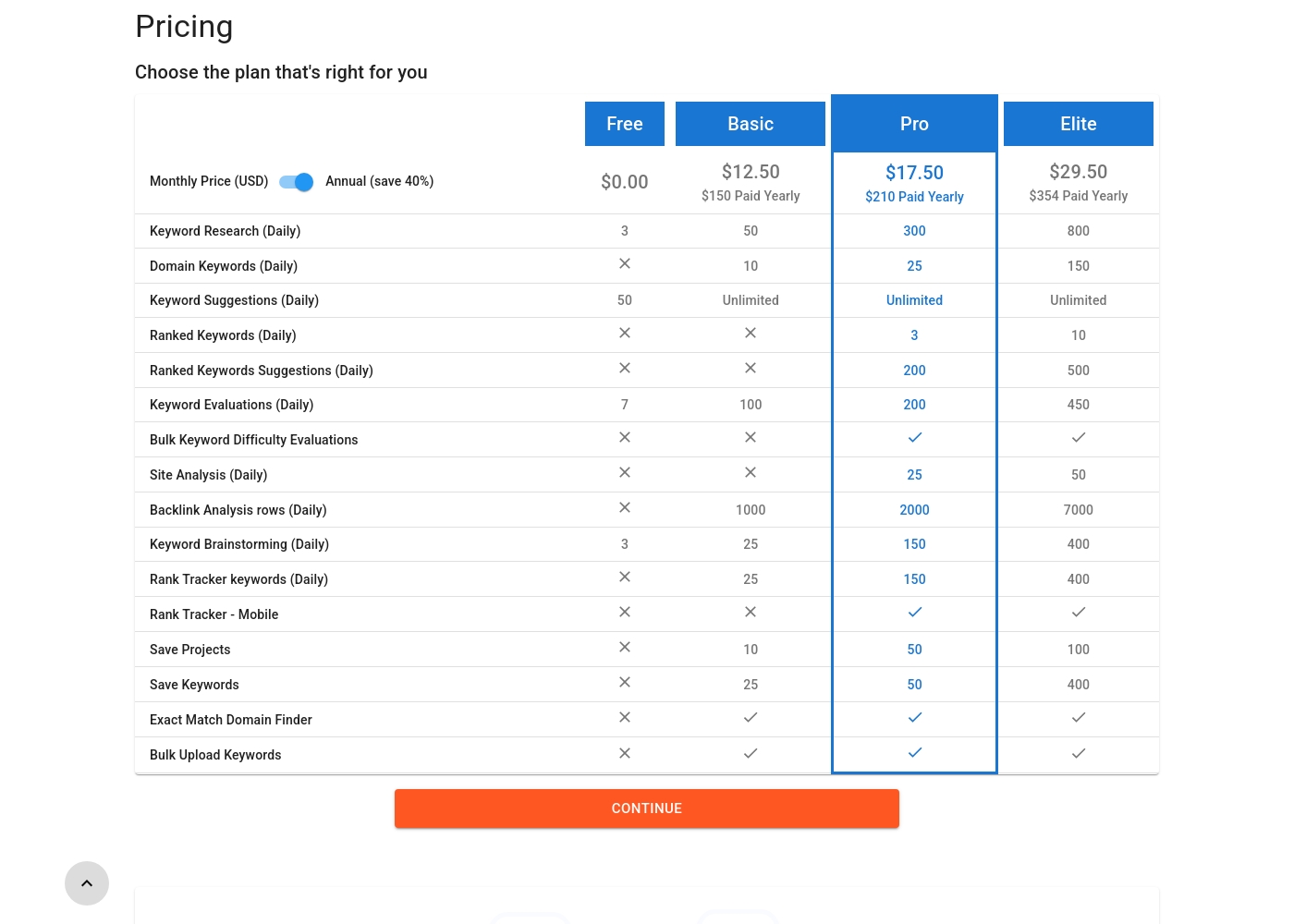
Keyword Revealer offers several flexible subscription plans starting with a free version, while paid tiers range from $12.50 to $29.50 per month when billed annually.
published on the show 03.11.2021. For more information, click here.</em></strong> </em></strong>In accordance with international codes and standards (e.g. IEC 60364), low-voltage electric motors must be grounding provided that they are powered by AC with a voltage higher than 50 Vac or by DC with a voltage higher than 120 Vdc. For more information, please read why grounding the motor frame is required? This post describes the grounding method for LV motors when driven by a Variable Frequency Drive (VFD). High-voltage motors must always be earthed. Correct grounding is necessary to ensure safety (the user against dangerous voltages coming from the motor frame) and to reduce the electrical current in the bearings as well as the emission (EMI) from the motor system. <h2>Standard PE connection</h2> The PE (protective Earth) terminal on the motor frame is designed for person safety (touch protection). The cross-sectional area of the PE cable must be minimum as defined on standard IEC 60034-1: <strong>Minimum cross-sectional area of grounding conductors</strong> <h2>Protective earthing by the motor cable</h2> In addition to the PE connection for safety reasons, high-frequency (HF) grounding of the motor frame is necessary. This is needed for: <h2>The earthing and cable cabling for a VFD-driven electric motor should include high-frequency (HF) grounding?</h2> - Minimizing of the high-frequency voltage potential of the motor frame with respect to the system ground. - Minimizing the return current (bearing current) flowing through the motor bearings to the motor foundation or to the driven machinery. - Cutting down the elektromagnetism (EMI) emission from the motor and its cables. <strong>General earthing requirements for VFD systems</strong>. When the motor is supplied by a VFD, to ensure a good high-frequency connection between the motor frame and the VFD: - Use a screened or symmetric motor cable (three-phase conductors plus a symmetrically arranged PE conductor and an overall screen). - Connect the <strong>cable screen</strong> of the motor cable to the PE terminal at both ends (VFD end and motor end) with a 360° connection. - Use the <strong>internal PE</strong> (the 4th wire of the motor cable - if exists) or better, the <strong>symmetrical PE wires</strong> of the 3-phase cable to connect the PE terminal at both ends (VFD end and motor end). <h2>Good practices for motor grounding</h2> For a correct grounding of the motor, follow these rules: - Connect the motor frame to the PE of the system (e.g. via cable or earthing busbar). - If a screened motor cable is used, connect the screen of the cable to the PE terminal at the VFD end and the motor end at 360°. - Install a <strong>HF (high frequency) bonding</strong> (with a flat copper braid) between the motor and the motor foundation. This is very important if the motor is on a separate foundation or if there is no good electric contact between the motor and the driven machinery. - For motors in the IEC 280 frame size and above, use a <strong>symmetrical motor cable</strong> (three-phase conductors and a symmetrically arranged PE conductor). - In the case of large motors, provide a low-impedance path for HF currents by using a <strong>shielded cable</strong> or a high-frequency (HF) bonding. This helps redirect HF currents back to the VFD, reducing bearing currents and EMI. <strong>Sources</strong>: High-frequency earthing of the motor VFD, page 14 (PDF download) Low voltage Process performance motors according to EU MEPS (PDF download) ABB Manual: Motor grounding in VFD systems (PDF download) <h6>Related articles</h6> What is a Combined Motor Starting device? Is the neutral grounded or not if no PE cable appears? What happens if the motor speed is lower or higher than the rated speed? How to Size a Power Cable for a Specific Load (Voltage Drop / Thermal limit)? Standard voltage and frequency in different countries around the world. Standard sizes of Power Cables for diverse applications. Inductive heating in single-core power cables. <h2>FAQ entries</h2> <strong>How many wires for a motor?:</strong> For a typical three-phase motor, four wires are used: three-phase conductors for power and one Ground/PE conductor for safety. If an additional shield is present, it is also connected to the ground but it is not a wire - rather a braid. <strong>Motor grounding wire size:</strong> The size of the motor grounding wire should be according to the local electrical codes (e.g. NEC, IEC). For example, according to IEC 60034-1, if the phase conductor S is 4 mm² < S ≤ 16 mm² then the ground conductor should be at least 4 mm². If S is between 16 mm² and 35 mm², the ground conductor should be at least 16 mm². If S is higher than 35 mm², then the ground conductor must have at least half of the phase conductor's section (S/2). <strong>Is a ground wire necessary for a small 3-phase motor?:</strong> Yes, a ground wire is almost always necessary for 3-phase motors for safety reasons and to comply with electrical codes. <strong>What is'360° connection' of the cable screen?:</strong> To connect the screen of a cable with a 360° connection, you use specialized cable glands (also called EMC glands) or clamps that encircle the entire circumference of the braided shield and bond it directly to the metal enclosure of the equipment (such as the motor terminal box or the VFD cabinet). This provides a low-impedance path for high-frequency interference, reducing electromagnetic noise and improving grounding. <strong>What is a 'Symmetrical motor cable'?:</strong> A symmetrical motor cable for a 3-phase AC motor typically contains three-phase conductors (L1, L2, L3) and three smaller earth (PE) conductors, all arranged symmetrically within the cable's overall shield/screen. This design helps minimize electromagnetic interference (EMI) and potential issues with bearing currents, particularly in variable frequency drive (VFD) applications. <strong>What is a 'Variable frequency drive'?:</strong> It is an electronic device (power electronics) that controls the speed and torque of an AC motor by varying the frequency and voltage of the electrical power supplied to it. By adjusting the frequency of the input power, VFDs allow for precise control of motor speed, resulting in energy savings, improved process control, and reduced mechanical wear on equipment. VFDs also offer features like soft starting and stopping, protection against motor overloads, and the ability to integrate with automation systems for enhanced efficiency and performance. <h5>The provided info is for educational purposes only. Always consult a qualified professional when working with electrical systems. Safety first!</h5> <em>Click to download & print as PDF:</em> Grounding of a VFD driven motor_ECA.pdf (202 downloads ) <em>Read more...</em> <h6>References</h6> <strong>[1]</strong>. ABB.
Keyword Revealer pricing: Keyword Revealer offers several flexible subscription plans starting with a free version, while paid tiers range from $12.50 to $29.50 per month when billed annually. You can choose from four distinct tiers designed to meet the needs of solo hobbyists or professional SEO agencies alike.