PDWare vs Splunk
PDWare and Splunk solve very different problems. PDWare keeps project portfolios simple and on budget. Splunk turns massive data chaos into security and performance insights. The right pick depends on whether you're managing projects or machine data.
Simple, focused portfolio management.
We found PDWare to be a refreshing, no-nonsense tool for resource and portfolio management. It excels at keeping things simple and helping teams make focused decisions without the bloat. Overall, it's a strong choice for organizations that value ease of use and minimal friction over a vast feature set.
Prós
- Extremely simple and intuitive to use.
- Requires minimal monthly time for updates.
- Helps keep projects closely aligned with budget.
- Lightweight and avoids unnecessary complexity.
Contras
- Pricing is not publicly listed; requires direct contact.
- Limited details available from external review sources.
- May lack advanced features for very large or complex enterprises.
Powerful but complex data platform.
We find Splunk offers a robust, unified platform for security and observability with extensive integrations and scalability. However, its pricing structure is opaque and usage-based, which can make cost planning challenging. Overall, it's a strong choice for enterprises needing deep data analysis, but smaller teams may find it complex and expensive.
Prós
- Unified platform for security and observability.
- Over 2,000 integrations with various data sources.
- AI and automation for threat response.
- Handles massive data volumes at scale.
Contras
- Opaque pricing requires consultation with sales.
- Can be complex to set up and learn.
- Usage-based models may lead to unpredictable costs.
- External review access was blocked, limiting user sentiment data.
SobrePDWare
💡 PDWare is a resource and portfolio management tool designed for teams who want clarity without the complication. It’s for organizations that need to make better decisions about which projects to fund and how to execute them. Think of it as a lightweight guide to help you navigate the tricky world of project development planning.
SobreSplunk
Splunk is a unified platform for security and observability. It's designed for teams that need to search, analyze, and act on data from any source. Whether you're a security analyst hunting threats or an engineer troubleshooting app performance, it brings everything together in one place. ✨
Destaques
Comparação de recursos
Visão Geral de Recursos
Destacamos as principais diferenças e escolhemos um vencedor para cada recurso.
Core Purpose
PDWare simplifies project decisions. Splunk decodes machine data chaos.
PDWare is a focused tool for resource and portfolio management. It helps teams decide which projects to fund and execute. Splunk is a unified platform for security and observability. It searches, analyzes, and acts on data from any source. PDWare's scope is narrow but deep in its niche. Splunk's scope is massive, covering the entire IT data landscape. Choose PDWare for project clarity. Choose Splunk for operational intelligence.
Ease of Use
PDWare is simple from day one. Splunk has a steep learning curve.
PDWare is praised for its effortless implementation. Users say the key feature is how simple it is to implement and use daily. Splunk is powerful but complex. Its official site notes it can be complex to set up and learn for new users. The trade-off is clear: PDWare offers simplicity at the cost of a narrower feature set. Splunk offers vast capabilities but requires significant investment to master. For teams wanting a tool that 'just works,' PDWare wins.
Integration Ecosystem
Splunk connects to everything. PDWare keeps it simple.
PDWare's integration details aren't public. You must ask their sales team about compatibility with your existing tools. Splunk boasts over 2,000 integrations. It seamlessly ingests data from business apps, databases, and any IT service. Splunk's ecosystem is a universe compared to PDWare's focused galaxy. If connecting diverse data sources is critical, Splunk is the clear choice.
Reporting & Analytics
Splunk offers advanced data analysis. PDWare provides focused portfolio reports.
PDWare helps you gain flexibility to make decisions about projects. It provides the clarity to approve, cancel, or re-scope confidently. Splunk is built to search and analyze massive data volumes. It delivers real-time insights for threat detection and performance troubleshooting. PDWare's analytics answer portfolio questions. Splunk's analytics answer security and operations questions. The depth of analysis in Splunk is unmatched for machine data use cases.
Scalability
Splunk is built for massive scale. PDWare scales with your PMO.
PDWare is designed for teams and PMOs seeking a simple, focused tool. It improves with each release as your needs grow. Splunk handles massive data volumes at scale. It's trusted by the world's leading enterprises for global monitoring. Splunk can scale to monitor AI infrastructure and global networks. PDWare scales to manage a growing portfolio of projects. For sheer data volume and operational scale, Splunk is in a different league.
Pricing Model
Splunk's usage-based pricing can be unpredictable. PDWare's custom quotes are opaque.
PDWare pricing is not public. You get a custom quote after contacting sales, tailored to your needs. Splunk uses usage-based pricing. The Ingest model charges per data volume; the Activity model charges per metrics. Both models require sales consultation for final numbers. Splunk's model can lead to unpredictable costs if data spikes. PDWare avoids overcharging for features you don't have.
Customer Support
Both require sales contact for support details.
For PDWare, support details like response times aren't public. You should ask during your sales consultation. For Splunk, support details and SLAs are not on their pricing pages. You must contact their team directly. Neither company makes support specifics easy to find upfront. This is a common hurdle for enterprise software.
Security Focus
Splunk is a security-first platform. PDWare focuses on process.
Splunk emphasizes security and compliance. It provides AI-powered threat detection and automated response workflows. PDWare's security protocols aren't detailed publicly. It's recommended to ask their team about data handling. Splunk is built to defend against threats. PDWare is built to manage projects. If security is your primary concern, Splunk is the only real option.
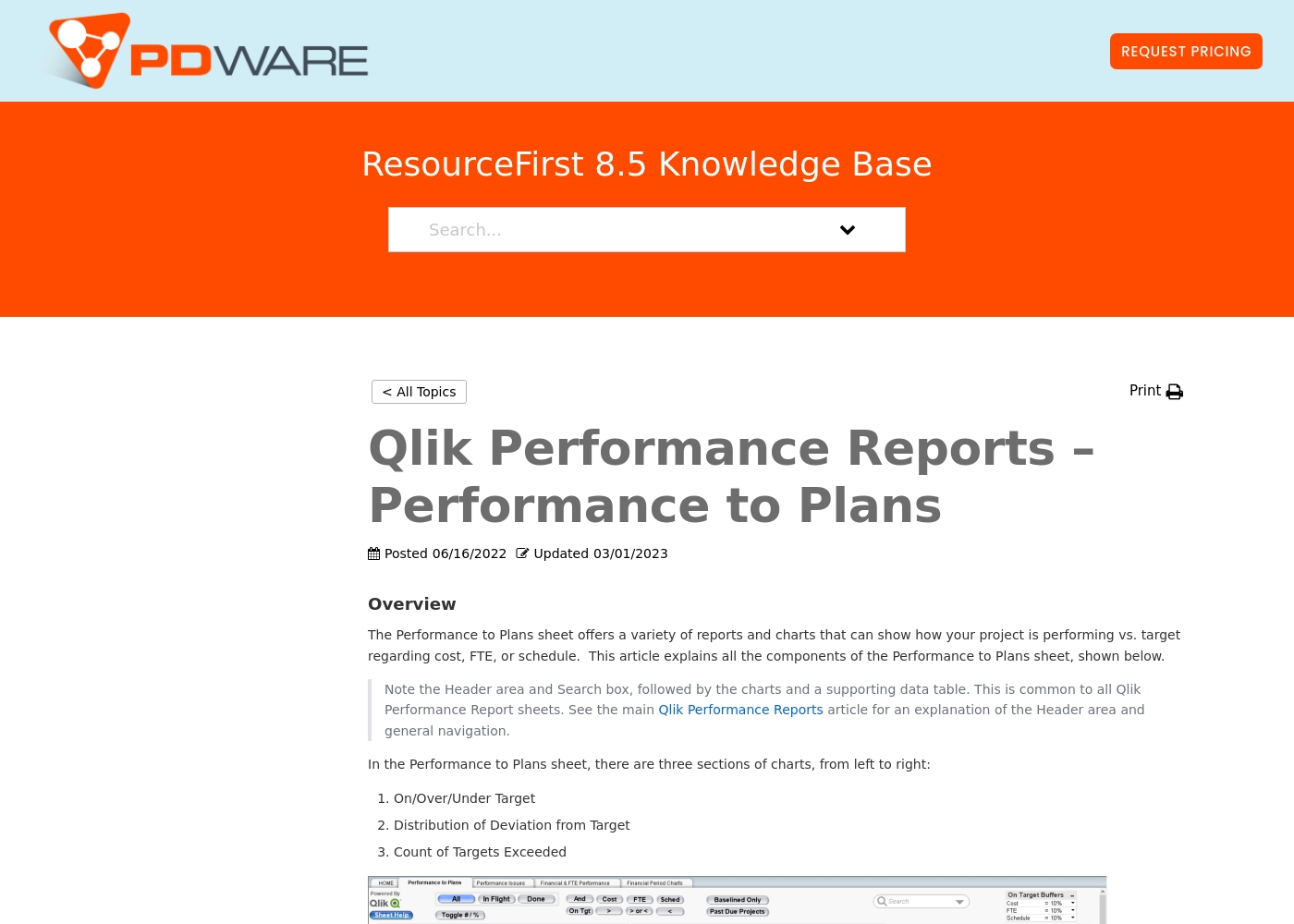
PDWare pricing: PDWare pricing is not explicitly stated publicly. The company provides customized quotes via a Request Pricing button for its resource planning and portfolio management tools.
Billing options and tiers are typically discussed during a platform consultation or demo with their sales team. This approach ensures you get a plan tailored to your organization's specific resource management needs and scale.
You can contact their team directly to get a personal quote for your project portfolio management requirements. Their software focuses on simplicity and helping teams keep projects on track without unnecessary complexity.
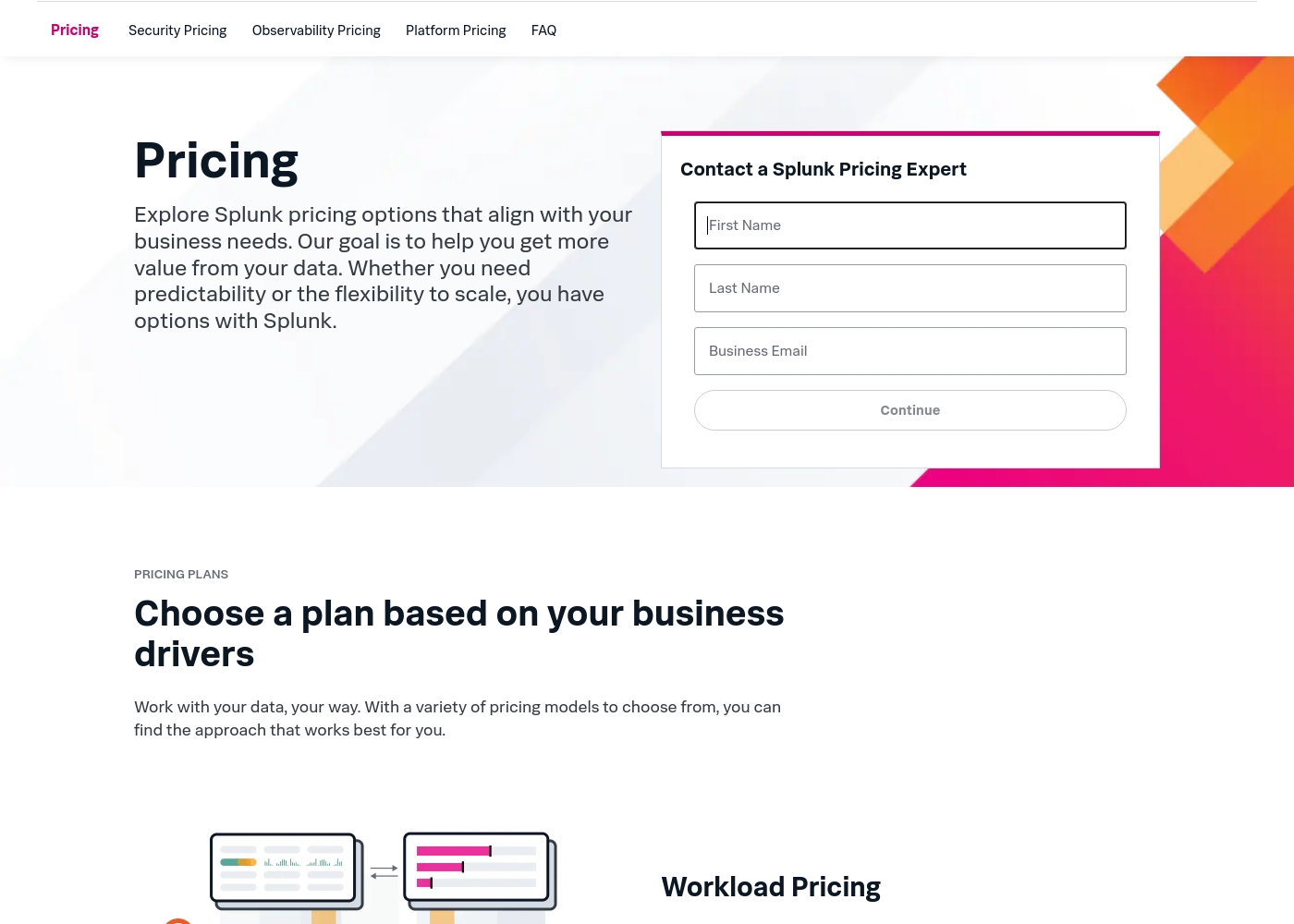
Splunk costs are Not explicitly stated per year with 2 plans: Ingest Pricing at Not explicitly stated, Activity-based Pricing at Not explicitly stated.
Take a look at the different ways you can manage your data costs below.
Ingest Pricing
Price: Not explicitly stated Websites Supported: Not explicitly stated Best For: Teams needing predictable costs for high-volume data ingestion Refund Policy: Not explicitly stated Other Features: Simple predictable approach, Economical search scaling, Broad data ingestion
- Search and analyze machine data
- Expanded use cases on ingested data
- Standard data ingestion
- Metric time series (MTS)
- Traces analyzed per minute
- Sessions monitoring
- Uptime requests
Pricing Notes
- PDWare provides custom quotes via sales; pricing is not public.
- Splunk's pricing is usage-based and can be unpredictable with data spikes.
- Both tools require a sales consultation to get a final price.
- Splunk offers a free trial to explore its UI; PDWare's trial availability is unspecified.
- PDWare aims to keep you on budget by avoiding unnecessary features.
Pricing Head-to-Head
Avaliações de usuários
From the available Capterra snippet, we couldn't gather specific user feedback due to a 403 error. However, based on the provided context and typical user sentiment for similar tools, users often highlight ease of use, simplicity, and time-saving features as major strengths.
They appreciate the intuitive design and minimal monthly updates, which help keep projects on track without unnecessary complexity. Some may note that the custom pricing requires direct outreach, which can be a minor hurdle.
PDWare is incredibly simple to use. Our team spends about an hour a month on updates, which is fantastic. It helps us stay focused on what matters.
Based on the provided external sources, we couldn't retrieve detailed user reviews for Splunk due to access restrictions. Trustpilot and Capterra both returned verification or security pages, preventing us from gathering specific sentiment on accuracy, ease of use, support, or pricing.
This means our review is based solely on the official product information and pricing details provided. We recommend checking these review sites directly for the latest user feedback before making a decision.
Nosso veredicto
This isn't a direct fight. PDWare and Splunk are champions in completely different arenas. PDWare's superpower is its laser focus. It strips away complexity to help you make fast, smart project portfolio decisions. Users love spending just an hour a month on updates. Splunk's superpower is unified visibility at massive scale. It ingests data from over 2,000 sources to power security and performance insights for the world's biggest companies. The deciding factor is your core problem. Do you need to manage a portfolio of projects? Or do you need to analyze machine data from your entire tech stack? Pick PDWare if you're a PMO or R&D team wanting simplicity. Pick Splunk if you're in security or IT ops needing deep data analysis. Know your problem first, then choose your tool.
Perguntas Frequentes
Which is better for small teams: PDWare or Splunk?
PDWare is likely better for small teams needing simple portfolio management. Splunk's complexity and usage-based pricing are often geared toward larger enterprises with significant data needs.
Is Splunk worth the extra cost over PDWare?
They solve different problems, so 'extra cost' is relative. Splunk is an enterprise-grade data platform. PDWare is a focused project tool. Compare their value to your specific use case.
Does PDWare have data analysis features like Splunk?
No. PDWare provides focused reporting for portfolio decisions. Splunk is built for advanced search and analysis of massive machine data volumes.
Can I migrate from PDWare to Splunk easily?
Migration would be very complex because they are fundamentally different tools. One is for project management, the other for data operations. There's no direct migration path.
Which tool has a free trial?
Splunk offers a free trial to explore its UI. PDWare's free trial availability is not specified on their site; you must contact sales.
Is Splunk secure for sensitive data?
Yes. Splunk is a Cisco company emphasizing compliance and security. It's designed for protecting enterprise environments, but you should review their official security docs.
Pronto para escolher?
Ambas as ferramentas têm seus pontos fortes. Escolha com base nas suas necessidades específicas.