OttoKit vs Splunk
OttoKit and Splunk solve totally different problems. OttoKit is a no-code workflow automator for connecting apps. Splunk is an enterprise data platform for security and observability. Your choice depends entirely on whether you need to automate tasks or analyze massive data streams.
Zalety
Wady
Powerful but complex data platform.
We find Splunk offers a robust, unified platform for security and observability with extensive integrations and scalability. However, its pricing structure is opaque and usage-based, which can make cost planning challenging. Overall, it's a strong choice for enterprises needing deep data analysis, but smaller teams may find it complex and expensive.
Zalety
- Unified platform for security and observability.
- Over 2,000 integrations with various data sources.
- AI and automation for threat response.
- Handles massive data volumes at scale.
Wady
- Opaque pricing requires consultation with sales.
- Can be complex to set up and learn.
- Usage-based models may lead to unpredictable costs.
- External review access was blocked, limiting user sentiment data.
OOttoKit
OttoKit to potężna platforma automatyzacji w chmurze, zaprojektowana, aby Twoje aplikacje lepiej ze sobą współpracowały. Wcześniej była znana jako SureTriggers, ale podstawowa funkcjonalność pozostaje ta sama. Platforma ta łączy ponad 1000 popularnych narzędzi, od CRM po aplikacje do czatu i arkusze kalkulacyjne. Obsługuje agencje, przedsiębiorców eCommerce i osoby budujące społeczności. Możesz łatwo tworzyć systemy, które sprawiają wrażenie, jakbyś zatrudnił superasystenta bez potrzeby posiadania umiejętności kodowania. ✅
OSplunk
Splunk is a unified platform for security and observability. It's designed for teams that need to search, analyze, and act on data from any source. Whether you're a security analyst hunting threats or an engineer troubleshooting app performance, it brings everything together in one place. ✨
Najważniejsze
Porównanie funkcji
Przegląd funkcji
Podkreślamy główne różnice i wybieramy zwycięzcę dla każdej funkcji.
User Interface
OttoKit uses a friendly drag-and-drop canvas. Splunk uses a powerful search-based interface.
OttoKit's interface is built for visual workflow creation. You drag blocks and connect them. No coding is needed. This makes it accessible for marketers and business owners. Splunk's interface centers on its Search Processing Language (SPL). It's designed for querying and analyzing massive datasets. It's incredibly powerful but has a steep learning curve. The key trade-off is ease of use vs. analytical power. OttoKit gets you automating in minutes. Splunk requires training but unlocks deep data insights.
Integration Ecosystem
Both have thousands of integrations, but for different purposes. OttoKit connects apps to automate tasks.
OttoKit offers 1,200+ app integrations. These are for creating workflows. Examples include Stripe, ActiveCampaign, and Google Sheets. You connect them to automate data flow. Splunk integrates with over 2,000 data sources. These are for ingesting logs, metrics, and traces. Examples include firewalls, databases, and cloud services. The goal is a unified analysis view. OttoKit integrates to *act* on data between apps. Splunk integrates to *analyze* data from apps. Your needs determine the better ecosystem.
Automation & AI
OttoKit automates business tasks with AI Agents. Splunk automates security responses with AI.
OttoKit's automation is its core feature. You build workflows with conditions and triggers. It includes AI Agents that monitor data and take actions 24/7. You can also approve steps with Human-in-the-Loop. Splunk's automation focuses on threat response. It uses AI to create high-fidelity alerts from noise. Automated workflows then investigate incidents. This helps security teams act faster. OttoKit automates general business processes. Splunk automates specialized security and IT operations. One is broad, the other is deep.
Reporting & Analytics
OttoKit provides simple workflow logs. Splunk is a full-fledged analytics powerhouse.
OttoKit tracks workflow execution. You can see run history and replay failed tasks. Alerts notify you of failures. It's operational monitoring, not business intelligence. Splunk is built for advanced analytics. It creates real-time dashboards from any data. You can perform complex searches across petabytes of data. This is for deep operational and business insights. If you need to *see* how your business runs, choose OttoKit. If you need to *analyze* why something is happening across your entire stack, choose Splunk.
Pricing Model
OttoKit uses simple one-time payments. Splunk uses complex, usage-based subscriptions.
OttoKit's pricing is straightforward. You pay a one-time fee for a lifetime plan. The Pro plan costs $349 once. You get a set number of tasks per month. Splunk's pricing is customized and opaque. You contact sales for a quote. Costs are based on data volume or activity metrics. This can lead to unpredictable bills. OttoKit offers cost certainty and lower entry. Splunk's pricing scales with your data needs but is harder to predict upfront.
Learning Curve
OttoKit is designed for quick, no-code adoption. Splunk requires significant technical training.
You can start building automations in OttoKit immediately. The visual builder is intuitive. Most users report a gentle learning curve. Tutorials are available for advanced features. Mastering Splunk takes dedication. You need to learn SPL for querying. Understanding its data models requires technical skill. Enterprise rollouts often involve professional services. For a non-technical team, OttoKit is ready on day one. For a data analyst, Splunk is a long-term investment in capability.
Scalability
OttoKit scales with task limits per plan. Splunk scales to handle massive enterprise data volumes.
OttoKit's scaling is defined by your plan. The Business Plus plan offers 30,000 tasks/month. You can upgrade if you hit limits. It scales for business process volume. Splunk is built to scale infinitely. It ingests terabytes of data daily. It powers monitoring for global enterprises. The architecture is designed for massive scale. OttoKit scales with your business *workload*. Splunk scales with the *data* your technology generates. These are fundamentally different scaling axes.
Customer Support
OttoKit offers premium support with paid plans. Splunk's support is part of enterprise contracts.
OttoKit includes 'Premium Support' with paid plans. User reports suggest slow response times (up to 7 days). Communication quality has been criticized. Reliability concerns affect trust. Splunk support is tied to enterprise agreements. Specific SLAs aren't public. For an enterprise, support is a contract negotiation item. Effectiveness varies by plan. OttoKit's support is a known pain point for some. Splunk's support is a standard enterprise service, not a differentiator for most.
Security Features
OttoKit has basic operational security. Splunk is a core platform for security operations.
OttoKit provides standard web application security. It mentions data security in FAQs but lacks details. It's not a security tool itself. Splunk is a Security Information and Event Management (SIEM) leader. It's used for threat detection, investigation, and response. Security is its primary function. Comparing these is like comparing a car's seatbelt to a whole security guard system. OttoKit has basic safety. Splunk *is* the security infrastructure.
OttoKit kosztuje od $0 do $1499 jednorazowo/za darmo, z 4 planami: Free za $0/miesiąc, Pro za $499 jednorazowo, Business za $799 jednorazowo i Business Plus za $1499 jednorazowo.
Teraz przyjrzymy się szczegółowo, jakie funkcje są zawarte w każdym konkretnym planie.
Free
Cena: $0 miesięcznie Wspierane Strony: 1 Połączenie WordPress Najlepsze dla: Każdego do rozpoczęcia automatyzacji i podstawowych funkcji Polityka Zwrotów: Nieokreślona Inne Funkcje: 250 Zadań/miesiąc, 20 Przepływów Pracy, Wszystkie dostępne Integracje, Agenci AI, Standardowe Wsparcie
- 20 Przepływów Pracy
- 1 Połączenie WordPress
- Wszystkie dostępne Integracje
- Standardowe Wsparcie
- Agenci AI
- AI + Automatyzacja
- MCP
- Agent AI
- Loop
- AI + Automatyzacja
- MCP
- Agent AI
- Human In the Loop
- Wszystkie Aplikacje Podstawowe (Email Parser, Path, Branch, API Module, Loop)
- AI + Automatyzacja
- MCP
- Agent AI
- Human In the Loop
- Wszystkie Aplikacje Podstawowe (Email Parser, Path, Branch, API Module, Loop)
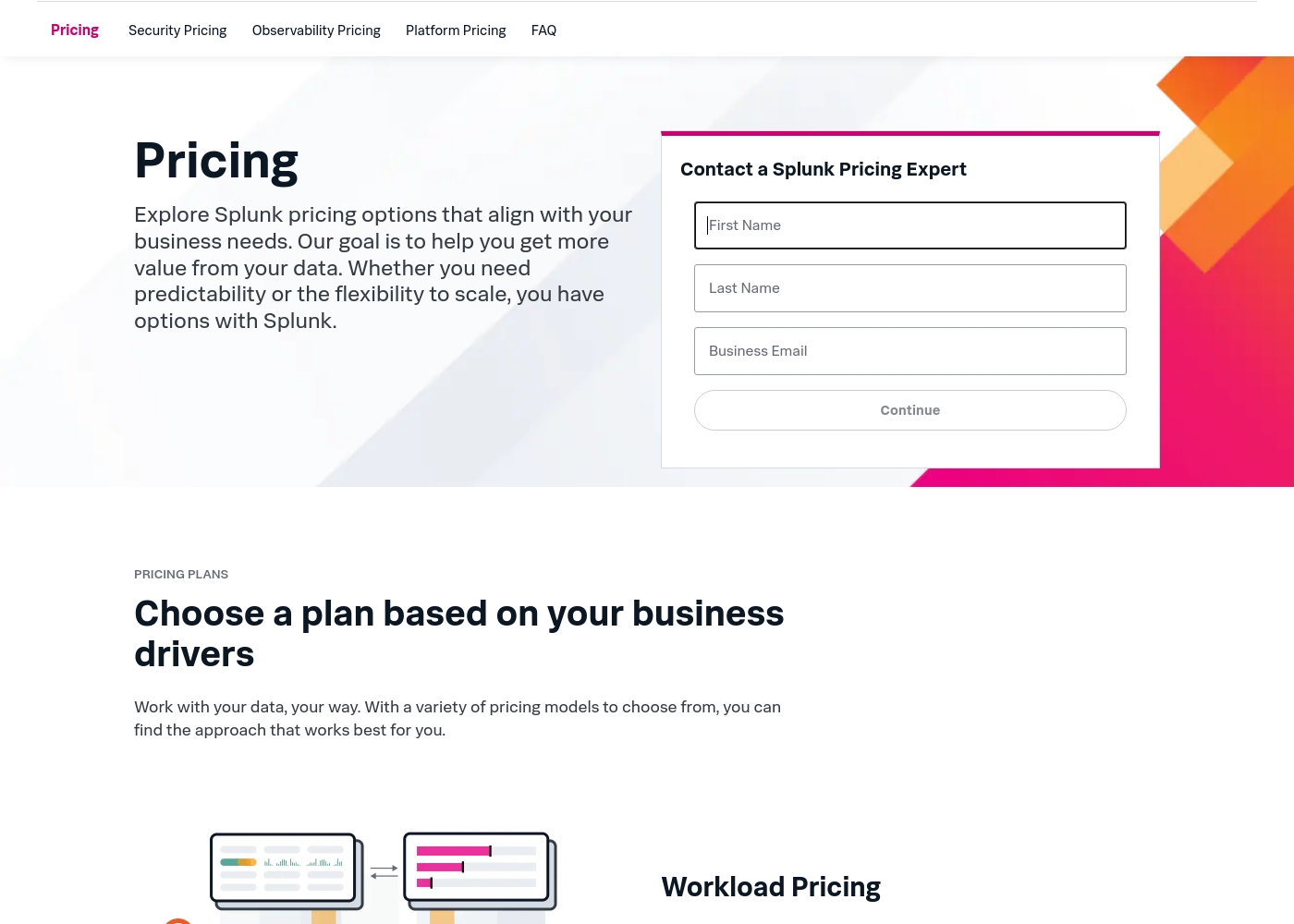
Splunk costs are Not explicitly stated per year with 2 plans: Ingest Pricing at Not explicitly stated, Activity-based Pricing at Not explicitly stated.
Take a look at the different ways you can manage your data costs below.
Ingest Pricing
Price: Not explicitly stated Websites Supported: Not explicitly stated Best For: Teams needing predictable costs for high-volume data ingestion Refund Policy: Not explicitly stated Other Features: Simple predictable approach, Economical search scaling, Broad data ingestion
- Search and analyze machine data
- Expanded use cases on ingested data
- Standard data ingestion
- Metric time series (MTS)
- Traces analyzed per minute
- Sessions monitoring
- Uptime requests
Pricing Notes
- OttoKit offers a clear, predictable cost with its one-time lifetime deals. Splunk's pricing is opaque and requires contacting sales.
- OttoKit's free plan is generous for small-scale use (250 tasks/month). Splunk only offers a free trial.
- OttoKit's cost is fixed per plan. Splunk's cost scales directly with your data volume or activity, which can be unpredictable.
- For agencies, OttoKit's Business Plus plan ($1299 one-time) includes unlimited workspaces. Splunk would require an enterprise contract.
Pricing Head-to-Head
Opinie użytkowników
Based on the provided external sources, we couldn't retrieve detailed user reviews for Splunk due to access restrictions. Trustpilot and Capterra both returned verification or security pages, preventing us from gathering specific sentiment on accuracy, ease of use, support, or pricing.
This means our review is based solely on the official product information and pricing details provided. We recommend checking these review sites directly for the latest user feedback before making a decision.
Nasz werdykt
This isn't a close race—it's a comparison of tools for different jobs. Splunk wins if you're an enterprise fighting security threats or drowning in data. OttoKit is your pick if you're a business owner drowning in repetitive tasks. OttoKit's superpower is making automation accessible. Its visual drag-and-drop builder lets you connect 1,200 apps without writing code. You can set up an AI agent to handle lead qualification for under $500 one-time. Splunk's superpower is making sense of chaos. It ingests data from 2,000 sources to give you one view of security and performance. It's the tool that helps you find a hidden threat or diagnose why an app is slow. The deciding factor is your core problem. If your problem is "I waste 10 hours a week copying data between apps," choose OttoKit. If your problem is "I can't see what's happening across our entire IT stack," choose Splunk. For most small businesses and WordPress users, OttoKit offers incredible value for workflow automation. For any organization where security and system performance are mission-critical, Splunk is the industry-standard powerhouse. Don't choose OttoKit for security analysis, and don't choose Splunk to automate your marketing emails.
Często zadawane pytania
Can I use OttoKit to monitor my website's security like Splunk?
No, OttoKit is a workflow automation tool, not a security monitoring platform. Splunk is designed for security operations, threat detection, and log analysis. They solve completely different problems.
Is OttoKit cheaper than Splunk?
Yes, significantly for most users. OttoKit offers a free plan and one-time lifetime deals starting at $349. Splunk's pricing is customized for enterprises and based on data volume, typically costing thousands annually.
Which is easier to learn, OttoKit or Splunk?
OttoKit is much easier for non-technical users. Its drag-and-drop interface requires no coding. Splunk requires learning its Search Processing Language (SPL) and has a steeper learning curve.
Does Splunk integrate with WordPress like OttoKit does?
Splunk can ingest data from WordPress logs if configured, but it's not a focused integration. OttoKit is built specifically for WordPress, with a dedicated plugin to connect and automate tasks for your site.
Can OttoKit handle large amounts of data like Splunk?
No. OttoKit processes automation tasks based on your plan limits (e.g., 5,000 tasks/month). Splunk is engineered to search, analyze, and store petabytes of data from across an enterprise infrastructure.
Which tool is better for a small marketing team?
OttoKit is far better for a small marketing team. It can automate social posting, lead management, and reporting between apps. Splunk is an enterprise data tool overkill for typical marketing workflows.
Gotowy do wyboru?
Oba narzędzia mają swoje mocne strony. Wybierz w oparciu o swoje konkretne potrzeby.