BidX vs Splunk
BidX and Splunk solve completely different problems. BidX is an Amazon ad automation platform, while Splunk is a data analytics and security tool. Your choice depends entirely on whether you need to optimize ad spend or analyze machine data.
Powerful Amazon PPC automation for scaling brands.
BidX is a robust, AI-driven platform that delivers significant time savings and performance gains for Amazon advertisers. We found its full-funnel automation and proven results compelling. Overall, it's a strong choice for brands ready to invest in scaling their Amazon PPC efficiently, though the annual commitment is a key consideration.
Zalety
- Dramatic time savings, creating campaigns up to 12x faster.
- Proven performance metrics: 36% ROAS lift and 43% sales growth.
- Full-funnel management covering search, display, and video ads.
- Flexible usage: self-service or managed service options.
Wady
- Pricing is opaque, requiring direct contact for quotes.
- Requires an annual contract with monthly payments.
- No free trial is explicitly offered, only a proof-of-concept period.
- Base costs start high (from €495/month) plus a spend percentage.
Powerful but complex data platform.
We find Splunk offers a robust, unified platform for security and observability with extensive integrations and scalability. However, its pricing structure is opaque and usage-based, which can make cost planning challenging. Overall, it's a strong choice for enterprises needing deep data analysis, but smaller teams may find it complex and expensive.
Zalety
- Unified platform for security and observability.
- Over 2,000 integrations with various data sources.
- AI and automation for threat response.
- Handles massive data volumes at scale.
Wady
- Opaque pricing requires consultation with sales.
- Can be complex to set up and learn.
- Usage-based models may lead to unpredictable costs.
- External review access was blocked, limiting user sentiment data.
OBidX
BidX is a marketplace growth platform built for brands and agencies selling on Amazon. ✨ It provides full-funnel advertising software to manage everything from search ads to display and video campaigns. The platform uses AI and automation to handle the complex work, so you can focus on strategy. It's designed for sellers and marketers who want better results with less manual effort.
OSplunk
Splunk is a unified platform for security and observability. It's designed for teams that need to search, analyze, and act on data from any source. Whether you're a security analyst hunting threats or an engineer troubleshooting app performance, it brings everything together in one place. ✨
Najważniejsze
Porównanie funkcji
Przegląd funkcji
Podkreślamy główne różnice i wybieramy zwycięzcę dla każdej funkcji.
Core Functionality
BidX automates Amazon ads; Splunk analyzes machine data for security and operations.
BidX focuses on managing and optimizing Amazon PPC, DSP, and AMC campaigns. It uses AI to create campaigns up to 12x faster than manual work. Splunk ingests and analyzes logs, metrics, and traces from any source. It provides a unified view for security threat detection and IT troubleshooting. The key difference is domain specificity. BidX is deep but narrow (Amazon ads), while Splunk is broad but deep (any machine data). For an Amazon seller, BidX delivers direct ROI. For an IT team, Splunk prevents outages and breaches.
Automation & AI
BidX automates ad tasks; Splunk automates threat response.
BidX's AI handles keyword targeting, bid adjustments, and campaign structure. Users report saving over 14 hours weekly on manual tasks. Splunk's AI powers high-fidelity alerts and automated investigation workflows. It helps security teams respond to incidents faster. BidX automates a specific workflow (ad management). Splunk automates analysis and response across any data source. The value depends on your bottleneck. If it's ad management, choose BidX. If it's alert fatigue, choose Splunk.
Data Integration
BidX connects only to Amazon; Splunk connects to everything.
BidX connects via Amazon's Advertising and Selling Partner APIs. It supports all global Amazon marketplaces. Splunk offers over 2,000 integrations. It supports OpenTelemetry, SDKs, and agents for logs, metrics, and traces from any source. BidX's integration is deep but limited to one ecosystem. Splunk's is vast and covers nearly any modern tech stack. If your data lives on Amazon, BidX is sufficient. If you need to correlate data across cloud, on-prem, and SaaS, Splunk is essential.
Pricing Transparency
Both have opaque pricing, but BidX provides a starting point.
BidX states plans start at €495/month plus a percentage of ad spend. Additional features like AMC reports have clear extra fees. Splunk's pricing is completely customized. You must contact sales for a quote based on data volume or activity. BidX offers more predictability. Splunk's costs can spike with usage. BidX also requires an annual contract, while Splunk's terms are negotiated.
Ease of Use
BidX is built for marketers; Splunk has a steeper learning curve.
BidX provides complimentary onboarding with a 1-on-1 session. The interface is designed for Amazon sellers and advertisers. Splunk is a powerful but complex data platform. Reviews mention it can be complex to set up and learn. BidX likely has a shorter time-to-value for its specific use case. Splunk requires significant investment in training and configuration. A marketing team could be productive in BidX in days. An IT team might need weeks to master Splunk.
Customer Support
BidX offers direct support channels; Splunk's are not public.
BidX lists phone support (Mon-Fri, 10am-5pm) and email. They provide complimentary onboarding. Splunk does not specify support channels or SLAs on their public pricing pages. BidX's support structure is more visible and accessible for its users. Splunk likely offers enterprise support packages, but they're not detailed here. For immediate, direct help, BidX seems more accessible.
Scalability
BidX scales with ad spend; Splunk scales to enterprise data volumes.
BidX is designed to grow with your Amazon advertising budget. There are no stated limits on campaign volume. Splunk is built for massive data volumes. It monitors entire global networks and AI infrastructure. BidX scales horizontally across Amazon accounts. Splunk scales vertically to handle petabytes of data. The scale challenge differs. BidX helps you spend more effectively. Splunk helps you process more data.
Security & Compliance
Splunk is built for security; BidX relies on Amazon's protocols.
BidX connects via secure Amazon APIs. Specific security details are not provided, but it follows Amazon's standards. Splunk is a Cisco company with a core focus on security. It provides tools for compliance monitoring and threat hunting. Splunk is a security platform. BidX is an advertising platform that uses secure connections. For meeting SOC 2 or similar standards, Splunk is the tool. BidX helps you comply with Amazon's advertising policies.
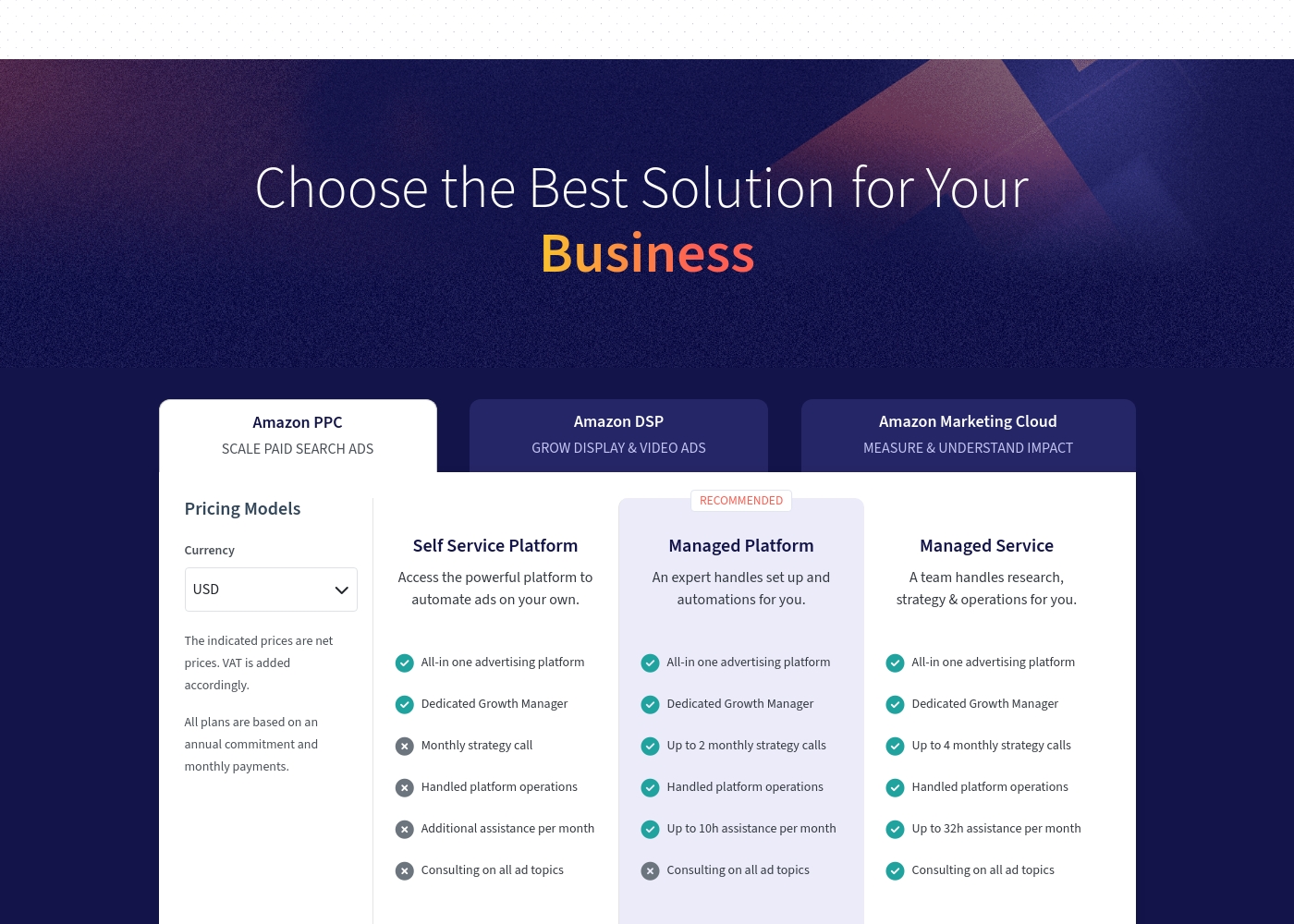
BidX pricing: BidX costs between 495 € and 4.995 € per month plus a percentage of connected ad spend. All plans require an annual commitment with monthly payments and target Amazon PPC, DSP, and AMC management for brands and agencies alike.
New customers can also start with a three-month proof of concept period to test features before a full commitment. Additional solutions like AMC reports start at 295 € per month, and keyword tracking is free for the first 100 terms before tiered fees apply for larger volumes.
No free trial is explicitly stated, but complimentary audits and onboarding are available to help users get started effectively. All indicated prices are net costs and do not include VAT, which is added accordingly based on your location and business status.
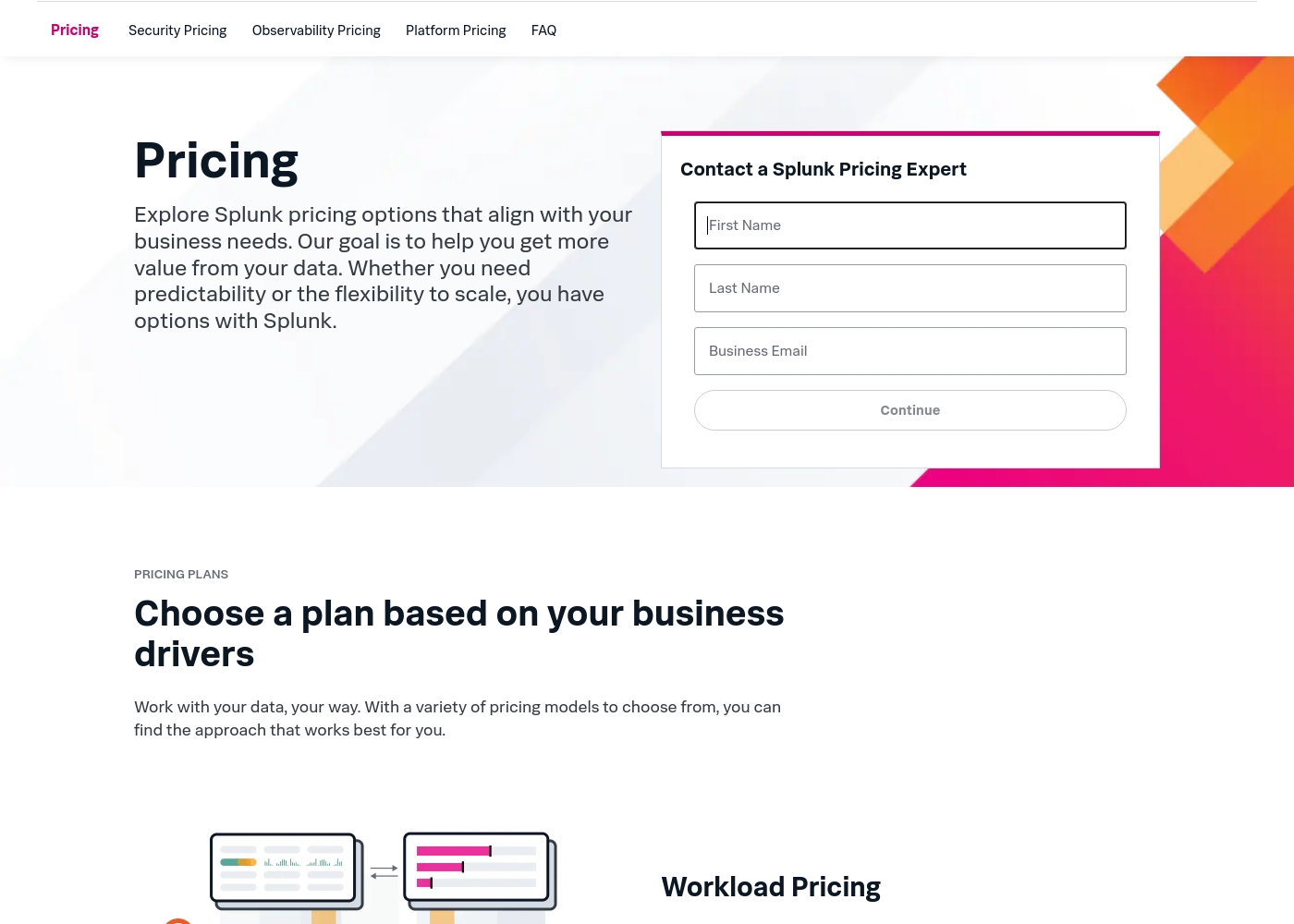
Splunk costs are Not explicitly stated per year with 2 plans: Ingest Pricing at Not explicitly stated, Activity-based Pricing at Not explicitly stated.
Take a look at the different ways you can manage your data costs below.
Ingest Pricing
Price: Not explicitly stated Websites Supported: Not explicitly stated Best For: Teams needing predictable costs for high-volume data ingestion Refund Policy: Not explicitly stated Other Features: Simple predictable approach, Economical search scaling, Broad data ingestion
- Search and analyze machine data
- Expanded use cases on ingested data
- Standard data ingestion
- Metric time series (MTS)
- Traces analyzed per minute
- Sessions monitoring
- Uptime requests
Pricing Notes
- BidX requires an annual commitment with monthly payments.
- Splunk offers a free trial to explore the UI.
- BidX's pricing starts at €495/month plus a percentage of connected ad spend.
- Splunk's costs can scale unpredictably with data ingestion spikes.
- Both vendors require sales contact for final quotes.
Pricing Head-to-Head
Opinie użytkowników
We couldn't access the live review content from Trustpilot or Capterra due to access restrictions. Without the specific user snippets, we cannot synthesize a balanced summary of recurring themes like accuracy, ease of use, or support responsiveness. Our assessment is therefore based solely on the provided website content and pricing details.
Based on the provided external sources, we couldn't retrieve detailed user reviews for Splunk due to access restrictions. Trustpilot and Capterra both returned verification or security pages, preventing us from gathering specific sentiment on accuracy, ease of use, support, or pricing.
This means our review is based solely on the official product information and pricing details provided. We recommend checking these review sites directly for the latest user feedback before making a decision.
Nasz werdykt
This isn't a fair fight—it's a comparison of two completely different tools. BidX wins for Amazon advertisers, Splunk wins for IT and security teams. BidX's superpower is Amazon ad automation. It creates campaigns 12x faster and delivers a 36% average ROAS lift. You save 14 hours weekly on manual tasks. Splunk's superpower is making sense of massive data chaos. It unifies security and observability with 2,000+ integrations. It handles petabytes of data from any source. The deciding factor is your primary challenge. If your pain point is manual Amazon ad management, BidX is the clear choice. If it's troubleshooting outages or hunting threats across a complex stack, Splunk is essential. Choose BidX if you're an Amazon seller or agency wanting to automate ads and boost ROAS. Choose Splunk if you're an IT or security team needing deep data analysis and threat detection. They solve different problems entirely.
Często zadawane pytania
Which is better for small teams: BidX or Splunk?
BidX is better for small Amazon seller teams. Its focus is on automating ad tasks without requiring a large IT staff. Splunk's complexity and cost make it more suitable for mid-to-large enterprises with dedicated data teams.
Does BidX have data analytics features like Splunk?
No. BidX provides analytics specific to Amazon ad performance, like ROAS and sales metrics. Splunk analyzes any machine data (logs, metrics, traces) for security and operations. They are not comparable in data analytics breadth.
Is Splunk worth the extra cost over BidX?
This is the wrong comparison. Splunk and BidX solve different problems. Splunk's cost is justified for enterprises needing security and observability. BidX's cost is for automating Amazon advertising to drive direct revenue.
Can I migrate from BidX to Splunk easily?
No, migration doesn't apply. BidX manages Amazon ad campaigns. Splunk ingests and analyzes IT data. Moving between them isn't like switching project management tools—they serve entirely different functions.
Do both tools offer free trials?
No. Splunk offers a free trial to explore its interface. BidX does not offer a free trial, but provides a three-month proof-of-concept period after purchase.
Which has better customer support?
BidX lists clear support channels (phone, email) and includes complimentary onboarding. Splunk's support details are not publicly listed, requiring a sales conversation. For immediate visibility, BidX appears more accessible.
Gotowy do wyboru?
Oba narzędzia mają swoje mocne strony. Wybierz w oparciu o swoje konkretne potrzeby.