Ignition vs Nickel
Ignition and Nickel both handle your money, but they start from very different places. Ignition begins with winning the deal and collecting payment upfront. Nickel starts after the deal, focusing on collecting, paying, and managing credit. It's a classic 'front-office vs back-office' financial workflow showdown.
Solid automation for getting paid faster.
We found Ignition to be a robust platform that truly automates the proposal-to-payment cycle, saving service businesses considerable admin time and improving cash flow. Overall, it's an excellent choice for firms wanting to professionalize their client onboarding and eliminate manual invoicing work.
Pro
- Automates proposals, agreements, and upfront billing in one flow.
- Helps eliminate manual payment chasing and reduces accounts receivable delays.
- Provides professional templates and tools to upsell and capture additional work.
- Saves significant admin time with bulk actions and automated renewals.
Contro
- Pricing, likely annual, may be a barrier for some budgets.
- Requires commitment to a specific workflow, not a simple standalone invoicer.
- Initial setup and learning curve can be steep for some users.
- May have limitations with deep integrations for non-standard accounting software.
Solid for payments and cash flow.
Overall, we find Nickel to be a capable platform for consolidating payment collection, bill pay, and basic credit operations into a single dashboard. Its strong value lies in the free ACH tier and clear pricing, though teams needing advanced reporting or very fast support may encounter some limitations.
Pro
- Free core plan with unlimited ACH transfers.
- Clean, intuitive interface for managing payments.
- Strong integration with QuickBooks Online.
- Transparent, scalable pricing with no hidden fees.
Contro
- Customer support response times can vary.
- Advanced reporting and analytics are somewhat limited.
- Learning curve for setting up credit decision workflows.
- Transaction limit on the free tier may be restrictive.
Informazioni suIgnition
Ignition is a platform for service businesses that want to automate proposals, agreements, and billing. 🔄 It's designed for professionals who bill clients for projects or recurring work. The goal is to make getting paid a seamless, automatic part of starting a new engagement.
Informazioni suNickel
Nickel is a unified payment and credit platform built for businesses. It replaces your fragmented stack of financial tools. ✅
You can accept payments, pay bills, and offer net terms to customers—all from a single dashboard. It's designed to give you full control over your money cycle.
Punti salienti
Confronto delle funzionalità
Panoramica funzionalità
Evidenziamo le principali differenze e scegliamo un vincitore per ogni funzionalità.
Core Workflow
Ignition automates the 'pre-work'—proposals, contracts, and first payment. Nickel automates the 'post-work'—invoicing, paying vendors, and managing credit.
**Ignition** starts when you create a proposal for a new client. It lets you embed payment terms and collect credit card or bank details upfront. Once the client signs, billing and renewals happen automatically. **Nickel** starts after the project is agreed. It gives you a dashboard to send invoices, accept various payment methods, and pay your own vendors with scheduled approvals. The key trade-off is your entry point. Ignition is for locking in and starting engagements seamlessly. Nickel is for managing the ongoing financial operations of those engagements. **Example:** Use Ignition to close a new retainer. Then use Nickel to manage that client's monthly payments and pay your subcontractors.
Payment Collection
Ignition collects payment at signing. Nickel collects payment on-demand with more customer payment flexibility.
**Ignition** focuses on securing payment details during the proposal phase. It aims to eliminate payment chasing by having everything on file before work starts. It's about removing friction from the initial sale. **Nickel** provides a customer-facing portal and pay-by-link feature. It offers free ACH and card payments, giving customers more choice when they pay invoices. The difference is timing and flexibility. Ignition gets you paid to start the work. Nickel lets customers pay invoices how they prefer, often cheaper for you via ACH. **Real-world impact:** For a consultant, Ignition ensures they get their first retainer instantly. For an e-commerce seller, Nickel lets customers choose the cheapest payment method.
Pricing Model
Ignition has annual, tiered plans. Nickel has a free tier and lower monthly costs for paid plans.
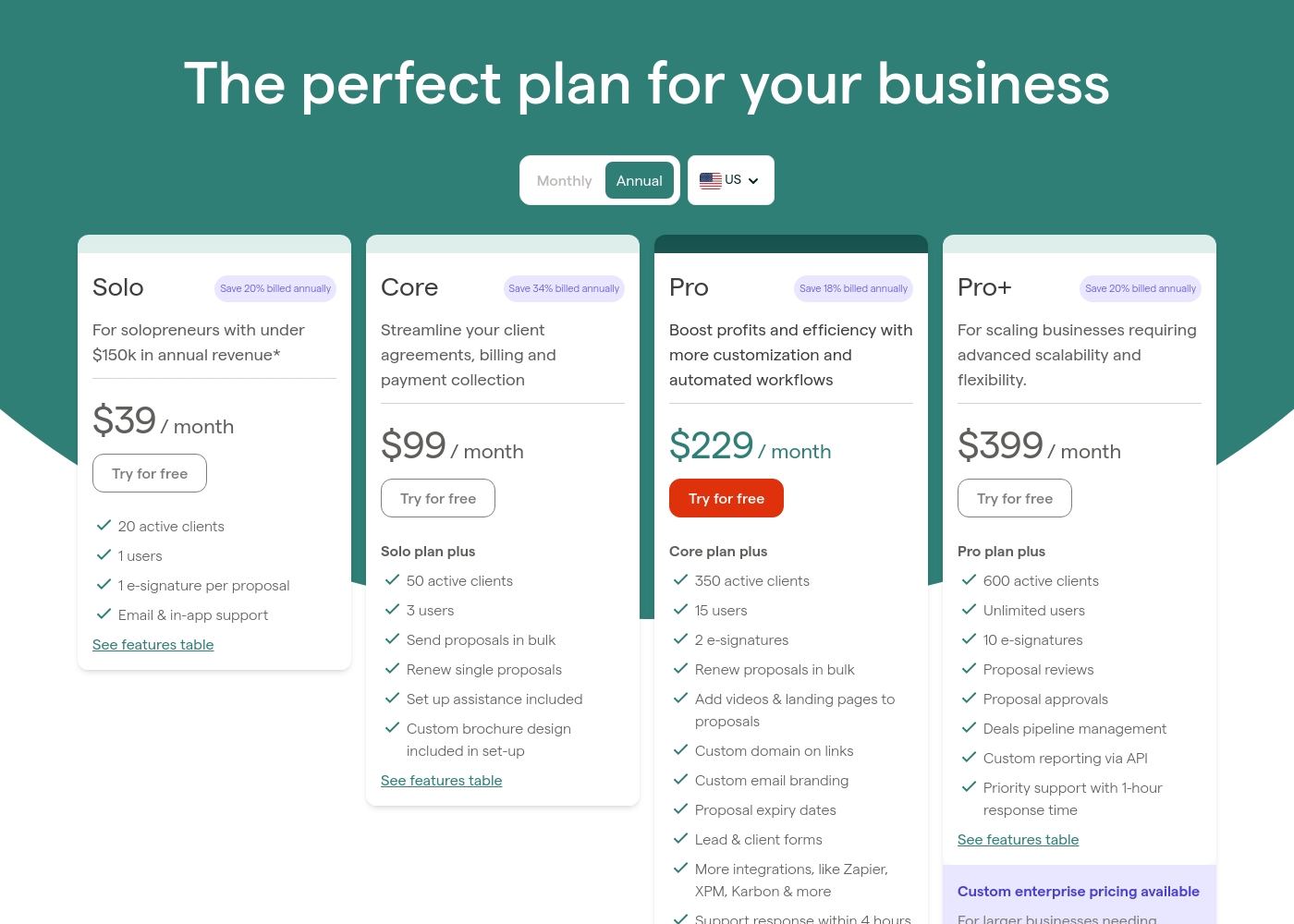
**Ignition** pricing starts at $0 but scales up to $200/month. Plans are likely billed annually and are based on active clients and users. This can be a significant upfront commitment. **Nickel** offers a free forever plan (Core). Paid plans (Plus) cost $35-45/month, billed monthly or annually. There are no hidden fees, and ACH transfers are always free. Nickel offers dramatically lower entry costs and more transparent scaling. Ignition's cost is justified if its automation saves you hours of admin time. **Key insight:** Nickel is better for budget-conscious teams. Ignition is an investment in sales automation and guaranteed cash flow.
Integration Ecosystem
Nickel has a deep, native QuickBooks integration. Ignition integrates with CRM and practice management tools via Zapier.
**Nickel** boasts a native, real-time sync with QuickBooks Online. Invoices and payments update your books instantly, eliminating manual data entry. This is a core feature. **Ignition** integrates with tools like XPM, Karbon, and Zapier. Its focus is on connecting to the systems where you manage client work and relationships. The difference is depth versus breadth. Nickel's single integration is mission-critical for bookkeeping. Ignition connects to your wider practice management stack. **Example:** A bookkeeping firm would love Nickel's QuickBooks sync. A marketing agency would value Ignition's connection to its project management tool.
Speed to Value
Nickel's free plan lets you start instantly. Ignition requires choosing a plan and likely some setup.
**Nickel** offers a free Core plan you can start using immediately. You can begin accepting payments with no monthly cost or lengthy trial signup. **Ignition** provides a 'Try for free' option, but the terms are unclear. Setting it up involves configuring proposal templates and payment workflows. Nickel has a clear advantage in instant accessibility. You can test its value with zero commitment. Ignition requires more upfront investment of time and possibly money. **Verdict:** For quick wins and testing, Nickel wins. For a full workflow overhaul, Ignition's setup is part of the value.
Security & Compliance
Nickel details extensive security (PCI, SOC 2, FDIC). Ignition's security details are not prominent in its public materials.
**Nickel** explicitly states it is PCI compliant and SOC 2 audited quarterly. It uses FDIC-insured accounts and strong encryption, routing payments through sponsor banks. **Ignition** handles sensitive payment data, but its website doesn't prominently detail specific compliance certifications like SOC 2 or PCI in the provided data. This is a significant difference in transparency. For businesses handling many client payments, Nickel's clear compliance posture is a major trust factor. **Bottom line:** If audit-grade compliance is a requirement, Nickel provides the clear evidence. Ignition's security posture is less documented publicly.
Ignition pricing: Plans from 0 Plans range: 0–200
Nickel pricing: Nickel offers a range of payment management plans starting from a free tier up to custom enterprise solutions. Pricing is designed to scale with your business needs, featuring unlimited free ACH transfers on all plans and a 20% discount for annual billing on the Plus tier.
- Nickel Core: $0/month
- Nickel Plus: $35/month (billed annually) or $45/month (billed monthly)
- Nickel Pro: Custom pricing for specialized credit operations
All plans include standard card payment processing at a 2.9% flat rate and native QuickBooks Online integration to streamline your financial workflows.
Pricing Notes
- Ignition's pricing is based on active clients and users, with significant annual commitment likely.
- Nickel's free tier (Core) is a major advantage for startups and very small teams.
- Ignition's plans go up to $200/month, while Nickel's highest stated paid tier is $45/month.
- Both offer unlimited ACH from different angles: Ignition for billing, Nickel for transfers.
- Nickel's pricing is more transparent with no hidden fees, per their marketing.
Pricing Head-to-Head
Recensioni degli utenti
Based on external reviews, Ignition receives praise for automating proposals and billing, which users say saves significant time and eliminates payment chasing. Many appreciate the professional client experience and ease of use, especially for integrating agreements and upfront payments.
💡 However, recurring concerns include pricing, which some find expensive, and occasional technical glitches or integration issues. Support responsiveness is noted as a highlight by many, though a few mention a steep initial learning curve and that the annual billing model isn't ideal for all budgets.
Ignition has transformed our proposal and billing process. Getting payment details upfront means we never chase invoices anymore. The automation saves our team hours every week.
We found that external feedback on Nickel is generally positive, with users highlighting its ease of use and impact on cash flow. Many appreciate the intuitive interface for handling payments and the significant time saved through automation and QuickBooks integration.
😊 The free ACH transfers and transparent pricing are frequently praised as major value drivers for small businesses. However, some reviews point to occasional customer support delays and a learning curve for more advanced features like credit management.
Nickel has been a game-changer for our small business. Getting paid via ACH for free and paying our vendors through the same platform saves us so much time and money. The QuickBooks sync is flawless.
Il nostro verdetto
There's no single winner between Ignition and Nickel because they solve different parts of the money puzzle. You're not choosing between two identical tools. Ignition's superpower is automation at the very start of the client relationship. It turns a signed proposal into a guaranteed, automatic first payment. It's about eliminating the fear of not getting paid after doing the work. Nickel's superpower is becoming the central hub for your money. It lets customers pay you cheaply, helps you pay vendors on schedule, and even manages trade credit. It's about controlling cash flow after the deal is signed. The deciding factor is your biggest headache. Is it chasing payments and doing manual billing? Pick Ignition. Is it juggling payment tools, paying vendors, and offering credit? Pick Nickel. For most service businesses, Ignition solves the more critical, front-end problem. But if you need to manage vendor payments and net terms, Nickel is the only option. Some businesses might even use both for a complete workflow.
Domande frequenti
Which is better for small teams: Ignition or Nickel?
Nickel is often better for very small teams due to its free Core plan. It lets you accept payments and pay bills with no monthly fee. Ignition's value is in automating admin for teams with more clients.
Does Ignition have bill pay for vendors like Nickel?
No, Ignition does not offer bill pay or vendor payment features. Its focus is solely on client-facing proposals, agreements, and collection. Nickel is the tool for managing payables.
Is Nickel worth the extra cost over Ignition's free plan?
This is a misconception. Ignition's entry-level plan is likely $0, but it's not a full-featured free tier like Nickel's. Nickel's free plan provides ongoing value, while Ignition's free option may be a limited trial.
Which integrates better with QuickBooks?
Nickel offers a native, real-time integration with QuickBooks Online. Ignition does not list QuickBooks as a core integration. For seamless accounting sync, Nickel is the clear choice.
Can I use Ignition to offer net terms to customers?
No, Ignition focuses on upfront payment collection, not extending credit terms. Offering net terms like Net 30 or Net 60 is a core feature of Nickel's Pro plan.
Which tool helps me get paid faster?
Ignition helps you get paid faster at the start by collecting payment with the proposal. Nickel helps you get paid faster on invoices via flexible options and free ACH transfers.
Pronto a scegliere?
Entrambi gli strumenti hanno i loro punti di forza. Scegli in base alle tue esigenze specifiche.