ThreatDown vs Wiz
ThreatDown and Wiz both want to keep your business safe, but from opposite angles. ThreatDown hardens your endpoints first. Wiz unifies your entire cloud stack into one security graph.
Best for: IT teams managing traditional endpoint fleets, Businesses wanting transparent, predictable security costs
Best for: Security teams in multi-cloud environments (AWS, Azure, GCP), DevOps and developers wanting security integrated into CI/CD
Proactive, layered protection with clear pricing.
We found ThreatDown offers a strong, proactive security model focused on prevention and hardening. Its tiered pricing is transparent and scalable, making it a solid choice for organizations wanting managed services or a flexible DIY approach. Overall, it's a reliable platform for building a more resilient digital environment.
Ventajas
- Focuses on proactive hardening and threat prevention before execution.
- Offers clear, transparent tiered pricing that scales with device count.
- Provides flexible options from self-managed tools to fully-managed 24/7 MDR.
- Includes features like instant rollback and ransomware remediation.
Desventajas
- Top-tier custom pricing requires direct sales contact.
- Detailed feature differences between tiers are not fully listed here.
- External user reviews were inaccessible for this assessment.
Top-tier, unified cloud security platform.
We find Wiz to be a powerful and comprehensive cloud security solution. It excels at unifying visibility across code, cloud, and runtime, which is crucial for modern, fast-moving teams. Overall, it's a top-tier platform for organizations needing deep context and automated protection at scale.
Ventajas
- Unified security graph connects code, cloud, and runtime for complete context.
- Trusted by over half of the Fortune 100 for proven risk reduction.
- Enables automated threat response and even code fixes to speed up remediation.
- Designed to protect modern AI workloads and agents.
Desventajas
- Custom, consumption-based pricing requires a sales consultation, lacking upfront transparency.
- Platform scope and depth may be more than needed for very small or simple cloud setups.
- Implementation and full value realization likely require significant enterprise-level commitment.
Acerca deThreatDown
ThreatDown is a comprehensive managed security service designed to protect your entire digital environment. 🛡️ It’s built for businesses that want a layered, proactive defense strategy rather than a reactive one. Think of it as a complete security shield, combining managed services with a DIY SOC (Security Operations Center) for flexible, powerful protection.
Acerca deWiz
✨ Wiz is a comprehensive cloud security platform. It's designed for security teams, developers, and DevOps professionals who need to protect modern cloud-native applications. The platform unifies visibility across your entire stack, helping you secure what you build from the start.
Aspectos destacados
Comparación de características
Resumen de Funcionalidades
Destacamos las principales diferencias y elegimos un ganador para cada característica.
Core Security Focus
ThreatDown is endpoint-first. Wiz is cloud-first. Their fundamental approaches are opposite.
ThreatDown's superpower is proactive perimeter hardening. It uses DNS filtering and patch management to seal off common entry points before attackers can even try. It then stops threats with advanced payload analysis and machine learning before code ever runs. Wiz's superpower is a unified security graph. It connects code, cloud, and runtime into one view. This gives you complete context about your applications and infrastructure across AWS, Azure, and GCP from a single platform. The key difference is environment. ThreatDown makes your traditional IT environment hostile to attacks. Wiz demystifies complex cloud environments and protects what you build there, including AI models.
Pricing Model
ThreatDown shows its cards. Wiz makes you ask. Your budget preference will decide this.
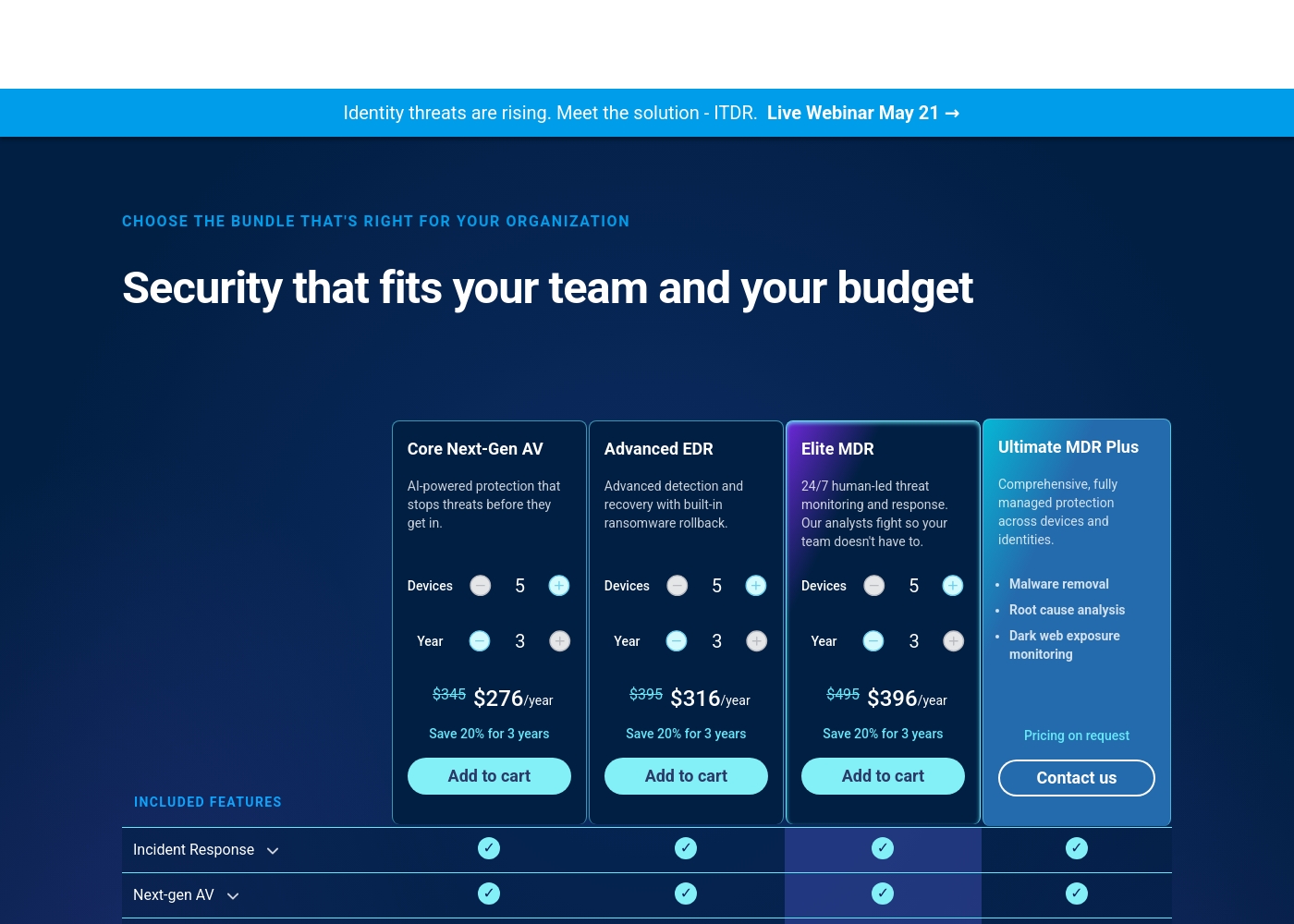
ThreatDown offers transparent, device-based pricing. You can see it starts at $276 per year for 5 devices on a 3-year plan. Pricing scales predictably as you add more endpoints to protect. Wiz uses a custom, consumption-based model. Costs depend on your cloud workloads and number of cloud providers. You must contact sales for a quote tailored to your specific environment. ThreatDown's transparency helps with budget planning. Wiz's model aims to align cost exactly with your cloud usage, which may offer better value for very large or small setups but lacks upfront clarity.
Remediation & Response
ThreatDown rolls back damage. Wiz suggests code fixes. Both respond fast, but differently.
When ThreatDown detects a threat, it acts immediately. It can isolate the affected endpoint and, for ransomware, perform a full rollback to the pre-attack state. It's like the incident never happened, ensuring business continuity. Wiz combines runtime detection with deep context. Its AI agents can automate responses. The Green agent can open a pull request with a suggested code fix for a vulnerability. The Red agent performs automated pen testing. ThreatDown provides a safety net with rollback. Wiz provides a path to permanently fix the root cause in your code. The choice depends on whether your priority is instant recovery or permanent prevention.
Cloud & AI Protection
Wiz is built for the cloud and AI era. ThreatDown focuses on traditional endpoints.
ThreatDown protects endpoints and hardens perimeters. Its core features like DNS filtering and patch management are critical for traditional IT security. It provides a strong, proactive shield for devices. Wiz is designed for cloud-native security. It continuously discovers and protects AI models, agents, and services across your cloud and SaaS. It identifies AI-specific risks like exposed models or weak guardrails. Wiz is the clear leader for organizations heavily invested in cloud infrastructure and AI development. ThreatDown remains essential for securing the physical and virtual endpoints connecting to those systems.
Developer Integration
Wiz shifts security left into code. ThreatDown protects the runtime environment.
ThreatDown's protection is largely post-deployment. It focuses on securing the environment where applications run, using advanced layers to neutralize threats before execution on endpoints. Wiz integrates directly into the developer workflow. It provides insights from the IDE through CI/CD pipelines. This helps developers write secure code from the start, catching risks before they reach the cloud. Wiz bridges the gap between security and development teams. 20% of its active users are Dev/DevOps professionals. ThreatDown's model is more suited for traditional IT operations teams managing endpoint fleets.
Scalability & Management
ThreatDown scales by device count. Wiz scales by cloud workload complexity.
ThreatDown's scalability is straightforward. You add more devices to your plan as your company grows. The pricing tiers and managed service options (like MDR) scale accordingly. Wiz's scalability is tied to your cloud footprint. It grows with the number of workloads, cloud providers (AWS, Azure, GCP), and projects you need to secure. Its API-based model requires no agents on individual workloads. Both scale effectively for their target environments. ThreatDown is easier to scale for a growing number of physical/virtual devices. Wiz scales seamlessly for expanding cloud infrastructure and microservices.
Ease of Getting Started
ThreatDown has clear entry points. Wiz likely requires a more complex onboarding.
ThreatDown allows direct purchase for its first three tiers online. You can select your device count and commitment term, then get started. This self-service model lowers the initial barrier. Wiz requires a sales consultation to get a custom quote. The onboarding likely involves assessing your cloud environment, which is more complex than installing an endpoint agent. The platform is praised for showing value quickly once deployed. ThreatDown offers a quicker path to purchase and deployment for a defined set of devices. Wiz's onboarding is more involved but is designed to deliver deep value across complex cloud estates.
ThreatDown pricing: ThreatDown offers tiered security plans starting at $276/year for 5 devices on a multi-year term. Pricing is based on the number of devices and the length of your subscription commitment (1-3 years).
direct purchase is available for the first three tiers, while the top-tier plan requires a custom quote from the sales team. Each plan includes a core suite of protection tools with options for managed services and 24/7 human-led endpoint detection and response (MDR).
Pricing becomes more cost-effective with longer-term commitments, such as 3-year plans which offer a 20% savings compared to annual rates. Organizations can choose between self-managed AV and fully-managed security operations to fit their technical capacity and specific risk profile.
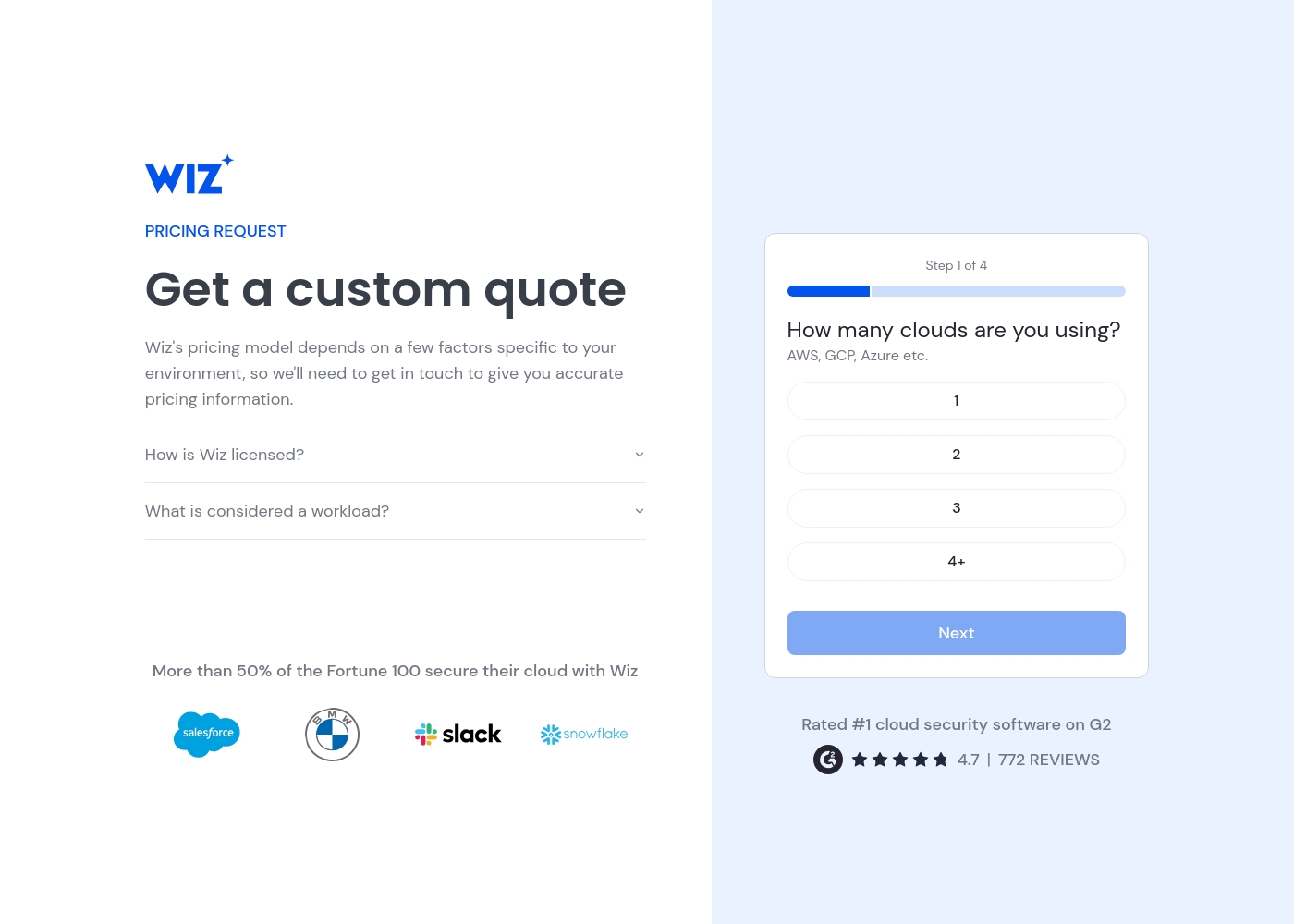
Wiz pricing: Wiz uses a custom pricing model tailored to your specific cloud environment. Costs are license-based and scale with your workload and the number of cloud platforms you use, such as AWS, GCP, or Azure.
To get exact numbers, you'll need to request a personalized quote from their sales team. This ensures you pay for the specific resources and features your enterprise actually needs for total cloud protection.
It is a flexible, consumption-driven approach for security at scale. You can start the process by providing details about your cloud infrastructure on their pricing page.
Pricing Notes
- ThreatDown's pricing is transparent and publicly listed, scaling by device count.
- Wiz's pricing is opaque and requires a sales consultation based on your cloud environment.
- ThreatDown offers significant savings (e.g., 20%) for longer 3-year commitments.
- Wiz's cost is directly tied to your cloud footprint, which could be more efficient for large-scale, variable usage.
- Neither tool explicitly advertises a free trial on their public pricing pages.
Pricing Head-to-Head
Reseñas de usuarios
We could not access external review snippets from Trustpilot or Capterra for ThreatDown due to access restrictions. Therefore, our review is based solely on the provided website information and pricing details. We cannot synthesize user sentiment or provide a summary of external reviews.
External review sites for Wiz were inaccessible during our analysis, preventing a direct sentiment synthesis. 😔 This means we couldn't verify recurring user themes on platforms like Trustpilot and Capterra regarding accuracy, ease of use, support, pricing, or onboarding. Our review therefore relies solely on the provided marketing content and our internal assessment.
Nuestro Veredicto
This isn't a simple "better or worse" fight. ThreatDown and Wiz are built for different battlegrounds. ThreatDown's superpower is proactive, layered defense for your endpoints and perimeter. It stops threats before they execute and can even roll back ransomware attacks. Its transparent, device-based pricing makes budgeting straightforward. Wiz's superpower is a unified security graph that connects code, cloud, and runtime. It provides deep context across multi-cloud environments and AI workloads. It can even automate code fixes, making security a partner for developers. The deciding factor is your environment. Choose ThreatDown if you manage a fleet of endpoints and want clear, scalable protection with managed service options. Choose Wiz if your infrastructure is cloud-native, you're building AI applications, and you need security deeply integrated into your development pipeline. For many modern tech companies, Wiz will be the primary platform, but ThreatDown remains critical for securing the devices that access the cloud.
Preguntas Frecuentes
Which is better for small teams: ThreatDown or Wiz?
ThreatDown is likely easier and more affordable for small teams with a traditional IT setup. Its transparent, device-based pricing starts at $276/year. Wiz's custom model is typically geared towards larger enterprises with complex cloud estates.
Does ThreatDown protect my cloud environment like Wiz?
Not in the same way. ThreatDown hardens endpoints and perimeters, which protects devices connecting to the cloud. Wiz provides deep, unified visibility and protection across your entire cloud infrastructure (AWS, Azure, GCP).
Can I get a free trial for ThreatDown or Wiz?
Neither tool explicitly advertises a free trial on their public websites. ThreatDown allows direct purchase for some plans, while Wiz requires a sales consultation. You should contact both sales teams to inquire about evaluation options.
Which tool is better for securing AI and machine learning workloads?
Wiz is specifically built to secure AI models, agents, and services across your cloud. It provides dedicated AI risk discovery and runtime protection. ThreatDown's focus is on endpoint security, not AI-specific workloads.
How does ThreatDown's ransomware rollback work compared to Wiz's fixes?
ThreatDown can instantly roll back a system to its pre-attack state, acting as a safety net. Wiz's Green agent automates security by suggesting and opening pull requests to fix vulnerabilities in your code permanently.
Which platform offers better visibility for a multi-cloud setup?
Wiz is designed for this. It unifies visibility across AWS, Azure, and GCP into a single security graph. ThreatDown's visibility is focused on the endpoints and devices within your network.
¿Listo para elegir?
Ambas herramientas tienen sus fortalezas. Elige según tus necesidades específicas.