Tellent vs Wing Assistant
This is a showdown between a software platform and a human service. Tellent is an all-in-one HR suite that automates your people processes. Wing Assistant provides a dedicated virtual assistant to handle your recurring workflows.
Strong modular suite for growing teams.
We find Tellent offers a powerful, integrated platform for automating HR and recruitment. Its modular design is ideal for mid-sized companies scaling their operations. Overall, it's a solid choice for centralizing people data, though implementation requires planning.
Ventajas
- Unifies recruiting, HR, and performance management in one platform.
- Offers strong automation and AI features to reduce manual tasks.
- Provides a flexible, modular system that scales with company growth.
- Features a large partner ecosystem (500+ integrations) for connectivity.
Desventajas
- Pricing is not transparent publicly and requires contacting sales.
- The modular setup may involve a complex initial configuration.
- May not be cost-effective for very small businesses or solopreneurs.
- Advanced customization and deeper technical features can have a learning curve.
Managed VA service for scalable support.
We found Wing Assistant to be a strong, managed solution for teams seeking dedicated virtual assistance without hiring overhead. The service emphasizes accountability, embedded workflow management, and continuity. Overall, it's a reliable option for businesses ready to scale operations with a structured partnership.
Ventajas
- Dedicated, managed virtual assistant embedded in your workflows.
- Handles oversight, backups, and performance management for you.
- Scalable model allows adding capacity without rebuilding processes.
- Structured coverage prevents service gaps with backup support.
Desventajas
- Specific external review data was inaccessible for validation.
- Requires commitment to a subscription for daily coverage blocks.
- Pricing details are not fully itemized in the provided snippets.
Acerca deTellent
It's a People Decision Platform. Think of it as a single, connected suite for recruiting, core HR, and performance management. It's built for mid-sized and growing companies (they mention 7,000+ customers globally) that want to streamline operations. The system is modular, so you can start with what you need, like the ATS, and add an HRIS or performance tools later. 💡
Acerca deWing Assistant
Wing Assistant is a managed service for virtual assistants. It's built for teams and leaders who need to scale operations without adding full-time headcount. You get a dedicated assistant embedded in your workflows, supported by a platform that handles oversight, backups, and performance. It's for businesses that want work owned—not just tasks completed. 🚀
Aspectos destacados
Comparación de características
Resumen de Funcionalidades
Destacamos las principales diferencias y elegimos un ganador para cada característica.
Core Product & Purpose
Tellent is a software suite for HR. Wing Assistant is a managed service providing a human helper.
Tellent is a People Decision Platform. It's a connected suite of software modules for recruiting, core HR, and performance management. It's built for companies wanting to automate and unify their internal people processes. Wing Assistant is a managed virtual assistant service. You get a dedicated professional embedded in your daily workflows, supported by a platform that handles oversight and backups. It's for leaders wanting to scale operations without hiring. The key difference is software vs. service. Tellent automates HR tasks through its platform. Wing Assistant assigns a real person to execute your operational tasks. They solve fundamentally different business problems.
AI & Automation
Tellent uses AI for HR task automation. Wing Assistant relies on a human to handle tasks.
Tellent's Intelligence module offers practical AI. It can generate personalized candidate emails, translate job postings with one click, and summarize interview feedback. It claims to save teams up to 64% of time on manual tasks. Wing Assistant's model is human-driven. Your dedicated VA learns your processes and tools. They execute tasks like CRM updates, email follow-up, and scheduling. Automation comes from their trained efficiency, not built-in AI features. Tellent's AI is a software feature for HR efficiency. Wing's "automation" is the skilled execution by your assigned assistant. For pure software automation, Tellent wins.
Scalability & Growth
Tellent scales by adding software modules. Wing scales by increasing assistant hours.
Tellent is designed to grow with your company. You can start with the ATS and later add the HRIS or performance modules. This modular approach lets you expand your software capabilities as your team and needs evolve. Wing Assistant scales by adjusting your subscription. You can move from the 80-hour plan (4-hour daily block) to the 160-hour plan (8-hour block). You can also potentially add more VAs as your operational workload increases. Tellent scales your HR infrastructure. Wing scales your human operational capacity. Your choice depends on whether you're growing your people management systems or your daily execution bandwidth.
Integration & Ecosystem
Tellent has a large partner marketplace. Wing embeds into your existing tech stack.
Tellent offers over 500 integrations through its marketplace. You can connect it to payroll, accounting, and other HR tech. This helps create a unified system of record for people data. Wing Assistant is designed to work within your tools. Your VA uses the Wing Workspace App for communication and tasks. They can operate in your CRM, email, calendar, and other software you already use. Tellent focuses on building a connected software ecosystem. Wing focuses on having a person operate within your existing ecosystem. Both aim for integration, but from different angles.
Risk & Accountability
Wing offers built-in backup and oversight. Tellent provides software reliability.
Wing Assistant includes structured backup coverage. If your primary VA is unavailable, a backup is ready to go, preventing service gaps. You also get a Customer Success Manager for oversight and quality control. Tellent's accountability lies in its software uptime and data security. It offers SOC 2 compliance and audit logs. Performance relies on the platform functioning correctly and your team using it properly. Wing mitigates human resource risk with a managed structure. Tellent mitigates process risk with a reliable software platform. Wing's model directly addresses single-point-of-failure concerns for task execution.
User Interface & Experience
Tellent is a multi-module software dashboard. Wing is a focused workspace app.
Tellent provides a comprehensive HR platform interface. You'll interact with different modules for recruiting, employee data, and performance. The focus is on managing people processes and data in one central place. Wing provides the Wing Workspace App. This is a dedicated tool for communicating with your assistant, creating tasks, and sharing files. It's designed for streamlined collaboration on daily work. Tellent's UI is for managing HR systems. Wing's UI is for managing tasks and communication with your VA. They serve very different primary functions.
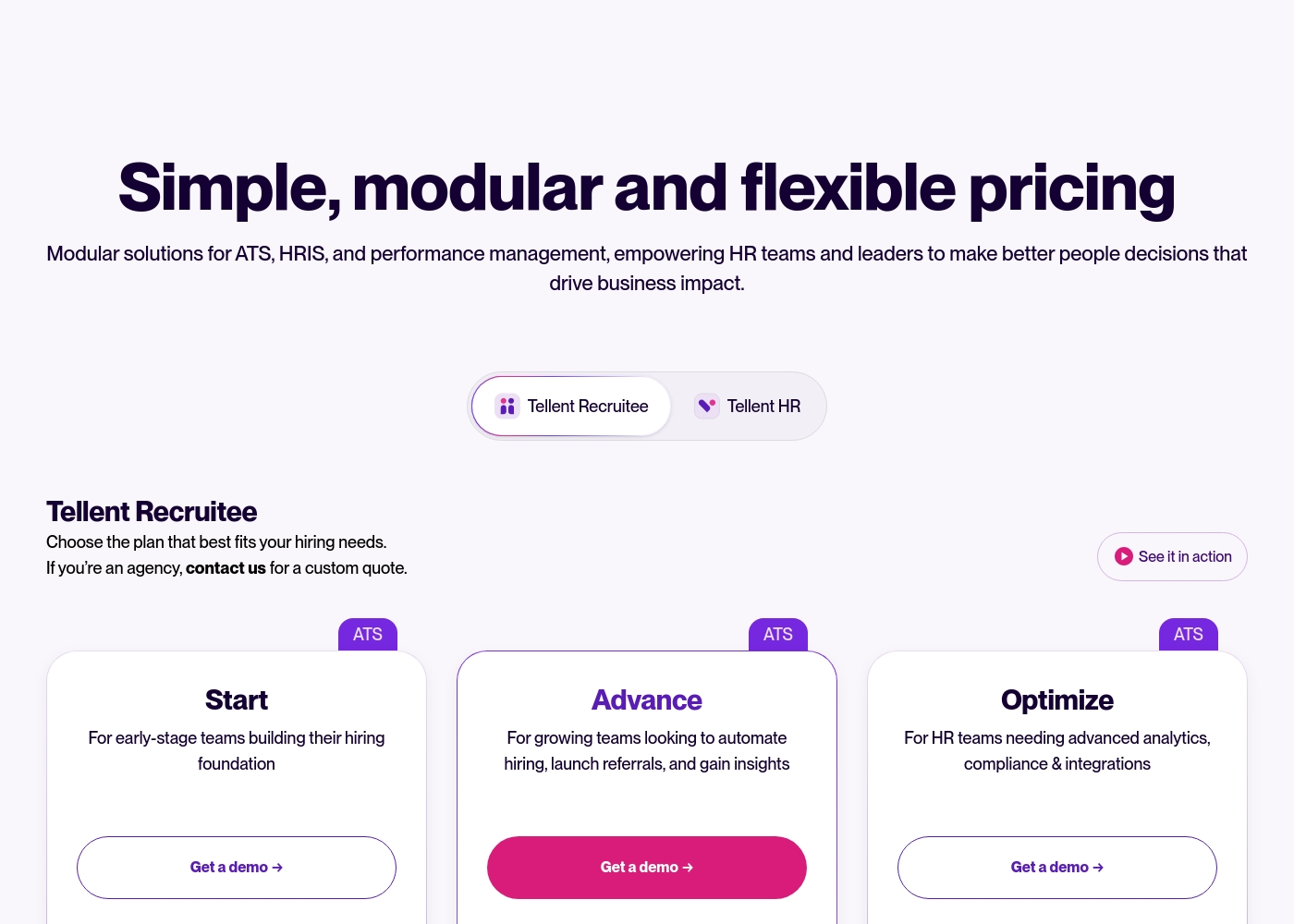
Tellent pricing: Tellent offers modular pricing with specific tiers for recruitment and HR management. Subscription costs increase based on your company's employee count with 20% savings available on annual plans. Plans range: 1–360/month Billing options: Free plan, Free trial, Monthly subscription, Yearly subscription, One-time payment, Usage-based pricing
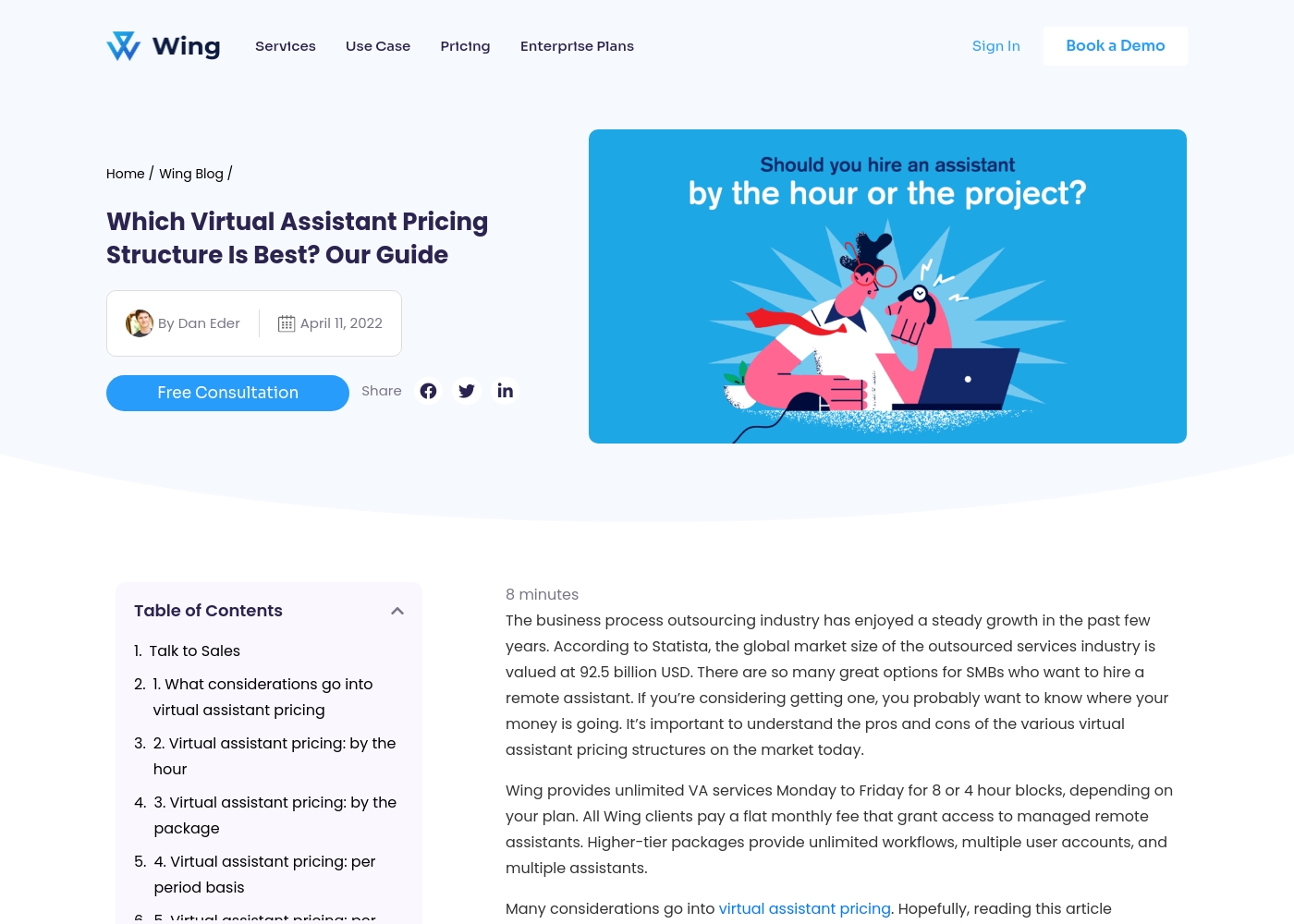
Wing Assistant pricing: Wing Assistant offers subscription-based pricing for dedicated virtual assistants with monthly or quarterly billing options. Packages are based on hours of daily coverage, including either 4 or 8-hour blocks Monday through Friday.
Read on for details about these flat monthly fees and what each entails for your workflow. No hidden costs for specialized skills—all your industry-specific needs like sales or dental support are rolled into the regular rate.
Choose the 80 or 160-hour plan to start scaling your business today with an experienced, managed professional at your side. 🚀 Click the link to view the latest rates or chat with their team for a custom quote that fits your exact operational needs.
Pricing Notes
- Tellent's pricing scales with your employee count and module selection. You must contact sales for a quote.
- Wing Assistant offers two main subscription plans based on daily coverage hours (4 or 8 hours).
- Tellent includes a free 18-day trial for its core modules.
- Wing Assistant does not advertise a free trial; you book a meeting to get started.
- Both tools have hidden costs: Tellent for some add-ons, Wing for specialized skill needs (though they say no extra fees).
Pricing Head-to-Head
Reseñas de usuarios
From external reviews, Tellent receives praise for its intuitive interface and strong customer support, which helps teams onboard smoothly. Users often highlight the ease of use and the platform's ability to streamline recruitment and HR tasks.
However, some feedback points to occasional bugs and a learning curve with advanced features. Pricing can feel steep for smaller teams, and a few reviewers mention delays in support responsiveness during peak times.
The platform is really intuitive. It streamlined our hiring process and saved our team hours each week. Support has been helpful whenever we had questions.
We couldn't access specific Trustpilot reviews due to a connection error, and Capterra data was not provided. This means we cannot synthesize a balanced summary of recurring user themes about accuracy, ease of use, support, or value from external platforms. Our website-based assessment is the primary source for this review.
We attempted to gather a testimonial from Trustpilot, but the review page returned a connection error. No specific user feedback could be retrieved from the source at this time.
Nuestro Veredicto
For most people comparing these two, it's a tie—because they solve different problems. You're not choosing between two HR tools. You're choosing between a software platform and a human service. Tellent's superpower is unifying your people operations. It's the single source of truth for recruiting, HR data, and performance management. It's built to automate HR workflows and scale with your company. Wing Assistant's superpower is providing reliable, owned execution. It gives you a dedicated professional to handle your daily tasks. The value is in reclaimed time and consistent operational support, not software features. The deciding factor is your core pain point. If your problem is disjointed HR systems and manual people processes, Tellent is your answer. If your problem is drowning in administrative tasks with no bandwidth, Wing Assistant is your solution. Choose Tellent if you're a growing company building scalable HR infrastructure. Choose Wing Assistant if you're a leader or team needing to offload recurring work to a managed professional. They can even complement each other—use Tellent for your HR stack and a Wing VA for operational tasks.
Preguntas Frecuentes
Which is better for a small startup with 10 people?
It depends on your need. Tellent might be overkill for very small teams. Wing Assistant could help a busy founder, but you'd need to commit to a subscription plan.
Can I use Tellent's software with Wing Assistant's service?
Theoretically, yes. You could use Tellent for your core HR and recruiting. Then, have a Wing VA manage tasks like scheduling or data entry within the Tellent platform.
Is Tellent cheaper than Wing Assistant?
Pricing is not directly comparable. Tellent's cost scales with employee count and modules. Wing's cost is a flat subscription for daily coverage hours. You need quotes for both.
Does Wing Assistant handle HR tasks like hiring?
No. Wing Assistant provides operational and administrative support. For hiring workflows, you would use a tool like Tellent's ATS, which Wing could potentially assist with.
Which offers a free trial?
Tellent offers an 18-day free trial of its core modules. Wing Assistant does not advertise a free trial; you book a meeting to discuss your needs.
What's the main difference in support?
Wing Assistant includes a dedicated Customer Success Manager with every plan. Tellent's support varies: all plans get chat, but higher tiers include onboarding and a dedicated CSM.
¿Listo para elegir?
Ambas herramientas tienen sus fortalezas. Elige según tus necesidades específicas.