Scannero vs Spynger
Scannero and Spynger offer very different kinds of monitoring solutions. Scannero uses a consent-based link method to find a location quickly and easily. Spynger provides deep, undetectable surveillance covering keystrokes and chat apps. Your choice depends entirely on your need for stealth versus simplicity and identity features.
Best for: Parents confirming the safety of a child's Wi-Fi-only device., Individuals verifying the identity of unknown phone numbers or online screen names.
Best for: Anyone requiring completely invisible, non-consensual deep monitoring., Users who must recover deleted private text messages and communications.
Useful features, problematic billing practices.
We found Scannero offers a simple approach to location tracking plus powerful supplemental tools like reverse lookups and data leak checks. Overall, while the core features hold promise, the current widespread reports of non-transparent pricing and difficulties with refunds severely undermine its credibility.
Pros
- Initial setup is fast and easy to use.
- Effective reverse phone lookup assists with identity verification.
- Works using Wi-Fi connection, not requiring active mobile data.
- Includes useful secondary features (e.g., data leak checks).
Cons
- Widespread reports of unauthorized and unexpected charges.
- Geolocation accuracy is inconsistent, sometimes highly inaccurate.
- Users report that the cancellation process is difficult.
- The initial trial pricing structure appears misleading.
Powerful Monitoring, Questionable Support
We found Spynger presents an exceptionally comprehensive monitoring tool with features like undetectable operation and deep social media access. Overall, based on feature strength balanced against user reports of poor reliability and troublesome support processes, it earns a mixed recommendation.
Pros
- Software operates completely undetected in the background.
- Comprehensive keylogger captures all typed text, including passwords.
- Successfully recovers and displays deleted text messages and chats.
- Monitors over 16 social media and messaging platforms (e.g., Tinder, WhatsApp).
Cons
- Significant difficulties reported concerning the refund process.
- Reliability issues; the app may unlink or stop updating data.
- Customers report auto-renewal charges after subscription cancellation.
- Basic technical support may require an extra payment fee.
AboutScannero
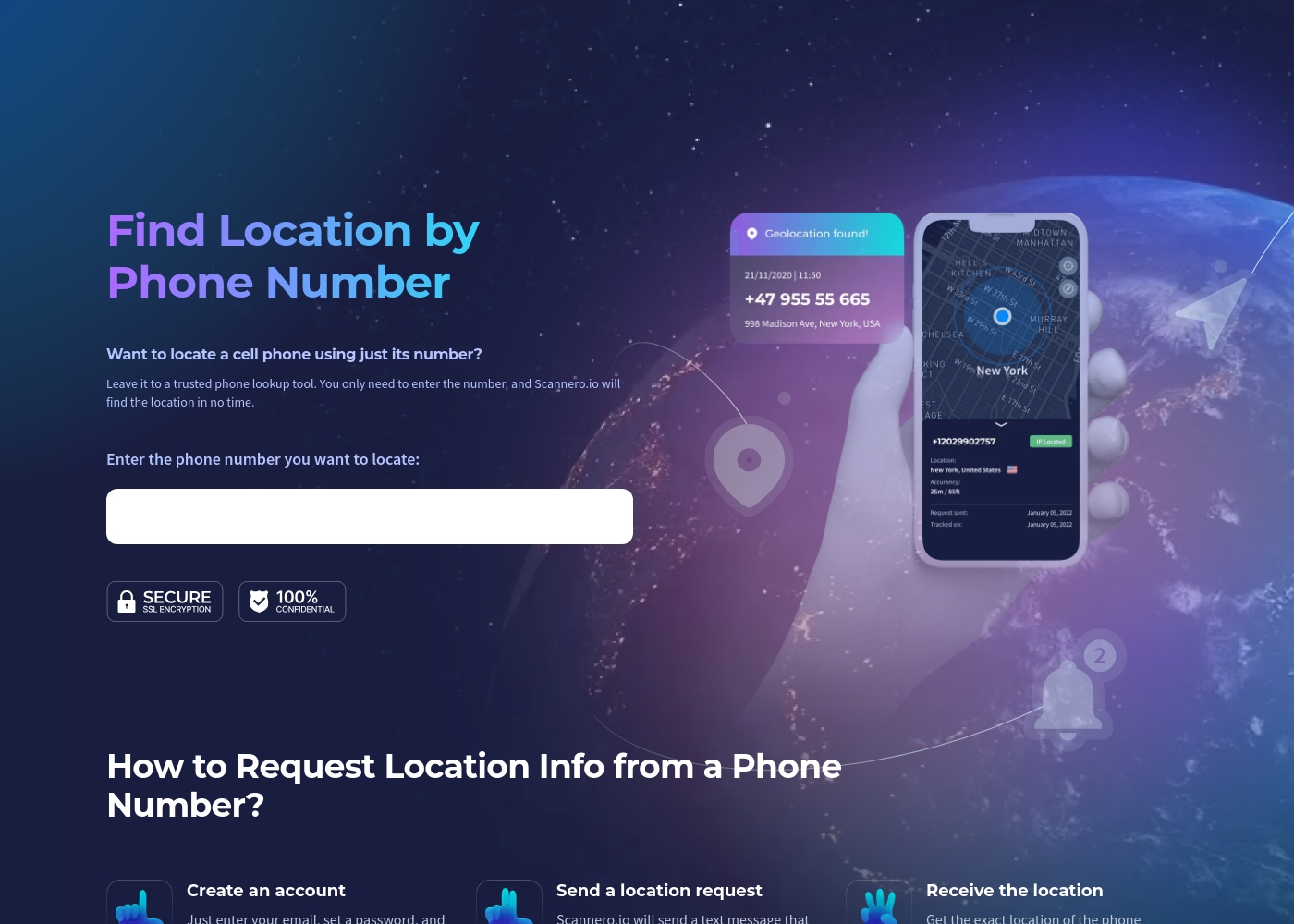
Scannero is a powerful, yet very easy-to-use digital utility designed for peace of mind and security. It offers a straightforward way to locate a mobile phone simply by knowing the number.
The main method is generating a unique link that the phone owner receives and taps. Once they click, you will see their precise location.
It's helpful for tracking loved ones who may not always have a data connection, like kids using Wi-Fi only devices. Users report that Scannero is both super-fast and highly accurate.
AboutSpynger
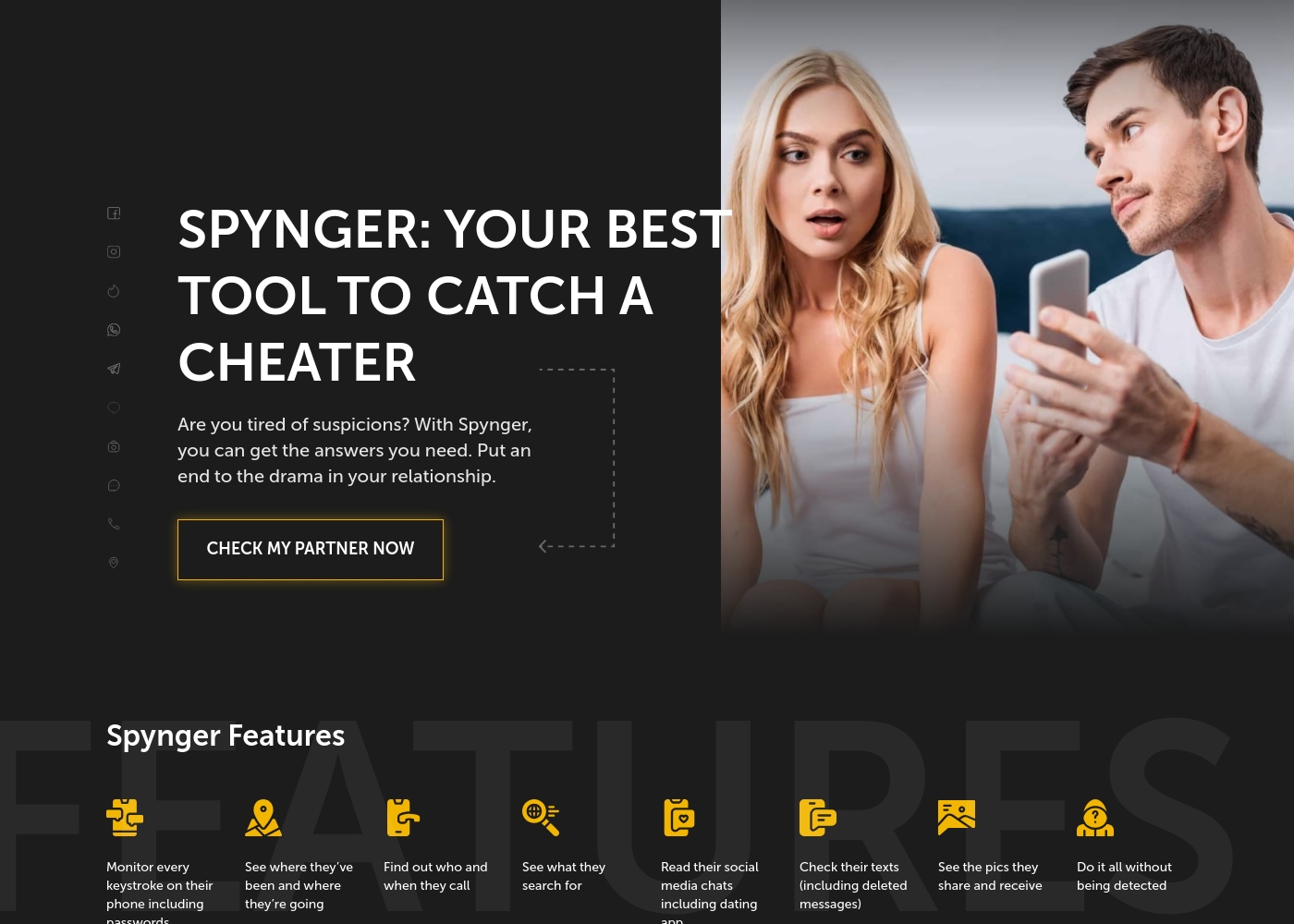
Spynger is a powerful, hidden monitoring application designed specifically for mobile devices. It allows you to monitor activity efficiently and completely undetected. The software supports all modern mobile devices, offering quick installation and an easy-to-use control panel. It runs in the background without any evidence and won’t affect performance or battery drain. 💡 In fact, it is featured as the only undetectable Android monitoring app.
Highlights
Feature Comparison
Features Overview
We highlight the main differences and pick a winner for each feature.
Stealth & Discretion
Spynger is fully undetectable; Scannero requires user action to share location.
Scannero is a voluntary safety tool; the user must click a link to send their location. This process means Scannero is not suitable for achieving complete secrecy or hidden monitoring. Spynger is engineered for surveillance and runs completely hidden in the background on mobile devices. Spynger hides itself from the home screen, launcher, and device task manager. If discretion is the absolute top priority, Spynger is the only viable choice over Scannero.
Location Tracking
Spynger tracks continuously; Scannero location is a single, post-click snapshot.
Scannero provides an instant location update after the target taps the unique tracking link. Scannero supports locating devices using only a Wi-Fi connection, saving mobile data. Spynger uses a Hidden GPS finder for continuous, real-time location monitoring and history logging. Users have reported Scannero’s location data is highly inconsistent, sometimes hundreds of miles inaccurate. Spynger provides reliable continuity, whereas Scannero provides instant, yet sometimes flawed, snapshots.
Deep Data Capture
Spynger captures keystrokes and deleted messages; Scannero cannot access device data.
Spynger utilizes a powerful Hidden Keylogger that captures every typed word, including passwords and sensitive account details. Spynger is also able to retrieve communications that the user has already deleted from their phone. Scannero explicitly lacks surveillance features; it focuses solely on location and public identity verification. If accessing the user's private texts, passwords, or deleted items is necessary, only Spynger can do it.
Social Media Access
Spynger monitors 16+ apps deeply; Scannero offers only basic profile verification.
Spynger is a surveillance powerhouse, monitoring over 16 messaging and social media platforms. It provides detailed access to chats and media from apps like WhatsApp, Snapchat, and Tinder. Scannero offers a reverse username lookup to find associated public profiles on dating sites or social media. Scannero only helps verify identities; it cannot access private communication like Spynger's deep integration allows.
Identity & Security Tools
Scannero performs security audits; Spynger focuses purely on monitoring.
Scannero features a valuable Data Leak Checker to scan databases for compromised user emails or phone numbers. Scannero also excels at reversing unknown phone numbers to reveal the caller’s identity. Spynger does not provide any external security auditing or identity verification tools. Scannero is useful for proactive personal security against data breaches and verifying unknown contacts.
Price Opacity & Trust
Both platforms suffer from poor transparency and extensive user complaints about billing.
Scannero users frequently report misleading trial offers with high, unexpected charges post-trial period. Spynger users also face significant difficulty with refunds after attempting to cancel their subscriptions. Neither Scannero nor Spynger discloses detailed, transparent pricing plans publicly. Users must exercise extreme caution when subscribing to either Scannero or Spynger due to widespread financial complaints.
Mobile Compatibility
Scannero works universally with just a link; Spynger supports all modern devices.
Scannero’s link-based method works on any phone number, making it highly universal and platform-agnostic. Scannero is especially useful for tracking Wi-Fi-only devices, which often miss data connections. Spynger supports all modern mobile devices and is noted specifically for its undetectable operation on Android. Spynger requires initial installation, unlike the simple web link used by Scannero.
We were unable to retrieve the specific pricing plans or subscription tiers for Scannero from the available documentation. The information does not detail plan names, monthly fees, or annual savings.
The scraped data does not clearly define different subscription levels or how features are packaged. We know the service offers useful functions like location tracking, reverse phone lookup, and checking for data breaches. Typically, services like this categorize features into tiers, but Scannero's precise structure, official plan names, costs, and feature allocations are currently not stated publicly in the content provided here.
Monthly Plan (Example)
It's clear that Spynger aims to provide a robust solution for tracking digital behavior. However, the exact pricing structure and specific plan names were not available in the promotional materials we reviewed. It’s important to note that powerful monitoring apps like this often use subscription models tailored to cover the necessary infrastructure and stealth technology they employ.
Since concrete plan details weren't provided, we are synthesizing the capabilities based on the extensive feature list outlined by Spynger itself. These features suggest an application positioned at a premium level, reflecting the technical complexity required for software to remain completely undetectable while providing comprehensive data access.
Other Features:
- Monitor every keystroke, including passwords typed.
- See location history using the Hidden GPS finder.
- View social media chats, including applications like Tinder.
- Access deleted text messages and check call history.
- Functions completely undetected in the background.
Pricing Notes
- Pricing details for both Scannero and Spynger are highly opaque and missing from public documentation.
- Scannero is criticized heavily for non-transparent trial charges that result in large, unauthorized fees.
- Spynger users frequently report difficulty obtaining refunds and persistent auto-renewal charges after cancellation.
- Buyers must thoroughly review payment terms directly on the official websites for both Scannero and Spynger before purchase.
Pricing Head-to-Head
User Reviews
Scannero’s external reception, based on over 1,100 Trustpilot reviews, suggests a deep divide between product concept and user experience, resulting in a poor 2.3-star rating. While a few users praised the general ease of setup and noted that secondary features like reverse phone lookup effectively identified marketing companies, the overwhelming sentiment revolves around deceptive pricing practices.
Many customers reported signing up for a cheap trial ($1 or €1) only to be immediately charged much higher, unauthorized subscription fees ($39.99 to €49.99). Users routinely found the cancellation and refund process extremely difficult, describing it as confusing or non-existent, leading to frustration and hidden charges.
I only paid for the small $1 trial test as advertised on the website. I never consented to the sudden charges of $69.20 and $48.25 withdrawn a day later. This hidden billing practice is completely misleading and unethical.
Spynger maintains a mixed reputation, holding a 3.0 rating across 173 reviews on Trustpilot. Users frequently commend the app's powerful features, specifically mentioning the undetectable keylogger, deleted chat retrieval, and remote GPS tracking as effective tools for gathering information.
Many satisfied customers confirmed finding essential data, sometimes uncovering shocking revelations. Specific support agents like Sylvie are often praised for being prompt and courteous.
My husband suddenly changed his phone password. That instantly felt like a major red flag for me. Thanks to Spynger’s keylogger feature, I still managed to see his chats and uncover the truth. It saved me from living a lie.
Our Verdict
If you need peace of mind, Spynger is the clear winner for deep, effective monitoring features. Scannero and Spynger serve fundamentally different surveillance needs; your choice depends on the required depth. Scannero is suited for non-intrusive safety checks and identity verification tasks. Setup is fast, and Scannero includes tools like the Data Leak Checker and reverse phone lookups. However, Scannero's location accuracy is often reported as inconsistent and unreliable. Spynger is built for comprehensive, undetectable surveillance, making it a truly powerful collection tool. It features a keylogger, recovers deleted chats, and monitors 16+ social platforms (including Tinder). Spynger focuses purely on providing hidden, detailed data capture. The deciding factor is stealth versus consent and external identity checks. If you absolutely require invisible access to conversations and deleted data, Spynger is the necessary choice. Choose Scannero if you only need a quick, link-based location and security scanning abilities. Spynger edges out Scannero due to its robust feature set and significantly higher user sentiment scores. Spynger delivers powerful surveillance, but research the billing terms carefully. Only choose Scannero if simplicity and identity checks outweigh the profound feature set of Spynger.
Frequently Asked Questions
Which is better for completely hidden monitoring: Scannero or Spynger?
Spynger is built specifically for complete stealth monitoring on mobile devices. Scannero requires the user to consent by clicking a unique link to share their location. Therefore, Spynger is the only option for hidden or non-consensual tracking.
Does Scannero offer the same deep data access as Spynger?
No. Spynger provides deep access features like a Hidden Keylogger and recovery of deleted text messages. Scannero cannot access private device data, texts, or chats. Scannero focuses on external information like phone lookups and location checks.
Why do users rate Spynger higher than Scannero?
Spynger reliably delivers its powerful monitoring features, leading to a 3.7-star rating. Scannero scores poorly at 2.8 stars, primarily due to numerous complaints about highly inaccurate location data and deceptive trial-to-subscription billing practices.
Can I use Scannero to track social media conversations?
No. Scannero only performs reverse username lookups to verify public identity on dating and social sites. Spynger monitors private conversations, shared media, and activity on over 16 chat platforms, including Tinder and WhatsApp.
Can Scannero locate a phone without the user knowing that they are being tracked?
No, Scannero requires the user to tap the unique tracking link sent via SMS or messenger. This is an explicit, consent-based process. Spynger is the tool designed to track a user’s location and movements without their knowledge.
Which tool offers useful security features like a data leak checker?
Scannero includes a valuable Data Leak Checker to audit if your personal information was compromised. Spynger completely lacks any outward-facing digital security tools, focusing only on device surveillance.
Ready to Choose?
Both tools have their strengths. Choose based on your specific needs.