Payhip vs Zeffy
Payhip and Zeffy serve very different creators. Payhip is for selling digital products, while Zeffy is for nonprofit fundraising. Choosing the right one depends entirely on what you're trying to accomplish.
Best for: Selling digital downloads like ebooks, templates, or music, Creating and selling online courses with quizzes and certificates
Best for: Nonprofits collecting one-time or recurring donations, Schools planning galas or selling event tickets
Exceptional value for digital creators.
We find Payhip delivers an outstanding value proposition: it eliminates feature-gating across all tiers and handles complex global tax compliance automatically. User feedback consistently validates the platform's ease of use and the quality of its human support staff. Overall, we recommend Payhip highly for anyone selling digital goods, courses, or coaching.
Pros
- Access to all features is included even on the Free Forever plan.
- Customer support is prompt, responsive, and provided by real people.
- Setup is remarkably user-friendly with a clean, easy-to-customize interface.
- Automatically handles complex EU and UK VAT calculation and compliance.
Cons
- Does not permit the sale of Private Label Rights (PLR) products.
- Some specialized functions required by highly ambitious course creators may be absent.
Free, powerful, and mission-focused fundraising.
We found Zeffy delivers on its core promise of zero fees, making it a top choice for budget-conscious nonprofits. The all-in-one suite covers donations, events, and memberships effectively, though the donor-funded model is a unique consideration. Overall, it's a strong, free platform for organizations prioritizing 100% fund retention.
Pros
- Truly zero platform or transaction fees for the organization.
- All-in-one platform for donations, tickets, auctions, and memberships.
- User-friendly interface for setting up campaigns quickly.
- Includes engagement tools like donation thermometers and leaderboards.
Cons
- Relies on optional donor tips for revenue, which may concern some users.
- Limited customization compared to more expensive enterprise platforms.
- Reporting and analytics could be more advanced for large organizations.
- Integration options might be narrower than broader market tools.
AboutPayhip
Payhip is a user-friendly platform designed for creators who want to turn their passion into profit. It makes selling online easy and accessible for everyone. You can create a free, fully customizable website within minutes, with absolutely no coding required ✨. Whether you sell ebooks, software, online courses, or physical inventory, Payhip provides the robust features you need. This platform helps you start, scale, and manage your business effectively, joining over 130,000 trusted creators.
AboutZeffy
Zeffy is a free, comprehensive platform designed specifically for nonprofits, schools, and community groups. It's your central hub for fundraising, from online donations to live auctions and peer-to-peer campaigns. If your organization needs to raise money without the overhead of platform fees, this tool is for you. 💡
Highlights
Feature Comparison
Features Overview
We highlight the main differences and pick a winner for each feature.
Core Purpose
Payhip is an e-commerce platform. Zeffy is a fundraising suite.
Payhip is built for creators selling digital products, courses, or services. It provides a complete online store, checkout, and delivery system. Zeffy is designed for nonprofits and community groups. Its tools are focused on raising money through donations, events, and memberships. The fundamental difference is their target user. Payhip is for commercial sellers; Zeffy is for mission-driven organizations.
Pricing Model
Payhip has tiered plans. Zeffy is completely free.
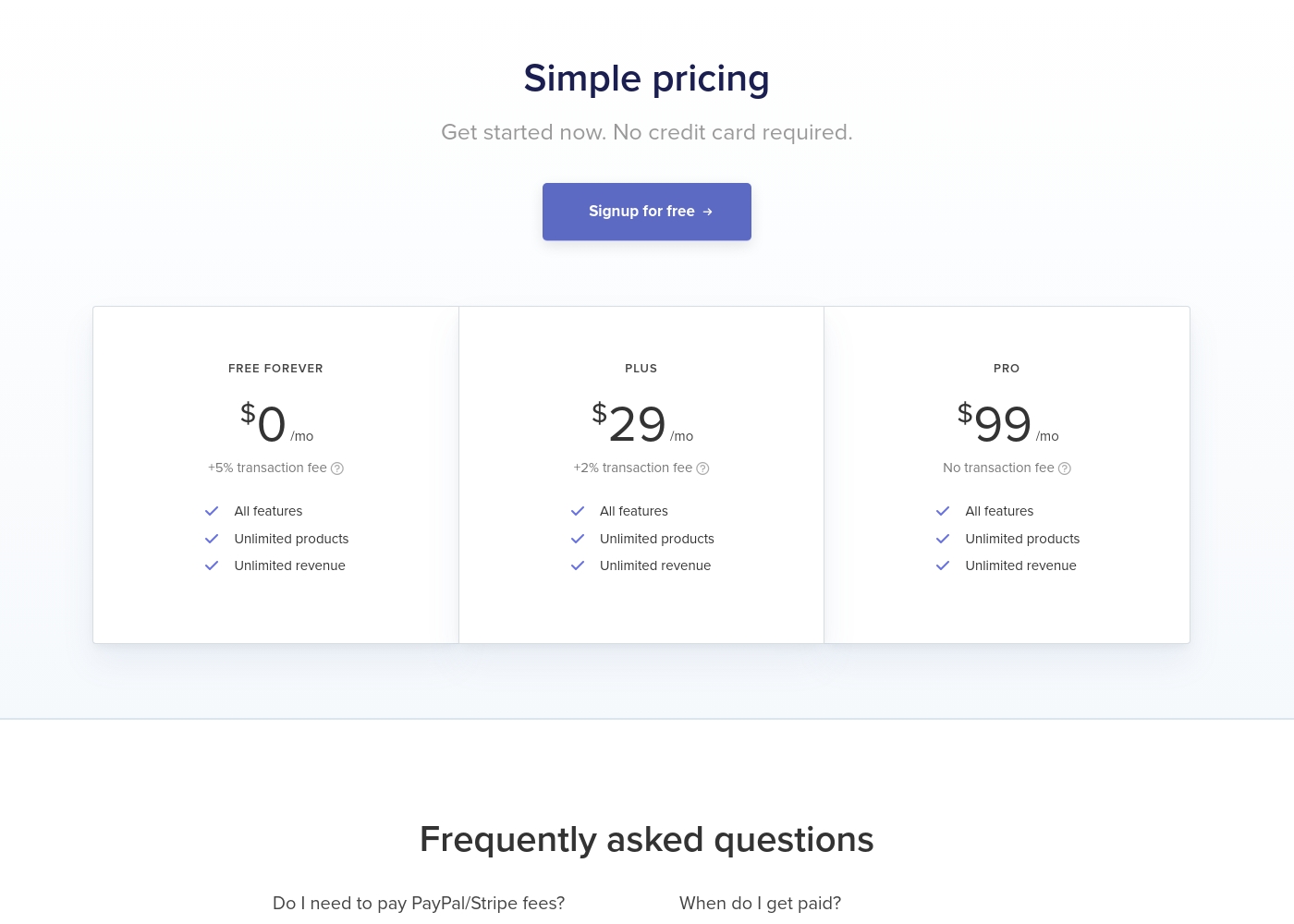
Payhip offers a Free Forever plan with a 5% transaction fee. Paid plans ($29/$99) reduce or eliminate this fee. Zeffy has zero platform or transaction fees for the organization. It's funded by optional donor tips. If you're a nonprofit, Zeffy's model is unbeatable for cost savings. For commercial sellers, Payhip's tiered fees offer a path to higher margins.
Fundraising Features
Zeffy excels here. Payhip lacks dedicated fundraising tools.
Zeffy offers peer-to-peer campaigns, live auctions, raffles, and donation thermometers. These are core to its platform. Payhip can process payments, but it doesn't have features like outbid notifications or fundraising leaderboards. For a school gala or community fundraiser, Zeffy provides the specific engagement tools needed for success.
Digital Product Sales
Payhip is the clear choice for selling products.
Payhip handles digital downloads, software licenses, and online courses with drip content and quizzes. Zeffy's merchandise store is basic and meant for simple fundraising, not a full e-commerce experience. If your goal is to sell an eBook or a coding course, Payhip has all the specialized tools you need.
Course Creation
Payhip has a built-in course builder. Zeffy does not.
Payhip lets you build courses with videos, assignments, and certificates. You can drip content on a schedule. Zeffy has no feature for hosting or selling educational content. This is a deal-breaker if you're an educator. Payhip is your only option between the two.
Ease of Use
Both are simple to set up. Payhip's interface is more polished.
Payhip is consistently praised for its clean, intuitive store builder and dashboard. Setup is very fast. Zeffy's interface is straightforward for creating campaigns, but it's less focused on design customization. Payhip likely offers a slightly smoother experience for building a branded online presence.
Payment Processing
Payhip uses Stripe/PayPal. Zeffy accepts all major cards.
Payhip integrates with Stripe and PayPal, letting you connect your own merchant accounts. Zeffy accepts all major credit/debit cards but doesn't detail the underlying processor. For sellers, Payhip offers more control over payment gateways.
Customer Support
Payhip advertises 24/7 support. Zeffy's support details are sparse.
Payhip offers 24/7 professional support, which users rave about for fast, helpful responses. The provided Zeffy data doesn't specify support channels or response times. Based on available info, Payhip's support seems more robust and transparent.
Tax Handling
Payhip automates EU/UK VAT. Zeffy doesn't mention it.
Payhip automatically calculates and handles digital VAT for EU and UK customers. This is a huge compliance win. Zeffy's documentation doesn't address sales tax or VAT compliance. For international digital sales, Payhip solves a major headache for you.
Scalability
Both scale well. Payhip by volume, Zeffy by campaign size.
Payhip's Pro plan removes fees for high-volume sellers. All plans allow unlimited products and revenue. Zeffy has no stated limits on how much you can raise. It's designed for organizations of various sizes. Scalability is a strength for both, just in different contexts.
Payhip costs between $0 and $99 per month with three plans: Free Forever at $0/month, Plus at $29/month, and Pro at $99/month.
Here are the details for each tier available through Payhip's simple pricing structure.
Free Forever
Price: $0/mo Best For: Creators starting out Other Features:
- 5% transaction fee
- All features included
- Unlimited products
- Unlimited revenue
- All features
- Unlimited products
- Unlimited revenue
- All features
- Unlimited products
- Unlimited revenue
- All features
- Unlimited products
- Unlimited revenue
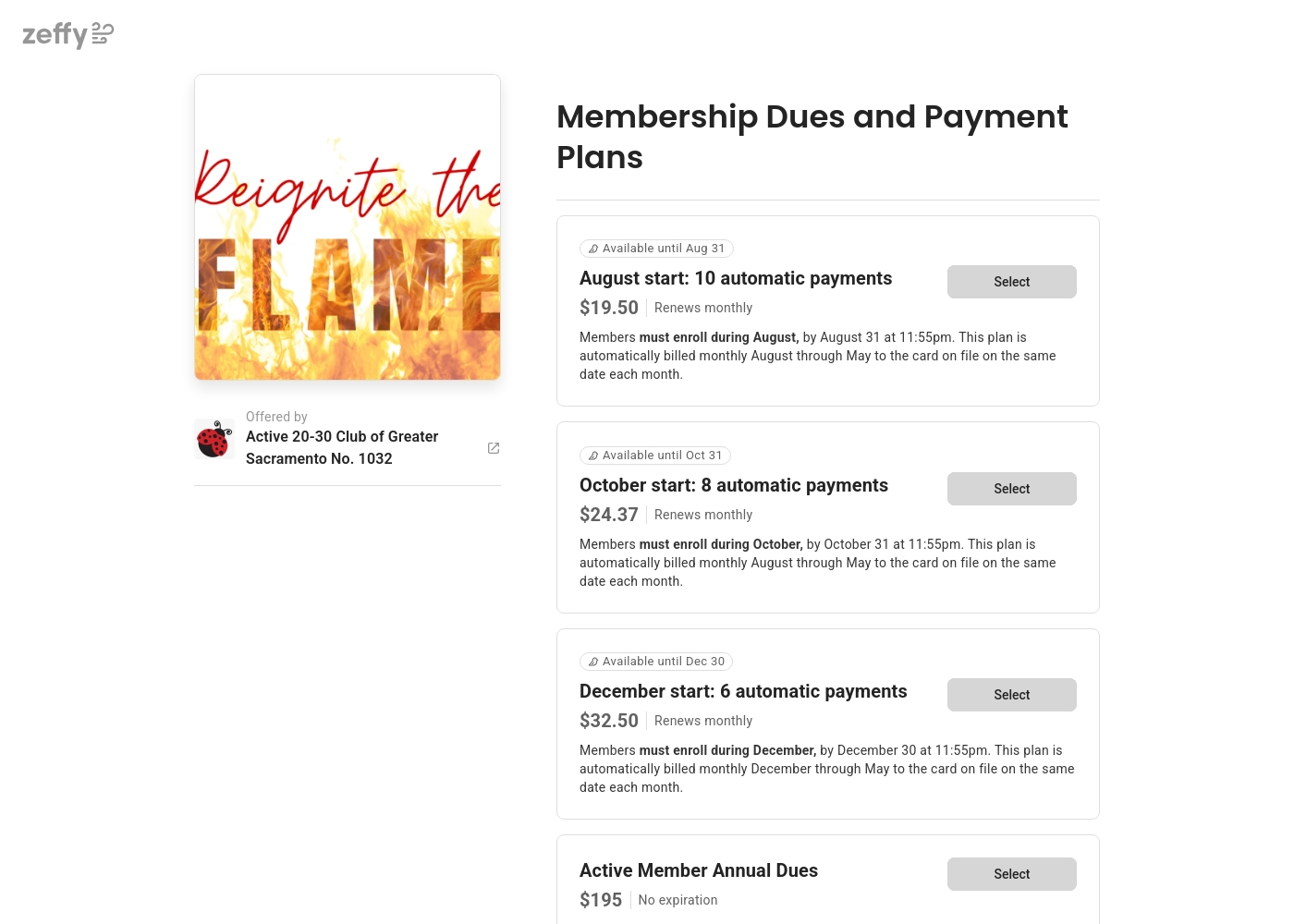
Zeffy pricing: Zeffy is a 100% free fundraising platform with zero platform fees. Organizations can collect donations, sell memberships, and manage events without losing any portion of their revenue to transaction costs or monthly fees.
For the specific Active 20-30 Club membership dues shown, options range from $19.50 per month to a single $195 annual payment, ensuring 100% of the funds support their mission through Zeffy's zero-fee model. This approach relies on voluntary contributions from donors to keep services running for nonprofits and clubs alike.
It's a transparent way to ensure your entire payment goes exactly where it's needed most without hidden charges or administrative overhead. You can choose to pay upfront or spread costs over time while keeping everything simple and fee-free for the organization involved.
Pricing Notes
- Payhip's Free Forever plan has a 5% transaction fee. The $29 Plus plan drops it to 2%. The $99 Pro plan eliminates it.
- Zeffy has zero platform or transaction fees for the organization. It's funded by voluntary donor tips.
- Payhip's paid plans unlock lower fees but not new features. All features are available on the Free plan.
- The choice is simple: Payhip costs money if you sell. Zeffy costs you nothing to raise money.
Pricing Head-to-Head
User Reviews
Payhip receives exceptional feedback for its comprehensive and user-friendly platform, consistently praised across hundreds of reviews. A key draw is the transparent and affordable pricing structure, particularly the powerful Free Forever plan, which allows new creators to start selling digital products without a significant monthly subscription burden.
Users frequently commend the platform's ease of use and simple setup, noting that customization is straightforward and quick, making the onboarding process effortless. However, the most universally lauded aspect is the customer support.
This is a great resource for people entering the online business space with digital products. The platform is well designed, remarkably user friendly, and immediate to launch. The variety of page templates makes getting started really simple and stress-free.
External reviews from Trustpilot and Capterra were inaccessible during our review due to security blocks, so we could not analyze user sentiment directly. However, the platform's core promise of zero fees is consistently highlighted in its own marketing and user testimonials we could gather.
Recurring themes from available sources focus on the simplicity and value of keeping 100% of funds, though some users note the donor-funded model relies on optional tips. Support and onboarding appear responsive for many, but like any platform, experiences can vary.
Zeffy has been a game-changer for our nonprofit. We keep every dollar we raise with no hidden fees, which means more funds for our cause. The setup was straightforward and our donors love the experience.
Our Verdict
The verdict is clear: it depends entirely on your mission. If you're a creator selling products, Payhip is your champion. If you're a nonprofit raising funds, Zeffy is the unbeatable choice. Payhip's superpower is its all-in-one selling engine. It handles digital downloads, full courses, and coaching with zero feature-gating. The automatic tax compliance alone is worth it for international sellers. Zeffy's superpower is its zero-fee model. Every dollar you raise goes directly to your cause. It provides specialized tools like auctions and peer-to-peer campaigns that Payhip simply doesn't have. The deciding factor is your core activity. Are you selling something for profit, or are you raising money for a cause? Your answer instantly points you to the right platform. Choose Payhip if you're a solo creator, educator, or coach. Choose Zeffy if you're a school, charity, or community club. Both are excellent—they just serve very different people.
Frequently Asked Questions
Can I sell digital products with Zeffy like I can with Payhip?
No. Zeffy is designed for fundraising and event management. Payhip is the platform for selling digital downloads, courses, and services.
Which is cheaper for a small nonprofit, Payhip or Zeffy?
Zeffy is free. Payhip would charge a transaction fee on its free plan. Zeffy is the clear choice for nonprofits on a budget.
Does Payhip have fundraising features like donation pages?
Payhip processes payments but lacks dedicated fundraising tools like donation thermometers, peer-to-peer campaigns, or auction hosting. Zeffy offers all of these.
Is Zeffy really free forever?
Yes. Zeffy has no platform or transaction fees for organizations. It is funded by optional tips from donors during transactions.
Which platform is better for online courses?
Payhip. It has a built-in course builder with videos, drip content, and certificates. Zeffy does not offer course creation tools.
Can I use Payhip and Zeffy together?
You could, but it's not typical. You'd use Payhip for your commercial product sales and Zeffy for nonprofit fundraising campaigns, as they serve different purposes.
Ready to Choose?
Both tools have their strengths. Choose based on your specific needs.