Etsy vs Zeffy
Etsy and Zeffy solve totally different problems for different people. Etsy is a global marketplace for selling unique, handmade, and vintage goods. Zeffy is a free, all-in-one fundraising platform for nonprofits and community groups. The choice is simple: do you need to sell crafts or raise money for a cause?
Best for: Solo entrepreneurs selling handmade crafts, Small businesses with vintage or unique inventory
Best for: Nonprofit organizations of any size, Schools and PTAs running fundraisers
Unique finds, operational headaches.
We recognize Etsy’s powerful concept of offering unique, handmade goods and strong personalization options. However, external reviews reveal chronic operational issues, particularly concerning system stability and customer care responsiveness. Overall, the platform’s valuable market niche is severely undermined by widespread failures impacting key reliability factors for both buyers and sellers.
Pros
- Access to a vast selection of unique, handmade, and vintage items.
- Enables strong product personalization (engraving, embroidery).
- Pricing model uses low listing fees rather than mandatory monthly subscriptions.
- Effective platform for supporting independent and small businesses.
Cons
- Customer support is widely reported as unhelpful, inadequate, or entirely nonexistent.
- Both buyer and seller accounts are frequently suspended without clear reason or explanation.
- High incidence of misleading product listings and scam sellers (poor accuracy).
- Widespread reliability issues concerning delivery, shipping delays, and faulty tracking.
Free, powerful, and mission-focused fundraising.
We found Zeffy delivers on its core promise of zero fees, making it a top choice for budget-conscious nonprofits. The all-in-one suite covers donations, events, and memberships effectively, though the donor-funded model is a unique consideration. Overall, it's a strong, free platform for organizations prioritizing 100% fund retention.
Pros
- Truly zero platform or transaction fees for the organization.
- All-in-one platform for donations, tickets, auctions, and memberships.
- User-friendly interface for setting up campaigns quickly.
- Includes engagement tools like donation thermometers and leaderboards.
Cons
- Relies on optional donor tips for revenue, which may concern some users.
- Limited customization compared to more expensive enterprise platforms.
- Reporting and analytics could be more advanced for large organizations.
- Integration options might be narrower than broader market tools.
AboutEtsy
Etsy is a vibrant online marketplace dedicated to all things distinctive and handmade or vintage. It is where you find items beyond the typical store purchase, ensuring your shopping feels personal. This destination is perfect for shoppers looking for original items, spanning from mugs and home goods to jewellery and apparel. Etsy focuses on delivering gifts as special as the recipient, prioritizing unique craftsmanship. It's a great place to discover essential items tailored to specific hobbies too. 💡
AboutZeffy
Zeffy is a free, comprehensive platform designed specifically for nonprofits, schools, and community groups. It's your central hub for fundraising, from online donations to live auctions and peer-to-peer campaigns. If your organization needs to raise money without the overhead of platform fees, this tool is for you. 💡
Highlights
Feature Comparison
Features Overview
We highlight the main differences and pick a winner for each feature.
Core Business Model
Etsy is a transactional marketplace. Zeffy is a zero-fee fundraising suite.
Etsy makes money when you sell. You pay a $0.20 listing fee and a 6.5% transaction fee plus payment processing on every sale. There's also a potential 15% fee if Etsy's Offsite Ads lead to a sale. Zeffy is completely free for organizations. It makes money through optional donor tips. You keep 100% of every dollar raised from donations, ticket sales, or memberships. The key trade-off is audience vs. cost. Etsy gives you access to millions of shoppers but takes a cut. Zeffy gives you a free platform but you must drive your own audience. For a seller, the fees are the cost of doing business on a large platform. For a nonprofit, keeping 100% of funds is often critical to the mission.
Target Audience
Etsy serves individual sellers. Zeffy serves community organizations.
Etsy is designed for independent sellers of unique, handmade, or vintage items. It's perfect for solo entrepreneurs, crafters, and small businesses looking for customers. Zeffy is built specifically for nonprofits, schools, clubs, and community groups. Its tools are focused on fundraising, events, and member management. Choosing is straightforward. If you make and sell physical products, Etsy is your marketplace. If you run an organization that needs to raise money, Zeffy is your operational hub.
Financial Model
Etsy charges multiple fees. Zeffy is entirely free.
On Etsy, you face a $0.20 listing fee, a 6.5% transaction fee, and payment processing costs (3% + $0.25). High-volume sellers may also pay a mandatory 15% Offsite Ads fee. Zeffy charges organizations zero fees. No platform, transaction, or subscription costs. The model is supported by voluntary tips from donors after transactions. The financial impact is huge. A nonprofit using Zeffy keeps all funds. A seller on Etsy must price products to cover fees and still make a profit.
Fundraising Tools
Zeffy has them. Etsy does not.
Etsy is not a fundraising platform. It facilitates the sale of physical goods between buyers and sellers. Zeffy is an all-in-one fundraising toolkit. It includes donation pages, ticket sales, auction hosting, peer-to-peer campaigns, and membership management. Features like donation thermometers, leaderboards, and automated outbid notifications are designed to boost engagement and maximize funds raised for a cause.
E-commerce Features
Etsy is a full e-commerce engine. Zeffy has basic merchandise sales.
Etsy provides a complete storefront with product listings, inventory tracking, shipping labels, and a massive built-in audience of shoppers seeking unique items. Zeffy allows you to set up a simple online store to sell branded merchandise or raffle tickets. It's a feature, not the core purpose. For serious product-based businesses, Etsy offers the robust e-commerce features and market reach you need.
User Experience
Both are user-friendly for their specific purposes.
Etsy's platform is geared toward buyers and sellers of products. Reviews cite issues with support and account suspensions, but the core buying/selling process is standard. Zeffy is noted for being straightforward to set up for campaigns. Its zero-fee model and simple interface are frequently praised by nonprofit users. Comparing UX directly is difficult as they serve entirely different workflows—one for shopping, one for fundraising.
Customer Support
Etsy support is widely criticized. Zeffy's support is less documented but appears responsive.
Etsy receives heavy criticism for unhelpful customer support, unexplained account suspensions, and withheld funds. This is a major pain point for sellers. Zeffy's support details are not extensively covered in external reviews, but user testimonials mention responsive help. The platform's simpler model may lead to fewer issues. For sellers, Etsy's support reputation is a significant risk factor. For nonprofits, Zeffy's support seems adequate based on available feedback.
Scalability
Etsy scales with your sales volume. Zeffy scales with your fundraising needs.
Etsy can handle high-volume sellers, but costs scale with it due to percentage-based fees. The mandatory Offsite Ads fee kicks in at higher sales thresholds. Zeffy is designed for organizations of all sizes with no volume limits or increasing fees. The platform grows with your campaigns. Scalability for Etsy means managing higher fees. Scalability for Zeffy means adding more campaigns without additional software cost.
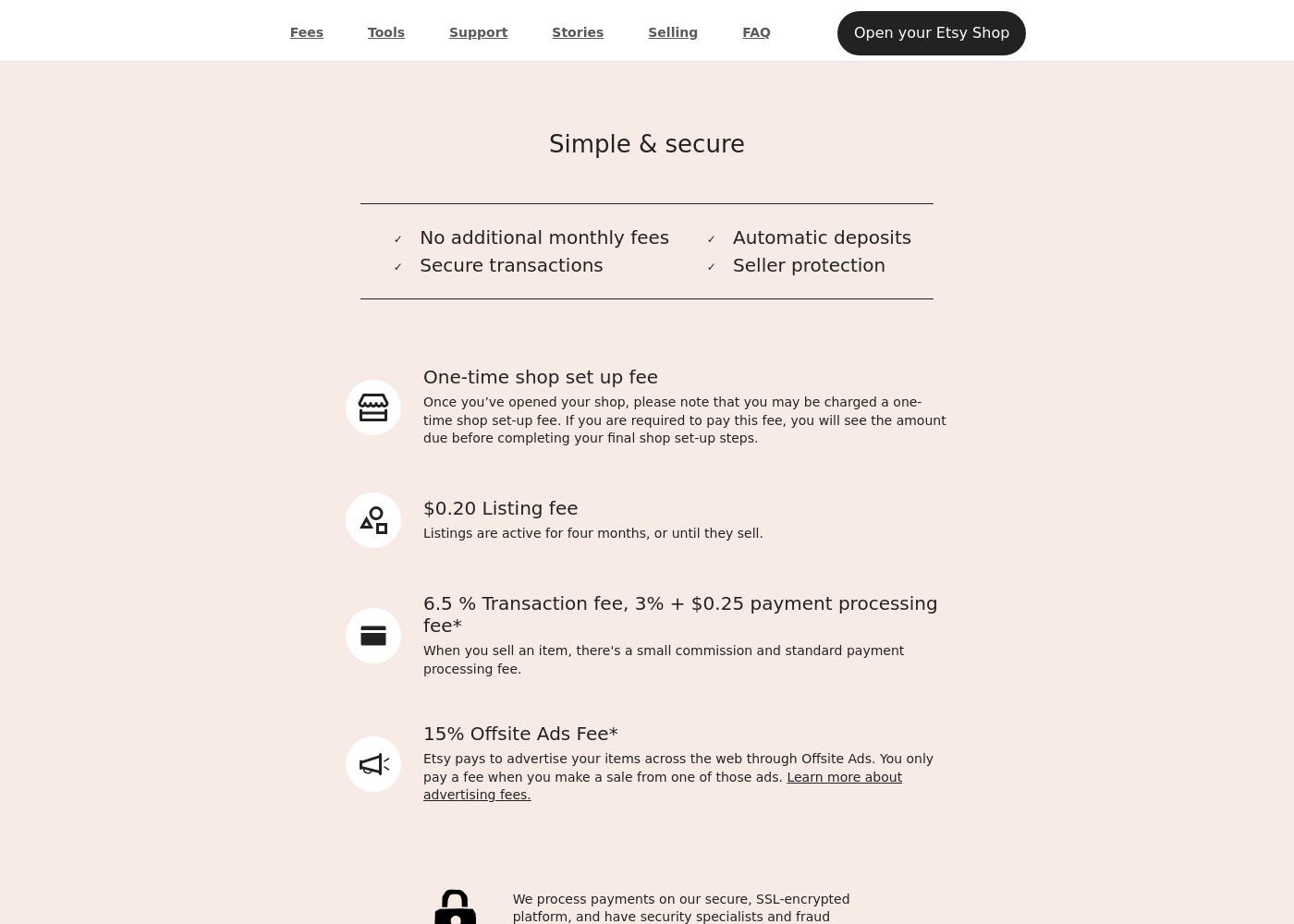
Etsy costs primarily involve fees when you list items or make a sale, with no mandatory additional monthly fees. The minimum fixed fee is $0.20 per listing, and transaction fees start at 6.5% plus a payment processing fee.
To understand how selling on Etsy works, we break down the necessary fees you should expect when setting up your shop and selling products.
Listing Fee
Price: $0.20 per listing Best For: All sellers who want to publish items on the platform Other Features:
- Listings are active for four months
- Fee applies until the item sells
- $0.20 USD per listing
- Active for four months or until sold
- Required to publish item
- 6.5% Transaction fee on sale price
- 3% + $0.25 Payment processing fee
- Only paid upon successful sale
- 15% fee when a sale is generated by an ad
- Etsy handles advertising on major external sites
- Optional for most sellers
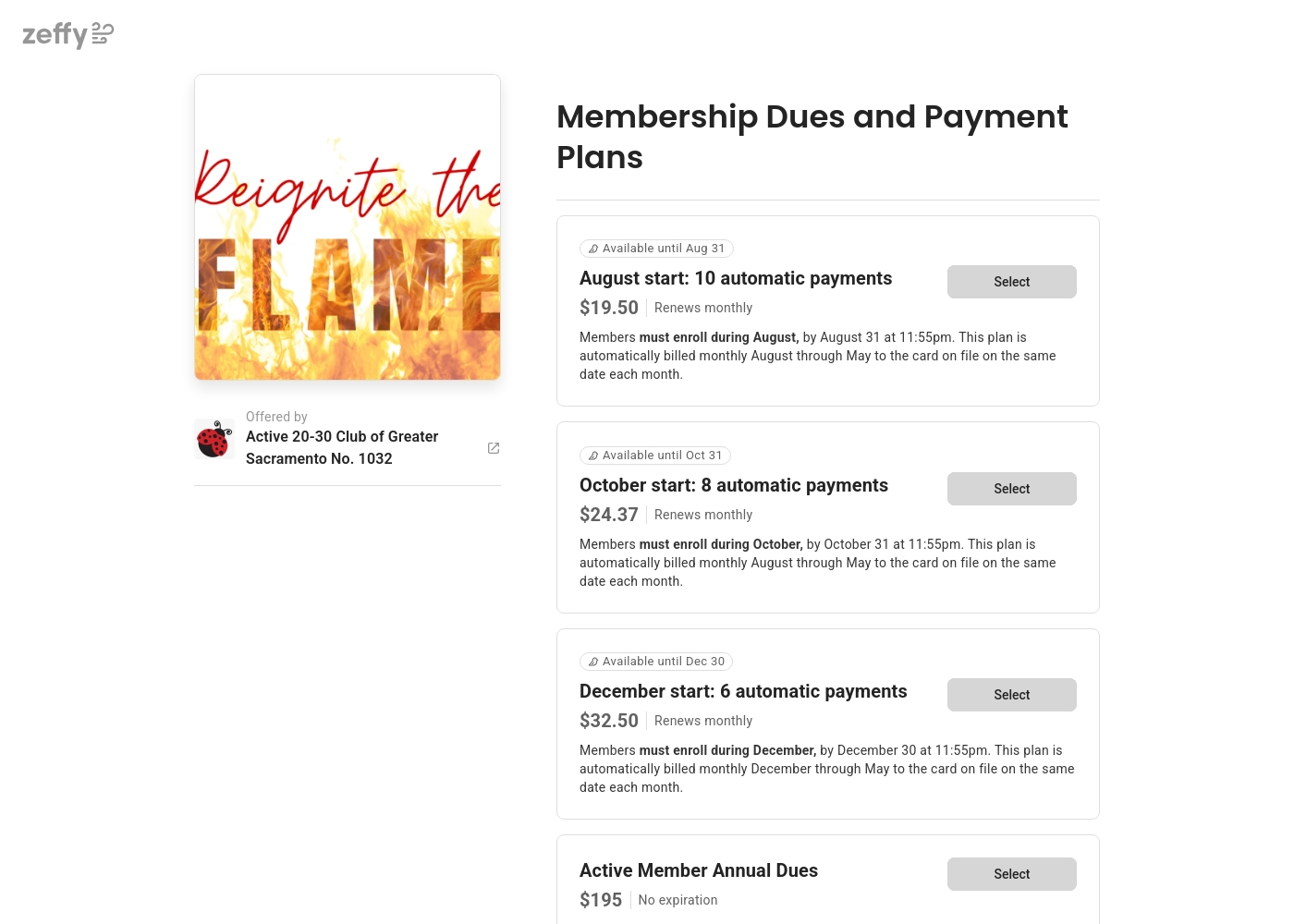
Zeffy pricing: Zeffy is a 100% free fundraising platform with zero platform fees. Organizations can collect donations, sell memberships, and manage events without losing any portion of their revenue to transaction costs or monthly fees.
For the specific Active 20-30 Club membership dues shown, options range from $19.50 per month to a single $195 annual payment, ensuring 100% of the funds support their mission through Zeffy's zero-fee model. This approach relies on voluntary contributions from donors to keep services running for nonprofits and clubs alike.
It's a transparent way to ensure your entire payment goes exactly where it's needed most without hidden charges or administrative overhead. You can choose to pay upfront or spread costs over time while keeping everything simple and fee-free for the organization involved.
Pricing Notes
- Etsy has no free trial or money-back guarantee; fees are purely transactional.
- Zeffy is always free; there are no subscription plans or trials to cancel.
- Etsy's Offsite Ads fee (15%) becomes mandatory for sellers exceeding a sales threshold.
- Zeffy relies on voluntary donor tips for its revenue, not fees from your organization.
Pricing Head-to-Head
User Reviews
The public sentiment regarding Etsy is highly critical, ranking extremely low with a multitude of negative experiences reported by both buyers and sellers. While the core idea of supporting independent creators is valued, the platform’s execution is consistently criticized.
A major theme is the failure of support responsiveness: users find customer service unhelpful, inaccessible, and often described as providing only generic responses. Reliability is another significant issue; many buyers report items arriving late, tracking numbers failing, or not receiving their purchases at all.
My account was permanently banned for absolutely no reason, and they will not specify why. I tried contacting support repeatedly about the suspension, but I only received generic, unhelpful messages in return. It’s frustrating.
External reviews from Trustpilot and Capterra were inaccessible during our review due to security blocks, so we could not analyze user sentiment directly. However, the platform's core promise of zero fees is consistently highlighted in its own marketing and user testimonials we could gather.
Recurring themes from available sources focus on the simplicity and value of keeping 100% of funds, though some users note the donor-funded model relies on optional tips. Support and onboarding appear responsive for many, but like any platform, experiences can vary.
Zeffy has been a game-changer for our nonprofit. We keep every dollar we raise with no hidden fees, which means more funds for our cause. The setup was straightforward and our donors love the experience.
Our Verdict
This isn't a fair fight. Etsy and Zeffy are built for completely different missions. Comparing them is like comparing a farmer's market to a charity fundraiser. Etsy's superpower is its massive, built-in audience. It connects makers of unique, handmade, and vintage goods with millions of shoppers worldwide. If you create something special, Etsy is where you find buyers. Zeffy's superpower is its zero-fee financial model. It lets nonprofits, schools, and community groups keep 100% of every dollar they raise. No platform fees, no transaction cuts. The deciding factor is your goal. Do you want to sell products for a profit? Then Etsy is your marketplace. Do you need to raise money for a cause without losing funds to software fees? Then Zeffy is your partner. For makers and sellers, choose Etsy to access a global marketplace. For nonprofits and community organizers, choose Zeffy to maximize every dollar for your mission.
Frequently Asked Questions
Can I use Etsy to sell products and raise money for my nonprofit?
Etsy is for selling physical goods, not direct fundraising. While you could sell merchandise, you'd pay fees on each sale. Zeffy is designed specifically for nonprofits to raise funds with zero fees.
Which platform is cheaper for selling items?
For selling physical products, Etsy is the only option. Its costs include a $0.20 listing fee plus a 6.5% transaction fee. Zeffy doesn't have a product marketplace model.
Does Zeffy charge any hidden fees?
No. Zeffy is completely free for organizations. It makes money through optional tips from donors, not from fees on your funds raised.
Why is Etsy getting so many negative reviews?
Recent Etsy reviews heavily criticize unhelpful customer support, frequent account suspensions, and issues with unreliable sellers. This has significantly hurt its public rating.
Can a school use Zeffy to sell event tickets?
Yes, absolutely. Zeffy allows schools to sell event tickets with zero fees. You can create different ticket types, bundles, and manage check-in easily.
What is the main reason to choose Zeffy over other fundraising tools?
The main reason is the zero-fee model. Zeffy ensures your nonprofit keeps 100% of donations and ticket sales, which can dramatically increase your net fundraising revenue.
Ready to Choose?
Both tools have their strengths. Choose based on your specific needs.