Etsy vs Gumroad
People often compare Etsy and Gumroad when launching their first products online. Etsy dominates the market for unique, physical, and highly personalized items. Gumroad is the top choice for digital creators selling courses, ebooks, and files. Choosing the right one depends entirely on your product format and audience source.
Best for: Sellers of custom-made jewelry, art, and home decor, Small businesses specializing in vintage or antique items
Best for: Solo entrepreneurs selling digital assets like 3D models or presets, Content creators launching video courses or instructional tutorials
Unique finds, operational headaches.
We recognize Etsy’s powerful concept of offering unique, handmade goods and strong personalization options. However, external reviews reveal chronic operational issues, particularly concerning system stability and customer care responsiveness. Overall, the platform’s valuable market niche is severely undermined by widespread failures impacting key reliability factors for both buyers and sellers.
Pros
- Access to a vast selection of unique, handmade, and vintage items.
- Enables strong product personalization (engraving, embroidery).
- Pricing model uses low listing fees rather than mandatory monthly subscriptions.
- Effective platform for supporting independent and small businesses.
Cons
- Customer support is widely reported as unhelpful, inadequate, or entirely nonexistent.
- Both buyer and seller accounts are frequently suspended without clear reason or explanation.
- High incidence of misleading product listings and scam sellers (poor accuracy).
- Widespread reliability issues concerning delivery, shipping delays, and faulty tracking.
Sell easily, but proceed with extreme caution.
Gumroad offers an accessible, zero-upfront-cost model ideal for creators starting out in the digital space. However, we found the user reports regarding immediate account bans, withheld payments, and severe customer support failures extremely alarming. Overall, we cannot recommend Gumroad due to critical risks concerning financial security and platform reliability.
Pros
- Purely usage-based model with no required monthly subscription fees.
- Fees are lower (10% + $0.50) for creators who drive their own traffic.
- Handles global sales tax and VAT/GST automatically as Merchant of Record (effective 2025).
- Ability to sell various digital and physical formats, including subscriptions.
Cons
- Frequent reports of withholding or delaying creator payouts without explanation.
- Customer support is often described as non-existent or limited to unhelpful chatbots.
- Accounts are frequently suspended or banned abruptly, trapping earned revenue.
- Lack of transparency regarding transaction fees makes actual costs higher than advertised.
AboutEtsy
Etsy is a vibrant online marketplace dedicated to all things distinctive and handmade or vintage. It is where you find items beyond the typical store purchase, ensuring your shopping feels personal. This destination is perfect for shoppers looking for original items, spanning from mugs and home goods to jewellery and apparel. Etsy focuses on delivering gifts as special as the recipient, prioritizing unique craftsmanship. It's a great place to discover essential items tailored to specific hobbies too. 💡
AboutGumroad
Gumroad is an all-in-one platform built to help creative entrepreneurs sell digital and physical products. It helps you experiment with all kinds of ideas and formats, like video lessons or monthly subscriptions. Whether you need more flexibility or just a different gig, Gumroad makes it easy to chart a new path. You don't need to be a tech expert to upload a file, set a price, and start selling your expertise. ✨
Highlights
Feature Comparison
Features Overview
We highlight the main differences and pick a winner for each feature.
Product Format Focus
Etsy is the clear winner for physical, handmade, and vintage goods. Gumroad excels in selling pure digital content and knowledge.
Etsy requires all items to be handmade, designed, or uniquely sourced original products. You'll find unique items from custom jewelry to vintage home decor available on Etsy. The platform offers curated shops focusing on specific interests like Yoga Essentials and Scrapbooking. Gumroad is designed for creative experts selling digital files like video courses, 3D models, or ebooks. Gumroad encourages selling specialized assets that can turn into reliable passive income for creators. They fully support various content formats and subscriptions. The formats are the core difference, defining each platform's entire operational structure. If you ship boxes, use Etsy; if you deliver files, use Gumroad. Gumroad enables you to easily pivot your offerings, moving from a one-time purchase to a recurring subscription model quickly.
Transaction Costs
Etsy offers a better standard transaction rate if you drive your own traffic. Gumroad’s discovery fee is much higher.
Etsy charges a 6.5% transaction fee plus payment processing (3% + $0.25) when an item sells. This rate is competitive for high-volume physical goods sellers. Etsy also requires a small $0.20 listing fee upfront to publish an item for four months. Gumroad's base rate when you bring the customer is 10% plus a fixed $0.50 fee per transaction. Creators are rewarded with this lower fee for self-driven traffic. However, Gumroad charges a very high 30% fee if a customer discovers you via their marketplace. Etsy's overall commission is lower for sellers who already have an established and loyal customer base. The fixed $0.20 listing fee must be considered an operating expense. Gumroad rewards the entrepreneur who understands audience growth, benefiting those who market strongly outside the platform.
Global Tax Compliance
Gumroad simplifies global business by handling all sales tax collection worldwide. Etsy requires sellers to manage this process independently.
Gumroad will act as the Merchant of Record (M.o.R.) starting in January 2025. This means Gumroad handles the complex collection and remittance of worldwide taxes like VAT. Because Gumroad manages M.o.R., creators do not need to worry about confusing tax settings like GST or sales tax. This drastically simplifies selling informational products globally. Etsy leaves tax responsibility to the seller, who must manage compliance across various jurisdictions. The platform does not take on this administrative burden for its vast network of independent shops. Dealing with international tax compliance is a huge logistical headache that Gumroad solves entirely, making global scaling much easier for digital creators.
Account Reliability & Payouts
Both platforms suffer severe and documented issues regarding account bans and fund withholding. Proceed with extreme caution.
Etsy users report frequent account suspensions or bans, often without clear reason or explanation from support staff. Seller funds are sometimes withheld for extended periods, causing financial stress. Customers also report misleading listings or reliability issues regarding shipping. Gumroad has frequent reports of immediately suspending accounts and sometimes trapping earned revenue within the platform. Users also cite security concerns, including suspected credit card fraud after using the platform. Both tools rank extremely low in public reviews because of these serious operational reliability failures. Neither platform protects its sellers well. Gumroad does offer automated payouts every Friday; however, this is meaningless if your account is abruptly suspended or funds are withheld.
Marketplace vs. Customization
Etsy offers massive marketplace visibility; Gumroad offers better integration with your existing external site.
Etsy acts as a massive marketplace where millions of shoppers actively look for specific items. The platform handles offsite advertising on major sites like Google and Facebook. This gives new sellers built-in discovery opportunities. Gumroad allows creators to customize their own storefront extensively or use their existing personal website instead. You can seamlessly connect Gumroad to thousands of external apps in your unique tech stack. This maximizes branding control. Etsy offers strong curated discovery tools, such as seasonal collections and personalized favorites lists. These focus on shopper experience. Gumroad is better for creators who want to build a brand identity independent of the platform's visual design.
Recurring Revenue Tools
Gumroad is built to handle subscriptions and fixed-length payment plans. Etsy focuses entirely on one-off sales.
Gumroad fully supports setting up memberships and recurring subscriptions for content packs or SaaS. This allows creators to build stable, predictable monthly income streams easily. They offer both fixed-length and continuous payment plans. Etsy does not explicitly offer integrated tools for recurring revenue models or monthly memberships. Its business model relies heavily on transactional one-time sales and repeat buyers. The focus is unique product inventory. The ability to launch subscriptions on Gumroad is critical for selling digital content like weekly newsletters or courses. This feature maximizes income potential for digital creators. Etsy's focus on non-recurring transactions aligns with selling unique, vintage, or fully custom physical goods.
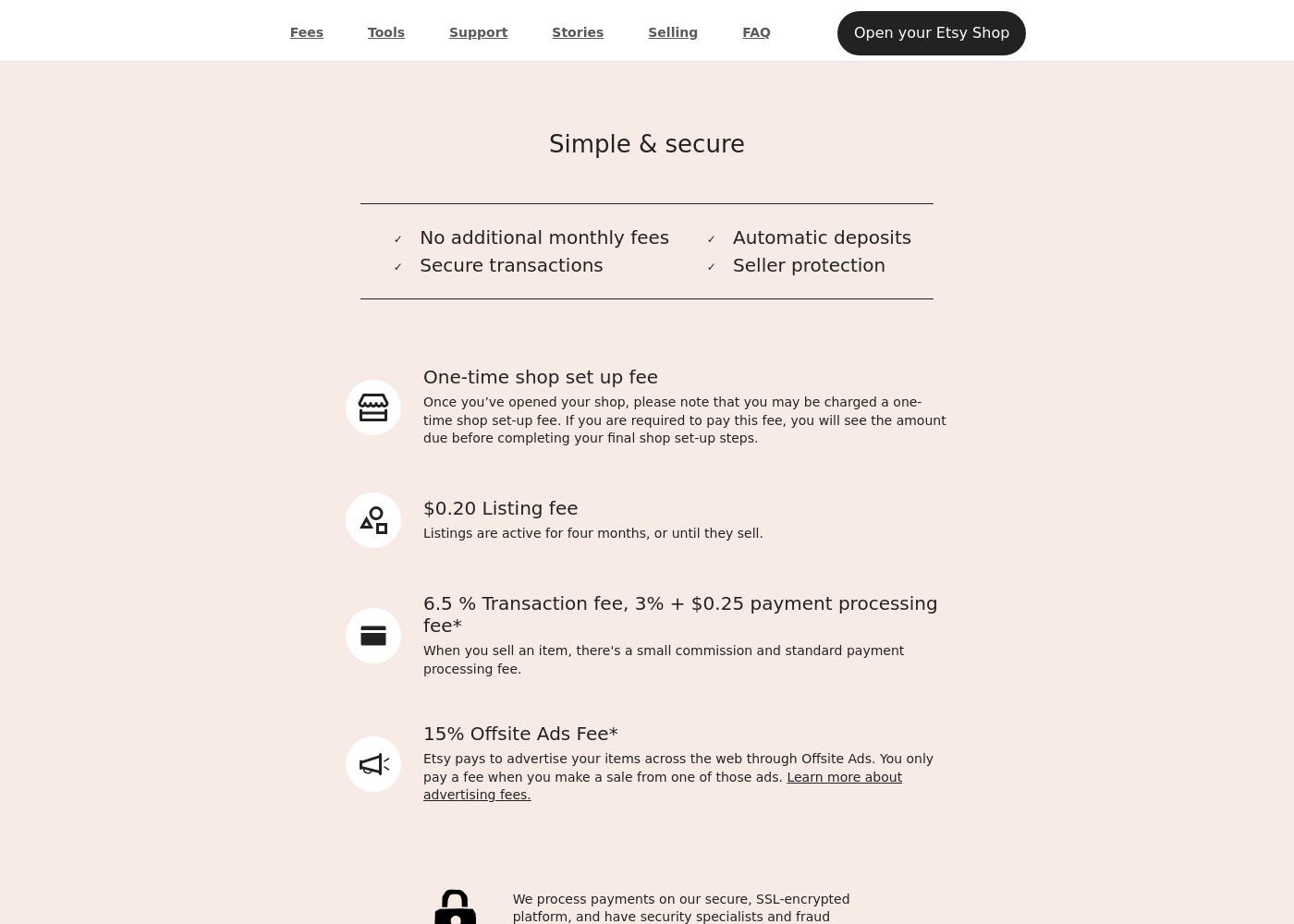
Etsy costs primarily involve fees when you list items or make a sale, with no mandatory additional monthly fees. The minimum fixed fee is $0.20 per listing, and transaction fees start at 6.5% plus a payment processing fee.
To understand how selling on Etsy works, we break down the necessary fees you should expect when setting up your shop and selling products.
Listing Fee
Price: $0.20 per listing Best For: All sellers who want to publish items on the platform Other Features:
- Listings are active for four months
- Fee applies until the item sells
- $0.20 USD per listing
- Active for four months or until sold
- Required to publish item
- 6.5% Transaction fee on sale price
- 3% + $0.25 Payment processing fee
- Only paid upon successful sale
- 15% fee when a sale is generated by an ad
- Etsy handles advertising on major external sites
- Optional for most sellers
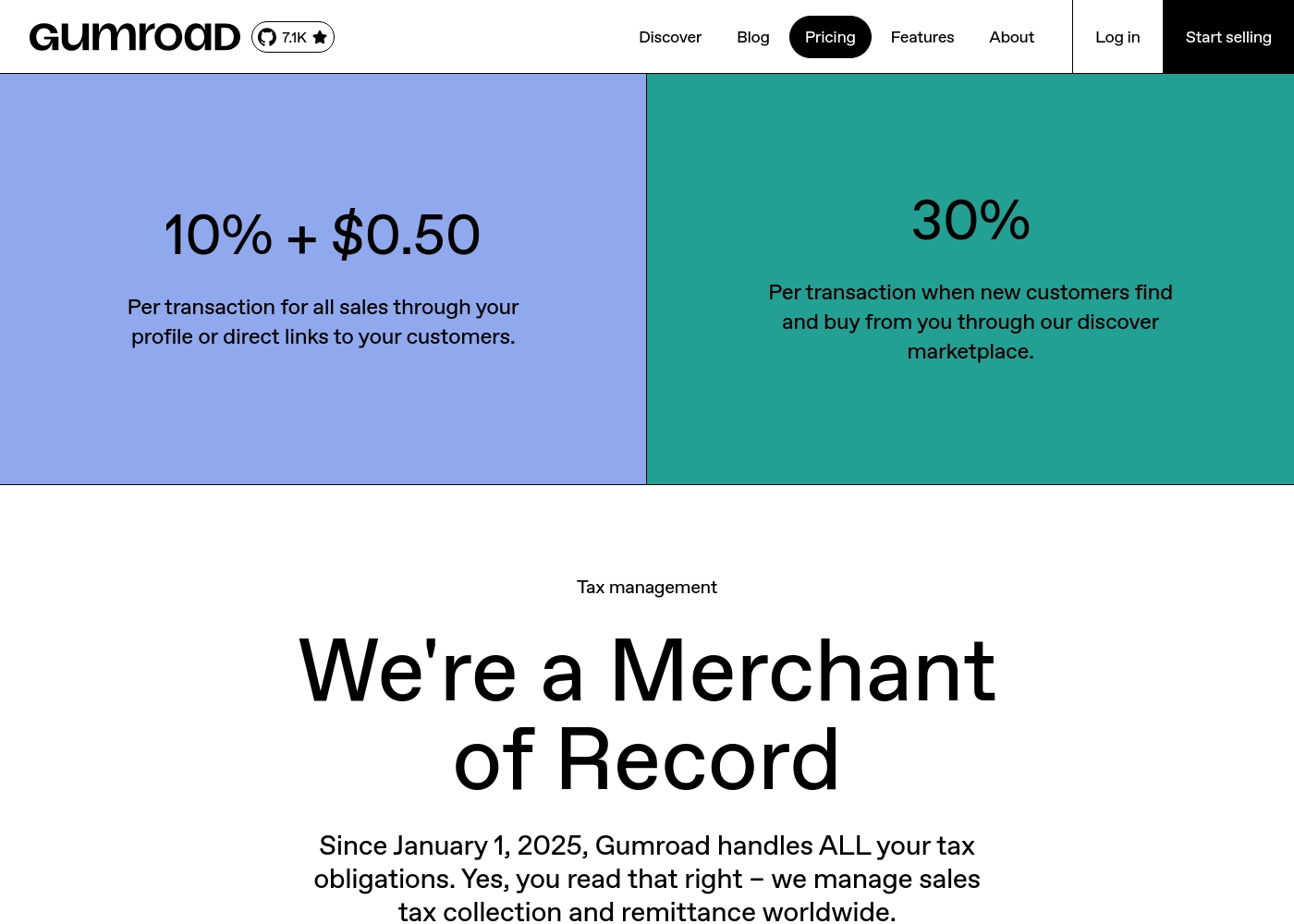
Gumroad pricing is entirely usage-based, costing between 10% + $0.50 and 30% per transaction, with two distinct fee structures.
Gumroad is unique because it doesn't charge any monthly fees. Instead, the cost is tied directly to your sales volume and the source of the customer. You only pay when you make a sale. Here is a breakdown of the two standard transaction-based rates.
Direct Sales and Your Audience
Price: 10% + $0.50 per transaction Best For: Creators who drive their own traffic Other Features:
- 10% + $0.50 per transaction fee
- Applies to sales through your profile
- Applies to sales via direct links to your customers
- Gumroad handles all sales tax collection and remittance (effective Jan 1, 2025)
- Fee Structure: 10% + $0.50 per transaction
- Applicable for sales through your Gumroad profile
- Applicable for sales utilizing direct links to your audience
- Gumroad handles worldwide tax compliance (Merchant of Record)
- Fee Structure: 30% per transaction
- Applicable when new customers find and buy from you via the discover marketplace
- Gumroad handles worldwide tax compliance (Merchant of Record)
Pricing Notes
- Etsy charges a mandatory $0.20 listing fee for every item published, active for four months.
- Etsy's transaction fees start lower (6.5%) but Offsite Ads can cost up to 15% if mandatory for high-volume sellers.
- Gumroad has zero upfront monthly or listing fees; you only pay when you make a sale.
- Gumroad costs 30% if a customer finds your product through their platform's discovery tools.
- Gumroad rewards creators who drive their own traffic with a lower 10% + $0.50 transaction rate.
- Neither Etsy nor Gumroad explicitly advertises a free trial or money-back guarantee for sellers.
Pricing Head-to-Head
User Reviews
The public sentiment regarding Etsy is highly critical, ranking extremely low with a multitude of negative experiences reported by both buyers and sellers. While the core idea of supporting independent creators is valued, the platform’s execution is consistently criticized.
A major theme is the failure of support responsiveness: users find customer service unhelpful, inaccessible, and often described as providing only generic responses. Reliability is another significant issue; many buyers report items arriving late, tracking numbers failing, or not receiving their purchases at all.
My account was permanently banned for absolutely no reason, and they will not specify why. I tried contacting support repeatedly about the suspension, but I only received generic, unhelpful messages in return. It’s frustrating.
Based on hundreds of Trustpilot reviews, Gumroad faces significant and severe criticism, reflected in its extremely low 1.3-star rating. The most pressing complaints revolve around financial instability and user safety.
Many creators report that Gumroad improperly halts or withholds payouts, often suspending accounts without warning or clear explanation after sales have been made, leading users to feel their hard-earned money was stolen. Customer service is consistently described as nearly non-existent; users report only receiving non-helpful chatbot responses, long silences, or even rude replies, failing to resolve critical issues like verification rejections or account bans.
Gumroad used to be trusty, but it’s fallen off. They hold my earnings for months now, skipping payouts because of a 'Payment Hold,' even though my account is verified. This practice is frustrating for long-time users.
Our Verdict
This comparison isn't about which tool is perfect; it’s about which platform carries the least risk for your specific product type. The choice hinges entirely on whether you sell digital files or physical goods. Both Etsy and Gumroad have catastrophic user support and widely reported financial reliability problems. Etsy's superpower is its massive, dedicated marketplace for physical items and unique finds. You get built-in traffic searching for custom pieces, like specialized apparel or vintage home decor. If you ship products, Etsy’s standard 6.5% transaction fee offers better overall value than Gumroad. Gumroad's superpower is its complete flexibility for digital products and its focus on the creator's autonomy. It handles painful global tax compliance (M.o.R. in 2025) and makes recurring income easy. Creators selling ebooks or video lessons benefit hugely from Gumroad's zero upfront fee model. However, the deciding factor must be risk tolerance, not just feature sets. Gumroad users are highly concerned about withheld payouts, while Etsy users report constant misleading listings and arbitrary bans. If your product is physical and customized, use Etsy. If you are launching a global course or digital subscription, Gumroad is the technical choice. If you sell custom mugs and handmade art, use Etsy for the built-in market exposure. If you are selling specialized Procreate brushes and online lessons, Gumroad gives you necessary subscription tools and worldwide tax handling. Choose the platform that aligns exactly with your format.
Frequently Asked Questions
Should I use Etsy or Gumroad if I primarily sell digital art and files?
Choose Gumroad for digital assets like art files, 3D models, or ebooks. Gumroad supports digital file delivery, subscriptions, and automatic global currency payments. Etsy focuses almost entirely on physical, handmade, or vintage products.
Which platform has lower fees for a seller with a large social media following?
Etsy offers a lower percentage commission rate (6.5% + processing) than Gumroad (10% + $0.50). However, Etsy charges a $0.20 listing fee for every item. Gumroad has higher transaction fees but zero fixed upfront costs.
Does Gumroad or Etsy make recurring monthly revenue easier to manage?
Gumroad is the definitive winner for recurring revenue, offering integrated tools for memberships and subscriptions. Etsy’s model is based purely on one-time sales of physical products.
Which platform helps with international sales tax collection?
Gumroad handles all worldwide sales tax and VAT automatically by acting as the Merchant of Record (effective 2025). Etsy sellers must manage complex international tax compliance themselves.
Are there any customer security issues reported for Etsy or Gumroad?
Yes, both have serious security reports. Gumroad users have reported suspected credit card fraud after purchase. Etsy customers report rampant misleading product listings and fulfillment issues.
Can I integrate my existing personal website with Etsy and Gumroad?
You can integrate both platforms with your own site. Gumroad supports robust app integrations for a seamless workflow. Etsy offers tools to create a custom website powered by your shop's inventory.
Ready to Choose?
Both tools have their strengths. Choose based on your specific needs.