DataHawk vs Payhip
DataHawk and Payhip serve very different business needs, making this a unique comparison. DataHawk unifies ecommerce data, while Payhip is a complete selling platform. Choosing depends on whether you analyze performance or sell products online.
Best for: Ecommerce brands selling on Amazon and Walmart, Marketing agencies managing multiple brand analytics
Best for: Solo creators selling digital products like ebooks and templates, Coaches and consultants offering 1:1 sessions or courses
Powerful Analytics, But Opaque Pricing
We see DataHawk as a strong contender for businesses needing a unified, AI-powered view of their ecommerce data. The platform promises to simplify complex analytics. Overall, it appears capable, but the custom pricing model and lack of public reviews are key considerations for potential buyers.
Pros
- Unifies data from multiple marketplaces into one dashboard.
- Includes AI-guided insights to uncover performance opportunities.
- Designed for ease of use, reducing manual data work.
- Scalable platform with features like daily alerts.
Cons
- Pricing is entirely custom and not publicly disclosed.
- Requires booking a demo for any cost information.
- No standard or transparent monthly/annual rates listed.
- Limited public user reviews make independent validation difficult.
Exceptional value for digital creators.
We find Payhip delivers an outstanding value proposition: it eliminates feature-gating across all tiers and handles complex global tax compliance automatically. User feedback consistently validates the platform's ease of use and the quality of its human support staff. Overall, we recommend Payhip highly for anyone selling digital goods, courses, or coaching.
Pros
- Access to all features is included even on the Free Forever plan.
- Customer support is prompt, responsive, and provided by real people.
- Setup is remarkably user-friendly with a clean, easy-to-customize interface.
- Automatically handles complex EU and UK VAT calculation and compliance.
Cons
- Does not permit the sale of Private Label Rights (PLR) products.
- Some specialized functions required by highly ambitious course creators may be absent.
AboutDataHawk
DataHawk is a unified analytics platform for ecommerce. 🎯 It combines data from different sources into one place. The system uses artificial intelligence to help you understand your performance better. It’s designed for ecommerce businesses that want clearer, smarter insights.
AboutPayhip
Payhip is a user-friendly platform designed for creators who want to turn their passion into profit. It makes selling online easy and accessible for everyone. You can create a free, fully customizable website within minutes, with absolutely no coding required ✨. Whether you sell ebooks, software, online courses, or physical inventory, Payhip provides the robust features you need. This platform helps you start, scale, and manage your business effectively, joining over 130,000 trusted creators.
Highlights
Feature Comparison
Features Overview
We highlight the main differences and pick a winner for each feature.
Data Analysis vs. Selling
DataHawk analyzes your existing sales data. Payhip enables you to make sales.
DataHawk is a specialized analytics tool. It connects to marketplaces like Amazon and Walmart. It pulls your sales, ad, and performance data into one unified dashboard. You get AI insights to spot trends. Payhip is an all-in-one selling platform. You create a store, list products, and process payments. It supports digital downloads, courses, coaching, and physical inventory. You handle everything from one dashboard. The key difference is your role. DataHawk helps you understand performance. Payhip helps you generate performance. If you sell on marketplaces, DataHawk is for you. If you sell directly to customers, Payhip is for you.
Ease of Use
Payhip is famously simple. DataHawk requires a sales demo to get started.
Payhip emphasizes effortless setup. Users praise its clean, intuitive interface. You can create a store in minutes with no coding required. The learning curve is very gentle. DataHawk's onboarding is custom. You must book a demo to discuss your needs. Setup involves guided data mapping and integration. The platform aims to be straightforward once configured. Payhip wins for immediate, self-serve simplicity. DataHawk's process is more involved but tailored to complex data needs. If you want to start selling in 10 minutes, choose Payhip.
Pricing & Transparency
Payhip offers clear, tiered pricing from $0 to $99. DataHawk's pricing is custom and hidden.
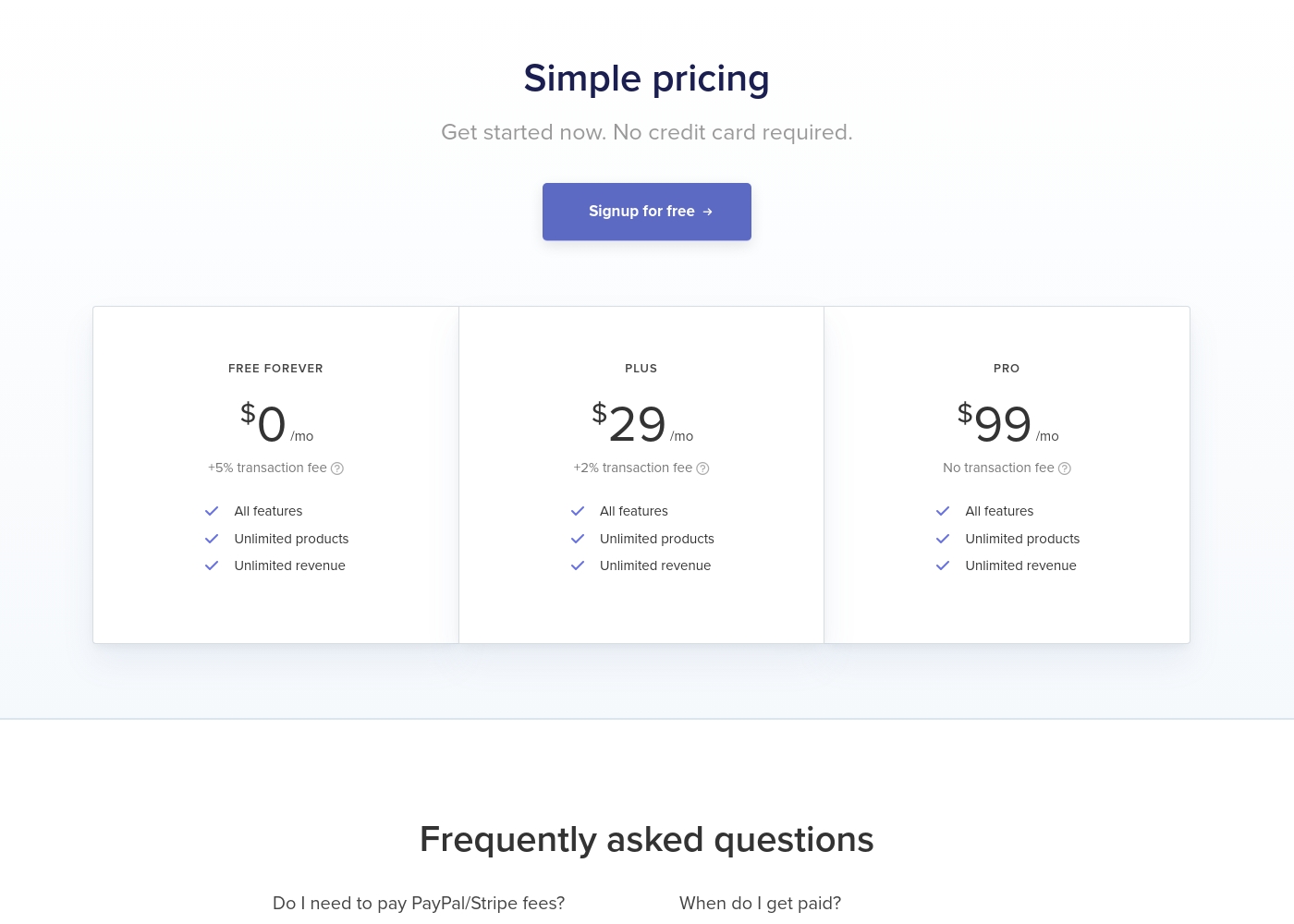
Payhip's pricing is public and simple. The Free Forever plan has no monthly cost. You pay a 5% transaction fee. Upgrading to Plus ($29/mo) drops the fee to 2%. Pro ($99/mo) eliminates it. DataHawk uses custom annual pricing. There are no public monthly rates. You need a demo to get a quote. Pricing depends on your analytics depth and marketplace scale. Transparency is the big difference. Payhip's costs are predictable. DataHawk's are opaque. If you need to budget precisely, Payhip is the clear choice.
AI & Insights
DataHawk provides AI-powered insights. Payhip focuses on selling features, not AI analytics.
DataHawk's core strength is AI. It uses artificial intelligence to analyze your data. It uncovers performance opportunities and patterns you might miss. This guides smarter decisions. Payhip does not emphasize AI analytics. Its features focus on selling, marketing, and compliance. The platform handles taxes and payments, not data analysis. DataHawk is the better tool if you want data-driven guidance. Payhip is the better tool if you need to create and sell products directly.
Customer Support
Payhip is known for exceptional 24/7 support. DataHawk's support is tied to sales consultations.
Payhip offers 24/7 professional support. User reviews consistently praise the team. They are responsive, helpful, and provide personalized solutions. Many issues are solved within 24 hours. DataHawk's support appears focused on sales and onboarding. You interact with their team during demos and setup. Ongoing support terms are part of your custom contract. For quick, reliable help, Payhip is the winner. DataHawk's support is more consultative and less publicly documented.
Integration Ecosystem
DataHawk integrates with Amazon and Walmart. Payhip integrates with Zoom and Calendly.
DataHawk connects to major marketplaces. Amazon and Walmart are key integrations. It consolidates data from these sources. This is crucial for marketplace sellers. Payhip's integrations serve creators. It works with Zoom and Calendly for coaching. It embeds onto existing websites. It handles its own checkout and payments. The ecosystems serve different goals. DataHawk's integrations are for data analysis. Payhip's integrations are for selling and service delivery.
Product Versatility
Payhip sells almost anything you can imagine. DataHawk is a data tool, not a selling platform.
Payhip allows you to sell digital files, courses, coaching, memberships, and physical inventory. There are unlimited products and revenue on all plans. This covers a vast range of business models. DataHawk does not sell products. It analyzes sales data from marketplaces. It's a performance tool, not a storefront. Its value comes from the insights it provides. If you need to sell a product, Payhip is the only option here. DataHawk helps you understand the sales you've already made.
Scalability
DataHawk scales with custom enterprise plans. Payhip scales with unlimited products and revenue.
DataHawk is built for scale. It's designed for brands and agencies. Custom plans accommodate growing data needs. It aims to be a long-term partner. Payhip scales easily for creators. All plans offer unlimited products and revenue. You can grow from a free plan to the Pro plan. The platform grows with your sales volume. Both handle growth, but differently. DataHawk scales through custom contracts. Payhip scales through transparent plan upgrades and unlimited usage.
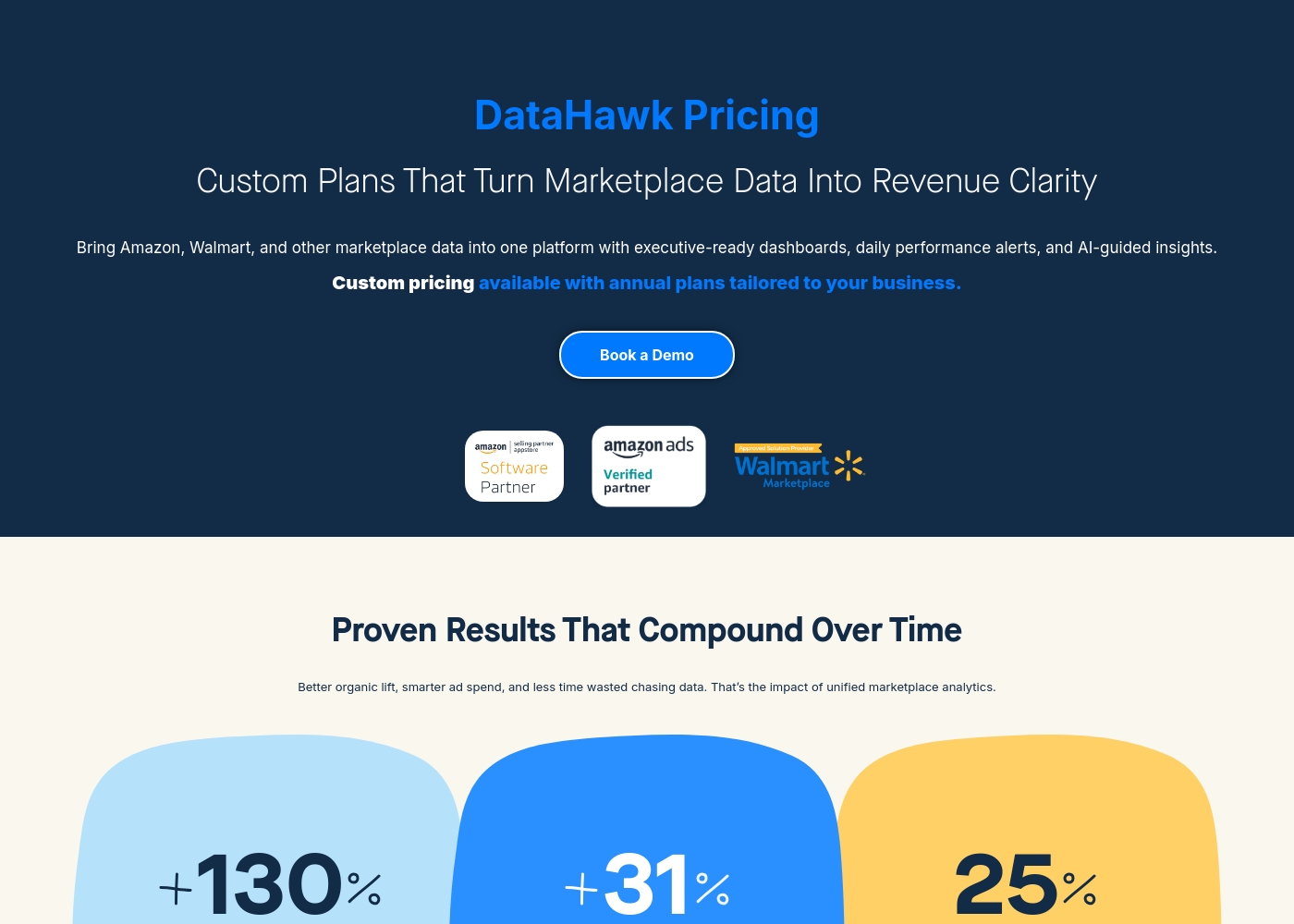
DataHawk pricing: DataHawk offers custom pricing models tailored specifically to your business needs and marketplace scale. Instead of flat fees, they provide annual plans based on the depth of analytics and connectivity required for your eCommerce operations Explorer dashboards and AI insights included everywhere. 🚀
Custom
Websites Supported: Amazon, Walmart, and other marketplaces Best For: Brands and agencies needing unified marketplace analytics and automated reporting Other Features: Executive-ready dashboards, Daily performance alerts, AI-guided insights, Amazon Ads partner verification, Walmart Marketplace integration
This plan is perfect for growing businesses that have outgrown manual spreadsheets. It brings multiple marketplace data sources into one clean view so you can focus on strategy rather than data cleaning. You get professional-grade tools regardless of your technical background.
Payhip costs between $0 and $99 per month with three plans: Free Forever at $0/month, Plus at $29/month, and Pro at $99/month.
Here are the details for each tier available through Payhip's simple pricing structure.
Free Forever
Price: $0/mo Best For: Creators starting out Other Features:
- 5% transaction fee
- All features included
- Unlimited products
- Unlimited revenue
- All features
- Unlimited products
- Unlimited revenue
- All features
- Unlimited products
- Unlimited revenue
- All features
- Unlimited products
- Unlimited revenue
Pricing Head-to-Head
User Reviews
We found that user sentiment on Trustpilot and Capterra is currently inaccessible due to technical blocks (CAPTERRA returns a 403 error, and Trustpilot requires browser verification). This means we cannot synthesize specific recurring themes like accuracy, ease of use, support, pricing, or onboarding from live reviews at this time. We advise checking the review platforms directly for the latest user feedback.
Payhip receives exceptional feedback for its comprehensive and user-friendly platform, consistently praised across hundreds of reviews. A key draw is the transparent and affordable pricing structure, particularly the powerful Free Forever plan, which allows new creators to start selling digital products without a significant monthly subscription burden.
Users frequently commend the platform's ease of use and simple setup, noting that customization is straightforward and quick, making the onboarding process effortless. However, the most universally lauded aspect is the customer support.
This is a great resource for people entering the online business space with digital products. The platform is well designed, remarkably user friendly, and immediate to launch. The variety of page templates makes getting started really simple and stress-free.
Our Verdict
This comparison is a bit like comparing a car's dashboard to a car dealership. DataHawk is the sophisticated analytics dashboard that helps you understand your performance. Payhip is the complete dealership that lets you build and sell your car. DataHawk's superpower is unified data. It pulls everything from Amazon and Walmart into one place. It uses AI to find insights you'd miss otherwise. This is perfect if your problem is fragmented data and manual reporting. Payhip's superpower is accessible selling. It lets anyone create a store, sell products, and handle taxes in minutes. Its free plan is powerful. This is perfect if your goal is to launch a business or sell a digital product. The deciding factor is your primary need. Do you sell on marketplaces and need to analyze that data? Choose DataHawk. Do you sell directly to customers and need a storefront? Choose Payhip. Final verdict: DataHawk is for brands analyzing performance on Amazon and Walmart. Payhip is for creators and businesses selling digital products, courses, or services. They solve different problems, so pick the one that matches your actual workflow.
Frequently Asked Questions
Which is better for small teams: DataHawk or Payhip?
Payhip is generally better for small teams. Its free plan and simple setup are ideal for startups. DataHawk is designed for brands and agencies needing unified analytics, which may be overkill for a small team.
Does DataHawk have a free trial like Payhip?
No, DataHawk does not offer a public free trial. You must book a demo for pricing and may discuss a proof-of-concept. Payhip, however, offers a Free Forever plan with no time limits.
Can I sell products on DataHawk?
No, DataHawk is an analytics platform, not a selling platform. It analyzes sales data from marketplaces like Amazon. For selling products directly, you would need a tool like Payhip.
Is Payhip worth the extra cost over DataHawk?
This depends on your goal. If you need to sell products, Payhip's free plan is excellent. If you need to analyze marketplace sales data, DataHawk's custom pricing may be worth it. They serve different purposes.
How does DataHawk handle taxes like Payhip?
DataHawk is not a selling platform, so it does not handle tax compliance. Payhip automatically handles digital EU and UK VAT for its sellers. DataHawk's focus is on analytics, not payments or taxes.
Can I integrate Payhip with my existing website?
Yes, Payhip allows you to embed its checkout and store features onto any existing website. This is a key feature for creators who want to add e-commerce without rebuilding their site.
Ready to Choose?
Both tools have their strengths. Choose based on your specific needs.