Awkward Styles vs Spreadshirt
Awkward Styles and Spreadshirt are top contenders for merchandise sellers. Awkward Styles targets serious scaling and advanced branding options. Spreadshirt offers a zero-cost, risk-free entry point ideal for new designers. Your choice depends on your current business size and financial commitment comfort.
Best for: Established e-commerce businesses running Shopify or Etsy stores, High-volume sellers (500+ orders daily) requiring logistics and warehousing support
Best for: Artists and designers starting out who need a zero-cost entry point, Sellers prioritizing maximum exposure via a large, existing marketplace audience
Strong features, unreliable error correction.
We find Awkward Styles integrates powerful fulfillment technology with flexible pricing, including a permanent free tier. While product quality and value are frequently praised, significant production accuracy and slow support responsiveness issues are major concerns for merchants. Overall, we recommend approaching with caution due to the reported operational unreliability regarding reprints and placement.
Pros
- Access to a permanent Free plan for new merchants.
- Consistently high quality across products with vibrant prints.
- Good for high-volume orders and reliable reorder fulfillment.
- Offers white-label features (custom packaging) for brand integrity.
Cons
- Customer support takes too long to respond (2–3 day wait times).
- Frequent issues reported regarding production accuracy (placement/color).
- Process for correcting misprints and errors is ineffective and frustrating.
- Users report difficulty canceling or rerouting 'processing' orders.
Always Free, High Volume, Mixed Quality
We find that Spreadshirt offers an attractive, risk-free entry point for designers due to its entirely free platform model and strong commitment to review verification. While users appreciate the customization tools and material quality, recurring feedback points to some notable inconsistencies in sizing and print execution that sellers should consider. Overall, Spreadshirt is an excellent, high-volume platform perhaps best suited for those prioritizing cost and speed over achieving flawless print consistency on every single order.
Pros
- Completely fee-free and risk-free platform for designers and shop owners.
- High quality and durability reported for base apparel materials.
- Extensive customization options using an easy-to-use configurator.
- Strong platform commitment to transparent, verified customer feedback.
Cons
- Inconsistent print quality noted (e.g., streaks, color inaccuracy, or grainy textures).
- Apparel sizing sometimes runs large or is inconsistent across items.
- User experience issues encountered during account setup and log-in processes.
- Packaging occasionally fails to protect items fully from weather damage during shipping.
AboutAwkward Styles
Awkward Styles acts as your comprehensive fulfillment partner for custom merchandise. The service is purpose-built for creators and entrepreneurs who need robust, seamless ways to scale their product offerings. They expertly manage the entire logistics chain, ensuring consistent quality from printing to final delivery. This flexibility allows brands to offer a wide array of goods without holding inventory themselves. 💡
AboutSpreadshirt
Spreadshirt is a brand committed to solid customer communication and feedback integrity. They keep customers informed using regular updates sent straight to your inbox. 💡 You will hear about new product offers, discount campaigns, and even exclusive competitions this way. Crucially, they manage customer reviews with a strong commitment to verification. This helps you trust the overall quality rating you see.
Highlights
Feature Comparison
Features Overview
We highlight the main differences and pick a winner for each feature.
Platform Cost
Spreadshirt is 100% zero-cost; Awkward Styles requires a subscription for scaling benefits.
Awkward Styles offers a permanent free tier to get started easily. Scaling merchants must pay $25/month for the Pro subscription tier. Paid Awkward Styles plans include discounts on blank goods and branding options. Spreadshirt is consistently 'Always free' and 'Fee-free' for all designers. There are zero upfront costs or subscription fees ever to worry about. This risk-free model makes Spreadshirt ideal for testing new design ideas. If budget is your priority, Spreadshirt provides maximum value for free.
Branded Fulfillment
Awkward Styles excels at white-label services; Spreadshirt focuses on generic fulfillment.
Awkward Styles heavily emphasizes total brand integrity for clients. They offer tag relabeling, flyer insertion, and custom packaging options. Pro users on Awkward Styles get a 50% discount on these valuable branding services. Spreadshirt provides standard fulfillment but details no advanced white-label features. If a premium, custom customer experience is vital, Awkward Styles is the better choice.
Scaling Infrastructure
Awkward Styles is built for massive growth; Spreadshirt is best for individual designers.
Awkward Styles offers a specialized Pro+ plan for extreme volume merchants. This tier supports 500+ orders daily and provides dedicated account management. Awkward Styles also offers optional warehousing services on their high-end plan. Spreadshirt handles high volume through its platform but lacks enterprise logistics services. Awkward Styles provides the infrastructure necessary to automate heavy API-driven e-commerce fulfillment.
Market & Traffic
Spreadshirt gives instant traffic; Awkward Styles relies solely on your external stores.
Spreadshirt lets designers sell directly through their high-traffic Marketplace. Listing designs there provides instant visibility to thousands of shoppers. Awkward Styles is a fulfillment partner that integrates with your store. You must drive traffic to your external Shopify or Etsy shop yourself. For quick, passive exposure, Spreadshirt’s Marketplace is a key advantage.
Print Accuracy
Awkward Styles struggles with placement errors; Spreadshirt faces issues with grainy textures and color.
Awkward Styles users frequently report issues with incorrect logo placement or color deviations. The process to correct misprints with Awkward Styles is often cited as frustrating and ineffective. Spreadshirt sometimes receives complaints about prints being grainy or colors lacking full saturation. Both platforms handle print quality well, but execution struggles appear common for both. For reliable results, both tools have operational consistency risks.
Customer Support
Spreadshirt's support is generally quicker; Awkward Styles users report significant response delays.
Awkward Styles users commonly wait 2 to 3 days for a response regarding production issues. This slow turnaround time severely impacts business operations for merchants. Spreadshirt customer service receives mixed reviews but is generally reported as responsive and helpful. Awkward Styles offers premium Slack support for its high-paying Pro+ members. Unless you are Pro+, expect latency and frustration from Awkward Styles support.
Integration Capability
Awkward Styles integrates deeply with external stores; Spreadshirt uses a proprietary system.
Awkward Styles provides deep API integration with platforms like Shopify and WooCommerce. Its paid plans allow connecting up to 12 stores for seamless fulfillment workflow. Spreadshirt offers its own internal Spreadshop system, not external integrations. Awkward Styles is required if you are already invested in major external e-commerce platforms.
Review Integrity
Spreadshirt verifies reviewers are buyers; Awkward Styles makes no explicit verification claims.
Spreadshirt proudly ensures that only confirmed buyers can leave product reviews. They also verify the authenticity of all written feedback before publication. This provides high confidence in Spreadshirt’s overall 4.1-star rating. Awkward Styles does not detail a formal review verification process. If integrity and verified sentiment matter, Spreadshirt is the winner.
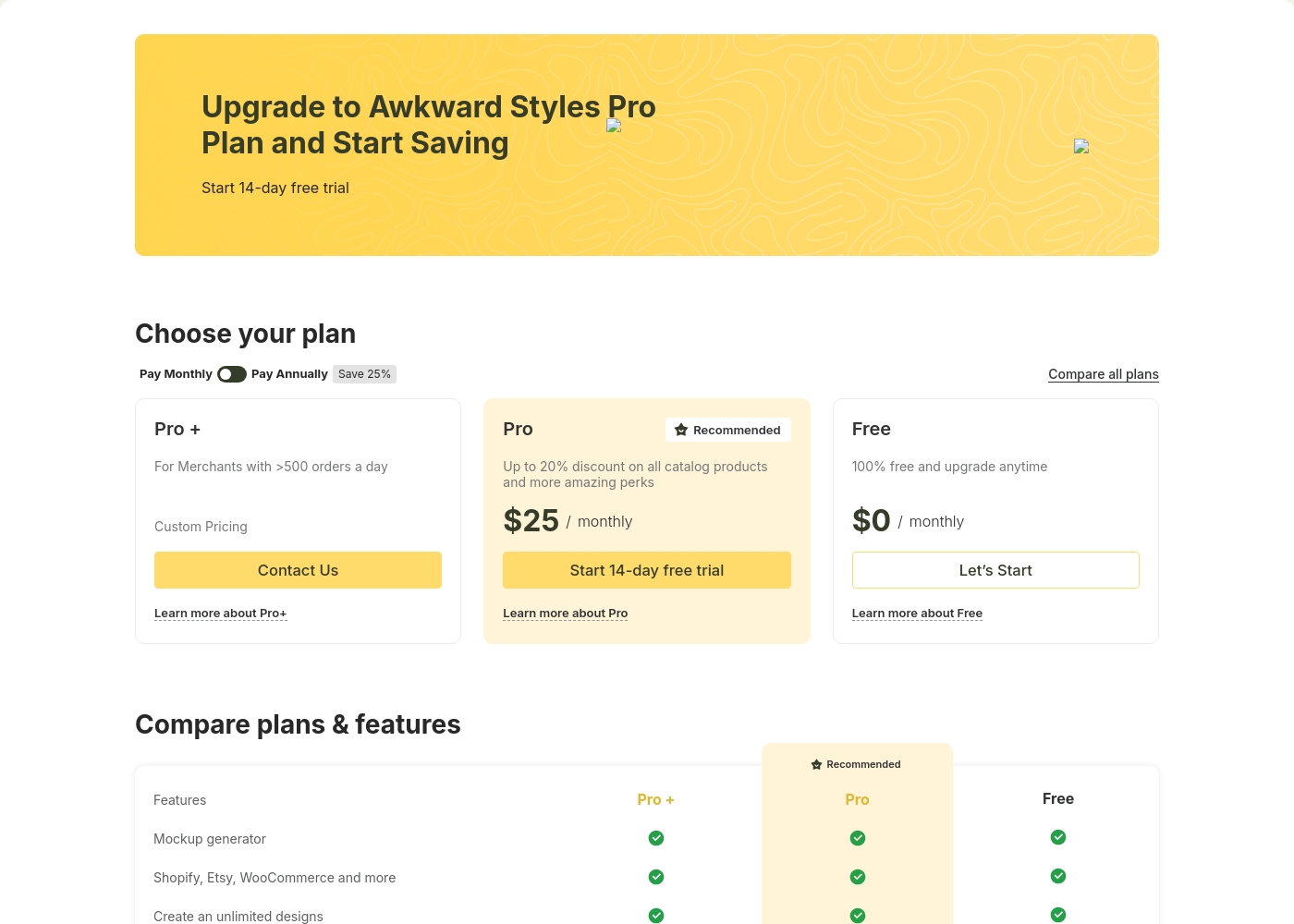
Awkward Styles costs between $0 and $240 annually with 3 plans: Free at $0 (monthly), Pro at $240 (yearly), and Pro+ (Custom Pricing).
Here’s a look at the specific features and benefits included in each available plan.
Free
Price: $0 monthly Websites Supported: 5 Online stores Best For: New merchants and small stores Other Features:
- Mockup generator
- Access to a design library
- Up to 20% discount on all catalog products
- Integrates with Shopify, Etsy, and WooCommerce
- Mockup generator
- Create unlimited designs
- 24/7 customer support
- Access to a design library to create product
- Up to 20% discount on all catalog products
- All Free plan features included
- Up to 20% discount on all catalog products and more amazing perks
- 50% discount on branding option
- Up to 30% discount on blank product
- Early access to new features
- Designed for Merchants with >500 orders a day
- All Free plan features included
- Volume Discount Available (Terms apply)
- Dedicated account manager
- Warehousing service, Slack message support
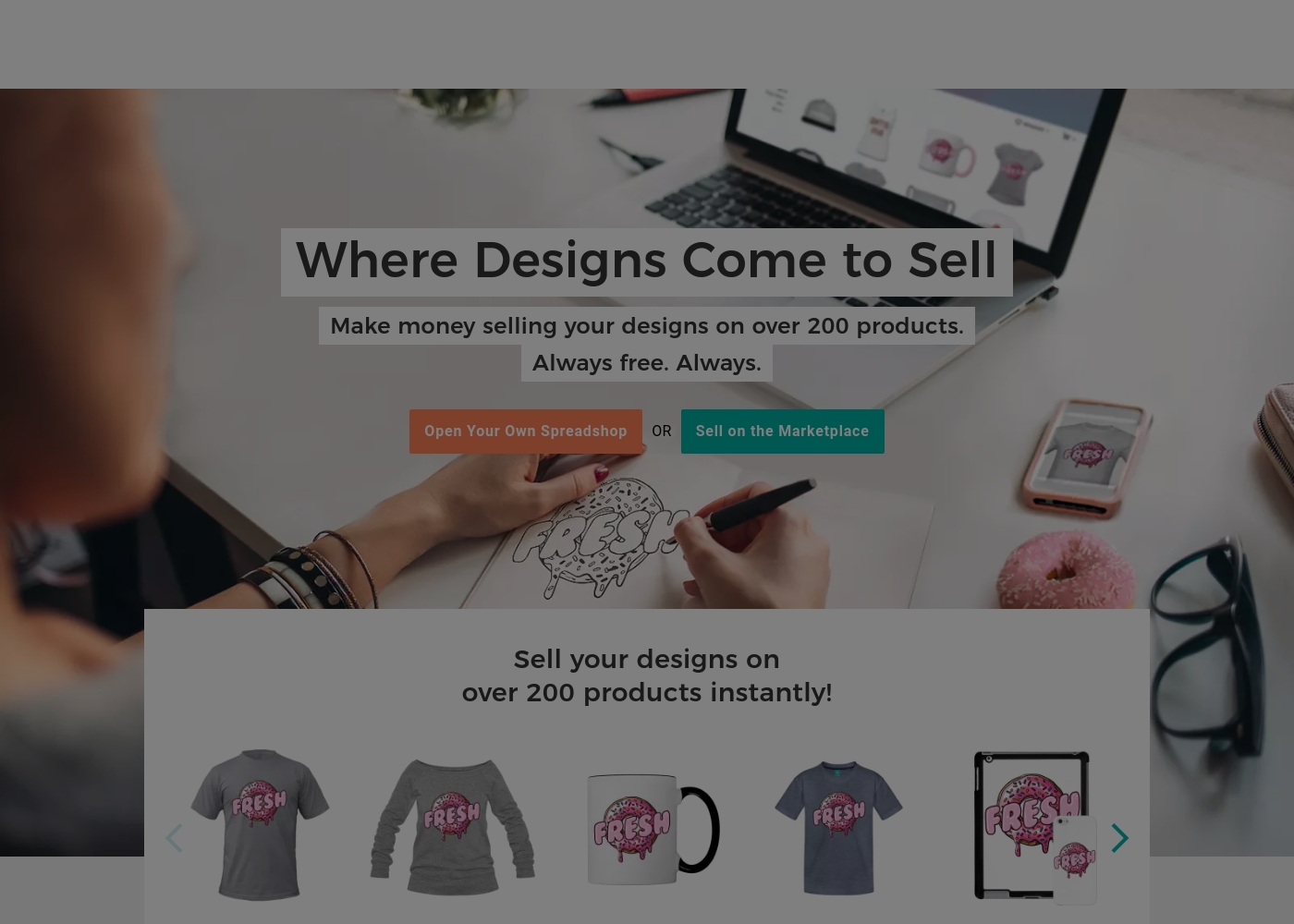
Spreadshirt is always free to use, offering two main ways to sell: Open Your Own Spreadshop and Sell on the Marketplace.
Spreadshirt lets you start selling immediately on over 200 products without worrying about platform fees. The process is designed to be risk-free and stress-free from the start.
Open Your Own Spreadshop
Price: Always free Best For: Building a dedicated brand storefront Other Features: Fee-free, Risk-free, Stress-free, Sell designs on over 200 products instantly
- Establish a dedicated brand storefront (Spreadshop)
- Sell designs on over 200 products instantly
- Fee-free, risk-free selling
- Stress-free platform use
- List designs directly on the Spreadshirt Marketplace
- Make money selling your designs on over 200 products
- Fee-free, risk-free selling
- Stress-free platform use
Pricing Notes
- Spreadshirt offers a permanent fee-free platform, eliminating all subscription costs.
- Awkward Styles offers a 14-day free trial on the Pro plan ($25/month) for advanced features.
- Awkward Styles Pro subscribers receive up to 50% off branding options and 30% off blank products.
- The highest Awkward Styles tier (Pro+) requires custom pricing for merchants handling 500+ daily orders.
- Awkward Styles users have reported frustration with unclear pricing currency (USD vs. international).
Pricing Head-to-Head
User Reviews
Awkward Styles has a mixed user sentiment, reflected in its 3.5-star rating on Trustpilot, based on 38 reviews. Many long-time users praise the consistent product quality—citing vibrant prints, soft fabrics, and an excellent price-to-quality ratio.
They are reported to be reliable for bulk orders and reorders, often delivering fast turnaround times, even during busy periods. However, recurring negative feedback points to significant struggles with production accuracy and customer support responsiveness.
I’ve been using Awkward Styles for over three years now. They’ve consistently delivered quality and reliability in fulfillment. Their prices remain some of the best for popular apparel, which helps me keep my store affordable for customers.
Spreadshirt maintains a "Great" 4.1-star rating based on over 16,000 Trustpilot reviews. Users frequently praise the high quality and comfort of the base apparel materials, noting the products feel durable and superior to what some competitors offer.
The extensive customization options and an easy-to-use design configurator are consistently highlighted as strengths. However, feedback concerning execution and logistics is notably mixed.
Shirts arrived and the designs seem to be printed well; they survived the first wash without any issues. The price was good for no minimum per design, saving us time on setting up our own screen prints. It offers great convenience and value.
Our Verdict
Awkward Styles and Spreadshirt both enable great merchandise businesses, but they serve different needs. Spreadshirt is completely free and gets you instant traffic exposure. Awkward Styles demands a subscription but unlocks high-end scaling and branding features. Ultimately, Spreadshirt is the clear winner for most designers starting out. Awkward Styles’ superpower is handling operations for massive e-commerce scale. If you run a high-volume Shopify store, the Pro+ plan is essential. You get deep API integration, warehousing, and crucial white-label options. Awkward Styles helps major brands maintain total integrity in their delivery experience. Spreadshirt’s strength is its guaranteed zero-cost, zero-risk entry point for artists. You start selling instantly through their Marketplace, gaining immediate audience exposure. Spreadshirt also boasts better overall user sentiment and review integrity. It’s perfect for testing new products without heavy financial investment. The deciding factor is your business structure and expected volume. If you need flawless, custom packaging across multiple stores, Awkward Styles delivers, despite its support issues. If you are a risk-averse designer focused on maximizing free distribution, Spreadshirt is unbeatable. Choose Spreadshirt for low overhead and quick market entry, or Awkward Styles for enterprise-level scaling.
Frequently Asked Questions
Which platform is truly free: Awkward Styles or Spreadshirt?
Spreadshirt is 100% always free, charging no monthly or usage fees whatsoever. Awkward Styles offers a permanent Free plan but charges $25/month for scaling features. To access enterprise logistics, you must pay for Awkward Styles Pro or Pro+.
Is Awkward Styles better than Spreadshirt for high-volume sellers?
Yes, Awkward Styles is superior for high volume growth. Its Pro+ plan specifically targets merchants doing 500+ orders daily. Awkward Styles provides warehousing services and a dedicated account manager at that enterprise level.
Does Spreadshirt offer white-label branding like Awkward Styles?
No, Awkward Styles explicitly offers advanced white-label services for premium branding. This includes custom packaging, tag relabeling, and flyer insertion. Spreadshirt does not prominently feature these detailed brand integrity options.
How do the customer reviews compare between Awkward Styles and Spreadshirt?
Spreadshirt has a significantly better rating (4.1 stars) and higher volume of positive reviews. Awkward Styles has a lower score (3.2 stars) due to recurring complaints about slow support. Spreadshirt verifies all customer feedback for authenticity.
Which tool is better for direct sales exposure and getting fast traffic?
Spreadshirt is superior for direct exposure and fast traffic results. You can list products on the highly-trafficked Spreadshirt Marketplace instantly. Awkward Styles only acts as a fulfillment engine for your separate external store.
Can I easily integrate Awkward Styles or Spreadshirt with Shopify?
You can integrate Awkward Styles seamlessly with Shopify, Etsy, and WooCommerce via API integration. Spreadshirt uses its own internal shop system (Spreadshop) and is not designed for external platform integration.
Ready to Choose?
Both tools have their strengths. Choose based on your specific needs.