AutoDS vs Cymbio
AutoDS and Cymbio target radically different types of e-commerce sellers. AutoDS is an affordable, all-in-one dropshipping toolkit for individuals and startups. Cymbio is an expensive, custom enterprise solution for established brands scaling across global marketplaces. The decision hinges entirely on your business complexity and operational volume.
Best for: Solo entrepreneurs launching their first dropshipping store on Shopify or eBay., Sellers needing automated order fulfillment and tracking for under 1,000 products.
Best for: Established brands needing to launch in 100+ new global marketplaces rapidly., Enterprise organizations requiring complex EDI/API or SFTP integration support.
Essential Automation for Scaling Dropshippers
We find AutoDS delivers exceptional value as an all-in-one dropshipping tool designed to automate complex, time-consuming tasks. It successfully streamlines essential operations like fulfillment, monitoring, and sourcing, allowing entrepreneurs to prioritize scaling and research. Overall, AutoDS is a highly reliable and indispensable platform for any serious dropshipper, backed by strong user sentiment.
Pros
- Comprehensive dropshipping automation (fulfillment, importing, monitoring).
- Highly praised and responsive customer support team.
- The Auto-Ordering system reliably automates order fulfillment and tracking updates.
- Excellent user interface and easy setup, especially helpful for beginners.
Cons
- Reported confusion concerning the pricing structure of AutoDS Marketplace products.
- Isolated reports of extended initial wait times for customer support responses.
- Potential billing confusion related to trial sign-ups defaulting to unexpected annual charges.
- Users occasionally need support intervention to resolve inventory synchronization issues.
AI automation for enterprise marketplace scaling.
Cymbio is an enterprise-grade platform specializing in high-volume, fully automated marketplace and dropship management. We find the feature set, including AI-powered financial reconciliation and rapid integrations across 1000+ marketplaces, highly appealing for large brands. Overall, the system seems built for complex scaling, but we note the non-transparent pricing structure and the near-total absence of verifiable third-party user feedback.
Pros
- Designed specifically for enterprise scale and high-volume operations.
- Fully automated, AI-powered Marketplacing™ Platform.
- Instant access to over 1000 global marketplace connections.
- Promises 'Rapid Go-Live' integrations within days.
Cons
- Pricing requires a custom quote; no transparent plans are published.
- No free trials or fixed pricing information are publicly available.
- Very limited public user feedback for third-party validation.
- Existing external feedback raises questions regarding advertising frequency.
AboutAutoDS
AutoDS is the comprehensive operational platform built for dropshippers at every level. It functions as the essential tool required to streamline your entire business. Whether you need a beginner-friendly setup or advanced tools to scale an existing enterprise, AutoDS has you covered. It provides a simple path from utilizing the AI Store Builder to automating the key fulfillment tasks. This allows you to start dropshipping or grow your existing business with confidence. 💡
AboutCymbio
Cymbio is the comprehensive Marketplacing™ platform designed for brands ready to scale their digital sales channels easily. It addresses the complexity of multi-channel commerce, covering Marketplace, Dropship, and Social Commerce operations. The platform handles back-end complexity required to connect brands seamlessly to numerous retailers. The goal is to get you live in desired channels quickly, boasting a No Code Integration approach that works in days, not months. It’s an enterprise-grade solution built for efficiency and fast growth. 💡
Highlights
Feature Comparison
Features Overview
We highlight the main differences and pick a winner for each feature.
Scale and Target
AutoDS is for solo dropshippers; Cymbio is for massive global brands and retailers.
AutoDS is the undisputed leader for individual entrepreneurs focused on dropshipping efficiency. Its plans are structured around 1,000 products or less, perfect for rapidly growing small businesses. AutoDS automates sourcing, fulfillment, and product research for fast execution. Cymbio is engineered for enterprise clients managing huge transaction volumes and complex logistics. It connects established brands to over 1000 global marketplaces effectively and reliably. Cymbio handles complex multi-warehouse inventory synchronization necessary for large retailers. Cymbio supports truly unlimited, enterprise-level global scaling for major corporate clients. AutoDS provides maximum utility within the limitations of standard dropshipping operations. Consider who your customers are: B2C dropshipping (AutoDS) or B2B retailer management (Cymbio).
Integration Capabilities
Cymbio manages complex EDI/API; AutoDS uses standard e-commerce connections.
AutoDS integrates seamlessly with platforms like Shopify, eBay, and Amazon for direct dropshipping operations. These integrations are quick to set up and target single-seller success. AutoDS setup is tailored to be beginner-friendly and quick to launch. Cymbio handles universal integration methods required by corporate partners, including API, EDI, and SFTP connections. This allows brands to integrate with vast retailer network systems easily. Cymbio focuses on 'Rapid Go-Live' integration within days, avoiding lengthy technical projects. If you need to connect using specialized formats like EDI, Cymbio is the only choice. AutoDS is great for standard connection via user-friendly platform APIs. Cymbio's ability to handle complex retail integrations is crucial for market expansion.
Pricing Model
AutoDS is transparent and cheap; Cymbio is custom and enterprise-grade.
AutoDS offers predictable, low-cost tiered pricing starting at $19.90 per month. Its plans scale transparently based only on the number of products you manage. You can try AutoDS for 14 days for only $1. Cymbio operates strictly on a custom quote model, reflecting its enterprise nature. There are no fixed public prices, free plans, or fixed introductory trials available. You must consult their sales team for specific costs. AutoDS removes all uncertainty regarding costs and permits low-risk testing. Cymbio requires a major investment decision upfront or after consultation. The accessible AutoDS pricing allows any entrepreneur to start immediately, while Cymbio targets high-revenue corporate budgets.
Financial Automation
Cymbio automates Collections and AR; AutoDS focuses on order fulfillment tracking.
AutoDS excels at automating the logistical side: order placement, tracking synchronization, and returns processing. Its focus keeps the entrepreneur’s time free from tedious manual tasks. This order management automation is critical for dropshipping efficiency. Cymbio offers advanced AI automation for complex corporate financial processes. This includes automating collections and full Accounts Receivable (AR) reconciliation across many sales channels. Cymbio also offers a built-in financing solution for cash flow management. Cymbio's AR reconciliation feature is specialized for brands managing complex payouts from dozens of retailers. AutoDS does not offer these corporate financial tools. This financial functionality provided by Cymbio ensures high reliability and clarity for accounting teams.
Startup Tools
AutoDS features product research and store building; Cymbio focuses on complex scaling.
AutoDS includes a sophisticated Product Research Tool to identify over 8 million trending items. It also provides an AI store builder to instantly launch a complete, ready-to-sell Shopify store. These tools expedite the launch process significantly. Cymbio assumes you already have established products and a large e-commerce infrastructure. Its primary goal is connecting that existing inventory to new sales channels globally. Cymbio helps standardize product content to meet retailer specs. For a new entrant needing market validation and a swift launch, AutoDS provides actionable tools. Cymbio is unsuitable for the initial startup phase involving product discovery. AutoDS dramatically lowers the barrier to entry for aspiring dropshipping entrepreneurs.
Operational Reliability
Cymbio uses Anomaly Detection; AutoDS relies on price and status monitors.
AutoDS utilizes robust Price and Stock Monitoring to keep listings accurate and operational. Its automation ensures reliable fulfillment and tracking updates for customers. This functionality minimizes common dropshipping errors. Cymbio integrates Proactive Monitoring, Anomaly Detection, and Automatic Error Resolution capabilities. This enterprise-grade system ensures maximum uptime and data stability across complex systems. It maintains stability across numerous retailer integrations. Cymbio is designed to proactively maintain the health of sprawling, mission-critical operations. AutoDS provides effective monitoring suitable for smaller, direct-to-consumer stores. If system failure is highly costly due to immense volume, Cymbio's reliability features are essential.
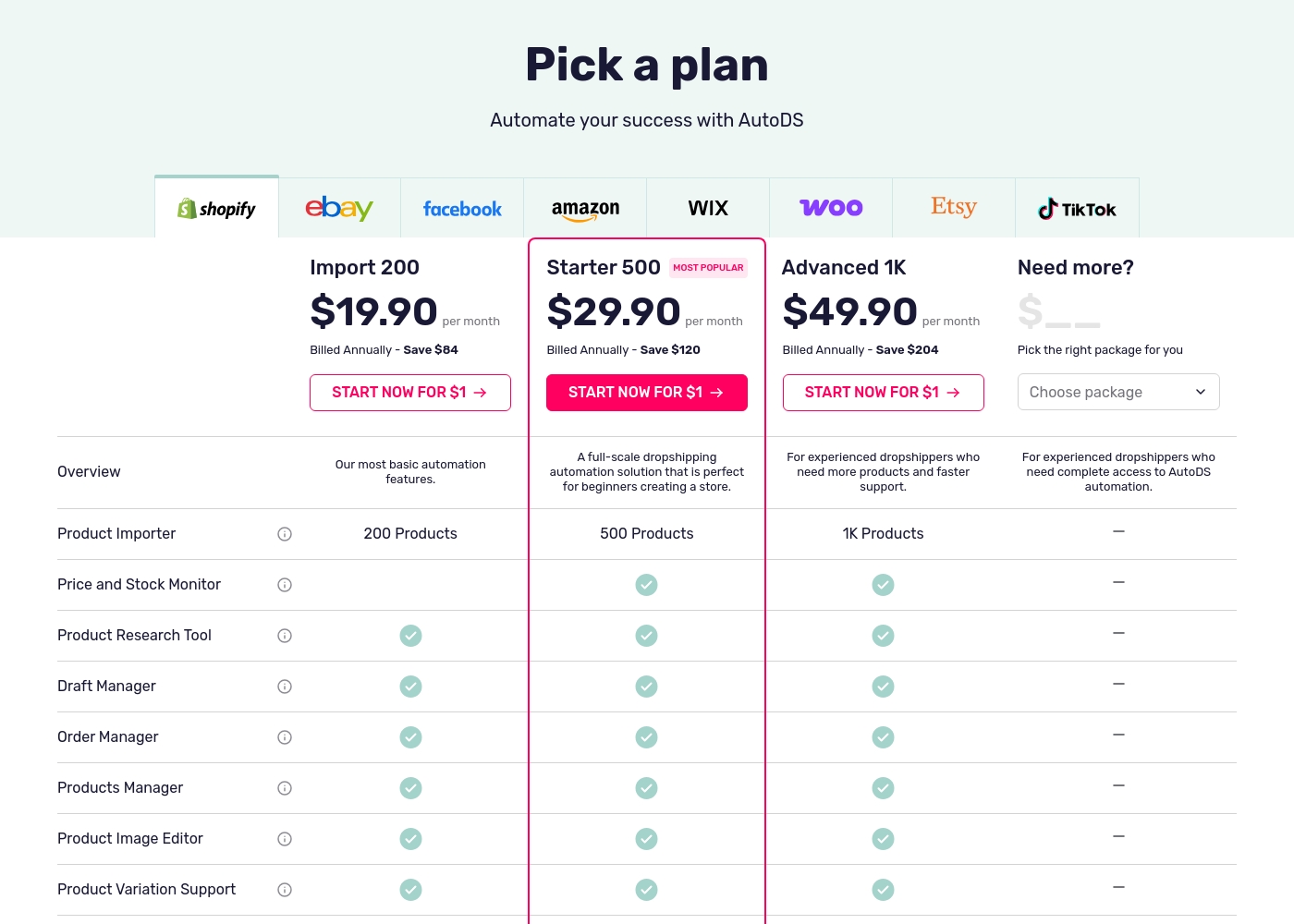
AutoDS costs between $9.90 and $49.90 per month with four known price points: Auto Ordering System at $9.90, Import 200 at $19.90, Starter 500 at $29.90, and Advanced 1K at $49.90.
Now let's look closely at how these different plans can automate your dropshipping business.
Auto Ordering System
Price: $9.90 per month Best For: Automating core fulfillment tasks Other Features: Automatic orders fulfillment, automatic tracking number updates, 3 automatic messages to buyers
- Automatic Orders Fulfillment
- Automatic tracking number update
- 3 automatic messages to buyers
- Price and Stock Monitor
- Draft Manager
- Order Manager
- Products Manager
- Product Image Editor
- Product Research Tool
- All features of Import 200
- Faster support
- All features of Starter 500
To find out exactly what your investment will be, you'll need to contact their expert team to discuss your operational scale and requirements.
Enterprise Automation Plan (Custom Quote)
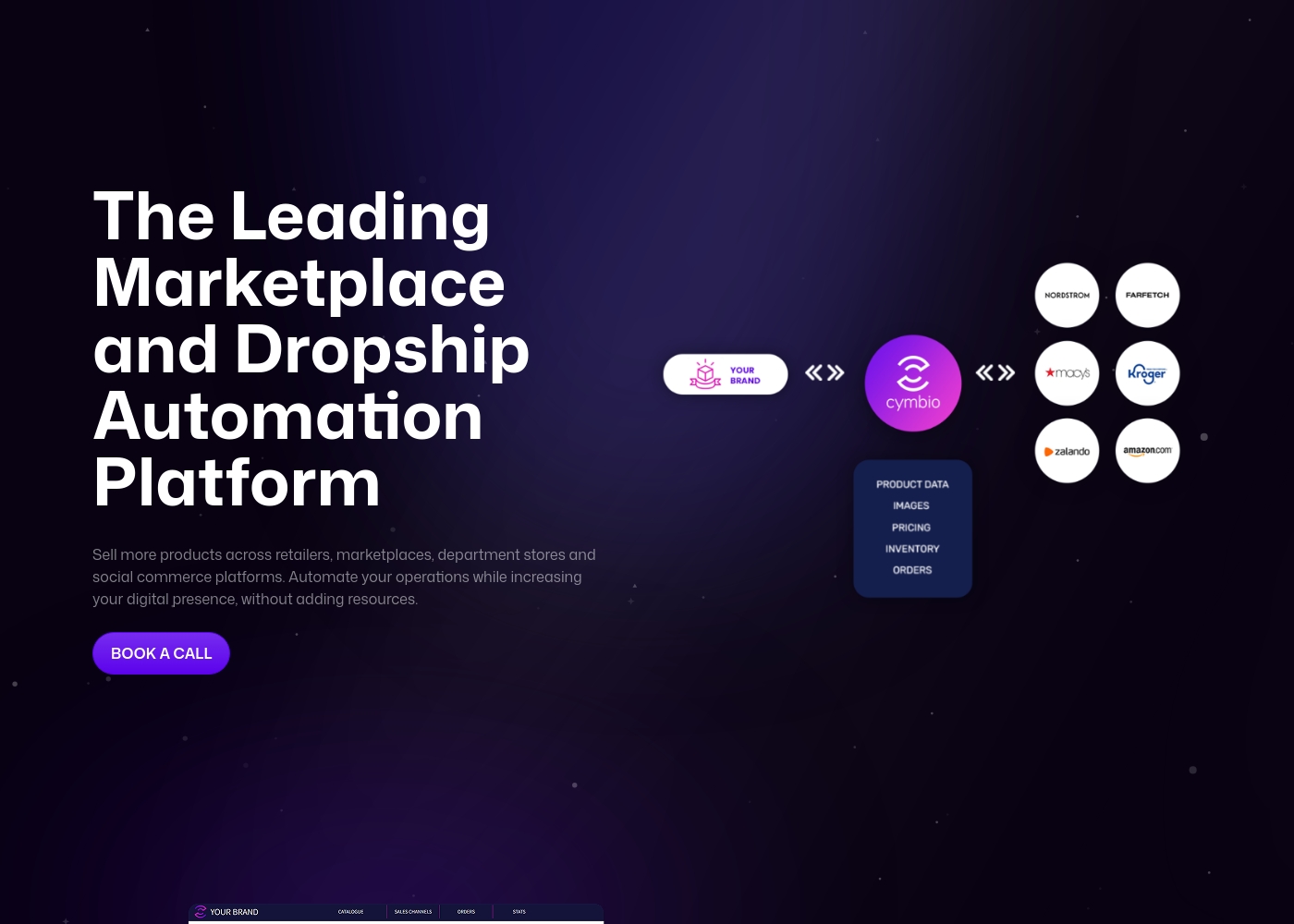
Best For: Brands and retailers seeking comprehensive marketplace and dropship automation. Other Features:
- Automated product data ingestion, standardization, and publishing.
- Real-time inventory synchronization across multiple warehouses.
- Full automated order management, tracking, and returns.
- Control and set unique pricing per retailer in multiple currencies.
- Automate collections and AR reconciliation.
This plan is ideal for established brands and retailers who need a sophisticated, integrated solution to streamline high-volume operations across many channels. Since the platform manages complicated tasks like AI content transformation and financial closing, it's clearly built for major growth and scale. Reach out via the “Book a Call” button to learn more about the partnership process. 💡
- Automated product data ingestion and standardization
- Images auto-adjusted to retailer specifications
- Real-time inventory updates and multi-warehouse support
- Automated real-time order management (tracking, returns, cancellations)
- Automate collections and AR reconciliation
Pricing Notes
- AutoDS offers clear, volume-based pricing starting under $20/month, making it accessible to beginners.
- Cymbio requires a consultation for pricing, indicating a significant enterprise investment model.
- AutoDS offers a 14-day trial for $1, allowing nearly risk-free assessment of its capabilities.
- Cymbio includes sophisticated financial automation like AR reconciliation crucial for global retailers, justifying its high cost.
- You save substantially by choosing annual billing with AutoDS, saving up to $204 yearly on the Advanced 1K plan.
Pricing Head-to-Head
User Reviews
AutoDS maintains an incredibly strong reputation, boasting a near-perfect 4.9-star rating across over 25,000 reviews. Users frequently celebrate the platform's user-friendliness and powerful overall automation capabilities.
Many reviewers note that the system is a complete game-changer for dropshipping, dramatically reducing time spent on manual tasks like product importing and order fulfillment. The crucial Auto-Ordering feature is often specifically praised for accurately processing orders and automatically updating tracking numbers.
AutoDS is an absolute game-changer for sellers. I love the automation; I wake up and my orders are processed, tracking numbers updated, and messages sent automatically. This Auto-Ordering feature saves me immense amounts of time every single week.
The available external feedback for Cymbio is extremely limited, making a true sentiment analysis difficult. Trustpilot shows only one review, which currently averages 3.6/5 and expressed suspicion regarding the company’s advertising practices.
This sole review warned users to 'Ge careful' because the company was 'Starting to put a lot of ads out there.' Since the single piece of feedback provided is skeptical, we recognize a significant lack of direct, detailed user experiences regarding core platform functions. We found no constructive input about technical aspects like the promised AI automation, integration reliability, customer support quality, or ease of use.
Ge careful Starting to put a lot of ads out there. I almost fell for it!! This is concerning because they are showing so many advertisements. Potential users need to proceed with caution when evaluating.
Our Verdict
The choice between AutoDS and Cymbio is straightforward; they exist in completely separate e-commerce spaces. This isn't really a competition of features, but a match based on scale and focus. If you're a beginner dropshipper, AutoDS wins easily; if you’re a global brand, Cymbio is essential. AutoDS is the undisputed champion for the entrepreneurial beginner or small-scale dropshipper. It costs attractively low, starting under $20/month, and provides an essential toolkit tailored for dropshipping success. AutoDS offers an AI store builder, product research, and crucial automated order fulfillment. If you manage fewer than 1,000 products, AutoDS delivers tremendous value and saves time. Cymbio is the necessary enterprise solution for established brands ready to tackle global wholesale and retail partnerships. Cymbio connects you to over 1000 marketplaces using robust EDI/API integrations seamlessly. Financial tools like AR reconciliation and multi-warehouse support prove Cymbio is designed for high-stakes, high-volume operations. The deciding factor is your current business structure and budget. If you are a solo seller seeking maximum dropshipping automation efficiency, choose AutoDS for its low cost and specialized tools. If you are an enterprise retailer struggling with complex systems and need dedicated service, Cymbio is the required investment for scaling. Pick AutoDS for affordability and simple automation; pick Cymbio for complexity and unlimited global scaling capabilities.
Frequently Asked Questions
Which is better for dropshipping beginners: AutoDS or Cymbio?
AutoDS is clearly superior for beginners in dropshipping. It provides an AI store builder, product research tools, and transparent, low-cost pricing. Cymbio is reserved for large, established retailers and requires custom quotes.
Does AutoDS offer financial reconciliation features like Cymbio?
No, AutoDS focuses on fulfillment and product logistics automation for dropshippers. Cymbio offers specialized financial tools like collections automation and Accounts Receivable (AR) reconciliation for enterprise users.
Is Cymbio compatible with complex API/EDI integrations?
Yes, Cymbio excels at universal integration methods like API, EDI, Message Queues, and SFTP. It is built to seamlessly connect established brands with major retailers. AutoDS operates primarily through platform-specific integrations.
Can I get a free trial to test AutoDS and Cymbio?
You can test AutoDS for 14 days for only $1 to fully explore the platform features. Cymbio does not offer a public free trial or fixed pricing model; you must request a custom demonstration.
Which tool provides better account management and support for scaling?
Cymbio provides 'White Glove' 24/7 support with a dedicated customer success manager. AutoDS offers responsive 24/7 VIP chat support but focuses on general support for individual users.
How do the pricing models differ substantially between AutoDS and Cymbio?
AutoDS uses standardized, transparent pricing based on your product volume (under 1,000 SKUs). Cymbio uses custom, non-public quotes based on operational volume, scale, and required complexity.
Ready to Choose?
Both tools have their strengths. Choose based on your specific needs.