Alamy vs Dreamstime
Alamy and Dreamstime both feature massive creative content libraries. Alamy focuses on guaranteed authentic content, while Dreamstime prioritizes volume, video, and value. The critical difference rests on pricing models and post-purchase user support.
Best for: Content creators prioritizing guaranteed authenticity via non-AI content., Graphic designers requiring high-quality EPS Vector files for detailed print media.
Best for: High-volume marketing teams requiring 200+ images monthly with download rollover., Video producers needing seamless access to royalty-free audio, sound effects, and 4K video.
Vast, Authentic Library; Buyer Beware.
Alamy offers a strong and unique value proposition via its massive, AI-free content library, focusing on authentic, professionally sourced visuals. However, we must highlight severe operational problems reported by users related to licensing clarity, inconsistent quality control, aggressive fine collection, and poor customer support responsiveness. Overall, while the inventory is visually excellent, the documented purchasing risks make it difficult for us to recommend Alamy for general use.
Pros
- Dedication to authentic, human-created, AI-free content.
- Vast and diverse global library, including videos, vectors, and live news feeds.
- Flexible, one-time purchase licensing model available.
- Significant bulk image pack discounts, offering savings up to 75%.
Cons
- Frequent reports of absent or extremely poor customer service post-purchase.
- Customers face large, unexpected fines related to licensing disagreements.
- Purchased, high-cost images can frequently be of unusable, inconsistent quality.
- Contributor commissions are reported as very low compared to sales yield.
Great Value with Excellent Support
We found Dreamstime excels in offering a massive asset library paired with highly responsive customer service, often resolving thorny issues like accidental double charges instantly. However, we caution new users about the automatic renewal practices and a growing prevalence of AI-generated images that clutter search results. Overall, the platform delivers strong value for high-volume content creators who prioritize helpful human support.
Pros
- High quality and vast selection of stock photos, videos, and audio.
- Exceptional and responsive customer service that promptly handles refunds.
- Simple and efficient image uploading process for contributors.
- User-friendly platform that is easy for most users to navigate.
Cons
- Subscription system lacks clarity regarding automatic renewals and cancellation.
- High volume of difficult-to-filter, low-quality AI-generated content.
- Search functionality sometimes struggles to return relevant results.
- Photographers report significant recent drops in sales and high payout threshold ($100).
AboutAlamy
Alamy is a comprehensive stock visual platform built for professional projects 💡. It serves as a deep resource for editors, designers, and marketers who need imagery they can trust. The platform organizes its high-quality content into specific categories to perfectly suit your needs. You can explore focused collections like Creative, Editorial, Photography, and Archives.
AboutDreamstime
Dreamstime is known as the world's largest stock photography community. It was established in 2000 and has since grown immensely. Talented contributors worldwide enrich the vast collection daily. This resource is perfect for everyone, from large corporations to small magazines and personal blogs. You'll find professional assets regardless of your budget. 💡
Highlights
Feature Comparison
Features Overview
We highlight the main differences and pick a winner for each feature.
Customer Support
Dreamstime offers exceptional support; Alamy's support is notoriously poor and unresponsive.
Alamy users consistently report customer service is utterly non-existent or dismissive. They maintain a strict 'no refund' policy even for billing errors. Dreamstime, conversely, receives pervasive praise for fast, responsive customer support. Dreamstime staff efficiently process full refunds if downloads have not been used. This distinction is the most critical difference between Alamy and Dreamstime.
AI Content Policy
Alamy guarantees zero AI-generated content, ensuring high authenticity. Dreamstime uses AI, sometimes leading to poor search results.
Alamy promises that its massive library contains only human-generated photography. This allows creators to guarantee authenticity for their clients. Dreamstime uses AI for smart search tools but struggles to filter synthetic content. Users specifically complain about difficulty excluding low-quality AI assets. Alamy provides essential peace of mind for authenticity-focused users.
Pricing Structure
Alamy uses simple one-time payments; Dreamstime offers high-volume subscriptions with rollover.
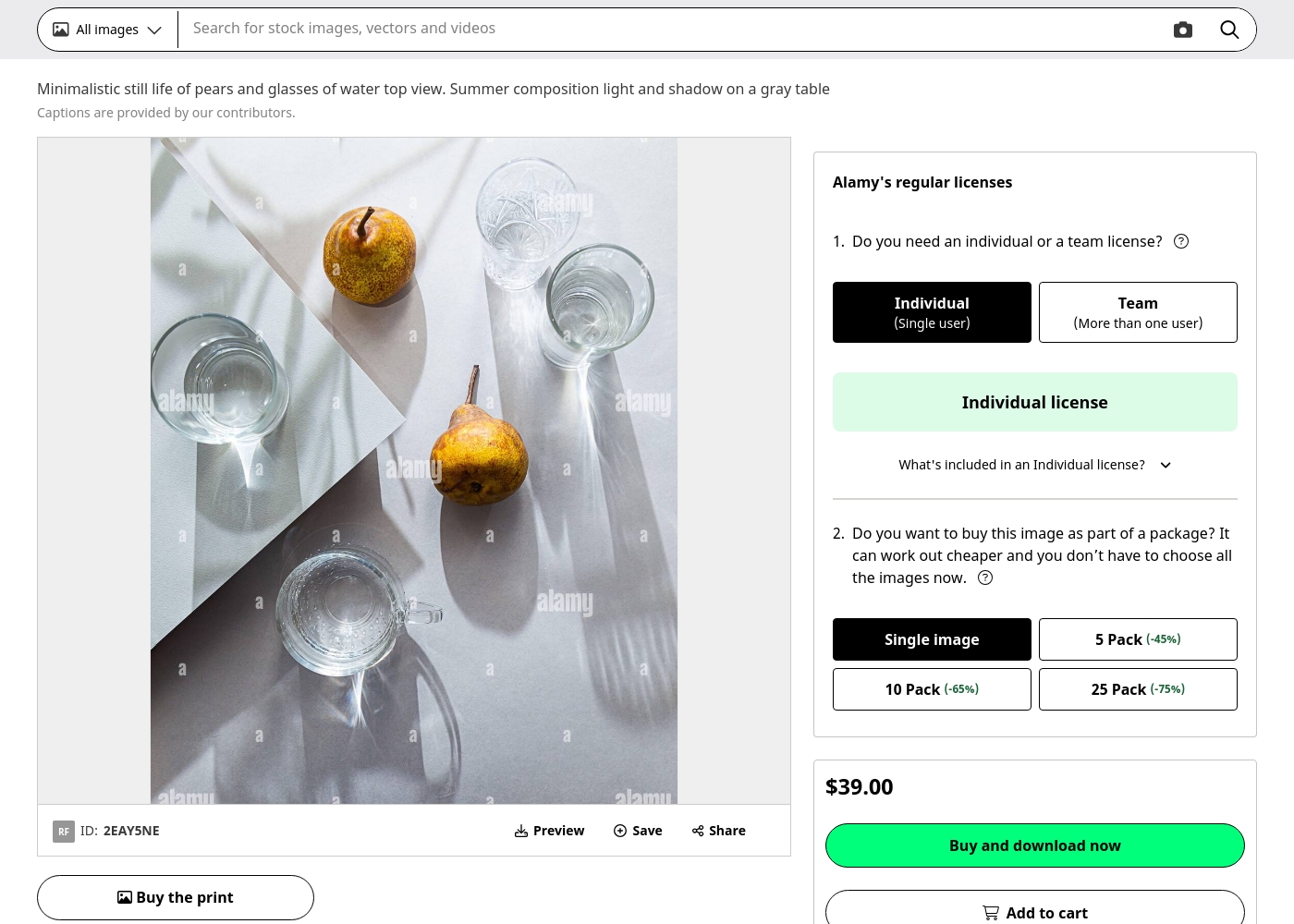
You buy single image licenses from Alamy for a flat $39.00 fee. Alamy provides packages offering up to 75% savings on bulk purchases. Dreamstime subscriptions start at $25/month for low volume plans. Dreamstime also offers credits for occasional, pay-per-download needs. Dreamstime’s rollover benefits users with inconsistent creative output.
Media Diversity
Dreamstime provides superior multimedia variety including video and audio. Alamy focuses on niche content like historical archives.
Dreamstime offers a complete kit including millions of 4K video clips and professional audio tracks. This supports comprehensive multimedia projects in one place. Alamy provides specialized illustrator-ready EPS Vector files. Alamy also offers unmatched depth in historical archives detailing past events. Dreamstime covers more general media types, Alamy focuses on deeper specialization.
Download Flexibility
Dreamstime subscriptions include rollover, maximizing content value. Alamy only offers immediate one-time downloads.
Dreamstime subscriptions automatically roll over unused downloads month-to-month. This is key for teams whose needs fluctuate significantly. Alamy's image packs must be purchased up front without recurring benefits. Alamy provides deep discounts only on the initial bulk buy. Rollover features in Dreamstime provide much better budget protection.
Copyright & Ethics
Dreamstime reports fair practices; Alamy faces severe criticism for aggressive, predatory enforcement.
Alamy has a high risk profile due to using third-party agencies like PicRights. These generate massive, inflated fines for alleged accidental usage. Dreamstime reviews indicate fairer customer interactions and prompt resolution of billing issues. Alamy's aggressive tactics put users at significant legal risk. Dreamstime is functionally a much safer platform to license assets.
Specialized Content
Alamy is better for archival footage and vectors; Dreamstime is better for live news and general stock.
Alamy offers deep historical context and unique EPS vector files for graphic design. Alamy provides immediate asset delivery via a dedicated live news feed. Dreamstime features a vast general stock library and a strong editorial section for current news. But Dreamstime lacks Alamy's focus on deep historical records. Alamy serves niche, print, and research needs better.
Alamy offers image licenses starting at $39.00 per image through flexible, one-time purchase arrangements, with package discounts up to 75%.
Alamy's pricing focuses on licensing flexibility. You can choose a license type based on your user count, then determine your purchase quantity (single image or discounted pack).
Individual License (Single User)
Price: $39.00 (per single image displayed) Best For: Single user Other Features: Can be bought as a single license or bundled into discounted image packs.
- Single user usage
- One-time purchase model
- Can be purchased as a single image or via image packs
- Supports more than one user (multi-seat licensing)
- One-time purchase model for projects
- Includes 5 images
- 45% discount applied
- Includes 10 images
- 65% discount applied
Dreamstime costs between $14.99 (one-time) and $219 per month with several plans available: 5 images at $25, 10 images at $39, up to 750 images at $219 per month, or $2,028 billed annually.
Dreamstime offers flexible pricing through credit packages or standard time-based subscriptions. Let's explore the best fit for your content needs.
Credit Packages (Pay per Download)
Price: Starts at $14.99 (for 3 credits) Best For: Users who need images occasionally or high-value media Other Features:
- Credits are the site currency for all downloads.
- Credits are valid for one full year from purchase.
- Use credits for RF, EL images, videos, and professional audio.
- Prices differ depending on media size, level, format, or license.
- Pay per download (using site currency)
- Used for RF, EL images, videos, audio
- Valid for 1 Year
- 5 total downloads per month
- Unused downloads roll over
- Automatic renewal
- Includes lifetime license
- 200 downloads per month
- Unused downloads roll over
- Includes lifetime license and unlimited online usage
- Gives unlimited printed and electronic copies
- 750 downloads per month
- Automatic renewal
- Downloads roll over
- Includes lifetime license and unlimited online usage
Pricing Notes
- Alamy offers substantial bulk discounts, reducing per-image cost by up to 75% for 25-image packs.
- Dreamstime supports rollover downloads in its subscription plans, ensuring unused assets are not wasted.
- Dreamstime offers a specialized Zero Gravity plan for unlimited downloads of specific niche content for $40/month.
- Alamy's single image price of $39.00 is significantly higher than Dreamstime's low-tier credit cost.
- Dreamstime users must watch out for automatic subscription renewals and the free trial auto-conversion policy.
Pricing Head-to-Head
User Reviews
Trustpilot shows a severely critical outlook for Alamy, scoring 1.4/5 stars. The most frequent complaints center squarely on customer service and ambiguous billing practices.
Many users report nonexistent customer support after purchase, struggling for months to gain access to files or process refunds, often feeling ignored or dismissed 😔. A significant and distressing theme is the experience of receiving large, unexpected fines, sometimes reaching over £400, for alleged license non-compliance months or years later.
I purchased four images, but realized a package deal was better. They immediately refunded my first purchase when I bought the package. Their team patiently sorted out the mess I made and gave me a great, lower price.
Dreamstime generally receives positive feedback from its large user base, scoring a 3.6/5 on Trustpilot. Customers frequently praise the high quality of the images available and the platform's user-friendly nature, noting that uploading and navigating the site is straightforward and easy.
Exceptional customer support is a standout feature; reviewers often highlight the staff's professionalism, quick response times, and efficiency in handling issues like accidental double billing or subscription problems. Contributors enjoy the strong sense of community and the fast approval process for their work.
I accidentally upgraded my free trial and was charged immediately. Dreamstime customer service efficiently processed my cancellation and provided a full refund quickly since I hadn't used any downloads. I really appreciate their prompt support!
Our Verdict
The decision between Alamy and Dreamstime should be simple for most creators. Dreamstime is the clear winner due to its reliable platform and excellent user experience. Alamy offers unique content, but its severe operational failures are a major deterrent. Alamy's superpower is its commitment to authentic content and specific archival assets. Alamy guarantees zero AI-generated content in its extensive global library. It excels in niche areas like deep historical archives and specialized EPS vectors. However, you must be prepared for aggressive enforcement tactics and extremely poor customer service. Dreamstime’s strength lies in its comprehensive media strategy and outstanding support. Dreamstime offers massive volume and flexible subscriptions with unused download rollover. Reviewers consistently praise Dreamstime for fast, professional customer service and efficient refunds. Dreamstime is the safer, more reliable choice for ongoing creative projects. The essential deciding factor is trust paired with necessity. If you absolutely require guaranteed non-AI assets or historical records, Alamy is necessary. If you prioritize budget, high-volume flexibility, and guaranteed responsive service, choose Dreamstime. Ultimately, Dreamstime is the safer, smarter choice for nearly all business users. Alamy's operational failings and high post-purchase risk make it hard to recommend broadly. Trust Dreamstime to deliver assets, value, and the support you truly need.
Frequently Asked Questions
Which platform is safer regarding copyright and post-purchase issues?
Dreamstime receives praise for solving customer and billing issues promptly. Alamy uses third-party agents for aggressive enforcement and issues massive fines. Dreamstime offers a much safer post-purchase experience overall.
Does Alamy offer historical archives like Dreamstime?
Alamy features deep archives chronicling historical events and prominent figures worldwide. Dreamstime focuses more on current, general stock and editorial content. Alamy is the better choice for niche historical research needs.
Can I find video footage and audio clips on both Alamy and Dreamstime?
Both platforms offer 4K quality video footage for premium use. Dreamstime also provides an extensive library of royalty-free audio and sound effects. Alamy’s media focus is primarily on images and vectors.
Which service is better for monthly high-volume content needs?
Dreamstime is superior for high volume using its subscription model (up to 750 images monthly). Dreamstime also includes rollover for unused downloads. Alamy relies on large one-time discounted image packs.
Which is cheaper for a single license purchase?
Alamy charges $39.00 for one single image license purchase. Dreamstime offers lower prices via credits, starting around $1.88 per asset. Dreamstime is generally cheaper for one-off downloads.
Why do users report such poor customer support for Alamy?
Reviews indicate Alamy's support is often non-existent or dismissive of complaints. They also enforce a strict no-refund policy, even for billing errors. Dreamstime support is noted as responsive and helpful.
Ready to Choose?
Both tools have their strengths. Choose based on your specific needs.