20NINE vs Salesforce
This comparison pits deep financial specialization against broad enterprise capability. Choosing between 20NINE and Salesforce is a decision on strategic focus. Salesforce offers vast CRM power, but 20NINE provides critical expertise for emerging markets. We'll show you if you need a global giant or vertical ninja.
Best for: Financial institutions targeting emerging markets., Organizations seeking to digitize cash-dominant economies.
Best for: Enterprise organizations needing complex, unified data strategies., Companies requiring industry-specific CRM features (Healthcare, Finance, Retail).
AI power for financial inclusion.
We recognize 20NINE's highly ambitious goal of digitizing informal economies using advanced AI credit scoring and next-generation payments. The unique solution excellently bridges the financial gap for millions otherwise ignored by traditional banking systems. Overall, 20NINE offers a powerful, high-impact platform, though its undisclosed custom pricing limits public transparency.
Pros
- Utilizes advanced AI for credit scoring informal economies.
- Crucial focus on financial inclusion for underserved markets.
- Delivers next-generation digital payment solutions (Blipply platform).
- Empowers micro-retailers to expand their market reach.
Cons
- Pricing plans and fee structures are not publicly disclosed.
- Lacks transparency regarding specific subscription tiers.
- No mention of a free trial or free access option.
- Lack of specific user reviews for the Blipply financial platform.
Enterprise Power, Support Needs Fixing
We recognize Salesforce as a globally powerful, feature-rich platform offering expansive, industry-specific tools. However, feedback related to customer support, proprietary billing, and usability is substantially negative and concerning. Overall, the foundational product is essential for large enterprises, but the necessary customer service and contractual practices appear fundamentally broken for many users.
Pros
- Extensive, feature-rich platform capable of handling complex enterprise needs.
- Offers specialized products and industry-specific Cloud solutions.
- Strong ecosystem, community, and AppExchange support.
- Effective for complex data pulling and building detailed reports.
Cons
- Customer service and support are widely reported as nonexistent or abysmal.
- Billing practices are often described as predatory, inflexible, and costly.
- The software is cumbersome, time-consuming, and requires excessive clicks for daily tasks.
- Sales teams pressure long-term contracts (3+ years) and high annual price increases.
About20NINE
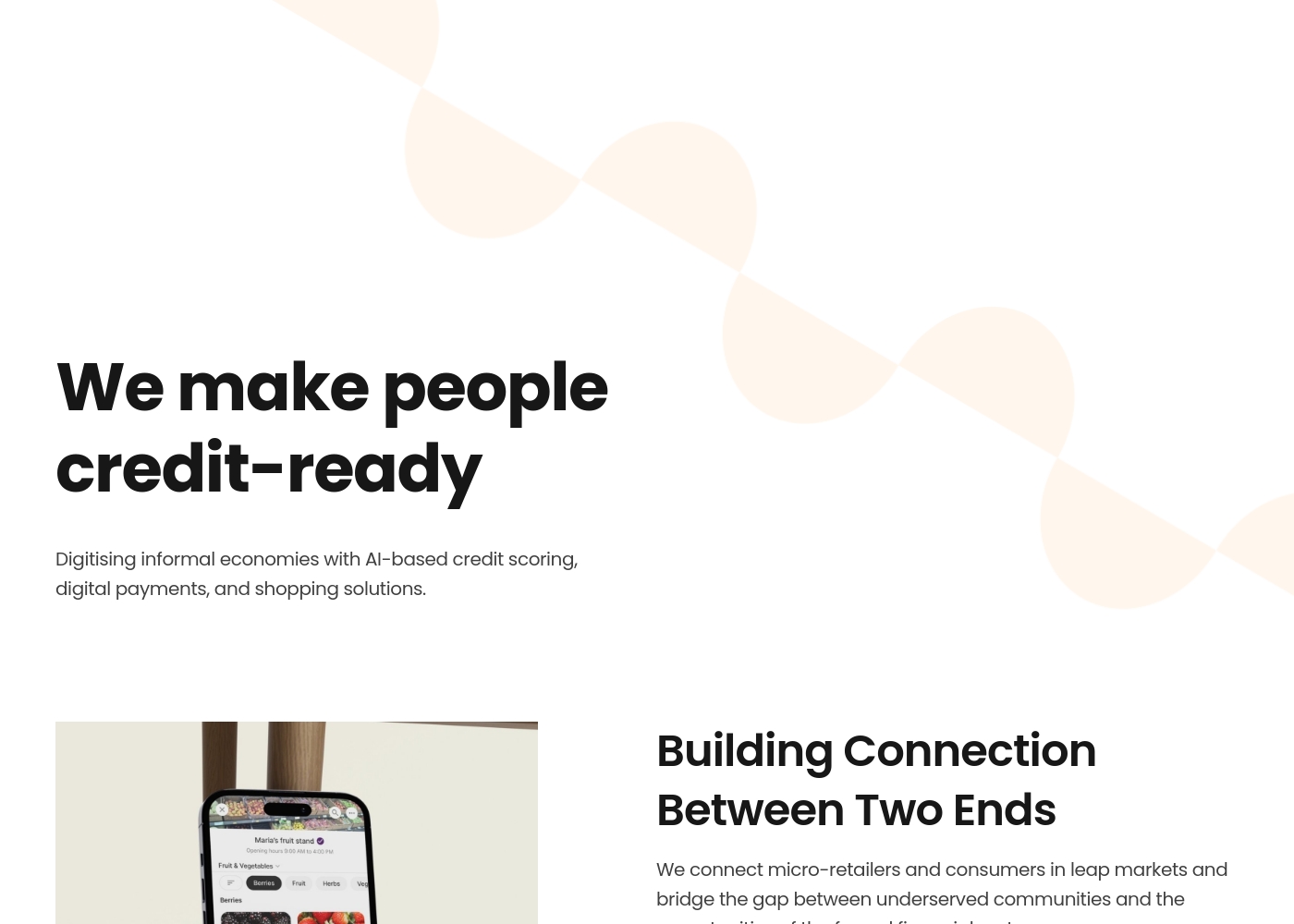
20NINE is building connections between two ends of the financial spectrum. We're bridging the gap between consumers and micro-retailers in leap markets and the formal financial system. The company uses advanced AI-based credit scoring to help both micro-retailers and their customers become credit-ready.
This platform leverages the rise of mobile phones, ushering in a new era of financial accessibility where traditional banking infrastructure is limited. For the millions of micro-retailers who are the backbone of local economies, 20NINE empowers them to expand their reach and transition from cash dominance. ✅ Their platform, Blipply, delivers seamless and accurate shopping experiences, designed for both online and in-store use.
AboutSalesforce
Salesforce is a leading global software company recognized for providing integrated technology solutions. It helps businesses across many sectors, offering specific tools for Financial Services, Retail, Healthcare, and more.
This platform focuses on connecting proactively with customers, automating workflows, and unifying data. Importantly, Salesforce incorporates powerful AI agents like Agentforce to improve support, boost productivity, and drive business outcomes.
The system aims to give you a single, unified value chain approach. You can also leverage a strong ecosystem through the AppExchange for additional tools and partners.
Highlights
Feature Comparison
Features Overview
We highlight the main differences and pick a winner for each feature.
Core Focus & Purpose
20NINE offers deep financial inclusion specialization, while Salesforce provides broad enterprise operations depth.
20NINE is laser-focused on financial inclusion in cash-dominant, emerging markets. They solve the complex problem of providing credit to micro-retailers without traditional histories. Their system bridges informal cash economies to regulated formal finance. Salesforce provides a massive, integrated technology platform for global business operations. It aims to unify data, streamline sales, and centralize customer service. This platform is built for generalized enterprise needs. Choosing 20NINE means prioritizing niche expertise over global feature breadth. Salesforce gives you the tools for nearly any business process. The trade-off is focused impact versus widespread operational capability.
AI Capability
20NINE uses highly specialized AI for credit scoring, while Salesforce uses AI for productivity.
20NINE leverages specialized AI to score credit risks accurately within informal economies. This AI is crucial for unlocking creditworthiness for previously underserved communities. Their technology makes consumers and micro-retailers fully credit-ready. Salesforce employs Agentforce AI primarily to boost productivity and provide fast 24/7 support. Their AI focus is on augmenting enterprise workforces. Users can also build and customize their own autonomous AI agents. 20NINE’s AI creates new financial access, offering profound social and economic impact. Salesforce's AI optimizes existing business processes for speed. 20NINE offers a more specialized and unique AI use case.
Payment Technology
20NINE provides innovative mobile payment infrastructure; Salesforce does not specialize here.
20NINE enables next-generation digital payments using mobile technology. This system eliminates the need for physical bank cards altogether. It’s designed specifically to increase financial accessibility in emerging markets. This shift moves markets away from cash dependence. Salesforce is primarily a technology platform for managing relationships and processes. It relies on external systems and partner integrations for payment processing. It provides no dedicated payment infrastructure itself. If transitioning a consumer base from cash to digital mobile payments is your goal, 20NINE is necessary. Salesforce cannot handle this core operational need directly.
Ecosystem and Extensibility
Salesforce has an unparalleled ecosystem; 20NINE's FinTech ecosystem details are limited.
20NINE focuses on complex infrastructure that requires custom implementation and integration capability. Public information about a developer platform or public App Store is not available. They focus on integration with existing banking or POS networks. Salesforce offers the massive AppExchange, providing partners and apps for nearly any business need. They nurture a vibrant community of developers and experts globally. This creates unprecedented flexibility and tool availability. For sheer number of integrations and accessible third-party solutions, Salesforce is a clear industry leader. 20NINE provides a specialized product where custom integration is the key.
Customer Support Experience
20NINE’s support gets high praise; Salesforce support is widely described as terrible by users.
Existing 20NINE customers praise their customer service as excellent and 'super fast.' Users consistently highlight pleasant, efficient communication and responsiveness. This applies specifically to their documented support channels. Salesforce users report support is 'abysmal,' 'nonexistent,' and impossible to reach quickly. Many complaints cite automated systems and lack of contact following serious issues. This is a severe, widespread complaint. If reliable human support is essential, 20NINE is the trustworthy choice based on user feedback. Salesforce's reputation for post-sales support is a profound liability.
Pricing and Contracts
Both require custom quotes, but Salesforce has reported issues with inflexible annual agreements.
20NINE uses custom enterprise or usage-based pricing models, requiring direct consultation. Details regarding refunds or cancellations are not publicly supplied. This structure is typical for tailored infrastructure projects. Salesforce also operates on a custom quote basis, but typically enforces rigid annual contracts paid in advance. Users frequently cite predatory billing and mandatory annual price hikes. A free trial is available for testing before commitment. Neither platform offers straightforward pricing, demanding engagement with sales teams. The reported rigidity of Salesforce contracts is a major point of user dissatisfaction. 20NINE offers no public trial.
Market Scalability
Salesforce scales broadly across industries; 20NINE scales deeply within financial infrastructure.
20NINE is built to handle infrastructure for millions of micro-retailers in high-growth, emerging markets. It focuses on massive scale within specific socioeconomic parameters. They facilitate the digitization of transactions at the national level. Salesforce is designed to manage the complexity of global enterprise operations across every vertical. It provides specialized tools for Healthcare, Manufacturing, and Financial Services growth. Salesforce defines high-level enterprise scale. While both platforms handle massive scale, Salesforce is more adaptable to diverse, complex organizational structures globally. 20NINE provides infrastructure scale for a specialized financial outcome.
Unified Data Strategy
Both platforms unify data, but 20NINE focuses on the consumer/retailer link, while Salesforce unifies entire business functions.
20NINE unifies data related to consumer behavior and micro-retailer transactions in real-time. This provides the AI system with necessary insights for credit scoring. The Blipply platform also connects online and in-store shopping experiences. Salesforce helps businesses integrate all crucial data points across the organization for a unified value chain. This covers sales, service, marketing, finance, and partner data. Workflow automation relies on this unified data. If you need to connect core financial entities and payment flows, 20NINE excels. If you need a comprehensive, organization-wide view of every customer touchpoint, Salesforce is built for that complexity.
You should contact 20NINE directly to inquire about costs for their digital payment and credit-scoring services, as pricing appears customized.
Custom Enterprise Solution
Best For: Organizations focused on bridging the gap between underserved communities and formal financial systems Other Features:
- AI-based credit scoring for informal economies
- Next-generation digital payment solutions (Blipply platform)
- Empowerment of micro-retailers to expand their reach
- Solutions designed for emerging markets and cash-dominant communities
20NINE primarily focuses on digitizing informal economies and connecting large networks of micro-retailers and consumers. Because their solutions address complex financial ecosystems, pricing is likely tailored to specific organizational needs, market scale, and implementation complexity. This ensures you get a powerful solution perfectly fitted to your target region and project goals. 🤝
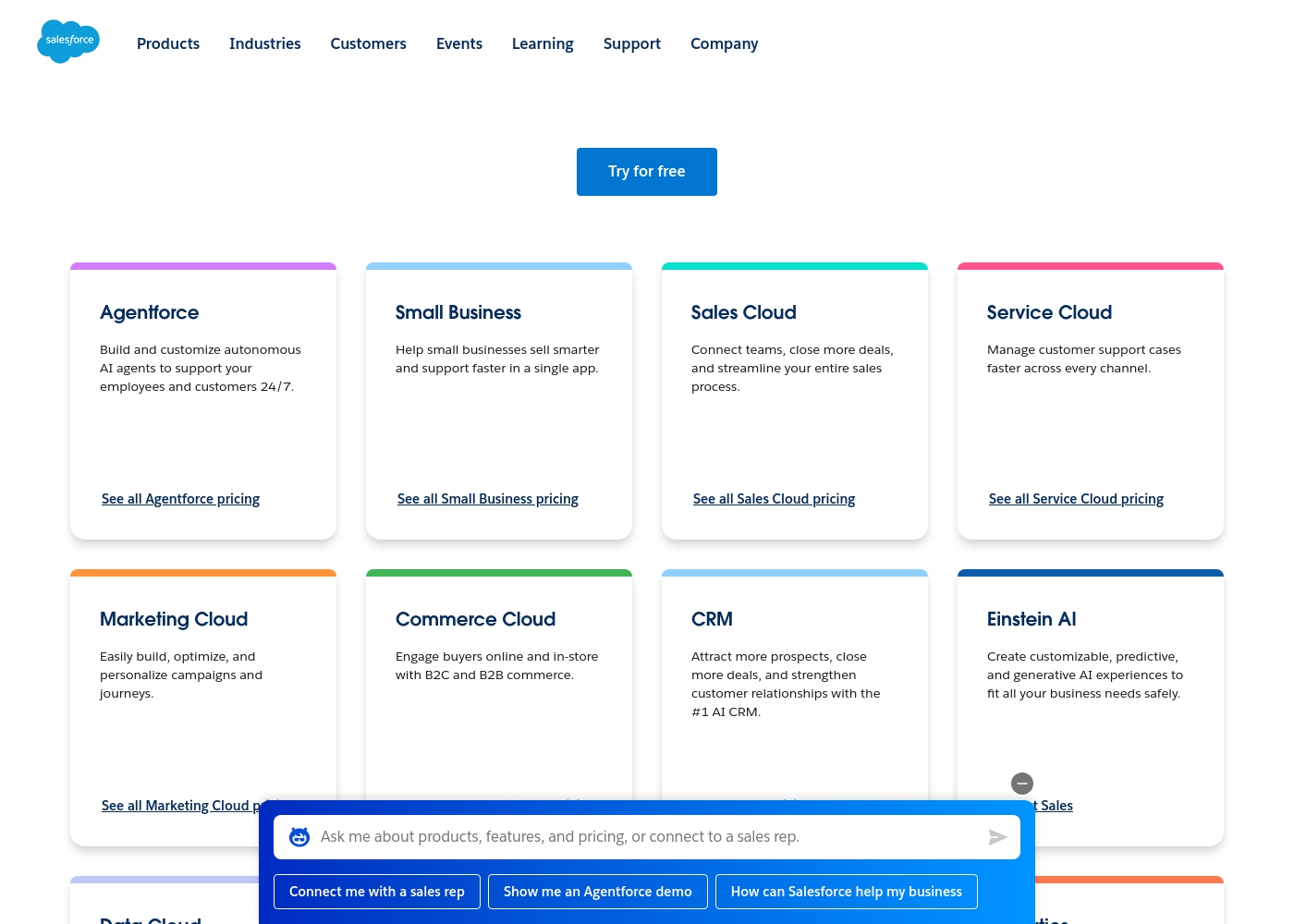
Salesforce pricing is determined on a quote-by-quote basis depending on the specific Cloud products chosen, such as Agentforce, Sales Cloud, and Marketing Cloud.
- Build and customize autonomous AI agents
- Support employees and customers 24/7
- Help small businesses sell smarter
- Faster support in a single app
- Connect sales teams and close more deals
- Streamline the entire sales process
- Manage customer support cases faster
- Manage support across every channel
Pricing Notes
- Both 20NINE and Salesforce use custom, quote-based pricing; neither offers public, standard tiers.
- 20NINE's pricing is likely usage- or volume-based, focused on large-scale infrastructure deployments.
- Salesforce contracts are typically annual and paid in advance, often requiring long-term commitments.
- Salesforce offers a clear free trial option, while 20NINE requires contacting sales for a potential pilot program.
- Users frequently complain about predatory billing practices and mandated annual price increases with Salesforce.
Pricing Head-to-Head
User Reviews
Trustpilot reviews for a company using the 20NINE name show a strong overall rating of 4.7 stars based on 26 reviews, categorized as Excellent. However, the provided user feedback specifically applies to a different entity: an established Dutch web hosting and web development service, not the AI credit scoring platform focused on emerging markets.
We found only one concrete sentiment snippet regarding the quality of service. This limited feedback, derived from the related web host entity, consistently emphasizes strong support responsiveness.
This team provides fine contact and a super-fast helpdesk. Their responsiveness really sets them apart in the technology sector.
User feedback on Salesforce is deeply polarized, leading to a very poor overall Trustpilot rating. While some users acknowledge the platform is a powerful tool with extensive features, the overwhelming sentiment focuses on severe issues with customer service and support responsiveness.
Users frequently describe support as "nonexistent" or "abysmal," reporting long waits, unhelpful automated systems, and difficulty reaching essential account managers. A significant pain point is the perceived lack of accountability and predatory billing practices; customers routinely mention inflexible contracts, mandatory annual price increases, and financial stress, especially for smaller businesses.
I strongly regret ever signing up with Salesforce. Their billing practices are predatory and completely inflexible, causing huge frustration and financial stress. I wish I had taken the time to read these reviews first.
Our Verdict
The decision between 20NINE and Salesforce comes down to specialization versus massive business breadth. Neither offers public pricing, making cost transparency difficult, but the choice is strategic. If you need specialized FinTech infrastructure for emerging markets, 20NINE is your clear winner. 20NINE’s superpower is using specialized AI to unlock critical creditworthiness in informal economies. They expertly facilitate next-generation, mobile-first digital payments, eliminating bank cards entirely. Furthermore, 20NINE users consistently report having excellent and ‘super fast’ customer support help. Salesforce's superpower is its ability to handle global enterprise complexity across numerous industries. Salesforce unifies critical business data and offers powerful industry-specific Cloud solutions. Its expansive AppExchange ecosystem gives companies endless customization options and tools. The essential deciding factor is the core problem you are trying to solve and your tolerance for risk. Pick 20NINE if digitizing transactions for millions of micro-retailers is your goal. Choose Salesforce if you need powerful, generalized CRM, despite severe user complaints about support and inflexible contracts. If you require proven, specialized financial infrastructure and great support, select 20NINE. If you are an established global enterprise needing the biggest ecosystem available, Salesforce remains a necessary, albeit often frustrating, choice.
Frequently Asked Questions
Which platform is better for specialized AI credit scoring: 20NINE or Salesforce?
20NINE is built specifically for AI credit scoring in cash-dominant informal economies. Salesforce uses AI mainly for productivity and basic 24/7 support. If you need financial inclusion expertise, 20NINE is the specialist you need.
Which company offers better customer support, comparing 20NINE and Salesforce?
20NINE's existing users consistently rate their support as superior and 'super fast.' Salesforce users report customer service is 'abysmal' and often nonexistent. 20NINE clearly delivers a much better support experience based on sentiment.
Does 20NINE provide industry-specific tools like Salesforce does?
20NINE specializes entirely in FinTech, focusing on micro-retailers and emerging financial markets. Salesforce offers generalized industry-specific Clouds like Healthcare, Retail, and Financial Services. 20NINE is highly focused, while Salesforce is broadly adaptable.
How do 20NINE's pricing and contracts compare to Salesforce's known practices?
Both 20NINE and Salesforce require custom quotes for their services. Salesforce usually demands annual contracts paid in advance and is criticized for being inflexible. 20NINE’s specific contract details are not publicly shared.
Can I use 20NINE for global CRM operations like I would use Salesforce?
No, 20NINE is a specialized financial infrastructure tool for emerging markets. Salesforce is built to manage complex global CRM, sales, and service operations. Their core purposes overlap very little.
Which company has a stronger technology ecosystem, 20NINE or Salesforce?
Salesforce has an industry-leading ecosystem supported by the AppExchange and a massive community. 20NINE focuses on custom integration but has no public ecosystem details for its FinTech solution. Salesforce wins for breadth.
Ready to Choose?
Both tools have their strengths. Choose based on your specific needs.