Splunk vs Wing Assistant
Splunk and Wing Assistant are two completely different tools for two very different jobs. Splunk is a data powerhouse for security and IT teams. Wing Assistant is a human-powered service for scaling business operations.
Powerful but complex data platform.
We find Splunk offers a robust, unified platform for security and observability with extensive integrations and scalability. However, its pricing structure is opaque and usage-based, which can make cost planning challenging. Overall, it's a strong choice for enterprises needing deep data analysis, but smaller teams may find it complex and expensive.
优点
- Unified platform for security and observability.
- Over 2,000 integrations with various data sources.
- AI and automation for threat response.
- Handles massive data volumes at scale.
缺点
- Opaque pricing requires consultation with sales.
- Can be complex to set up and learn.
- Usage-based models may lead to unpredictable costs.
- External review access was blocked, limiting user sentiment data.
Managed VA service for scalable support.
We found Wing Assistant to be a strong, managed solution for teams seeking dedicated virtual assistance without hiring overhead. The service emphasizes accountability, embedded workflow management, and continuity. Overall, it's a reliable option for businesses ready to scale operations with a structured partnership.
优点
- Dedicated, managed virtual assistant embedded in your workflows.
- Handles oversight, backups, and performance management for you.
- Scalable model allows adding capacity without rebuilding processes.
- Structured coverage prevents service gaps with backup support.
缺点
- Specific external review data was inaccessible for validation.
- Requires commitment to a subscription for daily coverage blocks.
- Pricing details are not fully itemized in the provided snippets.
关于Splunk
Splunk is a unified platform for security and observability. It's designed for teams that need to search, analyze, and act on data from any source. Whether you're a security analyst hunting threats or an engineer troubleshooting app performance, it brings everything together in one place. ✨
关于Wing Assistant
Wing Assistant is a managed service for virtual assistants. It's built for teams and leaders who need to scale operations without adding full-time headcount. You get a dedicated assistant embedded in your workflows, supported by a platform that handles oversight, backups, and performance. It's for businesses that want work owned—not just tasks completed. 🚀
亮点
功能比较
功能概览
我们强调主要差异并为每个功能选择获胜者。
Core Functionality
Splunk is software for data analysis. Wing Assistant is a managed human service for operations.
Splunk is a unified platform that ingests and analyzes logs, metrics, and traces from over 2,000 sources. It uses AI to detect threats and troubleshoot performance issues across your entire tech stack. Wing Assistant provides a dedicated virtual assistant who becomes part of your team. They handle recurring administrative, sales, and executive workflows, from CRM management to travel planning. The key difference is software versus service. Splunk analyzes machine data to protect systems. Wing Assistant executes human workflows to free up your time.
Ease of Use
Splunk is a powerful but complex data platform. Wing Assistant is designed to be plug-and-play support.
Splunk offers a unified interface for searching and analyzing massive datasets. However, reviews note it can be complex to set up and learn, requiring specialized skills. Wing Assistant integrates via the Wing Workspace App. You communicate, share files, and manage tasks in one place. The service handles recruitment, training, and integration for you. Wing Assistant has a much lower learning curve for the end user. Splunk requires significant investment in training and setup.
Collaboration & Communication
Splunk collaborates around data insights. Wing Assistant collaborates via a dedicated workspace app.
In Splunk, collaboration happens around shared dashboards, alerts, and incident investigations. Teams work together to analyze data and respond to events. Wing provides the Wing Workspace App for direct communication with your assistant. You can create tasks, share files, and have real-time discussions about ongoing work. The collaboration model differs entirely. Splunk is for cross-functional data investigation. Wing Assistant is for one-on-one operational partnership.
Automation Capabilities
Splunk automates data-driven responses. Wing Assistant executes your manually-defined processes.
Splunk uses AI and automation for high-fidelity alerts and automated investigation workflows. It can respond to security threats or performance issues without human intervention. Wing Assistant's 'automation' is the consistent execution of your recurring tasks by a dedicated professional. They follow documented procedures you define together. Splunk automates system responses. Wing Assistant automates human task execution.
Reporting & Analytics
Splunk provides deep, real-time analytics on machine data. Wing Assistant provides task and workflow visibility.
Splunk excels at creating detailed dashboards, visualizations, and alerts from complex datasets. It gives you real-time insights into security posture and system performance. Wing Assistant provides documented workflows and visibility into task completion. You can track progress on the projects your assistant manages. For data analytics, Splunk is the clear leader. Wing Assistant offers operational reporting on human work.
Integration Ecosystem
Splunk has over 2,000 technical integrations. Wing Assistant integrates into your existing human workflows.
Splunk boasts over 2,000 integrations with data sources, including cloud services, databases, and business applications. It's built to ingest and analyze data from anywhere. Wing Assistant integrates into your existing tools and workflows. Your assistant uses the software your team already relies on, like CRMs, email, and calendars. Splunk's ecosystem is for technical data ingestion. Wing Assistant's integration is about fitting into your current operational processes.
Customer Support
Splunk offers enterprise support tiers. Wing Assistant includes a dedicated Customer Success Manager.
Splunk provides various support plans and SLAs, which are detailed through consultation with their sales team. It's geared toward large enterprise needs. Every Wing Assistant plan includes a Customer Success Manager for oversight and support. You have a single point of contact for quality and management issues. Wing's support model is built into the service price. Splunk's support is an additional, customized component.
Pricing & Value
Splunk uses complex, usage-based pricing. Wing Assistant uses simple, subscription-based pricing.
Splunk's pricing is based on data volume or activity metrics. Costs can be unpredictable and require direct consultation, making budgeting challenging. Wing Assistant offers flat monthly fees for 80 or 160-hour blocks of daily coverage. There are no hidden fees for specialized skills. Wing Assistant offers more predictable budgeting. Splunk's value is in scaling massive data operations, which justifies its cost for the right use case.
Scalability
Splunk scales to handle massive data volumes. Wing Assistant scales by adding operational capacity.
Splunk is designed to ingest and analyze petabytes of data from global enterprises. It scales effortlessly to handle growing data needs. Wing Assistant lets you add support without new hires. You can start with an 80-hour plan and scale to 160 hours or add more assistants as needed. They scale different things. Splunk scales data processing. Wing Assistant scales human operational support.
Security & Compliance
Splunk is a security platform itself. Wing Assistant is a service with security certifications.
Splunk is a core tool for security teams. It helps detect threats, investigate incidents, and maintain compliance through data analysis. Wing Assistant is SOC 2 Certified and HIPAA Compliant. They use managed devices, VDI support, and access controls to protect your data. Splunk *provides* security capabilities. Wing Assistant *follows* strict security protocols as a service provider.
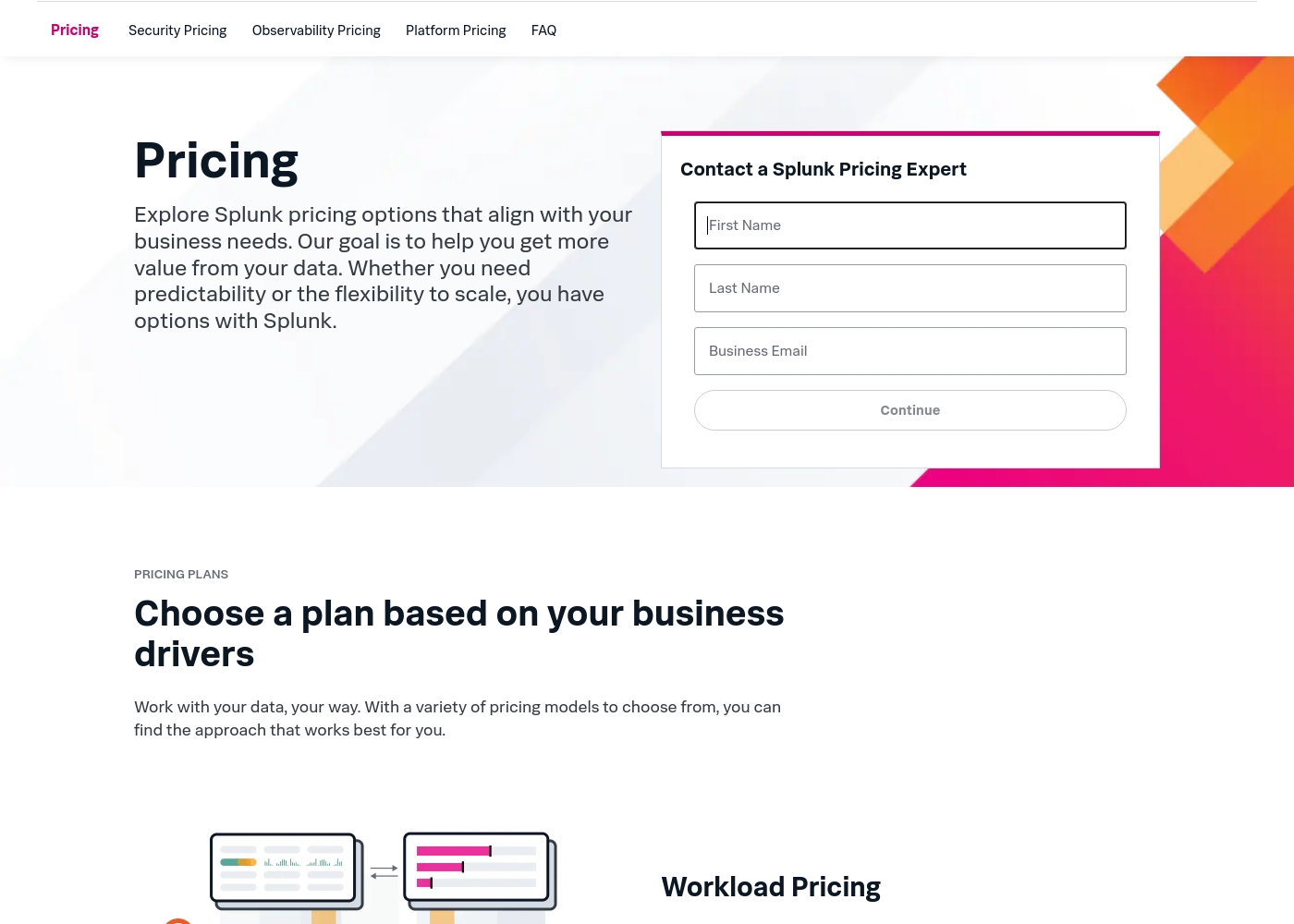
Splunk costs are Not explicitly stated per year with 2 plans: Ingest Pricing at Not explicitly stated, Activity-based Pricing at Not explicitly stated.
Take a look at the different ways you can manage your data costs below.
Ingest Pricing
Price: Not explicitly stated Websites Supported: Not explicitly stated Best For: Teams needing predictable costs for high-volume data ingestion Refund Policy: Not explicitly stated Other Features: Simple predictable approach, Economical search scaling, Broad data ingestion
- Search and analyze machine data
- Expanded use cases on ingested data
- Standard data ingestion
- Metric time series (MTS)
- Traces analyzed per minute
- Sessions monitoring
- Uptime requests
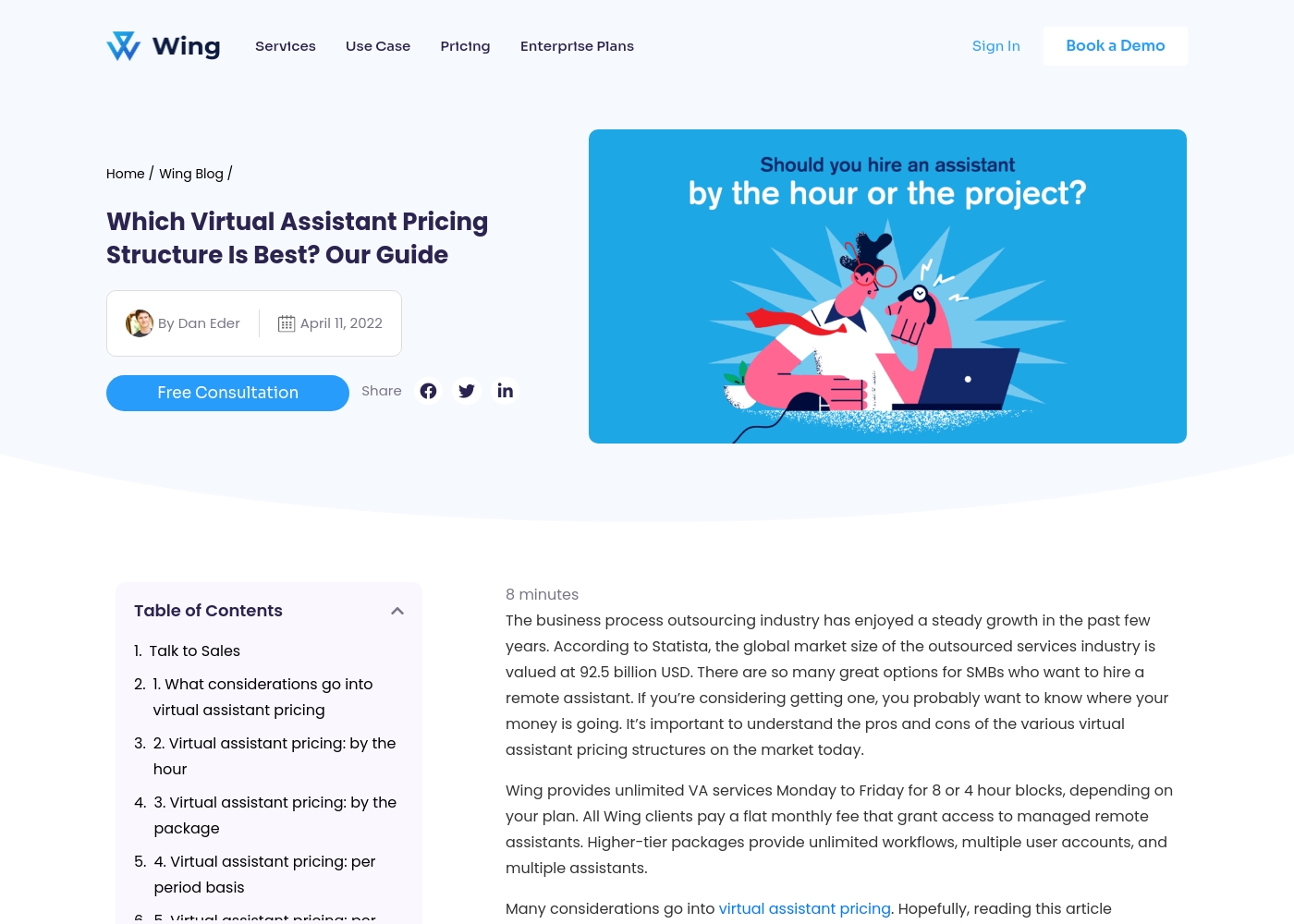
Wing Assistant pricing: Wing Assistant offers subscription-based pricing for dedicated virtual assistants with monthly or quarterly billing options. Packages are based on hours of daily coverage, including either 4 or 8-hour blocks Monday through Friday.
Read on for details about these flat monthly fees and what each entails for your workflow. No hidden costs for specialized skills—all your industry-specific needs like sales or dental support are rolled into the regular rate.
Choose the 80 or 160-hour plan to start scaling your business today with an experienced, managed professional at your side. 🚀 Click the link to view the latest rates or chat with their team for a custom quote that fits your exact operational needs.
Pricing Notes
- Splunk's pricing is opaque and requires sales consultation, making direct comparison difficult.
- Wing Assistant offers clear, flat-rate monthly pricing for defined daily coverage blocks.
- Splunk's costs can scale unpredictably with data volume or activity spikes.
- Wing Assistant includes a Customer Success Manager and all management overhead in the subscription fee.
Pricing Head-to-Head
用户评论
Based on the provided external sources, we couldn't retrieve detailed user reviews for Splunk due to access restrictions. Trustpilot and Capterra both returned verification or security pages, preventing us from gathering specific sentiment on accuracy, ease of use, support, or pricing.
This means our review is based solely on the official product information and pricing details provided. We recommend checking these review sites directly for the latest user feedback before making a decision.
We couldn't access specific Trustpilot reviews due to a connection error, and Capterra data was not provided. This means we cannot synthesize a balanced summary of recurring user themes about accuracy, ease of use, support, or value from external platforms. Our website-based assessment is the primary source for this review.
We attempted to gather a testimonial from Trustpilot, but the review page returned a connection error. No specific user feedback could be retrieved from the source at this time.
我们的判断
There's no single winner here because Splunk and Wing Assistant solve completely different problems. Trying to choose between them is like comparing a microscope to a personal assistant. Splunk's superpower is its massive data brain. It ingests, searches, and analyzes petabytes of information from over 2,000 sources. It helps security and IT teams spot threats and fix performance issues in real time. Wing Assistant's superpower is reliable human execution. You get a dedicated assistant embedded in your daily operations. They own your recurring workflows, from sales follow-up to calendar management, with built-in oversight and backup coverage. The deciding factor is your core pain point. If your problem is data chaos, blind spots, or slow threat response, you need Splunk. If your problem is being buried in admin and operational tasks, you need Wing Assistant. Choose Splunk if you're an IT or security team needing to monitor and protect complex systems. Choose Wing Assistant if you're a leader or team needing to offload repetitive work and scale operations. They're built for different worlds.
常见问题
Is Splunk a virtual assistant service like Wing Assistant?
No, they are fundamentally different. Splunk is a software platform for data analysis and security. Wing Assistant is a managed service providing a dedicated human virtual assistant.
Which is better for small business owners: Splunk or Wing Assistant?
Wing Assistant is generally better for small business owners needing operational help. Splunk is a complex, enterprise-level tool for data and security teams.
Can I use Splunk to manage my team's tasks and workflows?
Not really. Splunk automates responses based on data triggers, but it doesn't manage human workflows. Wing Assistant is designed specifically for owning and executing recurring business processes.
Is Wing Assistant more expensive than Splunk?
It's impossible to say definitively. Splunk's cost depends on your data volume and can be very high for large enterprises. Wing Assistant has a clear, flat monthly fee based on hours of coverage.
Does Wing Assistant offer the same kind of data reporting as Splunk?
No. Splunk provides advanced analytics, real-time dashboards, and alerts on machine data. Wing Assistant provides visibility into task completion and workflow progress.
Which tool has a better mobile app for on-the-go management?
Wing Assistant offers a dedicated mobile app for tasks and communication. Splunk is accessed via its mobile web interface, which is designed for data analysis rather than task management.
准备好选择了?
这两个工具都有各自的优点。根据您的具体需求进行选择。