OttoKit vs Splunk
OttoKit and Splunk solve totally different problems. OttoKit is a no-code workflow automator for connecting apps. Splunk is an enterprise data platform for security and observability. Your choice depends entirely on whether you need to automate tasks or analyze massive data streams.
宏伟的功能需要更好的稳定性。
优点
- 可以使用 AI 代理和人在回路 (HITL) 等高级功能。
- 极具竞争力的终身优惠 (LTD) 定价结构。
- 可视化、无代码的拖放工作流构建器。
- 专为 WordPress 网站设计的无缝集成。
缺点
- 报告了工作流可靠性和功能方面的重大问题。
- 支持响应时间可能非常慢(修复时间长达七天)。
- 观察到支持沟通有时显得生硬或无帮助。
- 因实施大量 LTD 策略而对长期支持模式产生担忧。
Powerful but complex data platform.
We find Splunk offers a robust, unified platform for security and observability with extensive integrations and scalability. However, its pricing structure is opaque and usage-based, which can make cost planning challenging. Overall, it's a strong choice for enterprises needing deep data analysis, but smaller teams may find it complex and expensive.
优点
- Unified platform for security and observability.
- Over 2,000 integrations with various data sources.
- AI and automation for threat response.
- Handles massive data volumes at scale.
缺点
- Opaque pricing requires consultation with sales.
- Can be complex to set up and learn.
- Usage-based models may lead to unpredictable costs.
- External review access was blocked, limiting user sentiment data.
关于OttoKit
OttoKit 是一个直观的云平台,可连接超过 1,200 个应用。它帮助您在所有业务平台之间自动处理重要事务。该工具非常适合希望流程自动运行的代理商、电子商务企业家和社区建设者。
OttoKit 使用友好的拖放画布来创建可视化工作流 💡。您无需任何编码技能即可构建强大的自动化。它也是专门设计用于与 WordPress 网站集成的顶级自动化解决方案。
关于Splunk
Splunk is a unified platform for security and observability. It's designed for teams that need to search, analyze, and act on data from any source. Whether you're a security analyst hunting threats or an engineer troubleshooting app performance, it brings everything together in one place. ✨
亮点
功能比较
功能概览
我们强调主要差异并为每个功能选择获胜者。
User Interface
OttoKit uses a friendly drag-and-drop canvas. Splunk uses a powerful search-based interface.
OttoKit's interface is built for visual workflow creation. You drag blocks and connect them. No coding is needed. This makes it accessible for marketers and business owners. Splunk's interface centers on its Search Processing Language (SPL). It's designed for querying and analyzing massive datasets. It's incredibly powerful but has a steep learning curve. The key trade-off is ease of use vs. analytical power. OttoKit gets you automating in minutes. Splunk requires training but unlocks deep data insights.
Integration Ecosystem
Both have thousands of integrations, but for different purposes. OttoKit connects apps to automate tasks.
OttoKit offers 1,200+ app integrations. These are for creating workflows. Examples include Stripe, ActiveCampaign, and Google Sheets. You connect them to automate data flow. Splunk integrates with over 2,000 data sources. These are for ingesting logs, metrics, and traces. Examples include firewalls, databases, and cloud services. The goal is a unified analysis view. OttoKit integrates to *act* on data between apps. Splunk integrates to *analyze* data from apps. Your needs determine the better ecosystem.
Automation & AI
OttoKit automates business tasks with AI Agents. Splunk automates security responses with AI.
OttoKit's automation is its core feature. You build workflows with conditions and triggers. It includes AI Agents that monitor data and take actions 24/7. You can also approve steps with Human-in-the-Loop. Splunk's automation focuses on threat response. It uses AI to create high-fidelity alerts from noise. Automated workflows then investigate incidents. This helps security teams act faster. OttoKit automates general business processes. Splunk automates specialized security and IT operations. One is broad, the other is deep.
Reporting & Analytics
OttoKit provides simple workflow logs. Splunk is a full-fledged analytics powerhouse.
OttoKit tracks workflow execution. You can see run history and replay failed tasks. Alerts notify you of failures. It's operational monitoring, not business intelligence. Splunk is built for advanced analytics. It creates real-time dashboards from any data. You can perform complex searches across petabytes of data. This is for deep operational and business insights. If you need to *see* how your business runs, choose OttoKit. If you need to *analyze* why something is happening across your entire stack, choose Splunk.
Pricing Model
OttoKit uses simple one-time payments. Splunk uses complex, usage-based subscriptions.
OttoKit's pricing is straightforward. You pay a one-time fee for a lifetime plan. The Pro plan costs $349 once. You get a set number of tasks per month. Splunk's pricing is customized and opaque. You contact sales for a quote. Costs are based on data volume or activity metrics. This can lead to unpredictable bills. OttoKit offers cost certainty and lower entry. Splunk's pricing scales with your data needs but is harder to predict upfront.
Learning Curve
OttoKit is designed for quick, no-code adoption. Splunk requires significant technical training.
You can start building automations in OttoKit immediately. The visual builder is intuitive. Most users report a gentle learning curve. Tutorials are available for advanced features. Mastering Splunk takes dedication. You need to learn SPL for querying. Understanding its data models requires technical skill. Enterprise rollouts often involve professional services. For a non-technical team, OttoKit is ready on day one. For a data analyst, Splunk is a long-term investment in capability.
Scalability
OttoKit scales with task limits per plan. Splunk scales to handle massive enterprise data volumes.
OttoKit's scaling is defined by your plan. The Business Plus plan offers 30,000 tasks/month. You can upgrade if you hit limits. It scales for business process volume. Splunk is built to scale infinitely. It ingests terabytes of data daily. It powers monitoring for global enterprises. The architecture is designed for massive scale. OttoKit scales with your business *workload*. Splunk scales with the *data* your technology generates. These are fundamentally different scaling axes.
Customer Support
OttoKit offers premium support with paid plans. Splunk's support is part of enterprise contracts.
OttoKit includes 'Premium Support' with paid plans. User reports suggest slow response times (up to 7 days). Communication quality has been criticized. Reliability concerns affect trust. Splunk support is tied to enterprise agreements. Specific SLAs aren't public. For an enterprise, support is a contract negotiation item. Effectiveness varies by plan. OttoKit's support is a known pain point for some. Splunk's support is a standard enterprise service, not a differentiator for most.
Security Features
OttoKit has basic operational security. Splunk is a core platform for security operations.
OttoKit provides standard web application security. It mentions data security in FAQs but lacks details. It's not a security tool itself. Splunk is a Security Information and Event Management (SIEM) leader. It's used for threat detection, investigation, and response. Security is its primary function. Comparing these is like comparing a car's seatbelt to a whole security guard system. OttoKit has basic safety. Splunk *is* the security infrastructure.
OttoKit 的价格在 $0 到 $1,299.00(一次性)之间,共 4 个计划:免费版 $0,Pro 版 $349.00,Business 版 $649.00,以及 Business Plus 版 $1,299.00。
以下是四个可用选项的细分。
免费版
价格:$0 支持的网站:未明确说明 最适合:任何人开始使用自动化和基本功能。 退款政策:不适用 其他功能:
- 1 个工作区
- 20 个工作流
- 1 个 WordPress 连接
- 有限的核心应用
- 20 个工作流
- 1 个 WordPress 连接
- 所有可用集成
- 标准支持
- AI 代理
- 无限工作流
- 高级支持
- MCP
- AI 代理
- 无限工作流
- 高级支持
- 5 个工作区
- 无限 WordPress 连接
- MCP
- 无限工作流
- 无限工作区
- 无限 WordPress 连接
- 高级支持
- MCP
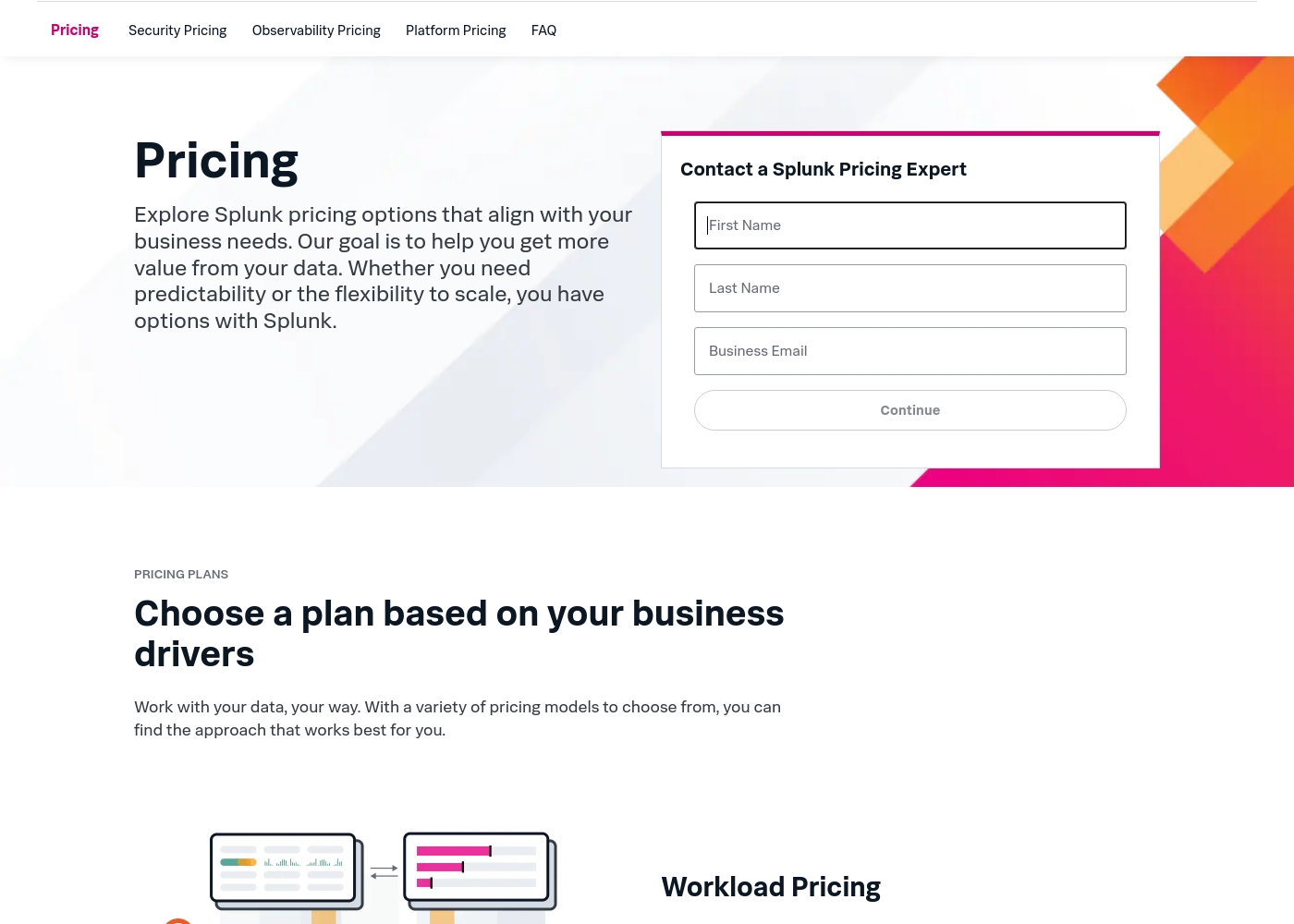
Splunk costs are Not explicitly stated per year with 2 plans: Ingest Pricing at Not explicitly stated, Activity-based Pricing at Not explicitly stated.
Take a look at the different ways you can manage your data costs below.
Ingest Pricing
Price: Not explicitly stated Websites Supported: Not explicitly stated Best For: Teams needing predictable costs for high-volume data ingestion Refund Policy: Not explicitly stated Other Features: Simple predictable approach, Economical search scaling, Broad data ingestion
- Search and analyze machine data
- Expanded use cases on ingested data
- Standard data ingestion
- Metric time series (MTS)
- Traces analyzed per minute
- Sessions monitoring
- Uptime requests
Pricing Notes
- OttoKit offers a clear, predictable cost with its one-time lifetime deals. Splunk's pricing is opaque and requires contacting sales.
- OttoKit's free plan is generous for small-scale use (250 tasks/month). Splunk only offers a free trial.
- OttoKit's cost is fixed per plan. Splunk's cost scales directly with your data volume or activity, which can be unpredictable.
- For agencies, OttoKit's Business Plus plan ($1299 one-time) includes unlimited workspaces. Splunk would require an enterprise contract.
Pricing Head-to-Head
用户评论
OttoKit 目前的外部反馈很少,Trustpilot 上只有一个详细的评论。这位用户报告了喜忧参半但最终令人担忧的体验。虽然该平台提供了强大的功能——评论者提到“它工作时运行良好”——但他们在测试中报告了可靠性方面的重大问题。所有三个测试的工作流都需要支持干预。支持响应被引用为缓慢(一个简单的问题修复花了长达七天时间),并且沟通有时显得生硬或没有帮助。这使得用户无法完全信赖 OttoKit 处理业务关键任务。此外,过度依赖廉价的终身优惠(LTD)引发了一个常见的行业危险信号,即长期支持和开发可能停止。用户应该意识到,尽管产品有望实现巨大潜力,但在完全依赖之前,其实际可靠性和支持响应速度可能需要改进。⚠️
我对 OttoKit 抱有很高的期望,但测试阶段却令人深感担忧。在我们构建的三个工作流中,所有流程都存在重大问题,需要支持。我现在无法相信这个产品能用于任何我的客户工作。
Based on the provided external sources, we couldn't retrieve detailed user reviews for Splunk due to access restrictions. Trustpilot and Capterra both returned verification or security pages, preventing us from gathering specific sentiment on accuracy, ease of use, support, or pricing.
This means our review is based solely on the official product information and pricing details provided. We recommend checking these review sites directly for the latest user feedback before making a decision.
我们的判断
This isn't a close race—it's a comparison of tools for different jobs. Splunk wins if you're an enterprise fighting security threats or drowning in data. OttoKit is your pick if you're a business owner drowning in repetitive tasks. OttoKit's superpower is making automation accessible. Its visual drag-and-drop builder lets you connect 1,200 apps without writing code. You can set up an AI agent to handle lead qualification for under $500 one-time. Splunk's superpower is making sense of chaos. It ingests data from 2,000 sources to give you one view of security and performance. It's the tool that helps you find a hidden threat or diagnose why an app is slow. The deciding factor is your core problem. If your problem is "I waste 10 hours a week copying data between apps," choose OttoKit. If your problem is "I can't see what's happening across our entire IT stack," choose Splunk. For most small businesses and WordPress users, OttoKit offers incredible value for workflow automation. For any organization where security and system performance are mission-critical, Splunk is the industry-standard powerhouse. Don't choose OttoKit for security analysis, and don't choose Splunk to automate your marketing emails.
常见问题
Can I use OttoKit to monitor my website's security like Splunk?
No, OttoKit is a workflow automation tool, not a security monitoring platform. Splunk is designed for security operations, threat detection, and log analysis. They solve completely different problems.
Is OttoKit cheaper than Splunk?
Yes, significantly for most users. OttoKit offers a free plan and one-time lifetime deals starting at $349. Splunk's pricing is customized for enterprises and based on data volume, typically costing thousands annually.
Which is easier to learn, OttoKit or Splunk?
OttoKit is much easier for non-technical users. Its drag-and-drop interface requires no coding. Splunk requires learning its Search Processing Language (SPL) and has a steeper learning curve.
Does Splunk integrate with WordPress like OttoKit does?
Splunk can ingest data from WordPress logs if configured, but it's not a focused integration. OttoKit is built specifically for WordPress, with a dedicated plugin to connect and automate tasks for your site.
Can OttoKit handle large amounts of data like Splunk?
No. OttoKit processes automation tasks based on your plan limits (e.g., 5,000 tasks/month). Splunk is engineered to search, analyze, and store petabytes of data from across an enterprise infrastructure.
Which tool is better for a small marketing team?
OttoKit is far better for a small marketing team. It can automate social posting, lead management, and reporting between apps. Splunk is an enterprise data tool overkill for typical marketing workflows.
准备好选择了?
这两个工具都有各自的优点。根据您的具体需求进行选择。