Glances vs Splunk
Glances and Splunk solve very different problems. Glances unifies your existing business apps into one live view. Splunk ingests and analyzes massive data volumes for security and operations. The right choice depends on your core pain point: workflow clutter or data overload.
Best for: Business teams wanting to unify daily workflows across Monday.com, QuickBooks, and Asana, Operations staff needing to perform cross-app actions without switching tabs
Best for: Security operations centers (SOCs) needing to detect and respond to threats, IT and DevOps teams monitoring complex infrastructure and application performance
强大的无代码集成
我们将 Glances 视为一种无代码集成,可将应用统一为一个实时的单一视图。我们很看重其引导式设置、跨工具的实时数据以及为团队成员提供的安全访问权限。总体而言,我们认为它是需要治理和跨工具工作流程的团队的可靠选择,尽管某些细节如年度定价尚未显示。
优点
- 无代码设置,并提供引导式连接选项
- 跨应用的统一实时视图
- 主要应用(Monday.com 和 QuickBooks)的实时数据同步
- 安全的数据访问,无需共享凭据
缺点
- 当前视图未显示年度定价
- 部分产品详情(例如支持的网站)未明确说明
- 退款政策未明确说明
- 按用户定价对大型团队来说可能会增加成本
Powerful but complex data platform.
We find Splunk offers a robust, unified platform for security and observability with extensive integrations and scalability. However, its pricing structure is opaque and usage-based, which can make cost planning challenging. Overall, it's a strong choice for enterprises needing deep data analysis, but smaller teams may find it complex and expensive.
优点
- Unified platform for security and observability.
- Over 2,000 integrations with various data sources.
- AI and automation for threat response.
- Handles massive data volumes at scale.
缺点
- Opaque pricing requires consultation with sales.
- Can be complex to set up and learn.
- Usage-based models may lead to unpredictable costs.
- External review access was blocked, limiting user sentiment data.
关于Glances
Glances 是一款无代码集成工具,可将您的业务应用统一到一个单一的实时视图中。它能帮助团队保持在一个位置,实时查看来自多个应用的数据,并在不离开当前工作流程的情况下执行操作。从 Asana 到 Zendesk,Glances 连接了各种业务应用。💡
关于Splunk
Splunk is a unified platform for security and observability. It's designed for teams that need to search, analyze, and act on data from any source. Whether you're a security analyst hunting threats or an engineer troubleshooting app performance, it brings everything together in one place. ✨
亮点
功能比较
功能概览
我们强调主要差异并为每个功能选择获胜者。
Core Purpose & Philosophy
Glances connects your business apps for daily workflows. Splunk ingests machine data for deep analysis.
Glances is a no-code integration layer. It pulls real-time data from apps like Asana and Zendesk into one view. You can take actions without leaving your current tab. Splunk is a unified platform for security and observability. It ingests logs, metrics, and traces from any source. Teams use it to search, analyze, and respond to events across their entire stack. The key difference is their fundamental goal. Glances aims to reduce app-switching for business teams. Splunk aims to provide a single pane of glass for operational and security data. For a marketing team, Glances unifies campaign data. For a security operations center, Splunk detects and responds to threats.
Ease of Setup & Use
Glances offers guided, no-code setup in minutes. Splunk's setup is complex and typically requires expertise.
Glances emphasizes a quick, no-code start. It offers Guided Connect to tailor your workflow. Most users report getting started without IT help. Splunk's setup is enterprise-grade. It involves planning data sources, configuring ingestion, and building dashboards. It often requires a dedicated engineer or professional services. The trade-off is power vs. simplicity. Glances prioritizes immediate value for business users. Splunk prioritizes comprehensive data collection for technical analysis. A small business owner can launch Glances in an afternoon. Deploying Splunk for a new environment can take weeks.
Data Handling & Security
Glances displays data live without storing it. Splunk ingests and stores data for analysis and compliance.
Glances pulls data in real-time when you view it. It does not store your app data, only minimal encrypted connection info. This simplifies the security model. Splunk ingests and indexes data. It stores this data for searching, analysis, and compliance reporting. This requires robust data governance and security controls. The difference is data residency. Glances is a transient viewer. Splunk is a persistent data repository. This impacts both security requirements and cost models. For teams handling sensitive data, Glances minimizes exposure. Splunk enables long-term trend analysis and audit trails.
Integration Scope
Glances connects business apps for workflow. Splunk connects data sources for observability and security.
Glances focuses on business applications like Monday.com, QuickBooks, and Asana. It enables actions like creating invoices or updating customer data across them. Splunk offers over 2,000 integrations. These are primarily technical sources: servers, clouds, network devices, and databases. It also integrates with business apps for broader context. The scope is different. Glances provides deep integration for specific business workflows. Splunk provides wide ingestion for comprehensive system visibility. Glances helps a sales team see CRM and support tickets together. Splunk helps an IT team see network logs and application errors together.
Analysis & Action
Glances enables direct actions across apps. Splunk enables powerful search, analysis, and automated responses.
Glances lets you take actions from its unified view. You can create a QuickBooks invoice or update a Monday.com task without switching tabs. It's about executing known tasks efficiently. Splunk lets you run complex queries against massive datasets. You can create dashboards, set up alerts, and build automated playbooks. It's about discovering unknown patterns and responding to incidents. Glances automates routine cross-app tasks. Splunk automates security and operational responses. The first is about productivity, the second about resilience. Using Glances, you might update a project status from an email. Using Splunk, you might automatically isolate a compromised server.
Pricing Model
Glances has transparent per-user plans. Splunk has opaque, usage-based pricing requiring a sales quote.
Glances lists clear monthly prices: $29 per user for Professional, or $99 for a bundled plan. You know what you'll pay upfront based on team size. Splunk's pricing is based on data volume or activity metrics. Costs can be unpredictable and require direct consultation with their sales team to get a quote. The difference is predictability. Glances offers cost certainty for budgeting. Splunk's costs scale with your data ingestion, which can vary widely. A startup can budget Glances easily. An enterprise using Splunk needs careful monitoring of data volumes to control costs.
Ideal Team Size & Type
Glances suits business and operations teams. Splunk suits security, IT, and data engineering teams.
Glances is built for business roles: project managers, accountants, and operations staff. It helps them work across their daily apps without technical overhead. Splunk is built for technical roles: security analysts, DevOps engineers, and SREs. It gives them the tools to monitor complex systems and respond to threats. The organizational focus is different. Glances improves business process efficiency. Splunk improves technical system reliability and security posture. A 50-person marketing agency would love Glances. A 500-person tech company with a SOC would need Splunk.
Learning Curve & Support
Glances has a gentle learning curve with guided help. Splunk has a steep curve and offers enterprise support.
Glances is designed for non-technical users. Its Guided Connect and simple interface mean most people learn it quickly. Support is geared toward onboarding. Splunk is powerful but complex. Mastering SPL (Search Processing Language) and dashboard creation takes significant time. Support is structured for enterprise clients. The investment is different. Glances offers quick ROI for daily tasks. Splunk offers long-term ROI but requires upfront training and expertise. You can train a new hire on Glances in a day. It takes months to become proficient with Splunk.
Glances 的费用为每月 29 至 99 美元,包含 2 个方案:专业版 29 美元/用户/月,Glances for monday.com & QuickBooks 99 美元/月。显示的定价反映按月计费;此处未显示年度定价。两个方案均提供免费试用,开始时无需信用卡。
下方的定价详情细分了每个方案为您带来的内容。
Professional
价格:每用户每月 29 美元 支持的网站:未明确说明 适合人群:需要对访问权限和跨应用可见性有强大控制的团队 退款政策:未明确说明 其他功能:
- 连接和搜索无限应用
- 管理团队角色和权限
- 安全的数据传输
- 为每个应用自定义视图
- 在其他应用中执行操作
- 连接和搜索无限应用
- 管理团队角色和权限
- 安全的数据传输
- 为每个应用自定义视图
- 在其他应用中执行操作
- 包含专业版的所有功能,外加最多 3 个用户
- 发票到 Monday 的实时同步
- 创建和发送 QuickBooks 估价单和发票
- 将 QuickBooks 估价单转换为发票
- 创建和更新客户及子客户
Take a look at the different ways you can manage your data costs below.
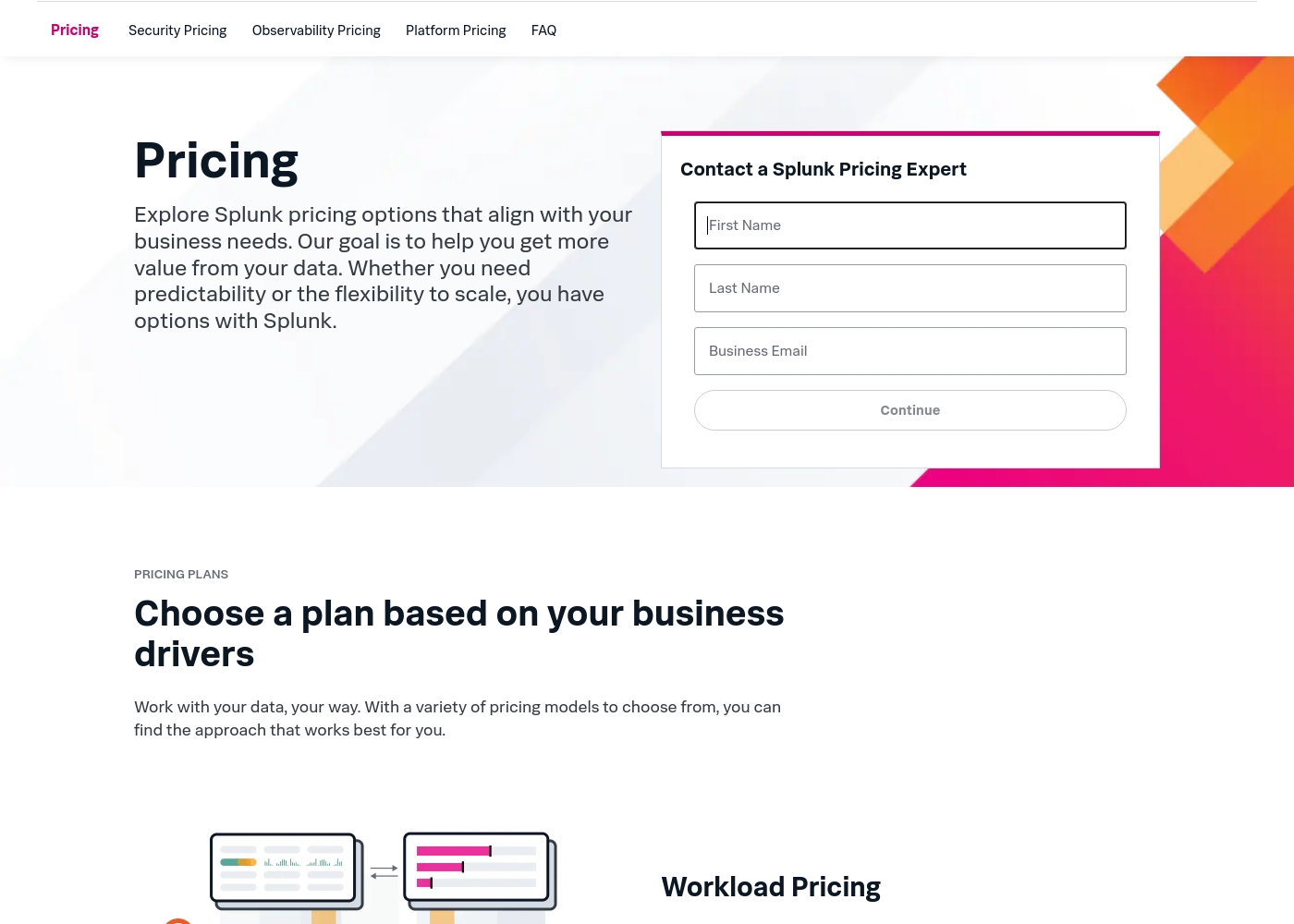
Ingest Pricing
Best For: Teams needing predictable costs for high-volume data ingestion Other Features: Simple predictable approach, Economical search scaling, Broad data ingestion
This plan is a great fit if you want a straightforward bill based on the amount of data you bring into the platform. It makes it easy to run extra searches without worrying about hidden fees. It's built for consistency and long-term planning.
- Search and analyze machine data
- Expanded use cases on ingested data
- Standard data ingestion
- Metric time series (MTS)
- Traces analyzed per minute
- Sessions monitoring
- Uptime requests
Pricing Notes
- Glances offers transparent, predictable pricing with two clear monthly plans.
- Splunk's pricing is usage-based and opaque, requiring sales consultation for a custom quote.
- Glances's $29/user/month plan makes costs easy to forecast for small teams.
- Splunk's costs can spike unexpectedly with data volume, requiring careful monitoring.
- Both offer free trials, but Glances emphasizes no credit card is required.
- Splunk is positioned as an enterprise solution, implying higher total cost of ownership.
Pricing Head-to-Head
用户评论
Capterra 上的评论表明,Glances 因其无代码方法、广泛的集成和清晰的统一实时数据视图而受到重视。我们没有收到 Trustpilot 的数据,但 Capterra 提到用户赞赏无需离开当前工作即可跨应用运行日常任务,这有助于节省时间和减少错误。该产品强调360 度视图、实时数据以及为团队成员提供的安全访问,并且免费试用过程很顺利。定价方面有两个方案——专业版 29 美元/用户/月,以及包含 monday.com 和 QuickBooks 的 99 美元/月的捆绑方案——试用无需信用卡。入职优势包括提供引导式连接选项来定制工作流程,无代码设置降低了入门门槛。它不是一个繁重的配置工具;它旨在提供治理和广泛的应用连接性,确保数据可靠地保留在原处。总而言之,对于寻求工具间一致性,同时希望保持设置精简和透明的团队来说,Glances 提供了实实在在的价值。👍
Glances 在不造成混乱的情况下统一了我们的应用。无代码设置帮助我们节省了数小时,实时视图使我们的团队在各个系统之间保持一致。
Based on the provided external sources, we couldn't retrieve detailed user reviews for Splunk due to access restrictions. Trustpilot and Capterra both returned verification or security pages, preventing us from gathering specific sentiment on accuracy, ease of use, support, or pricing.
This means our review is based solely on the official product information and pricing details provided. We recommend checking these review sites directly for the latest user feedback before making a decision.
我们的判断
For most business teams looking to simplify their daily workflow, Glances is the clear winner. It solves a very specific problem—app clutter—extremely well. If you're tired of tab-switching between Monday.com and QuickBooks, Glances unifies it in minutes, not months. Splunk's superpower is its raw analytical muscle. It ingests and makes sense of terabytes of data from your entire tech stack. This is indispensable for security analysts hunting threats or engineers debugging performance across a complex cloud environment. The deciding factor is your core challenge. Choose Glances if your team's productivity is hampered by disconnected business apps. Choose Splunk if your business is at risk from blind spots in your IT infrastructure. Final verdict: For a 20-person operations team, Glances will transform their day. For a 200-person company with a dedicated security team, Splunk is essential infrastructure. They solve different problems for different people.
常见问题
Which is better for small teams: Glances or Splunk?
Glances is generally better for small business teams. Its per-user pricing is predictable and its no-code setup requires no IT expertise. Splunk's complexity and usage-based model are often overkill for small teams.
Can Splunk do what Glances does with business apps like Monday.com?
Not exactly. Splunk can ingest data from Monday.com for analysis, but it's not designed for the daily, two-way workflow actions that Glances provides. Glances lets you create and update tasks directly.
Is Splunk worth the extra cost over Glances?
It depends entirely on your use case. If you need to analyze machine data for security or operations, Splunk is worth it. If you just need to unify business app workflows, Glances delivers more value at a lower cost.
How quickly can I get started with each tool?
You can start using Glances in minutes with its guided setup. Splunk's initial deployment and configuration for useful analysis typically takes days or weeks and requires technical skill.
Does Glances store my data like Splunk?
No, that's a key difference. Glances pulls data in real-time and doesn't store your app data. Splunk ingests and indexes data, storing it for searching and analysis, which has security and cost implications.
Which tool has more integrations?
Splunk has significantly more integrations (over 2,000), primarily for technical data sources. Glances focuses on deep, actionable integrations with a curated set of major business applications.
准备好选择了?
这两个工具都有各自的优点。根据您的具体需求进行选择。