Engine vs Splunk
Engine and Splunk are in completely different worlds. Engine handles business travel bookings and costs. Splunk analyzes machine data for security and IT. This comparison helps you pick the right tool for your actual job.
Best for: Construction crews and field teams needing coordinated travel, Event planners managing hotel blocks for conferences
Best for: Enterprise security teams needing threat detection, DevOps and SRE teams monitoring application performance
A free, solid platform for basic travel management.
We find Engine delivers on its core promise of being a free, all-in-one travel platform for businesses. It excels at consolidating bookings, billing, and reporting to save time and money. Overall, it's a strong, no-cost option for teams needing straightforward travel logistics, though it may lack advanced customization for complex needs.
优点
- Truly free core platform with no contracts or hidden fees.
- Saves significant time by centralizing flights, hotels, and car bookings.
- Users report savings of up to 60% through exclusive corporate rates.
- Consolidated DirectBill invoicing simplifies expense tracking.
缺点
- Optional FlexPro upgrade for maximum flexibility has undisclosed pricing.
- Some users mention occasional slow or inconsistent customer support.
- Travel inventory may be limited for certain specific dates or locations.
- Reporting and policy controls, while present, may be basic for larger enterprises.
Powerful but complex data platform.
We find Splunk offers a robust, unified platform for security and observability with extensive integrations and scalability. However, its pricing structure is opaque and usage-based, which can make cost planning challenging. Overall, it's a strong choice for enterprises needing deep data analysis, but smaller teams may find it complex and expensive.
优点
- Unified platform for security and observability.
- Over 2,000 integrations with various data sources.
- AI and automation for threat response.
- Handles massive data volumes at scale.
缺点
- Opaque pricing requires consultation with sales.
- Can be complex to set up and learn.
- Usage-based models may lead to unpredictable costs.
- External review access was blocked, limiting user sentiment data.
关于Engine
Engine is an all-in-one travel management platform for businesses. It helps companies book, manage, and track travel for teams, crews, or groups. Whether you're in construction, events, or the public sector, it centralizes your bookings and spending. 💡
关于Splunk
Splunk is a unified platform for security and observability. It's designed for teams that need to search, analyze, and act on data from any source. Whether you're a security analyst hunting threats or an engineer troubleshooting app performance, it brings everything together in one place. ✨
亮点
功能比较
功能概览
我们强调主要差异并为每个功能选择获胜者。
Core Purpose
Engine is for booking trips. Splunk is for analyzing data.
Engine is an all-in-one platform for business travel. It lets companies book flights, hotels, and cars. The goal is to centralize bookings and track spending. Splunk is a unified platform for security and observability. It searches, analyzes, and acts on data from any source. The goal is to provide real-time insights. The key difference is domain. Engine solves travel logistics. Splunk solves data analysis for IT and security teams.
Pricing Model
Engine is free for users. Splunk's cost is based on your data volume.
Engine is free for businesses. Hotels pay a commission on bookings. There are no contracts or minimum spends. An optional FlexPro upgrade has undisclosed pricing. Splunk uses usage-based pricing. You can choose an Ingest model (pay by data volume) or an Activity-based model (pay by metrics). You must contact sales for a quote. The trade-off is predictability. Engine offers zero cost. Splunk's bill scales with your usage, which can be unpredictable.
Integration Ecosystem
Splunk connects to 2,000+ data sources. Engine connects to a few key business tools.
Engine offers 'streamlined integrations' with ERP and HR tools. The exact number of supported platforms isn't listed. It's focused on spend management workflows. Splunk boasts over 2,000 integrations. It ingests logs, metrics, and traces from virtually any source. This includes business apps, databases, and IT services. Splunk is built for massive connectivity. Engine's integrations are more limited and targeted to its travel niche.
User Interface
Engine has a simple travel dashboard. Splunk has a powerful but complex data UI.
Engine provides an intuitive dashboard for travel bookings and spend. It's designed for clarity, showing all team trips in one view. The focus is on simplicity. Splunk's interface is for searching and visualizing complex datasets. It's powerful but noted as having a steep learning curve. It's built for technical users. The difference is user type. Engine's UI is for travel managers. Splunk's UI is for data analysts and security engineers.
Automation
Splunk automates threat response. Engine automates booking policies.
Engine allows you to set travel policies and spending controls. This automates compliance for your team's bookings. It's policy-based automation. Splunk uses AI for high-fidelity alerts and automated workflows. It can investigate and respond to security incidents automatically. It's action-based automation. Splunk's automation is more advanced, tackling real-time threats. Engine's automation streamlines administrative tasks.
Reporting & Analytics
Engine tracks travel dollars. Splunk analyzes machine data trends.
Engine provides clear reporting on travel spend. You can track expenses by project, job number, or cost code. It's financial and operational reporting. Splunk offers real-time insights from logs, metrics, and traces. It helps you monitor performance, detect issues, and analyze trends. It's technical and performance analytics. The insight type is different. Engine gives you cost control. Splunk gives you system visibility and business impact analysis.
Customer Support
Engine offers 24/7 live support. Splunk's support details are unclear.
Engine provides 24/7 live support. Users describe it as responsive and helpful. Specific SLAs aren't mentioned on their site. Splunk's support details are not on their public pricing pages. You'd need to contact their sales team. The complexity of their platform suggests a need for robust support. Engine has a clear support promise. Splunk's support structure is opaque for prospective users.
Scalability
Splunk is built for enterprise data scale. Engine scales with your team size.
Engine is built for businesses from startups to large enterprises. It handles travel for crews, events, and sports teams. Its scale is about group size. Splunk is designed for the world's leading enterprises. It handles massive volumes of machine data across any environment. Its scale is about data volume and complexity. Splunk operates at a fundamentally different scale. Engine grows with your people; Splunk grows with your data.
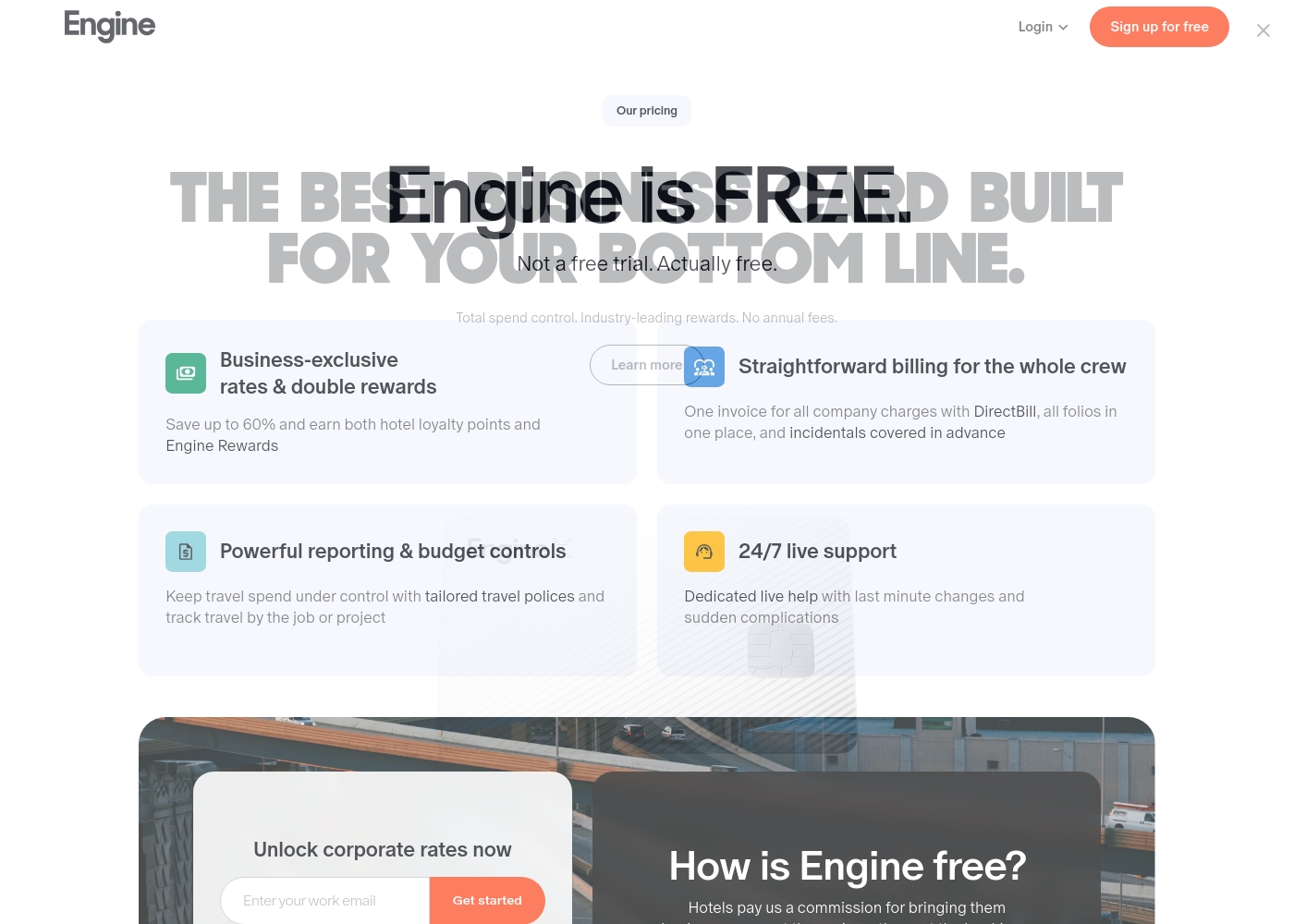
Engine costs $0 with 1 plan: Standard at $0 per month.
See how our free platform helps your business save on every trip.
Standard
Price: $0 per month Best For: Businesses and crews of all sizes Other Features: Exclusive rates up to 60% off, consolidated billing via DirectBill, 24/7 live support, Engine Rewards and hotel points, budget controls and reporting
- Save up to 60% on rates
- Earn hotel points and Engine Rewards
- Consolidated DirectBill invoicing
- 24/7 live support
- Travel policies and reporting
- Cancel until noon day-of check-in
- Pay only for nights used
- Unlimited changes
- No blackout dates
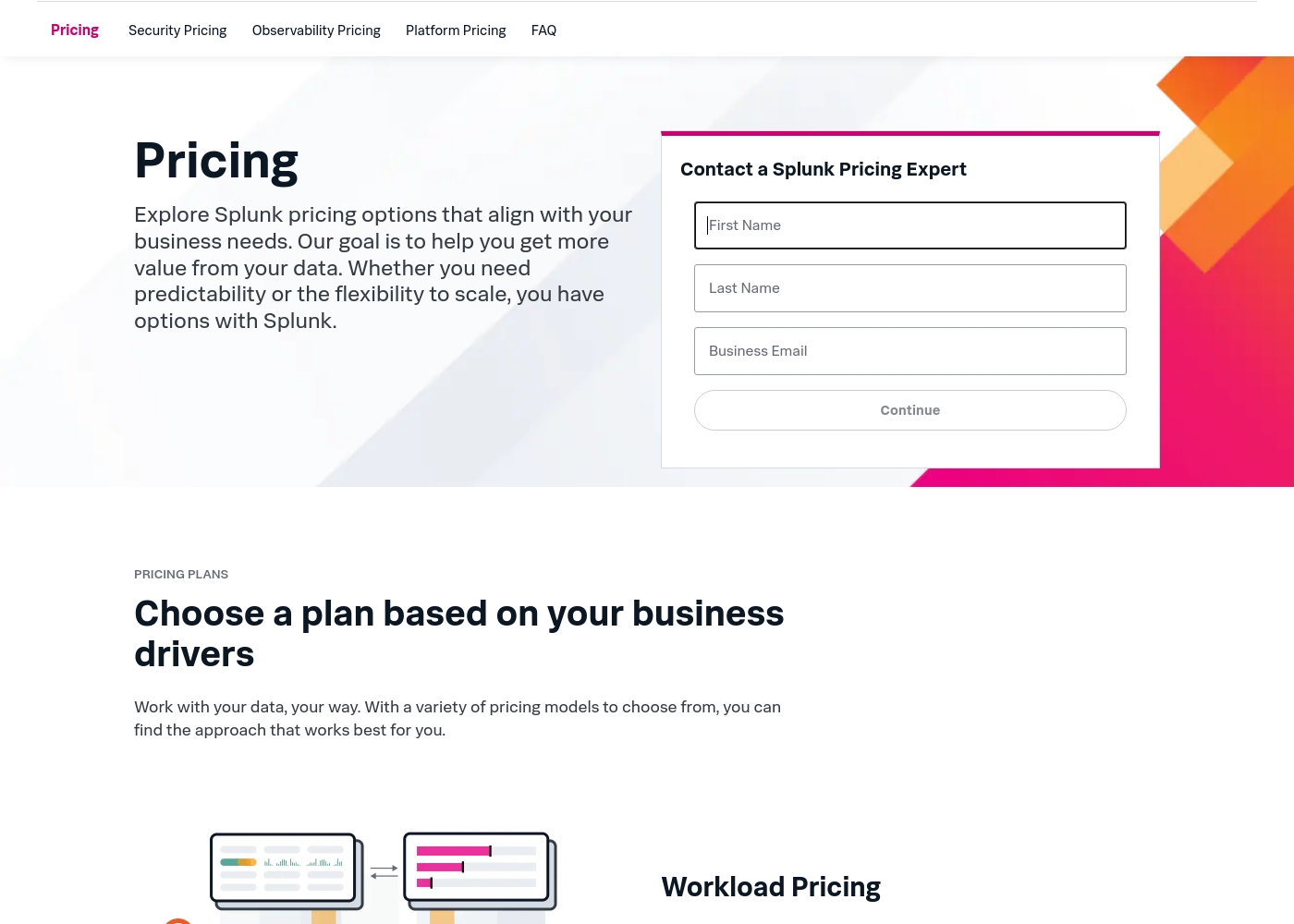
Take a look at the different ways you can manage your data costs below.
Ingest Pricing
Best For: Teams needing predictable costs for high-volume data ingestion Other Features: Simple predictable approach, Economical search scaling, Broad data ingestion
This plan is a great fit if you want a straightforward bill based on the amount of data you bring into the platform. It makes it easy to run extra searches without worrying about hidden fees. It's built for consistency and long-term planning.
- Search and analyze machine data
- Expanded use cases on ingested data
- Standard data ingestion
- Metric time series (MTS)
- Traces analyzed per minute
- Sessions monitoring
- Uptime requests
Pricing Notes
- Engine's Standard plan is truly free with no contracts. Hotels pay a commission.
- The optional FlexPro upgrade adds cancellation flexibility but its pricing is undisclosed.
- Splunk's pricing is customized and requires contacting sales for a quote.
- Splunk's usage-based models can lead to unpredictable costs if data volume spikes.
Pricing Head-to-Head
用户评论
Based on external review platforms, Engine consistently earns praise for its truly free model and ease of use. Users highlight the significant cost savings (up to 60% off) and the simplicity of having all bookings and billing in one place.
The support team is frequently described as responsive and helpful. However, some reviewers note occasional issues with customer service response times and limited inventory for specific dates or locations.
Engine has been a game-changer for booking travel for our field crews. The interface is simple, and the savings on hotels are real. Consolidated billing makes my accounting life so much easier.
Based on the provided external sources, we couldn't retrieve detailed user reviews for Splunk due to access restrictions. Trustpilot and Capterra both returned verification or security pages, preventing us from gathering specific sentiment on accuracy, ease of use, support, or pricing.
This means our review is based solely on the official product information and pricing details provided. We recommend checking these review sites directly for the latest user feedback before making a decision.
我们的判断
This is a mismatch of epic proportions. Engine and Splunk are built for entirely different jobs. Choosing between them is like choosing between a hammer and a microscope. Engine's superpower is saving you time and money on business travel. It's completely free for you to use. Companies report saving an average of 26% on travel costs. Splunk's superpower is making sense of massive amounts of machine data. It unifies security and observability. Over 2,000 integrations let you pull in data from anywhere. The deciding factor is your problem. Need to book hotels for a crew and track the budget? Pick Engine. Need to analyze server logs to stop a cyberattack? Pick Splunk. Final verdict: They aren't competitors. Engine is the best choice for free business travel management. Splunk is the best choice for enterprise data analysis and security. Make your decision based on whether you're booking a trip or debugging a system.
常见问题
Which is better for small teams: Engine or Splunk?
Engine is ideal for small teams managing travel. It's free and easy to set up. Splunk is often too complex and expensive for small teams without major data needs.
Does Engine have data analysis features like Splunk?
No, Engine's reporting is focused on travel spend and policies. Splunk is a full data analysis platform for logs, metrics, and traces. They serve different purposes.
Is Splunk worth the extra cost over Engine?
They aren't directly comparable costs. Engine is free. Splunk's cost is based on data volume and is for a completely different use case. Value depends on your need.
Can I use Engine for IT monitoring?
No. Engine is a travel management platform. It books flights and hotels. Use Splunk for IT monitoring, security, and observability.
What if my data volume spikes on Splunk?
Your costs will increase, as Splunk uses usage-based pricing. Monitor your data ingestion carefully. Engine has no such risk as it is free.
Does Engine integrate with our expense software?
Engine offers streamlined integrations with ERP and HR tools. Check their documentation for your specific software. Splunk has over 2,000 integrations.
准备好选择了?
这两个工具都有各自的优点。根据您的具体需求进行选择。