Drip vs Etsy
This is an apples-to-oranges comparison, but a common one. Drip is a powerful email marketing tool for your online store. Etsy is the marketplace where you sell your handmade or vintage goods.

Powerful for e-commerce, but check the support.
We find Drip to be a highly capable email automation platform built specifically for B2C e-commerce. Its visual builder and smart segmentation are standout features for creating personalized customer journeys. Overall, it's a strong choice for online brands, provided your team can manage the learning curve and verify support levels.
优点
- Excellent visual workflow builder for automation
- Deep e-commerce integrations (Shopify, WooCommerce)
- Powerful, behavior-based segmentation tools
- Free migration for large lists (17,500+)
缺点
- Pricing can become expensive as contacts scale
- Some users report slow or inconsistent customer support
- Requires integration with compatible platforms
- Advanced features may have a learning curve
独特发现,但运营上有烦恼。
我们认可 Etsy 提供独特、手工制作商品和强大个性化选项的强大理念。然而,外部评论揭示了长期存在的运营问题,尤其是在系统稳定性和客户服务响应能力方面。总的来说,该平台有价值的市场定位被大量影响买卖双方关键可靠性因素的失败所严重削弱。
优点
- 可以接触到大量独特的、手工制作的和复古的商品。
- 支持强大的产品个性化定制(雕刻、刺绣)。
- 定价模式采用低廉的刊登费,而非强制性的月度订阅。
- 支持独立和小型企业的有效平台。
缺点
- 据广泛报告,客户支持无益、不足或完全不存在。
- 买家和卖家账户经常无故被暂停,且没有明确原因或解释。
- 误导性商品刊登和诈骗卖家(准确性差)的事件发生率很高。
- 交货、运输延误和跟踪信息错误的可靠性问题非常普遍。
关于Drip
Drip is an email marketing automation platform built for B2C companies that sell online. Whether you're an e-commerce brand, a course creator, or a travel provider, it gives you the tools to move beyond generic newsletters. It's designed to be a powerful yet simple engine for driving revenue through personalization. 💡
关于Etsy
Etsy 是一个充满活力的在线市场,致力于提供所有独特和手工制作或复古的商品。在这里,您可以找到超出普通商店购买范围的商品,确保您的购物体验充满个性。这个目的地非常适合寻找原创商品的购物者,商品范围从马克杯、家居用品到珠宝和服装不等。Etsy 专注于提供与收礼人一样特别的礼物,优先考虑独特的工艺。它也是发现满足特定爱好的必需品的好地方。💡
亮点
功能比较
功能概览
我们强调主要差异并为每个功能选择获胜者。
Core Purpose & Function
Drip automates email marketing for your existing store. Etsy is the entire store and marketplace.
Drip is a specialized email tool. It connects to platforms like Shopify to send automated, personalized messages. You use it to market products you already sell elsewhere. Etsy is a full online marketplace. It provides the storefront, the audience, and the payment processing. You sell your unique items directly to shoppers browsing Etsy. The key difference is infrastructure. Drip is a marketing engine. Etsy is the entire sales ecosystem. For example, Drip would send an abandoned cart email to a customer who left your Shopify store. Etsy would be the platform where that customer found your handmade jewelry in the first place.
Pricing & Fees
Drip charges monthly based on your contact list. Etsy takes a cut of each sale.
Drip's pricing starts at $39/month for up to 2,500 contacts. You pay for the marketing tool, and your email sends are unlimited. Etsy has no monthly fee. You pay $0.20 per listing and a 6.5% transaction fee plus payment processing when you make a sale. This is a fixed cost vs. variable cost model. Drip is a predictable marketing expense. Etsy's costs only come when you earn revenue. For a brand doing $10k/month on Shopify, Drip's fee is a flat line item. For an Etsy seller, fees are a percentage of their top line.
Ease of Use & Setup
Drip connects to your store; Etsy IS your store. Both have learning curves.
Drip requires you to connect it to your e-commerce platform first. Once connected, its visual builder makes creating emails relatively straightforward. Etsy's setup involves creating a shop, writing listings, and photographing products. It's the work of building a business, not just connecting a tool. Drip has a learning curve for advanced automation. Etsy has a learning curve for product presentation and SEO. A Drip user might spend a day setting up a welcome flow. An Etsy seller might spend a week perfecting their first 10 product listings.
Customer Support & Reliability
Drip has strong reported satisfaction. Etsy's support is a major user complaint.
Drip highlights a 97.3% customer satisfaction score. Users can get live chat support and fast email responses. Etsy reviews are filled with complaints about unhelpful, generic customer support. Sellers report issues with account suspensions and withheld funds. The difference is stark. Drip's support is positioned as a key feature. Etsy's support is a significant pain point for its users. This could determine your day-to-day experience. One helps you succeed; the other might block you.
Target Audience & Use Case
Drip is for B2C brands marketing their own store. Etsy is for creators selling unique items.
Drip is ideal for e-commerce brands, course creators, and travel providers. It's for anyone with an existing store needing better marketing. Etsy is designed for makers of unique, handmade, or vintage goods. It's for creators who need a marketplace to reach buyers. You choose Drip if you already have a shop. You choose Etsy if you need the shop and the audience. An apparel brand on Shopify uses Drip. A jewelry maker who works from home uses Etsy.
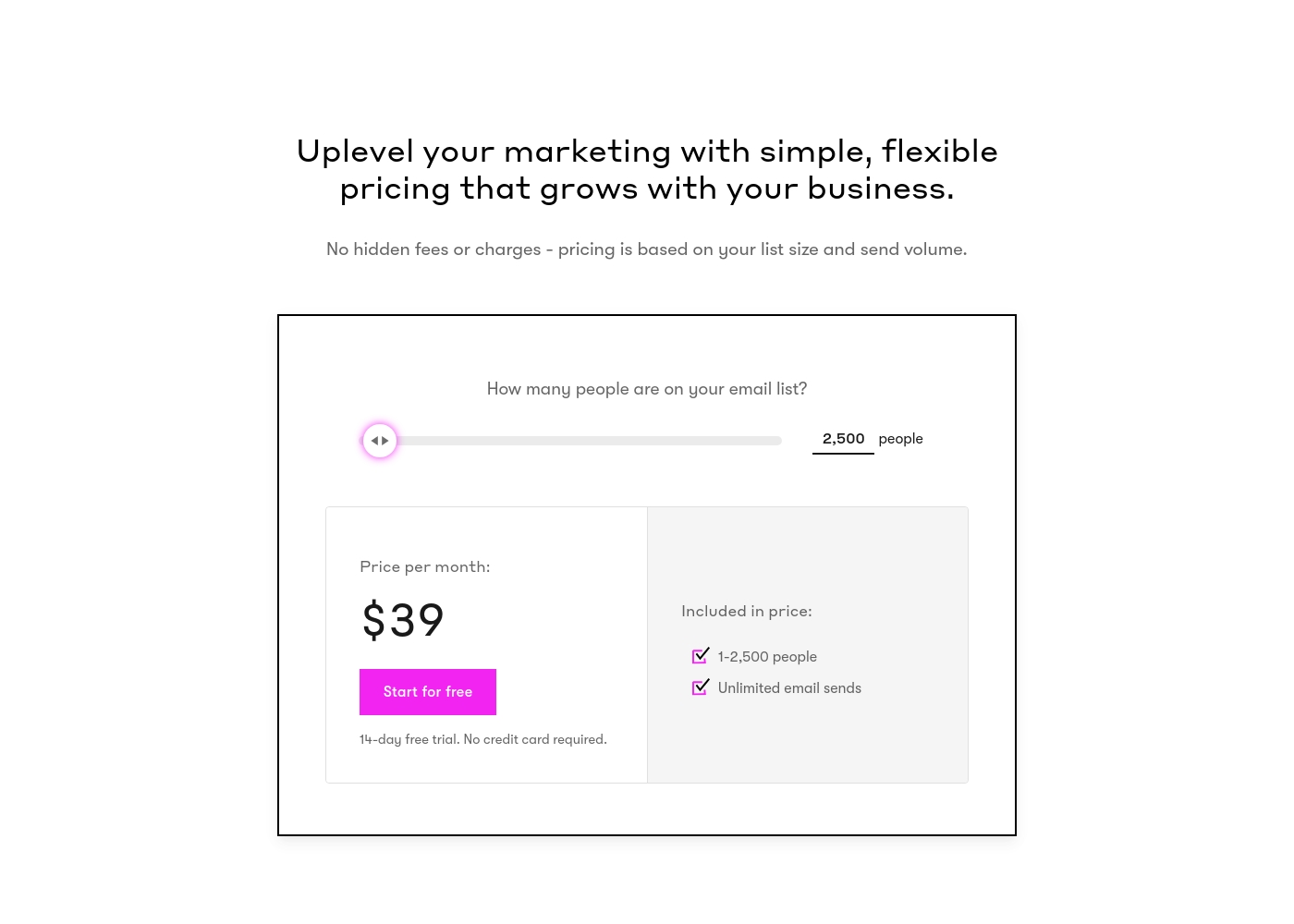
Drip pricing: Drip offers a flexible, usage-based subscription starting at $39/month for up to 2,500 people. Pricing scales based on your email list size and includes a 14-day free trial with no credit card required to start browsing its powerful automation tools tool and visual builder.
Your monthly cost increases as your audience grows, but you always get features like unlimited email sends and onsite campaigns. This ensures you only pay for what you actually use while accessing expert support and pre-built marketing playbooks right from the start.
You can cancel your subscription at any time within your billing settings if your business needs change. This model is specifically designed for e-commerce brands looking for deep segmentation and personalized customer journeys without enterprise-level complexity or hidden fees.
Etsy 的费用主要涉及刊登商品或完成销售时的费用,没有强制性的额外月度费用。最低固定费用是每件刊登商品 0.20 美元,交易费从 6.5% 起,外加支付处理费。
为了解 Etsy 的销售运作方式,我们详述了您在设置店铺和销售产品时应预期的必要费用。
刊登费
价格:每件刊登商品 0.20 美元 支持的网站:未明确说明 最适合:所有希望在平台上发布商品的卖家 退款政策:未明确说明 其他特色:
- 刊登有效期为四个月
- 在商品售出前一直需要支付费用
- $0.20 美元/件刊登商品
- 有效期四个月或直到售出
- 发布商品必需
- 销售价格的 6.5% 交易费
- 3% + $0.25 支付处理费
- 仅在成功销售时支付
- 当广告产生销售时收取 15% 的费用
- Etsy 在主要外部网站上投放广告
- 对大多数卖家可选
Pricing Notes
- Drip is a fixed monthly marketing cost based on list size. Etsy has no monthly fee but takes ~9.5% of each sale price.
- For low-volume sellers, Etsy's fee model is cheaper. For high-volume brands, Drip's flat fee provides predictable costs.
- Drip offers a 14-day free trial with no credit card. Etsy has no trial; you pay as you go.
Pricing Head-to-Head
用户评论
We found a mixed bag of user sentiment from Trustpilot, as the Capterra link was inaccessible. Reviews praise Drip's powerful automation and segmentation for driving revenue, with many noting its ease of use for e-commerce.
💡 On the downside, several users report frustration with customer support responsiveness and occasional platform glitches. Pricing is frequently cited as a concern, with some feeling the cost can escalate quickly as contacts grow.
Drip's automation tools are top-notch. We set up abandoned cart sequences that really boosted our recovery rate. The visual builder makes it easy to see the customer journey.
公众对 Etsy 的评价非常苛刻,收到了买卖双方的大量负面反馈,排名极低。虽然支持独立创作者的核心理念受到重视,但平台在执行层面一致受到批评。一个主要主题是支持响应不力:用户发现客服无益、难以联系,并经常只收到通用回复。可靠性是另一个重要问题;许多买家报告称商品延迟送达、跟踪号码无效或根本没有收到购买的商品。此外,用户经常遇到商品准确性问题,注意到那些被宣传为手工或复古的商品往往是廉价的大规模生产的垃圾,有时甚至带有主要零售商的标签。对于卖家来说,任意或未解释的账户暂停是一个反复出现的威胁,有时还伴随着长达 180 天的款项冻结。在结账或初始账户设置过程中出现技术错误也会导致即时沮丧和封号。这种持续的模式表明运营管理严重辜负了用户。👎
我的账户无缘无故被永久封禁,而且他们不愿说明原因。我反复联系支持部门询问封禁事宜,但只收到了千篇一律、毫无帮助的回复。这太令人沮丧了。
我们的判断
This comparison isn't about which tool is better—it's about which job you need done. For email marketing, Drip wins. For selling handmade goods, Etsy wins. Drip's superpower is turning browsers into buyers. Its automation and segmentation tools let you send hyper-personalized emails at scale. It's a growth engine for your existing online store. Etsy's superpower is providing an instant marketplace. It connects you to millions of shoppers specifically looking for unique, handmade, or vintage items. It's a sales channel from day one. The deciding factor is your starting point. If you already have a store and need to boost sales, choose Drip. If you need a platform to host and sell your creations, choose Etsy. Final verdict: They serve entirely different purposes. Use Drip to market your products. Use Etsy to sell them. Many brands might even use both—selling on Etsy while building their own store with Drip marketing.
常见问题
Can I use Drip to send emails to my Etsy customers?
Not directly. Drip integrates with e-commerce platforms like Shopify, not with Etsy. You would need to export customer data from Etsy, which is not recommended or supported. They are separate ecosystems.
Which is cheaper to start: Drip or Etsy?
Etsy is cheaper to start. There's no monthly fee; you only pay $0.20 per listing. Drip requires a monthly subscription starting at $39, though it offers a 14-day free trial.
I sell on Shopify. Should I use Drip or Etsy?
Use Drip. It integrates directly with Shopify to automate your email marketing. Etsy is a separate marketplace; you could list some products there, but it won't integrate with your Shopify store's marketing.
Is Etsy a good platform for selling handmade jewelry?
Yes, Etsy is designed for unique, handmade goods like jewelry. It has a built-in audience for these items. Be mindful of the ~9.5% total fees per sale and potential support issues.
Does Drip have a free plan?
Yes, Drip offers a free plan for up to 2,500 people. This is great for small stores starting out. Paid plans unlock more features and support as your list grows.
Why are there so many bad reviews for Etsy?
Common complaints include unhelpful customer support, arbitrary account suspensions, and shipping reliability. Many sellers feel the platform doesn't adequately protect them.