OttoKit vs Splunk
OttoKit and Splunk solve totally different problems. OttoKit is a no-code workflow automator for connecting apps. Splunk is an enterprise data platform for security and observability. Your choice depends entirely on whether you need to automate tasks or analyze massive data streams.
Các tính năng tham vọng cần sự ổn định tốt hơn.
Chúng tôi thấy các tính năng của OttoKit—như AI Agents và trình tạo trực quan—rất hứa hẹn, đặc biệt khi kết hợp với mức giá LTD thân thiện với ngân sách. Nhìn chung, chúng tôi phải cảnh báo người dùng về những rủi ro tiềm ẩn liên quan đến độ tin cậy của quy trình công việc và thời gian phản hồi chậm của bộ phận hỗ trợ khách hàng.
Ưu điểm
- Truy cập các tính năng nâng cao như AI Agents và Human in the Loop (HITL).
- Cấu trúc giá Mua trọn đời (LTD) một lần cạnh tranh cao.
- Trình tạo luồng công việc kéo và thả trực quan, không cần code.
- Tích hợp liền mạch được thiết kế đặc biệt cho các trang WordPress.
Nhược điểm
- Báo cáo gặp sự cố đáng kể về độ tin cậy và chức năng của luồng công việc.
- Thời gian phản hồi hỗ trợ có thể rất chậm (lên đến bảy ngày để khắc phục).
- Giao tiếp hỗ trợ đôi khi được nhận xét là thẳng thừng hoặc không hữu ích.
- Lo ngại về mô hình hỗ trợ lâu dài do chiến lược LTD (Mua trọn đời) nặng nề.
Powerful but complex data platform.
We find Splunk offers a robust, unified platform for security and observability with extensive integrations and scalability. However, its pricing structure is opaque and usage-based, which can make cost planning challenging. Overall, it's a strong choice for enterprises needing deep data analysis, but smaller teams may find it complex and expensive.
Ưu điểm
- Unified platform for security and observability.
- Over 2,000 integrations with various data sources.
- AI and automation for threat response.
- Handles massive data volumes at scale.
Nhược điểm
- Opaque pricing requires consultation with sales.
- Can be complex to set up and learn.
- Usage-based models may lead to unpredictable costs.
- External review access was blocked, limiting user sentiment data.
VềOttoKit
OttoKit là một nền tảng đám mây trực quan kết nối hơn 1.200 ứng dụng với nhau. Nó giúp bạn tự động hóa những gì quan trọng trên tất cả các nền tảng kinh doanh của mình. Công cụ này lý tưởng cho các agency, doanh nhân thương mại điện tử và người xây dựng cộng đồng muốn quy trình tự chạy 💡.
OttoKit sử dụng canvas kéo và thả thân thiện để tạo các Luồng công việc Trực quan 💡. Bạn không cần bất kỳ kỹ năng mã hóa nào để xây dựng các hoạt động tự động hóa mạnh mẽ. Nó cũng là giải pháp tự động hóa hàng đầu được thiết kế đặc biệt để tích hợp với các trang WordPress.
VềSplunk
Splunk is a unified platform for security and observability. It's designed for teams that need to search, analyze, and act on data from any source. Whether you're a security analyst hunting threats or an engineer troubleshooting app performance, it brings everything together in one place. ✨
Điểm nổi bật
So sánh tính năng
Tổng quan về tính năng
Chúng tôi làm nổi bật những khác biệt chính và chọn người chiến thắng cho từng tính năng.
User Interface
OttoKit uses a friendly drag-and-drop canvas. Splunk uses a powerful search-based interface.
OttoKit's interface is built for visual workflow creation. You drag blocks and connect them. No coding is needed. This makes it accessible for marketers and business owners. Splunk's interface centers on its Search Processing Language (SPL). It's designed for querying and analyzing massive datasets. It's incredibly powerful but has a steep learning curve. The key trade-off is ease of use vs. analytical power. OttoKit gets you automating in minutes. Splunk requires training but unlocks deep data insights.
Integration Ecosystem
Both have thousands of integrations, but for different purposes. OttoKit connects apps to automate tasks.
OttoKit offers 1,200+ app integrations. These are for creating workflows. Examples include Stripe, ActiveCampaign, and Google Sheets. You connect them to automate data flow. Splunk integrates with over 2,000 data sources. These are for ingesting logs, metrics, and traces. Examples include firewalls, databases, and cloud services. The goal is a unified analysis view. OttoKit integrates to *act* on data between apps. Splunk integrates to *analyze* data from apps. Your needs determine the better ecosystem.
Automation & AI
OttoKit automates business tasks with AI Agents. Splunk automates security responses with AI.
OttoKit's automation is its core feature. You build workflows with conditions and triggers. It includes AI Agents that monitor data and take actions 24/7. You can also approve steps with Human-in-the-Loop. Splunk's automation focuses on threat response. It uses AI to create high-fidelity alerts from noise. Automated workflows then investigate incidents. This helps security teams act faster. OttoKit automates general business processes. Splunk automates specialized security and IT operations. One is broad, the other is deep.
Reporting & Analytics
OttoKit provides simple workflow logs. Splunk is a full-fledged analytics powerhouse.
OttoKit tracks workflow execution. You can see run history and replay failed tasks. Alerts notify you of failures. It's operational monitoring, not business intelligence. Splunk is built for advanced analytics. It creates real-time dashboards from any data. You can perform complex searches across petabytes of data. This is for deep operational and business insights. If you need to *see* how your business runs, choose OttoKit. If you need to *analyze* why something is happening across your entire stack, choose Splunk.
Pricing Model
OttoKit uses simple one-time payments. Splunk uses complex, usage-based subscriptions.
OttoKit's pricing is straightforward. You pay a one-time fee for a lifetime plan. The Pro plan costs $349 once. You get a set number of tasks per month. Splunk's pricing is customized and opaque. You contact sales for a quote. Costs are based on data volume or activity metrics. This can lead to unpredictable bills. OttoKit offers cost certainty and lower entry. Splunk's pricing scales with your data needs but is harder to predict upfront.
Learning Curve
OttoKit is designed for quick, no-code adoption. Splunk requires significant technical training.
You can start building automations in OttoKit immediately. The visual builder is intuitive. Most users report a gentle learning curve. Tutorials are available for advanced features. Mastering Splunk takes dedication. You need to learn SPL for querying. Understanding its data models requires technical skill. Enterprise rollouts often involve professional services. For a non-technical team, OttoKit is ready on day one. For a data analyst, Splunk is a long-term investment in capability.
Scalability
OttoKit scales with task limits per plan. Splunk scales to handle massive enterprise data volumes.
OttoKit's scaling is defined by your plan. The Business Plus plan offers 30,000 tasks/month. You can upgrade if you hit limits. It scales for business process volume. Splunk is built to scale infinitely. It ingests terabytes of data daily. It powers monitoring for global enterprises. The architecture is designed for massive scale. OttoKit scales with your business *workload*. Splunk scales with the *data* your technology generates. These are fundamentally different scaling axes.
Customer Support
OttoKit offers premium support with paid plans. Splunk's support is part of enterprise contracts.
OttoKit includes 'Premium Support' with paid plans. User reports suggest slow response times (up to 7 days). Communication quality has been criticized. Reliability concerns affect trust. Splunk support is tied to enterprise agreements. Specific SLAs aren't public. For an enterprise, support is a contract negotiation item. Effectiveness varies by plan. OttoKit's support is a known pain point for some. Splunk's support is a standard enterprise service, not a differentiator for most.
Security Features
OttoKit has basic operational security. Splunk is a core platform for security operations.
OttoKit provides standard web application security. It mentions data security in FAQs but lacks details. It's not a security tool itself. Splunk is a Security Information and Event Management (SIEM) leader. It's used for threat detection, investigation, and response. Security is its primary function. Comparing these is like comparing a car's seatbelt to a whole security guard system. OttoKit has basic safety. Splunk *is* the security infrastructure.
OttoKit có giá từ $0 đến $1.299,00 (thanh toán một lần) với 4 gói: Miễn phí ở mức $0, Pro ở mức $349,00, Business ở mức $649,00 và Business Plus ở mức $1.299,00.
Đây là bảng phân tích của bốn lựa chọn có sẵn.
Free
Giá: $0 Trang web được hỗ trợ: Không nêu rõ Tốt nhất cho: Bất kỳ ai bắt đầu với tự động hóa và các tính năng cơ bản. Chính sách hoàn tiền: Không áp dụng Các tính năng khác:
- 1 Không gian làm việc
- 20 Luồng công việc
- 1 Kết nối WordPress
- Các ứng dụng cốt lõi giới hạn
- 20 Luồng công việc
- 1 Kết nối WordPress
- Tất cả Tích hợp có sẵn
- Hỗ trợ Tiêu chuẩn
- AI Agents
- Luồng công việc không giới hạn
- Hỗ trợ Cao cấp
- MCP
- AI Agent
- Luồng công việc không giới hạn
- Hỗ trợ Cao cấp
- 5 Không gian làm việc
- Kết nối WordPress không giới hạn
- MCP
- Luồng công việc không giới hạn
- Không gian làm việc không giới hạn
- Kết nối WordPress không giới hạn
- Hỗ trợ Cao cấp
- MCP
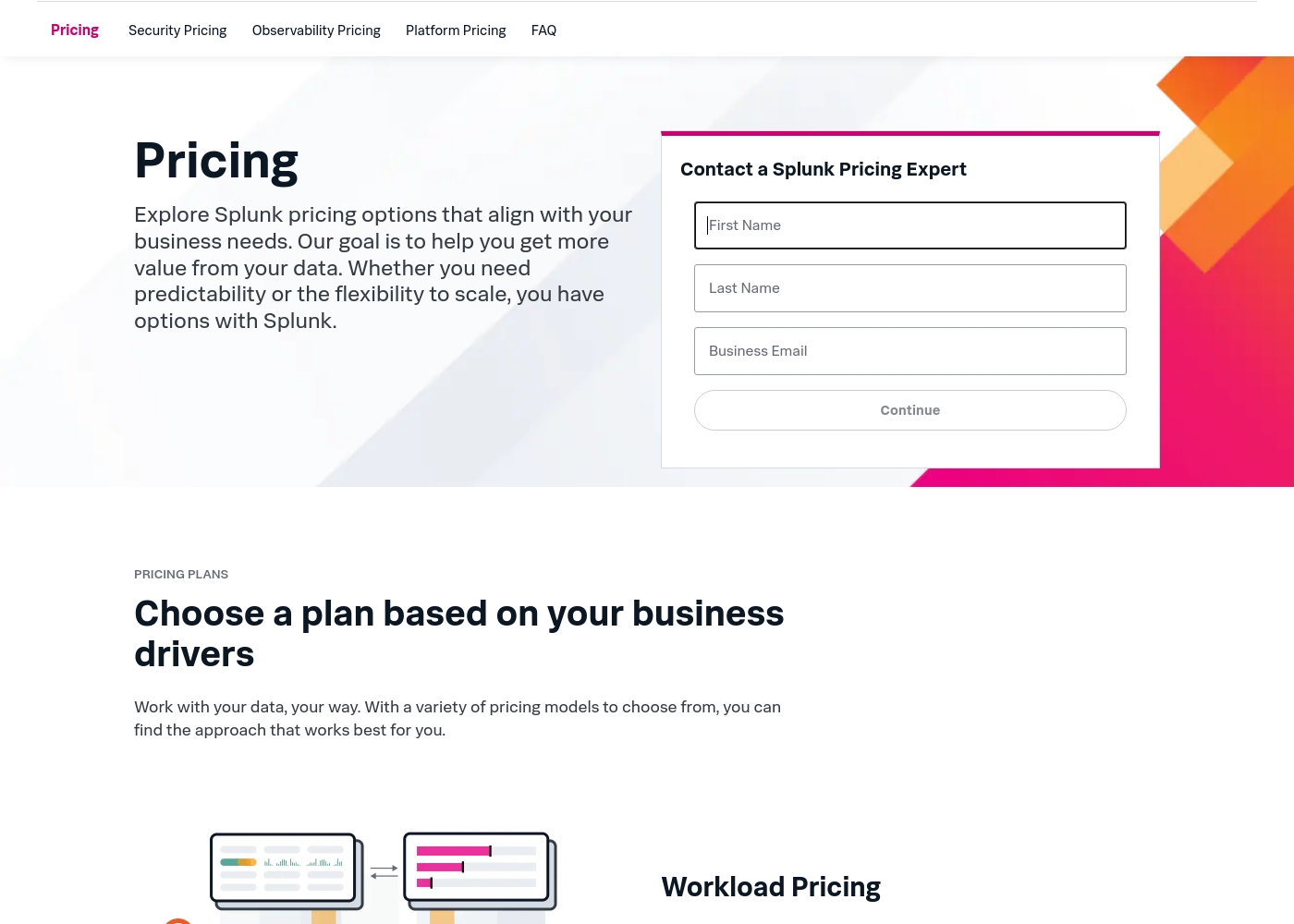
Splunk costs are Not explicitly stated per year with 2 plans: Ingest Pricing at Not explicitly stated, Activity-based Pricing at Not explicitly stated.
Take a look at the different ways you can manage your data costs below.
Ingest Pricing
Price: Not explicitly stated Websites Supported: Not explicitly stated Best For: Teams needing predictable costs for high-volume data ingestion Refund Policy: Not explicitly stated Other Features: Simple predictable approach, Economical search scaling, Broad data ingestion
- Search and analyze machine data
- Expanded use cases on ingested data
- Standard data ingestion
- Metric time series (MTS)
- Traces analyzed per minute
- Sessions monitoring
- Uptime requests
Pricing Notes
- OttoKit offers a clear, predictable cost with its one-time lifetime deals. Splunk's pricing is opaque and requires contacting sales.
- OttoKit's free plan is generous for small-scale use (250 tasks/month). Splunk only offers a free trial.
- OttoKit's cost is fixed per plan. Splunk's cost scales directly with your data volume or activity, which can be unpredictable.
- For agencies, OttoKit's Business Plus plan ($1299 one-time) includes unlimited workspaces. Splunk would require an enterprise contract.
Pricing Head-to-Head
Đánh giá của người dùng
OttoKit hiện có rất ít phản hồi bên ngoài, chỉ có một đánh giá chi tiết trên Trustpilot. Người dùng duy nhất này đã báo cáo một trải nghiệm lẫn lộn nhưng cuối cùng đáng lo ngại.
Mặc dù nền tảng cung cấp chức năng mạnh mẽ—người đánh giá lưu ý, "Khi nó hoạt động, nó hoạt động tốt"—nhưng họ báo cáo các sự cố đáng kể về độ tin cậy trong quá trình thử nghiệm. Cả ba luồng công việc được kiểm tra đều yêu cầu sự can thiệp của bộ phận hỗ trợ.
Tôi đã rất hy vọng vào OttoKit, nhưng giai đoạn thử nghiệm lại gây lo ngại sâu sắc. Trong ba luồng công việc chúng tôi đã xây dựng, tất cả đều gặp sự cố lớn đòi hỏi phải hỗ trợ. Tôi không thể tin tưởng sản phẩm này cho bất kỳ công việc khách hàng nào của mình lúc này.
Based on the provided external sources, we couldn't retrieve detailed user reviews for Splunk due to access restrictions. Trustpilot and Capterra both returned verification or security pages, preventing us from gathering specific sentiment on accuracy, ease of use, support, or pricing.
This means our review is based solely on the official product information and pricing details provided. We recommend checking these review sites directly for the latest user feedback before making a decision.
Phán quyết của chúng tôi
This isn't a close race—it's a comparison of tools for different jobs. Splunk wins if you're an enterprise fighting security threats or drowning in data. OttoKit is your pick if you're a business owner drowning in repetitive tasks. OttoKit's superpower is making automation accessible. Its visual drag-and-drop builder lets you connect 1,200 apps without writing code. You can set up an AI agent to handle lead qualification for under $500 one-time. Splunk's superpower is making sense of chaos. It ingests data from 2,000 sources to give you one view of security and performance. It's the tool that helps you find a hidden threat or diagnose why an app is slow. The deciding factor is your core problem. If your problem is "I waste 10 hours a week copying data between apps," choose OttoKit. If your problem is "I can't see what's happening across our entire IT stack," choose Splunk. For most small businesses and WordPress users, OttoKit offers incredible value for workflow automation. For any organization where security and system performance are mission-critical, Splunk is the industry-standard powerhouse. Don't choose OttoKit for security analysis, and don't choose Splunk to automate your marketing emails.
Câu hỏi thường gặp
Can I use OttoKit to monitor my website's security like Splunk?
No, OttoKit is a workflow automation tool, not a security monitoring platform. Splunk is designed for security operations, threat detection, and log analysis. They solve completely different problems.
Is OttoKit cheaper than Splunk?
Yes, significantly for most users. OttoKit offers a free plan and one-time lifetime deals starting at $349. Splunk's pricing is customized for enterprises and based on data volume, typically costing thousands annually.
Which is easier to learn, OttoKit or Splunk?
OttoKit is much easier for non-technical users. Its drag-and-drop interface requires no coding. Splunk requires learning its Search Processing Language (SPL) and has a steeper learning curve.
Does Splunk integrate with WordPress like OttoKit does?
Splunk can ingest data from WordPress logs if configured, but it's not a focused integration. OttoKit is built specifically for WordPress, with a dedicated plugin to connect and automate tasks for your site.
Can OttoKit handle large amounts of data like Splunk?
No. OttoKit processes automation tasks based on your plan limits (e.g., 5,000 tasks/month). Splunk is engineered to search, analyze, and store petabytes of data from across an enterprise infrastructure.
Which tool is better for a small marketing team?
OttoKit is far better for a small marketing team. It can automate social posting, lead management, and reporting between apps. Splunk is an enterprise data tool overkill for typical marketing workflows.
Sẵn sàng chọn?
Cả hai công cụ đều có điểm mạnh riêng. Chọn dựa trên nhu cầu cụ thể của bạn.