Drip vs Freshdesk by Freshworks
Drip and Freshdesk by Freshworks are both powerful tools, but they solve completely different problems. Drip automates email marketing for sales. Freshdesk automates customer support tickets. Choosing between them depends entirely on whether your goal is to sell more or support better.

Powerful for e-commerce, but check the support.
We find Drip to be a highly capable email automation platform built specifically for B2C e-commerce. Its visual builder and smart segmentation are standout features for creating personalized customer journeys. Overall, it's a strong choice for online brands, provided your team can manage the learning curve and verify support levels.
Плюсы
- Excellent visual workflow builder for automation
- Deep e-commerce integrations (Shopify, WooCommerce)
- Powerful, behavior-based segmentation tools
- Free migration for large lists (17,500+)
Минусы
- Pricing can become expensive as contacts scale
- Some users report slow or inconsistent customer support
- Requires integration with compatible platforms
- Advanced features may have a learning curve
Powerful AI helpdesk, support needs polish.
We find Freshdesk a strong contender for teams needing scalable, AI-enhanced customer service. Its unified workspace and automation features genuinely improve efficiency, though our experience shows the platform's value can be tempered by support and pricing considerations. Overall, it’s a capable tool for growing businesses that should be vetted carefully against specific needs.
Плюсы
- Intuitive, user-friendly interface that simplifies agent onboarding.
- Effective AI automation for routine tasks, freeing up agent time.
- Omnichannel support unifies email, chat, social, and more.
- Scalable pricing with a free tier for small teams.
Минусы
- Customer support from Freshworks can be slow or inconsistent.
- Advanced features and add-ons can become costly.
- May lack deep customization for niche legacy systems.
- Pricing transparency could improve, with some reporting hidden costs.
ОDrip
Drip is an email marketing automation platform built for B2C companies that sell online. Whether you're an e-commerce brand, a course creator, or a travel provider, it gives you the tools to move beyond generic newsletters. It's designed to be a powerful yet simple engine for driving revenue through personalization. 💡
ОFreshdesk by Freshworks
✨ Freshdesk is a comprehensive customer service platform designed to unify and simplify support. It's built for businesses that need to manage customer interactions across multiple channels in one place. The system uses AI to automate responses and assist human agents, aiming for faster resolutions and happier customers.
Основные моменты
Сравнение функций
Обзор функций
Мы выделяем основные различия и выбираем победителя для каждой функции.
Core Purpose
Drip sells more. Freshdesk supports better. They're built for opposite business goals.
Drip is an email automation platform. It helps e-commerce brands send personalized campaigns that drive revenue. Think abandoned cart emails and product recommendations. Freshdesk is a customer service platform. It helps support teams manage customer inquiries. It unifies email, chat, and social into a single ticketing queue. The key difference is revenue vs. resolution. Drip's success is measured in sales. Freshdesk's success is measured in ticket resolution and customer satisfaction. If you need to automate marketing emails, Drip is your tool. If you need to automate customer support workflows, Freshdesk is the choice.
AI & Automation
Freshdesk has more advanced, multi-purpose AI. Drip's automation is focused on email sequences.
Drip's automation is centered on email workflows. You build visual sequences triggered by customer behavior. It's powerful for nurturing leads and recovering carts automatically. Freshdesk's Freddy AI is broader. It includes AI agents for 24/7 resolutions, a copilot for agents, and predictive insights. It handles entire support tickets, not just messages. Freshdesk's AI aims to replace manual support work entirely. Drip's AI aims to send the right email at the right time to drive a sale. For pure email automation, Drip is excellent. For automating customer service interactions, Freshdesk's AI is more comprehensive.
Ease of Use
Both are intuitive for their purposes. Freshdesk requires setup for a team; Drip is for individual marketers.
Drip emphasizes simplicity for marketers. The visual builder requires no developers. You connect your store, import a list, and start using prebuilt workflows. Freshdesk is designed for agent onboarding. Users praise its intuitive interface for new support staff. The workspace is unified to avoid context switching. The learning curve differs. Drip is for one person setting up campaigns. Freshdesk is for a team learning to collaborate in a shared inbox. Both tools succeed in making their respective tasks easier. The choice depends on whether 'easy' means easy email design or easy team ticket management.
Integration Ecosystem
Drip integrates with e-commerce platforms. Freshdesk integrates with business and support apps.
Drip offers 50+ integrations. Core ones are e-commerce platforms like Shopify, BigCommerce, and WooCommerce. It also connects to booking and LMS systems. Freshdesk integrates with a broad library of business apps. This includes CRM, collaboration tools, and other Freshworks products. It's built to fit into an existing support stack. The integration focus is clear. Drip wants to connect to your store data. Freshdesk wants to connect to your support ecosystem. If your priority is deep e-commerce data sync, Drip wins. If you need to plug into various business software, Freshdesk has wider coverage.
Pricing Structure
Drip costs more as your list grows. Freshdesk costs more as your team grows.
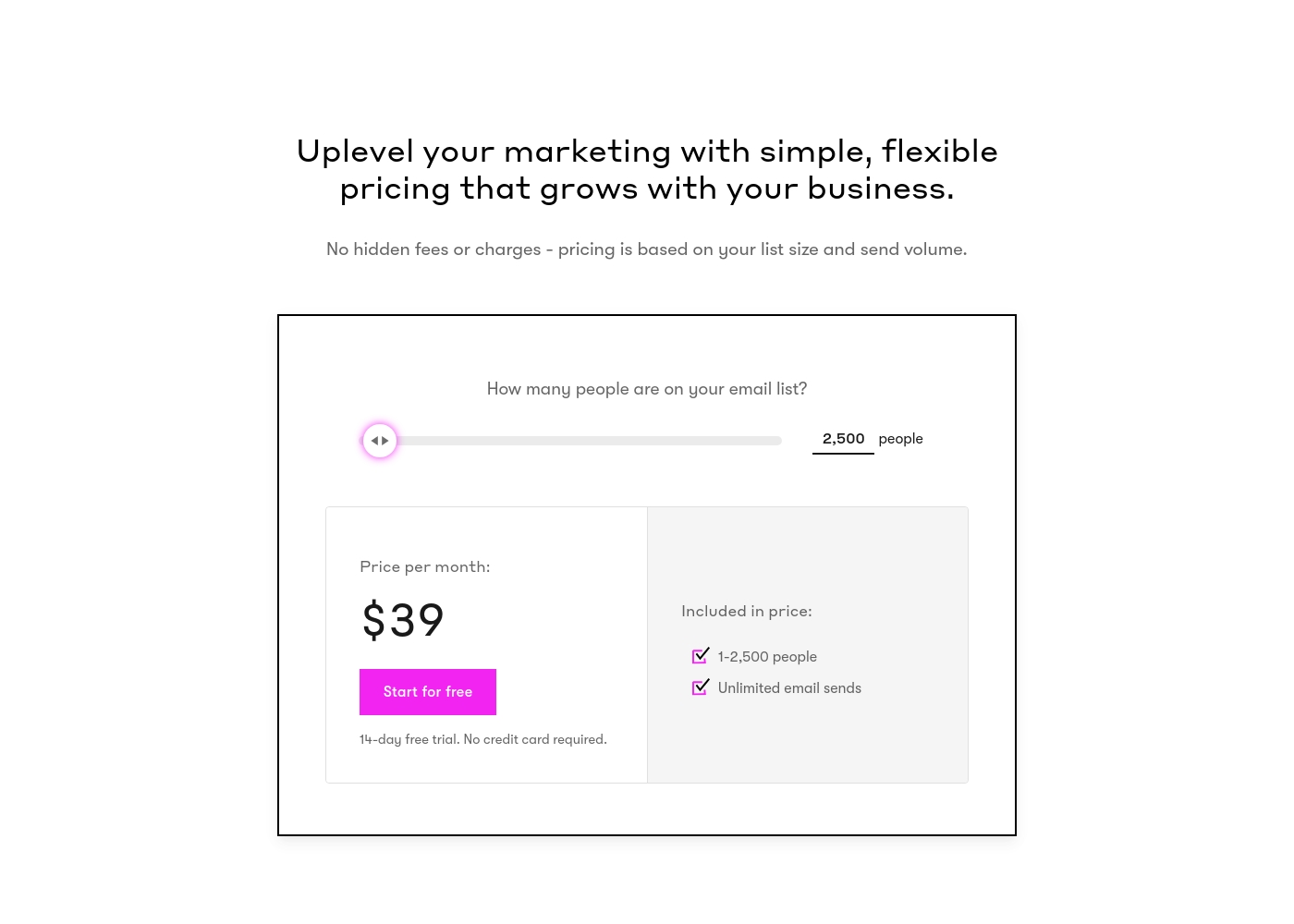
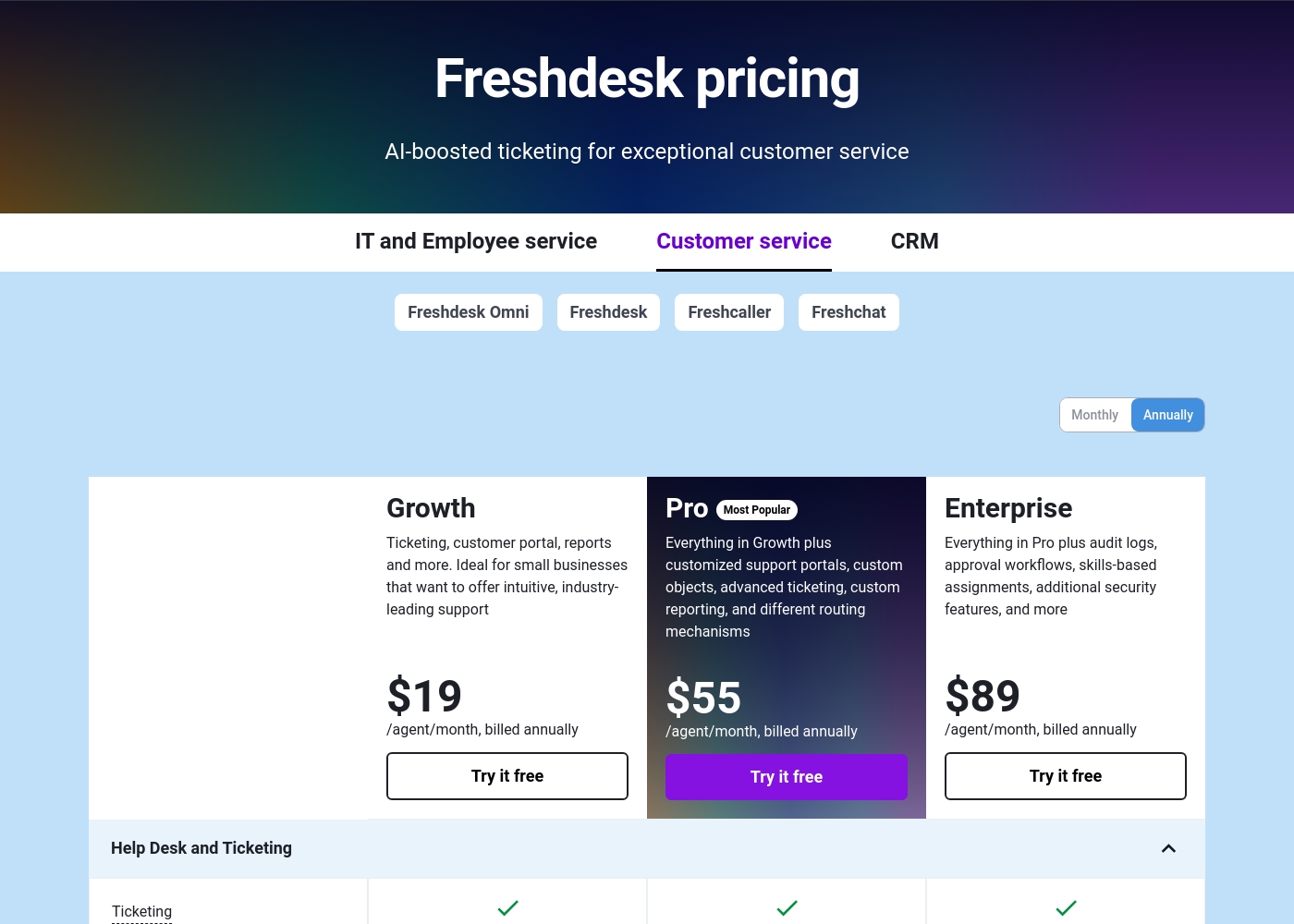
Drip's pricing is usage-based. It starts at $39/month for up to 2,500 contacts. The cost scales as your email list size increases. There are no per-user fees. Freshdesk's pricing is per agent. It has a free plan for 2 agents. Paid plans range from $19 to $89 per agent per month. Add-ons for AI can increase costs. The cost driver is different. With Drip, you pay for audience size. With Freshdesk, you pay for team size. A 10,000-contact list is expensive on Drip but free on Freshdesk if you have no agents. A 50-agent team is expensive on Freshdesk but flat-rate on Drip. Choose Drip if your cost should align with your customer reach. Choose Freshdesk if your cost should align with your support headcount.
Reporting & Analytics
Freshdesk offers deeper operational analytics. Drip focuses on campaign performance.
Drip's reporting centers on email metrics. You track open rates, clicks, and conversions. Its key metric is revenue attributed to automated segments. Freshdesk's analytics cover support operations. It provides ticket volume, agent performance, and CSAT scores. Its AI Insights offer proactive trend analysis. The analytical lenses are different. Drip helps you optimize marketing messages. Freshdesk helps you optimize support processes. For measuring marketing ROI, Drip is purpose-built. For measuring support efficiency and customer happiness, Freshdesk provides more relevant data.
Scalability
Both scale, but for different resources. Drip scales with contacts; Freshdesk scales with agents.
Drip is built to handle growing contact lists. It offers sophisticated segmentation and automation for large audiences. Its infrastructure is designed for high-volume email sending. Freshdesk is built for growing support teams. It scales ticket volume and agent count. Advanced features like skill-based routing and enterprise security handle complex organizations. Scaling Drip means managing more customer data and campaigns. Scaling Freshdesk means managing more agents and support interactions. The platform that 'scales better' depends on what you're scaling. For a larger marketing audience, Drip. For a larger support operation, Freshdesk.
Customer Support
Both vendors have mixed reviews for their own support. Freshdesk offers 24/5; Drip offers email/chat.
Drip offers email support to all paying customers. Live chat is available for plans $99/month or higher. Reviews cite a 97.3% satisfaction score but also mention slow responses. Freshdesk provides 24/5 professional support. User reviews frequently praise the software but criticize the responsiveness of Freshworks' own support team. The irony is similar. Both tools aim to improve customer experience, yet their own support receives mixed feedback. Freshdesk has more availability (24/5 vs business hours). When evaluating, consider that both companies' support has room for improvement. Your experience may vary based on your plan and issue.
Value for Money
Value depends on your goal. Drip generates revenue; Freshdesk reduces support costs.
Drip's value is in revenue generation. Users report 5x more revenue with segmentation. The cost is justified if it drives a positive return on ad spend. Freshdesk's value is in operational efficiency. Its AI can handle up to 80% of routine queries. The cost is justified if it reduces headcount or improves CSAT. The ROI calculation is different. For Drip, value = (Revenue from emails) - (Platform cost). For Freshdesk, value = (Cost savings from AI) + (Value of higher CSAT) - (Platform cost). Neither is 'cheap.' Each provides strong value when applied to the correct business problem. The wrong tool for the job offers poor value.
Drip pricing: Drip offers a flexible, usage-based subscription starting at $39/month for up to 2,500 people. Pricing scales based on your email list size and includes a 14-day free trial with no credit card required to start browsing its powerful automation tools tool and visual builder.
Your monthly cost increases as your audience grows, but you always get features like unlimited email sends and onsite campaigns. This ensures you only pay for what you actually use while accessing expert support and pre-built marketing playbooks right from the start.
You can cancel your subscription at any time within your billing settings if your business needs change. This model is specifically designed for e-commerce brands looking for deep segmentation and personalized customer journeys without enterprise-level complexity or hidden fees.
Freshdesk by Freshworks pricing: Freshdesk by Freshworks offers a free tier for small teams and paid plans ranging from $19 to $89 per agent per month when billed annually. Pricing depends on your specific needs for automation, advanced reporting, and enterprise-grade security features like audit logs and skill-based routing.
You'll also find usage-based AI add-ons for businesses ready to automate their support queue with Freddy AI agents and copilots. Customization and scalability are built into every tier to ensure your support desk grows with you smoothly over time.
Flexible monthly and annual billing cycles allow you to transition easily as your team expands or your requirements evolve beyond the basic features. All paid plans include a free trial period to test those advanced tools in your real-world environment before committing to a purchase.
Pricing Notes
- Drip's cost is driven by contact list size. A 10,000-contact list will be significantly more expensive than a 1,000-contact list.
- Freshdesk's cost is driven by agent count. A 50-agent support team will be significantly more expensive than a 5-agent team.
- Freshdesk offers a free plan for 1-2 agents for up to 6 months, providing a low-barrier entry.
- Both tools offer free trials. Drip's is 14 days. Freshdesk's gives access to the Enterprise plan.
- Advanced features in Freshdesk (like AI Copilot) are paid add-ons, which can increase total cost.
Pricing Head-to-Head
Отзывы пользователей
We found a mixed bag of user sentiment from Trustpilot, as the Capterra link was inaccessible. Reviews praise Drip's powerful automation and segmentation for driving revenue, with many noting its ease of use for e-commerce.
💡 On the downside, several users report frustration with customer support responsiveness and occasional platform glitches. Pricing is frequently cited as a concern, with some feeling the cost can escalate quickly as contacts grow.
Drip's automation tools are top-notch. We set up abandoned cart sequences that really boosted our recovery rate. The visual builder makes it easy to see the customer journey.
On Trustpilot, users consistently praise Freshdesk for its intuitive interface and ease of use, highlighting how quickly teams can get started with minimal training. The AI-powered automation and unified workspace receive positive remarks for boosting agent efficiency and simplifying omnichannel support.
However, recurring concerns focus on customer support responsiveness from Freshworks itself, with some users reporting slow or unhelpful replies. Pricing and value also draw mixed feedback; while some appreciate the feature-rich plans, others find add-ons and scaling costs become steep.
Freshdesk is incredibly intuitive. Our team was up and running in hours, and the AI suggestions help us resolve tickets much faster. It's a game-changer for our workflow.
Наш вердикт
This isn't a close race—it's a choice between two different sports. Drip and Freshdesk by Freshworks are not competitors. They are specialists for opposite business goals. Drip's superpower is turning browsers into buyers. It automates personalized emails that recover abandoned carts and recommend products. If you run an online store, Drip is a revenue engine. Freshdesk's superpower is turning frustrated customers into happy ones. It unifies support channels and uses AI to resolve issues automatically. If you manage a support team, Freshdesk is an efficiency multiplier. The deciding factor is your primary pain point. Are you losing sales to poor follow-up? Choose Drip. Are you overwhelmed by a flood of support tickets? Choose Freshdesk. They don't even serve the same masters. Final verdict: Pick Drip if your budget is for marketing and your goal is more sales. Pick Freshdesk if your budget is for support and your goal is better service. They can even be used together by different departments. There's no 'better' tool—only the right tool for the job at hand.
Часто задаваемые вопросы
Which is better for a small e-commerce store: Drip or Freshdesk by Freshworks?
Drip is better. It's designed specifically for e-commerce with deep Shopify integration and automation for cart recovery. Freshdesk is a support tool, not a sales tool.
Can I use Freshdesk by Freshworks for marketing emails like Drip?
No. Freshdesk is a customer service platform. Its email functionality is for support ticketing, not marketing campaigns or automated sales sequences.
Is Drip more expensive than Freshdesk by Freshworks?
It depends. Drip's cost scales with your contact list size. Freshdesk's cost scales with your number of agents. A large list on Drip could cost more than a small team on Freshdesk, and vice-versa.
Which has better AI: Drip or Freshdesk by Freshworks?
Freshdesk has more advanced and versatile AI. Its Freddy AI handles full support resolutions, agent assistance, and analytics. Drip's AI focuses on email automation triggers.
Does Freshdesk by Freshworks have a free plan?
Yes. Freshdesk offers a free plan for up to 2 agents for the first 6 months. It includes essential ticketing and knowledge base features. Drip does not have a free plan, only a free trial.
Which is easier to set up for a non-technical team?
Both are relatively easy for their purpose. Drip's visual builder is simple for marketers. Freshdesk's unified workspace is intuitive for support agents. The setup complexity depends on your specific workflow needs.
Готовы выбрать?
Оба инструмента имеют свои сильные стороны. Выбирайте в соответствии с вашими конкретными потребностями.