Cognism vs Drip
Cognism and Drip solve completely different problems. One gives you sales contacts; the other emails your customers. Cognism targets B2B teams selling into Europe. Drip helps B2C brands turn browsers into buyers.
Strong European Data, But Pricy
We found Cognism to be a robust platform for B2B sales teams targeting Europe, with its phone-verified data and compliance focus standing out. Overall, it delivers real value for pipeline building, but the custom pricing and onboarding curve require careful consideration.
Плюсы
- Excellent phone-verified contact data for higher connect rates.
- Strong compliance and GDPR/CCPA adherence for European markets.
- Generally easy-to-use interface after initial setup.
- Responsive customer support is frequently praised.
Минусы
- Pricing is opaque and generally considered expensive.
- Onboarding process can be challenging for new users.
- Data accuracy can be inconsistent or outdated in some cases.
- May not be ideal for very small teams or non-European markets.

Powerful for e-commerce, but check the support.
We find Drip to be a highly capable email automation platform built specifically for B2C e-commerce. Its visual builder and smart segmentation are standout features for creating personalized customer journeys. Overall, it's a strong choice for online brands, provided your team can manage the learning curve and verify support levels.
Плюсы
- Excellent visual workflow builder for automation
- Deep e-commerce integrations (Shopify, WooCommerce)
- Powerful, behavior-based segmentation tools
- Free migration for large lists (17,500+)
Минусы
- Pricing can become expensive as contacts scale
- Some users report slow or inconsistent customer support
- Requires integration with compatible platforms
- Advanced features may have a learning curve
ОCognism
Cognism is a B2B data and sales intelligence platform designed for revenue teams selling into European markets. 🎯 It focuses on providing accurate, compliant contact data—especially phone-verified mobile numbers—to help sales and marketing teams identify and reach decision-makers. The platform is built for SMBs, mid-market, and enterprise teams who need to navigate Europe's complex regulatory landscape and diverse local markets.
ОDrip
Drip is an email marketing automation platform built for B2C companies that sell online. Whether you're an e-commerce brand, a course creator, or a travel provider, it gives you the tools to move beyond generic newsletters. It's designed to be a powerful yet simple engine for driving revenue through personalization. 💡
Основные моменты
Сравнение функций
Обзор функций
Мы выделяем основные различия и выбираем победителя для каждой функции.
Core Purpose & Audience
Cognism finds B2B contacts. Drip emails B2C customers. They serve opposite ends of the sales funnel.
Cognism is a sales intelligence platform. It provides verified contact data like emails and mobile numbers. Sales teams use it to build prospect lists for cold outreach. It's built for B2B companies targeting European markets. Drip is an email marketing automation tool. It sends personalized emails based on customer behavior. E-commerce stores use it for abandoned cart recovery and promotions. It's built for B2C brands selling online. The key difference is the target audience. Cognism helps you *find* new business contacts. Drip helps you *nurture* existing customers. They solve different stages of the revenue cycle.
Data Quality & Sourcing
Cognism focuses on verified, compliant B2B data. Drip uses your own customer engagement data.
Cognism's core strength is its database. It provides phone-verified mobile numbers, claiming up to 3x higher connect rates. Data is refreshed every 30 days for senior roles. It prioritizes GDPR compliance and Do-Not-Call coverage. Drip doesn't provide a contact database. It works with the contacts *you* provide (e.g., from your Shopify store). It enriches this data with email opens, clicks, and purchase history. Its data is behavioral, not demographic. The trade-off is source vs. enrichment. Cognism gives you new, cold contact data. Drip makes your existing warm data smarter. Cognism's data requires purchase credits; Drip's value comes from sending more emails to your list.
Automation Capabilities
Drip offers powerful, visual email automation. Cognism's automation is limited to data feeds.
Drip shines with its visual workflow builder. You can create multi-step email sequences triggered by actions like cart abandonment or course sign-ups. It uses templates for common e-commerce scenarios. Automation is central to its value. Cognism's 'automation' is about data delivery. You can set up data feeds to enrich your CRM automatically. It also has intent signals. But it doesn't send emails or manage customer journeys. That's a different tool's job. This is a major difference in functionality. Drip is an *active* marketing tool that sends messages. Cognism is a *passive* data tool that feeds information to your sales team. If you need email automation, Drip is the only choice here.
Ease of Use & Onboarding
Both aim for simplicity, but Cognism may have a steeper learning curve for data features.
Cognism offers a guided onboarding after purchase. The platform is designed for quick list building. However, some reviews mention an initial learning curve. Mastering its advanced filters and compliance settings takes time. Drip emphasizes visual simplicity. Setup involves connecting your store and importing a list. Pre-built templates and workflows get you started fast. Its drag-and-drop builder requires no developers. Drip generally appears easier for immediate use, especially for marketers. Cognism's power lies in data nuances, which might require more training. Both offer support, but Drip's is more accessible on lower-tier plans.
Reporting & Analytics
Cognism tracks data quality and sales outreach. Drip tracks email performance and revenue.
Cognism provides dashboards focused on data usage. You can see which records are exported, credit consumption, and data freshness. The Pro package includes intent data analytics. It measures the *input* for your sales team. Drip's reporting is centered on email metrics. You see open rates, click-through rates, and conversions. It can directly attribute revenue to specific email campaigns. It measures the *output* of your marketing. The analytics serve different goals. Cognism helps you measure pipeline generation activities. Drip helps you measure customer engagement and sales revenue from marketing. Your choice depends on what you need to optimize.
Pricing & Value
Cognism uses opaque, custom pricing. Drip has transparent, usage-based pricing.
Cognism's pricing is not public. It's based on a subscription + credit model. You must contact sales for a quote. Users report it as expensive and not transparent. The cost is for accessing a premium B2B database. Drip's pricing is public. It starts at $39/month for up to 2,500 contacts. Costs scale with your list size. There's a free 14-day trial with no credit card. The cost is for sending unlimited emails and using automation features. This reflects their different businesses. Cognism sells valuable, compliance-heavy data. Drip sells marketing tools. Drip's value is clearer upfront, while Cognism's requires a sales conversation.
Customer Support
Cognism offers dedicated account managers. Drip offers accessible chat support on higher plans.
Cognism's Pro plan includes an account manager. All users get live chat support. Reviews praise its responsiveness. Support is part of a higher-touch, enterprise-focused service model. Drip provides email support for all paying users. Live chat is unlocked on plans $99/month or higher. They report a 97.3% satisfaction score. Support is scaled for a wider range of business sizes. Cognism's support feels more personalized for larger clients. Drip's support is more accessible for small to mid-sized businesses. The key is which plan tier you're on, especially with Drip.
Integration Ecosystem
Cognism integrates with B2B CRMs. Drip integrates with B2C e-commerce platforms.
Cognism's integrations are for sales data flow. Key partners are Salesforce, HubSpot, and Pipedrive. The goal is to push contact data into your CRM for sales outreach. It also offers API access for custom data needs. Drip's integrations are for e-commerce and content. It connects deeply with Shopify, BigCommerce, and WooCommerce. It also works with booking and course platforms. The goal is to pull in customer data for personalized emails. The ecosystems don't overlap. Cognism fits a B2B tech stack. Drip fits a B2C online store stack. Choosing between them isn't about integration preference—it's about your fundamental business model.
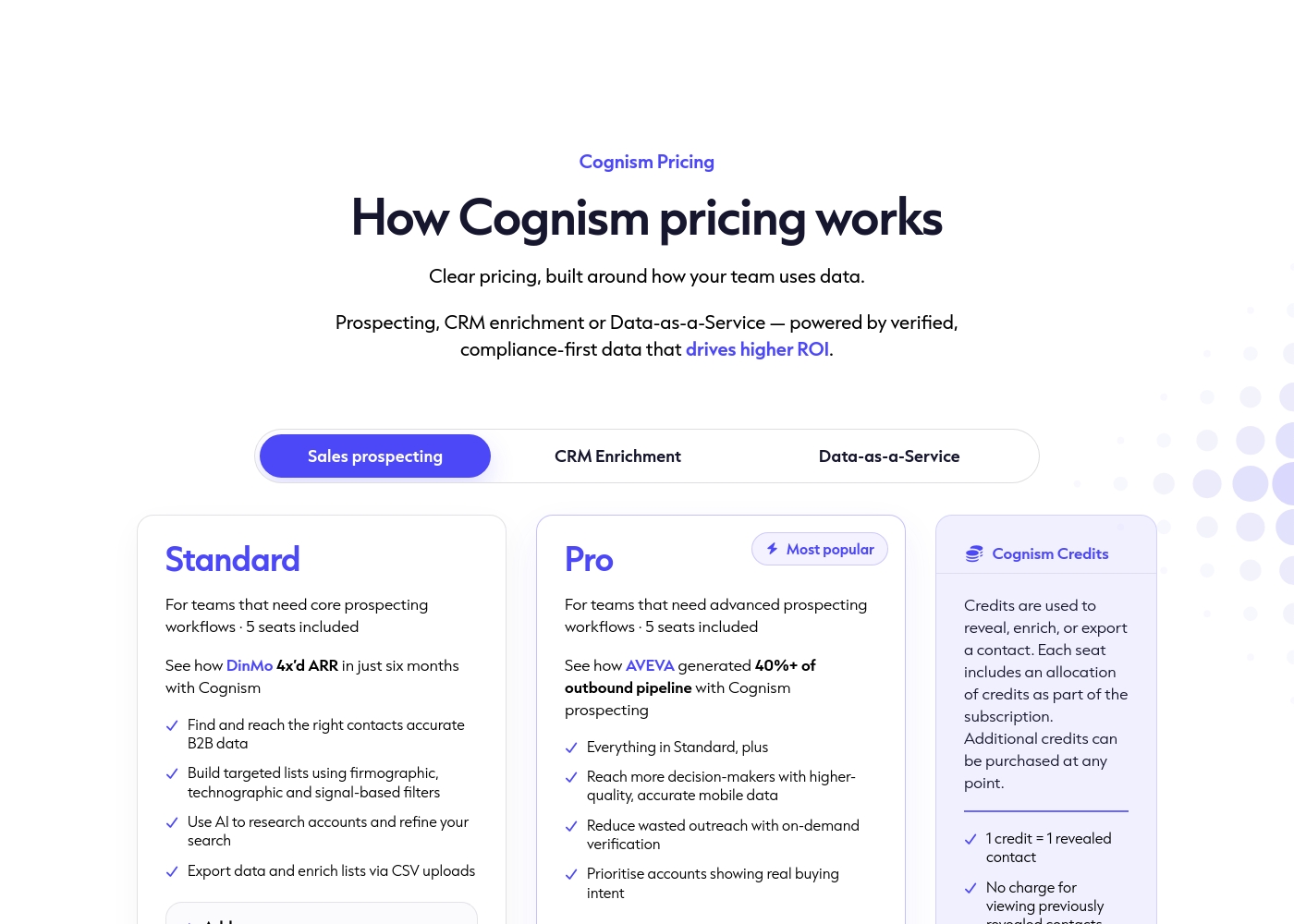
Cognism pricing: Cognism offers custom subscription-based pricing tailored to your team size and data needs. The platform features two core prospecting tiers, Standard and Pro, alongside available add-ons for CRM enrichment and API access segments to ensure you only pay for what you use.
All pricing and seats are designed to scale with your team's growth and data volume requirements. Please contact their sales team for a personalized quote tailored to your specific goals and seat requirements.
No prices are publicly listed, as each plan is custom-tailored to the business needs of the user. Their platform uses a credit-based model for revealing, enriching, or exporting company and contact records to keep your team up to date with the latest information.
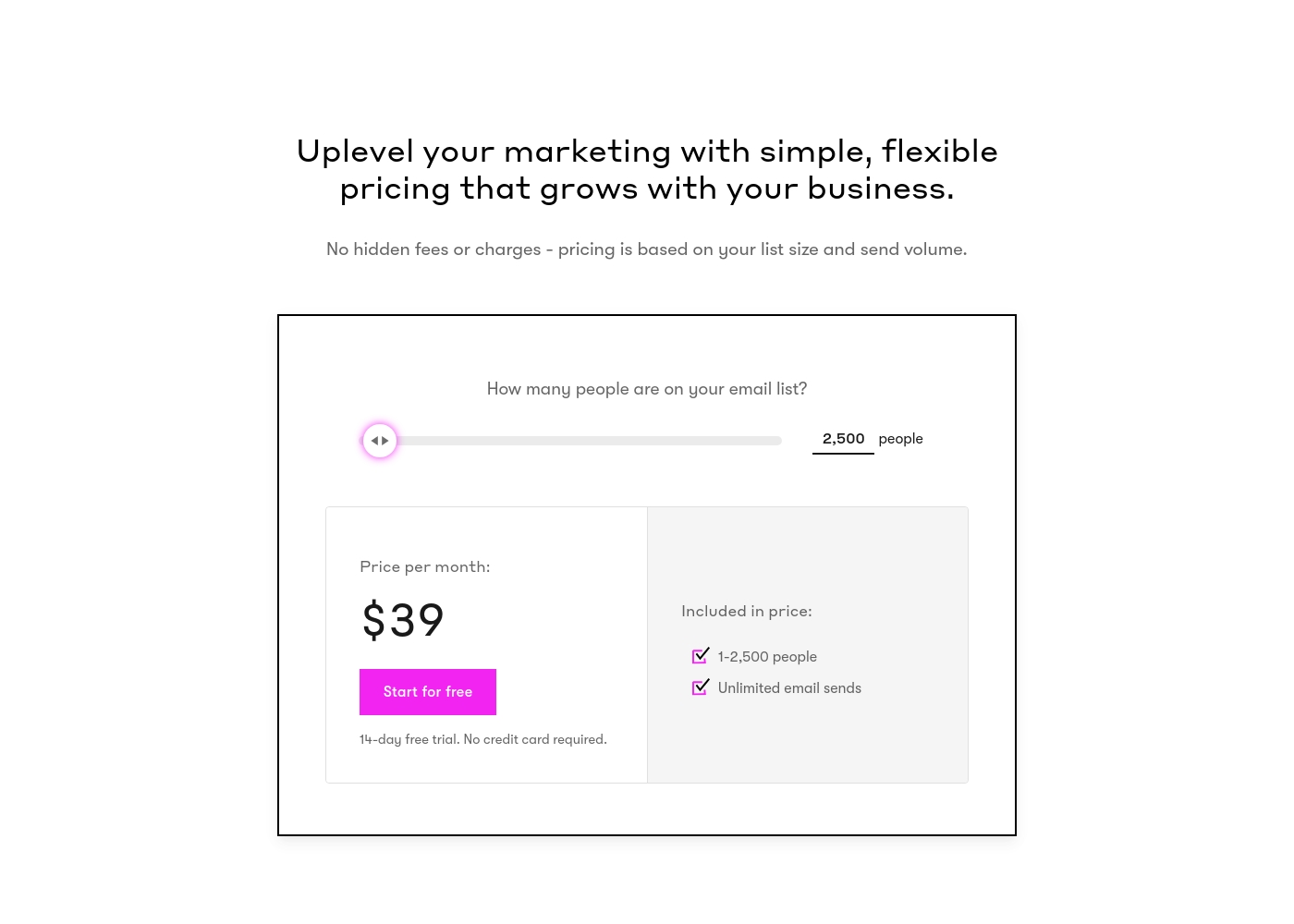
Drip pricing: Drip offers a flexible, usage-based subscription starting at $39/month for up to 2,500 people. Pricing scales based on your email list size and includes a 14-day free trial with no credit card required to start browsing its powerful automation tools tool and visual builder.
Your monthly cost increases as your audience grows, but you always get features like unlimited email sends and onsite campaigns. This ensures you only pay for what you actually use while accessing expert support and pre-built marketing playbooks right from the start.
You can cancel your subscription at any time within your billing settings if your business needs change. This model is specifically designed for e-commerce brands looking for deep segmentation and personalized customer journeys without enterprise-level complexity or hidden fees.
Pricing Notes
- Cognism uses custom, opaque pricing based on a subscription + credit model. No public prices are listed.
- Drip's pricing is transparent and based on the number of active contacts. It starts at $39/month.
- Cognism does not offer a free trial, only a discovery demo.
- Drip offers a free 14-day trial with no credit card required.
- Cognism's value is in its high-quality, compliant B2B data. Drip's value is in its email automation and segmentation tools.
- Drip includes unlimited email sends on all paid plans. Cognism's credits are used per contact record revealed or enriched.
Pricing Head-to-Head
Отзывы пользователей
We found mixed sentiment in external reviews for Cognism. Users consistently praise the high accuracy and quality of phone-verified data, which helps connect with decision-makers.
Many also highlight the platform's ease of use and strong customer support. However, recurring complaints focus on high pricing that isn't transparent, onboarding challenges, and occasional data reliability issues, like outdated contacts.
The data quality is top-notch, especially the mobile numbers. It's made a real difference in our outreach. Support has been helpful whenever we had questions.
We found a mixed bag of user sentiment from Trustpilot, as the Capterra link was inaccessible. Reviews praise Drip's powerful automation and segmentation for driving revenue, with many noting its ease of use for e-commerce.
💡 On the downside, several users report frustration with customer support responsiveness and occasional platform glitches. Pricing is frequently cited as a concern, with some feeling the cost can escalate quickly as contacts grow.
Drip's automation tools are top-notch. We set up abandoned cart sequences that really boosted our recovery rate. The visual builder makes it easy to see the customer journey.
Наш вердикт
This isn't a fair fight—Cognism and Drip serve entirely different masters. Choosing between them depends solely on whether you need to *find* new customers or *engage* existing ones. Cognism's superpower is sourcing compliant, phone-verified B2B data for European markets. It promises higher connect rates and helps sales teams build pipeline with confidence. If you're hunting for enterprise leads across borders, Cognism is your specialized weapon. Drip's superpower is automated, behavior-driven email marketing for B2C brands. Its visual builder and smart segments help e-commerce stores recover carts and increase lifetime value. If you're nurturing an online audience, Drip is your revenue-driving engine. The deciding factor is your business model. B2B with a complex European sales cycle? Cognism. B2C with an online store or course? Drip. They solve opposite problems, so the choice is binary. For most people reading this, the verdict is clear. Pick Cognism if your job is filling a sales funnel with cold outreach. Pick Drip if your job is converting browsers into buyers through email. There's no overlap here.
Часто задаваемые вопросы
Can I use Cognism to send marketing emails to leads?
No, Cognism is a data platform, not an email sender. It provides contact information to enrich your CRM. You would need a separate tool, like Drip, to actually send marketing emails to those contacts.
Does Drip provide business contact data like Cognism?
No, Drip works with the contact list you build or import. It doesn't source new business leads. Its strength is engaging people who have already interacted with your brand or store.
Which is cheaper for a small business, Cognism or Drip?
Drip is generally more accessible for small businesses with transparent pricing starting at $39/month. Cognism's custom pricing and credit model are typically geared towards mid-market B2B teams with dedicated budgets.
Is Cognism better for sales or marketing teams?
Cognism is designed for sales and revenue operations teams. Its tools are for prospecting and pipeline building. Marketing teams might use it for list building, but its core function is sales intelligence.
Is Drip only for e-commerce stores?
While it's built for B2C e-commerce, Drip also works well for online course creators, travel providers, and other digital businesses. Its core strength is automating communication based on user behavior.
How do the free trials differ?
Drip offers a 14-day free trial with full feature access, no credit card needed. Cognism does not offer a free trial; you can only request a guided discovery demo.
Готовы выбрать?
Оба инструмента имеют свои сильные стороны. Выбирайте в соответствии с вашими конкретными потребностями.